When Mainstream Fashion Stops Being Interesting: Meet the Designers Refusing to Follow the Rules
By DLifestyle Magazine
With mainstream brands dominating the runway season after season, it is becoming increasingly difficult to discover something genuinely new. New talent, new creativity, new expressions — the things that once made fashion exciting — can sometimes feel buried beneath familiar names, familiar silhouettes and familiar commercial strategies.
Mainstream designers are just that: mainstream. There is a business to run, shareholders to satisfy, collections to sell and a bottom line that cannot be ignored. The question increasingly becomes: how much can we sell, how quickly can we sell it, and how many people will recognise the name on the label?
But somewhere between the established fashion houses and the commercial machinery of the industry, there is another generation worth paying attention to.
I want to find the designers who rebel against that thinking. The ones who make us stop and watch, not because their names are already familiar, but because what they are creating is new, exciting, bold and distinctively their own.
It is not necessarily about rejecting fashion week, luxury or the established houses. It is about finding the people who remind us why fashion became an art form in the first place.
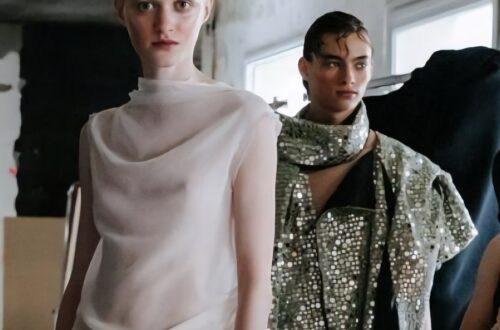
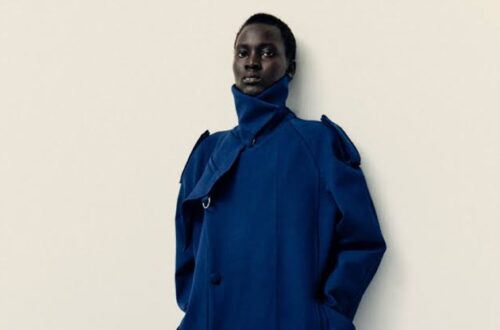
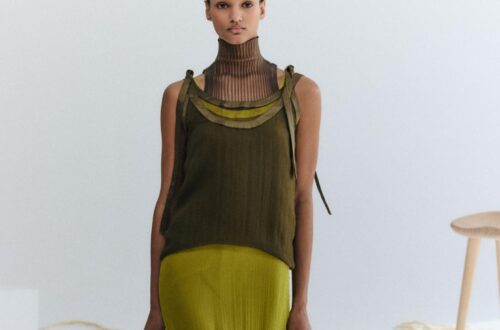
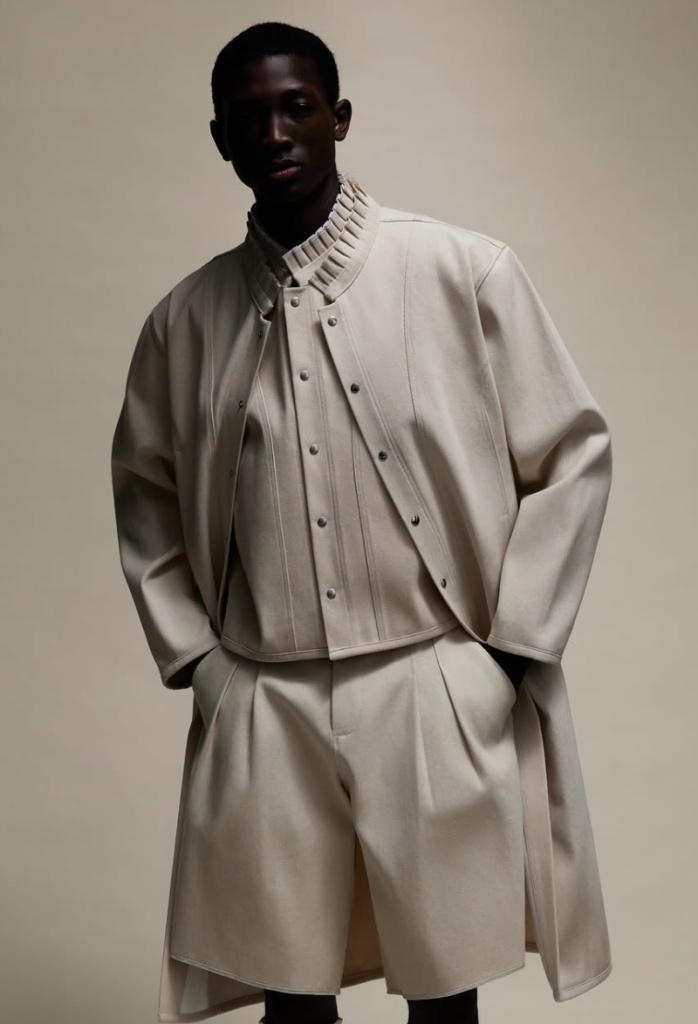
Two names that deserve a closer look are Marie Adam-Leenaerdt and Anthony Calydon.
Marie Adam-Leenaerdt: questioning the clothes we take for granted
Belgian designer Marie Adam-Leenaerdt is an interesting case because her rebellion is not particularly loud. There are no theatrics required to understand what she is doing. Instead, she takes familiar pieces of clothing and challenges the way we understand them.

Having studied at La Cambre in Brussels and worked within the studios of Givenchy and Balenciaga, Adam-Leenaerdt understands the language of established fashion houses. Yet her own label, launched in 2022, has developed a very different way of communicating.
She does not simply want to produce another beautifully tailored coat or another elegant dress. She wants to know what else that garment could become.
A trench coat can be separated, shortened or transformed into a skirt. A familiar silhouette can be enlarged or reduced until its proportions become unexpected. A garment can be reversible, adaptable or even presented in a way that makes the distinction between clothing and accessories less obvious.
It is a clever approach because she is not relying on novelty for novelty’s sake. She is asking whether the things we already own could be designed with more thought.
Her Autumn/Winter 2026 collection took this thinking further. Some garments incorporated fabric swatches from previous collections, while other pieces were designed to be reversible. One particularly interesting idea involved apron-patterned fabric that could be cut and sewn by the wearer.
That is a rather different relationship between designer and customer. Instead of simply presenting a finished product and asking us to buy it, she introduces the possibility of participation.
There is something quietly rebellious about that.
In an industry where newness is often measured by how much a brand can produce each season, Adam-Leenaerdt is asking whether a garment can do more with less. Her approach questions mass production, the lifespan of clothing and the expectation that every collection must deliver an entirely new wardrobe.
Her own creative philosophy is particularly revealing: less, but constructed. Each piece must justify its existence.
Does she care about Fashion Week?
She certainly does. Adam-Leenaerdt has established herself on the Paris Fashion Week calendar, and her Spring/Summer 2026 presentation explored the relationship between the runway, the showroom and the way clothing is actually worn in everyday life.
But she is not simply using Fashion Week to display another seasonal collection. She uses the platform to question how fashion is presented and experienced.
Her Autumn/Winter 2026 show even played with the audience’s experience, using collapsible stools arranged on racks so visitors could choose where to sit. It sounds like a small detail, but it reflects a larger interest in participation and personal choice.
In July 2026, she received the ANDAM Grand Prix, one of the French fashion industry’s important awards for emerging talent. It is a significant achievement, but what makes her interesting is not the award itself. It is the thinking behind the work.
Adam-Leenaerdt is not trying to make the familiar disappear. She is making us look at it again.
Anthony Calydon: the self-taught designer building his own language
If Marie Adam-Leenaerdt is questioning the garment, Anthony Calydon is questioning the way a designer is expected to build a fashion identity.
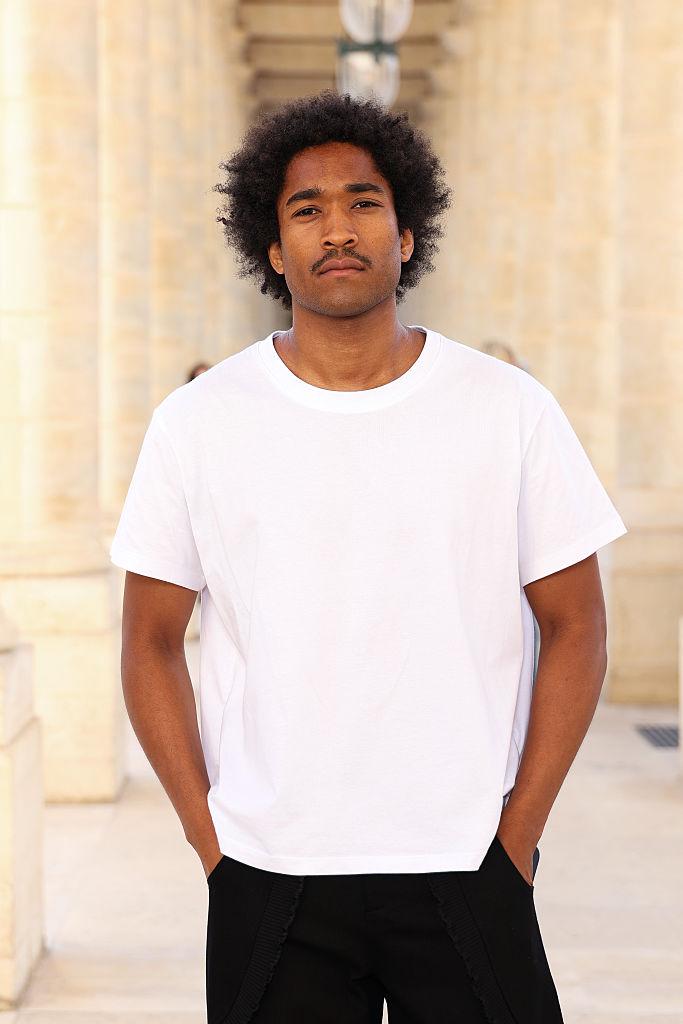
Calydon is a French designer based in Paris, and his route into the industry is quite different from the traditional fashion-school-to-fashion-house journey.
He is self-taught. Before establishing his label, he was making pieces by hand at home and trying to find a way into an industry that can be difficult to penetrate without established connections.
One encounter helped change his outlook. He had the opportunity to show his first collection to Yohji Yamamoto in Paris. Calydon has spoken about how the encouragement he received from the Japanese designer helped him find his way when he was struggling to establish his own label.
That is an important part of his story. He was not arriving with the machinery of a major fashion house behind him. He was trying to build something that people could recognise as his own.
And that is exactly what makes his work interesting.
Calydon’s collections have a playful, almost animated quality. Pop culture, video games, manga and superhero costumes all feed into his creative universe. His clothing features sculptural hoods, colourful bags, socks, distinctive footwear details and ribbed knitwear.
But one of his most recognisable details is the overlock stitch.
In conventional garment construction, stitching is often a technical necessity, something used to finish fabric edges. Calydon has turned that detail into part of his visual identity. Instead of hiding it, he makes it visible.
It is a small but important act of creative independence: taking something ordinary and making it recognisably his.
He has also spoken about wanting people to recognise an Anthony Calydon piece without needing to see a large logo. He wants the materials, construction and overall appearance to communicate the identity of the brand.
That is a refreshing ambition in a market where brand recognition can sometimes matter more than the design itself.
Does he care about Fashion Week?
Yes, but his relationship with the fashion calendar is worth examining.
In September 2026, Calydon presented his first installation in Tokyo through a collaboration involving Rakuten Fashion Week Tokyo, ANDAM and the Japanese Fashion Week Organization.
He has also described his ambition to grow the brand until he can consistently organise his own presentations.
That is an important distinction. He is not dismissing Fashion Week. He is using the opportunities available to him while working towards a position where he can present his work on his own terms.
His business is also built around a different kind of relationship with the customer. He has spoken about focusing on e-commerce, developing an international audience and growing the brand through its community.
His first retail partner in Japan discovered him through Instagram. At the beginning, he and his team were sewing the garments themselves and could not accept large numbers of orders.
There is something worth remembering here: a designer does not necessarily need to begin with a major fashion house, a celebrity campaign or a front-row invitation. Sometimes the beginning is a small collection, a handful of customers and a very clear idea of what the work should look like.
Calydon has since received the 2026 ANDAM Pierre Bergé Prize. For a designer who once struggled to find his place in the industry, it represents a considerable step forward.
The uncomfortable question: who owns an idea when the designer is still unknown?
There is another side to the fashion industry that deserves attention.
For every designer who manages to establish a name, there are countless independent creatives producing work without the protection, financial resources or visibility enjoyed by major fashion houses.
An emerging designer might spend months developing a silhouette, a print, a textile treatment or a distinctive garment. A small label might have only a handful of people behind it. Yet a much larger business can have the production capacity, marketing budget and retail network to put a similar-looking product in front of millions.
And when that happens, the independent designer may find themselves fighting for something that should never have been in question: recognition for their own work.
This is not simply a theoretical concern. In September 2026, Australian independent label Khaos found itself at the centre of a public dispute after founder Bessie Joseph noticed a skirt sold by larger retailer Universal Store that she believed looked strikingly similar to her own Billie skirt.
The Khaos skirt was originally priced at A$160, while the Universal Store version was listed at A$90.
Joseph publicly raised the issue, sent the retailer a cease-and-desist notice and contacted the company through several channels. At the time of the report, she said she had received no response.
Rather than allowing the situation to become a financial battle she could not afford, Joseph responded commercially. She temporarily reduced the price of her own skirt to match the larger retailer’s price, inviting customers to buy directly from the independent designer.
She later told Inside Retail that the four days before her television appearance had been the best four days of business since launching Khaos.
There is an important distinction here: the similarity was alleged by the independent designer, and the reporting does not establish that a court found Universal Store guilty of copying. But the episode exposes the imbalance between a small creative business and a much larger retailer.
And it raises a question that fashion cannot afford to ignore: when an independent designer creates something distinctive, how easily can that idea be replicated by a business with considerably greater resources?
It is also worth looking beyond Australia. In December 2025, Indian designer Anupamaa Dayal’s allegations against Argentine brand Rapsodia were examined in a legal analysis by intellectual-property law firm S.S. Rana & Co. Dayal alleged that designs inspired by Indian botanical motifs had appeared in Rapsodia’s commercial material after representatives had visited her Delhi studio.
Again, these were allegations, not a court-established finding of infringement. But the case highlights the difficulty of protecting creative work across borders, particularly when the designer does not have the legal resources of an international brand.
This is where the conversation about emerging talent becomes more important than simply finding the next fashionable name.
If we want new ideas, we must also care about the people who create them. If we celebrate originality, we must be prepared to ask who originated the work. And if we want independent designers to challenge the established fashion houses, we must recognise that creativity needs more than an Instagram following to survive.
Fashion needs its outsiders
Neither Marie Adam-Leenaerdt nor Anthony Calydon is operating outside the fashion industry. Both have received recognition from one of its important institutions, ANDAM, and both are using international fashion platforms to introduce their work to wider audiences.
But that does not make their creative approaches any less interesting.
Adam-Leenaerdt is questioning how clothing is designed, constructed, presented and reused. Calydon is developing a recognisable visual language through self-directed learning, material experimentation and a direct relationship with his audience.
One challenges the object. The other challenges the route to becoming a designer.
And perhaps that is what I am looking for when I look beyond the familiar names on the runway.
Not another label trying to convince me that a familiar silhouette is revolutionary because it carries a famous name. Not another collection whose greatest achievement is how much of it can be sold.
I want to see the ideas that make me stop. The designers who make me question why something has been made that way, why a material has been used differently, or why a garment suddenly feels like something I have never seen before.
Fashion needs its established houses. But it also needs the outsiders, the independent minds and the designers who have not yet been given a seat at the table.
Because when everything starts to look familiar, the most exciting thing a designer can do is give us something we cannot immediately recognise — and make us want to understand it.