The Paris Fashion Rebel Who Never Needed to Become a Fashion Empire
Adeline André and the quiet art of refusing to follow the industry
There is a particular kind of designer I find increasingly difficult to come across in fashion today. Not another name competing for attention during Fashion Week, not another creative director waiting for their turn at a major fashion house, and certainly not another label built around how many pieces it can sell.
I’m interested in the ones who have managed to remain entirely themselves.
The designers who don’t necessarily want the attention, don’t need a celebrity sitting front row to validate their work, and have no interest in turning their creative identity into a commercial machine.
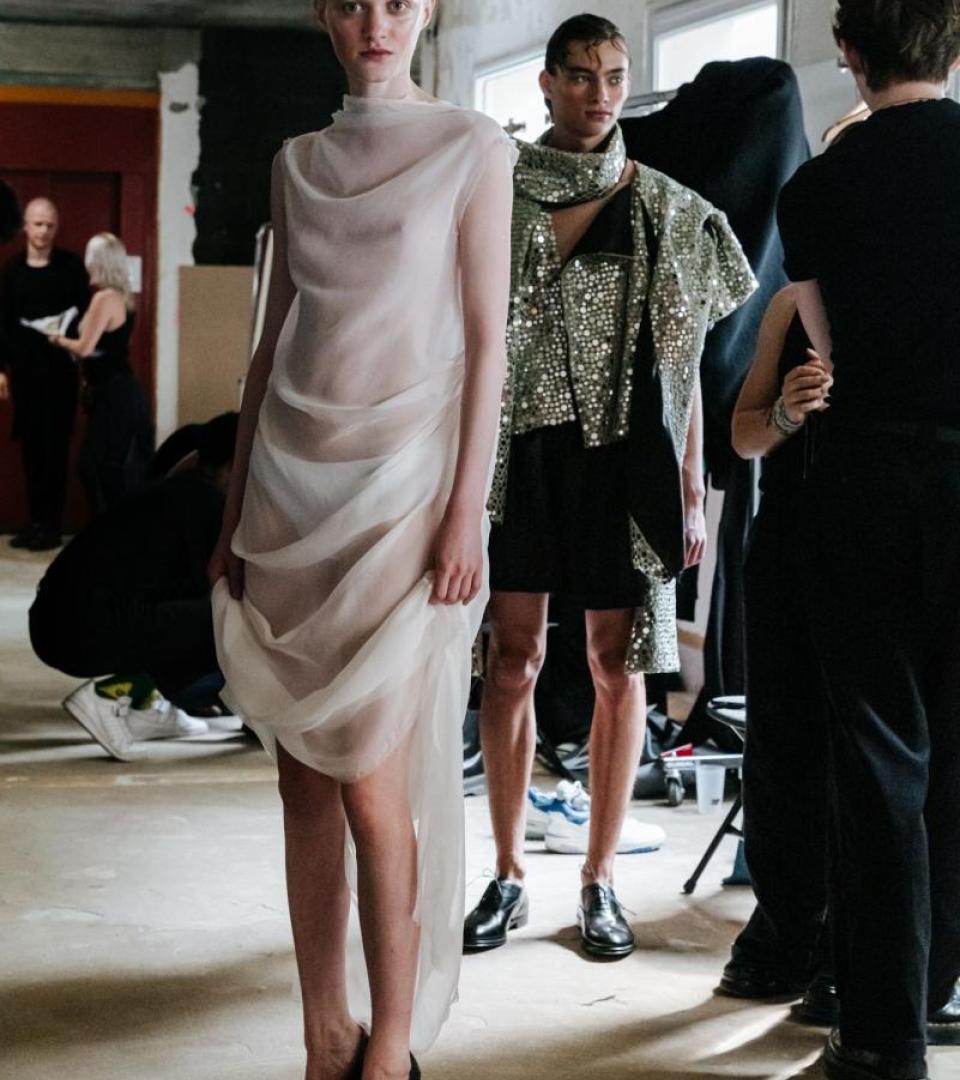
In Paris, one such name deserves considerably more attention: Adeline André.
Her story is particularly interesting because she knows the establishment from the inside. In 1970, André joined Christian Dior as an assistant to Marc Bohan, working within the house’s haute couture world. She had an opportunity to experience the hierarchy, precision and extraordinary craftsmanship that defined Paris couture.
But rather than spend her career climbing that hierarchy, she eventually established her own house in 1981, alongside István Dohar.
And she brought something different to the table.
Three armholes and a different way of thinking
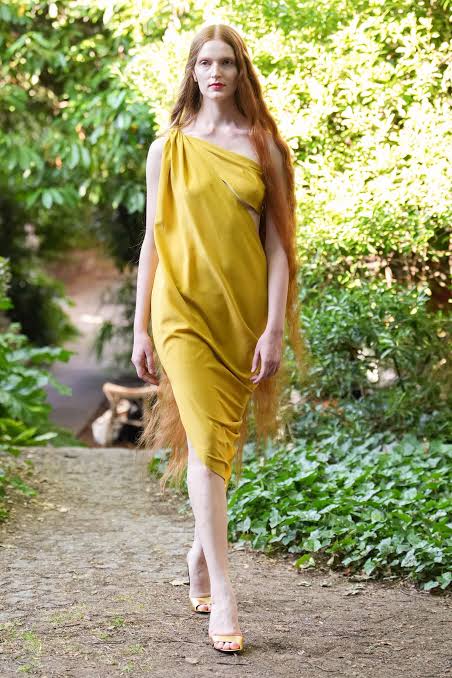
One of André’s earliest signatures was a garment with three armholes. It sounds like a relatively simple alteration until you consider what it does to the relationship between the garment and the person wearing it.
Rather than relying on conventional buttons, fastenings or accessories, the fabric wraps around the body. The wearer becomes part of the construction.
It was an unusual proposition, particularly during a period when fashion was embracing padding, exaggerated shoulders and increasingly structured silhouettes.
André went in the opposite direction.
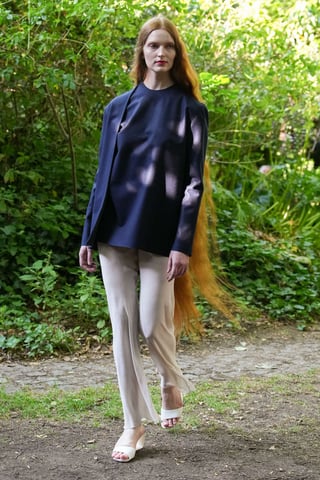
She stripped away unnecessary construction, avoided conventional lining and focused on natural fabrics, movement and the relationship between cloth and body. Her garments were not designed to impose a shape on the wearer. They were designed to move with them.
The three-armhole design became so distinctive that examples of her work entered the collections of institutions including the Palais Galliera in Paris, the Fashion Institute of Technology in New York and MUDE in Lisbon.
This wasn’t a designer trying to make another fashionable dress. She was questioning how a dress could function in the first place.
When the runway wasn’t the destination
Perhaps the most interesting part of André’s career is what happened when the commercial realities of ready-to-wear became difficult.
Rather than continually expanding to meet boutique orders, she moved increasingly towards bespoke work and private clients.
Her presentations, known as Topofwear gatherings, took place in galleries, workshops and private salons in Paris, London and New York. The format was a far cry from the conventional fashion show.
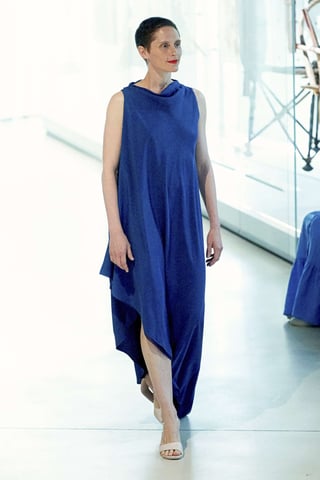
Her clientele included people from the worlds of architecture and art. Her approach was personal: clothes made to order, developed around the individual rather than a mass-market size chart.
In 1997, she joined the official Haute Couture Week calendar. In 2005, she received the protected Haute Couture designation.
Yet, in an interview with the Fédération de la Haute Couture et de la Mode, she made a revealing comment about the attention that followed.
Fame, she explained, did not interest her. She wanted to work and earn her living.
That is quite a statement in an industry that has increasingly made the designer as visible as the clothes.
A rebel without the theatrics
André is not a rebel in the conventional sense. There are no deliberately shocking slogans or theatrical attempts to upset the fashion establishment.
Her rebellion is quieter, and perhaps more difficult to maintain.
She has spent decades protecting a particular way of making clothes. Her collections are intended for private clients, women and men, and are produced to order and made to measure. Her work continues to revolve around natural materials, careful construction and a restrained aesthetic.
She has also worked beyond fashion, creating costumes for theatre, opera and ballet. That interest in movement makes sense when you look at her garments: they are often best understood when the body is actually moving in them.
There is something refreshing about a designer who doesn’t appear to need a new identity every season.
The question fashion should be asking
I don’t think every designer needs to become the next Dior, Chanel or Saint Laurent. In fact, perhaps the industry would benefit from a few more people who have no intention of becoming any of those things.
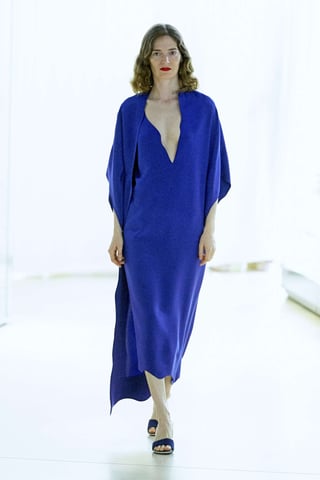
André’s career raises a question worth asking: how many genuinely interesting designers have we overlooked because they aren’t playing the usual fashion game?
There is a difference between being independent because you haven’t yet been discovered and remaining independent because you have deliberately built a life around your own creative rules.
Adeline André offers a compelling example of the latter.
And perhaps that is where we should be looking next: not simply for the next big name, but for the people who have quietly spent decades making sure their name remains their own.