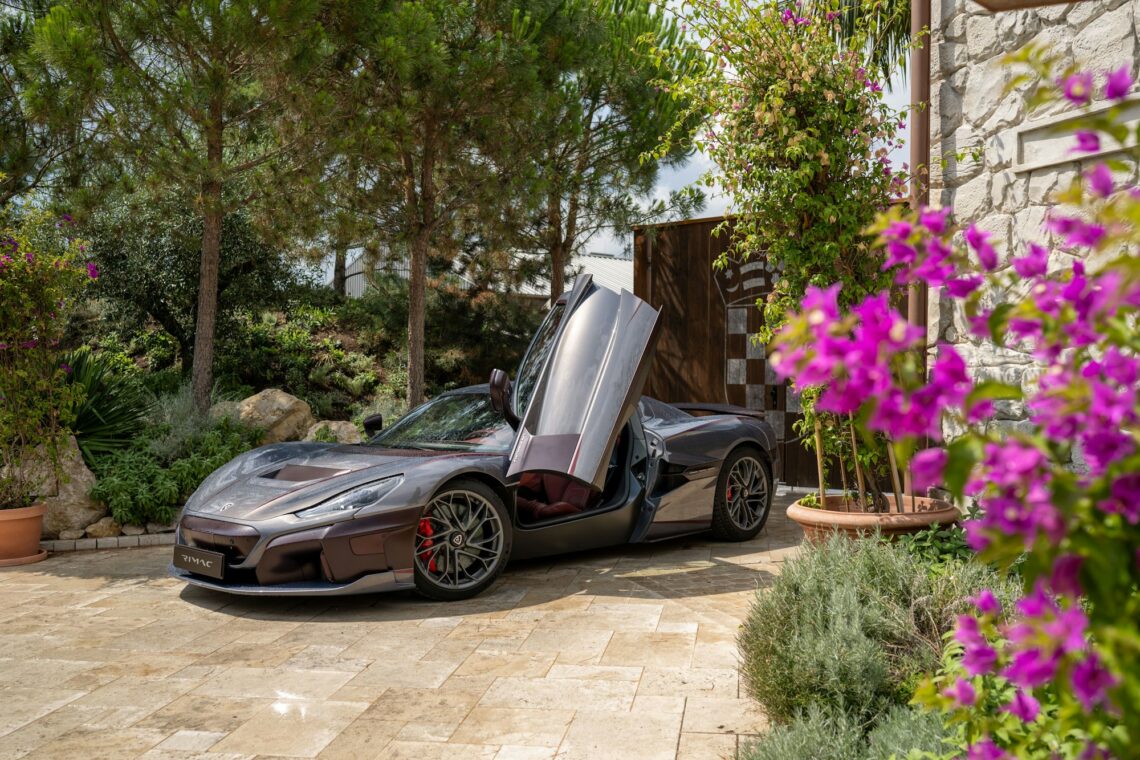
The electric hypercar that put Croatia on the automotive map is approaching the end of its production life. But for Mate Rimac, the Nevera was never meant to be the final destination.
There is something rather fitting about the way the Rimac Nevera is preparing to leave the production line. It arrived with a promise that seemed almost unreasonable: to challenge the world’s most established hypercar manufacturers using nothing but electric power. It broke records, challenged expectations and demonstrated that an automotive newcomer from Croatia could compete in a territory traditionally occupied by Ferrari, Bugatti, McLaren and Koenigsegg.
Now, after just 71 examples, its production story is coming to an end.
Rimac founder Mate Rimac has confirmed that the company is completing the final ten Nevera R models, with customer deliveries expected before the end of 2026. Once those cars have left the factory, production of the Nevera will conclude.
It is an unexpectedly short production story for a car that was originally intended to establish an entirely new chapter in the hypercar world.
A record-breaking machine with a different purpose
First introduced as the C_Two concept in 2018, the Nevera eventually entered customer production in 2022. Its arrival marked a significant moment for the electric performance car industry.
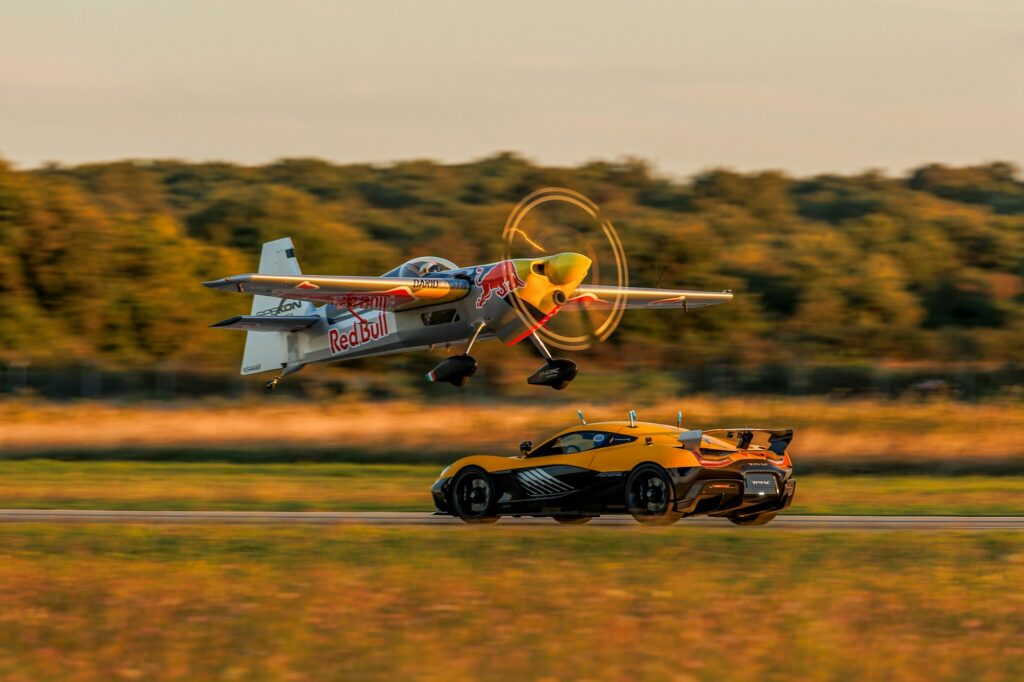
The standard Nevera delivered 1,914 horsepower through four electric motors, one at each wheel, with an advanced torque-vectoring system controlling how that power reached the road.
Its performance figures were extraordinary: a claimed 0–60 mph time of approximately 1.85 seconds and a top speed of 258 mph.
Then came the Nevera R.
With output increased to 2,107 horsepower, revised aerodynamics and a more aggressive performance focus, the R represented the ultimate evolution of the original platform. It was not simply a cosmetic exercise. It was Rimac demonstrating how much further its engineering could take an already extraordinary machine.
Yet the numbers tell an interesting commercial story.
Rimac has confirmed that 51 standard Neveras and 20 Nevera Rs will have been produced, bringing the total to 71 cars. The original standard Nevera programme had targeted 150 examples, while the Nevera R was announced as a separate limited series of 40.
For a vehicle capable of competing with the world’s fastest production cars, the relatively small number of customers willing to purchase an electric hypercar is an important part of the story.
Performance, it seems, does not automatically translate into demand.
The car that built something bigger
Perhaps the most revealing part of Mate Rimac’s announcement was not the production figure, but his reflection on what the Nevera accomplished.
He has described it as the foundation upon which the company’s subsequent achievements were built, explaining that without the Nevera there would be no Bugatti Tourbillon and no factory as it exists today.
That statement changes how we should look at the car’s commercial performance.
The Nevera was not simply another product expected to generate revenue through a conventional production cycle. It was a demonstration of engineering capability, manufacturing ambition and technological independence.
It established Rimac’s credentials in battery development, electric propulsion, software, torque vectoring and high-performance vehicle integration.
Those capabilities could subsequently be applied to projects far larger than a limited-production hypercar.
In that respect, the Nevera may have fulfilled a purpose that extended well beyond the number of cars sold.
Porsche exits, and Rimac enters a new ownership era
The Nevera’s retirement arrives during an equally significant period for the wider Rimac Group.
In April 2026, Porsche announced its intention to sell its shareholdings in Rimac Group and Bugatti Rimac to a consortium led by HOF Capital.
The transaction was completed on September 9, 2026, following regulatory approval.
Porsche had held approximately 20.6 per cent of Rimac Group and 45 per cent of Bugatti Rimac, the joint venture established in 2021. The consortium also includes Abu Dhabi-based BlueFive Capital and other institutional investors.
Following the transaction, Rimac Group remains the 55 per cent majority shareholder of Bugatti Rimac, while the new investor consortium replaces Porsche’s former interests.
The change also brought leadership adjustments.
Mate Rimac took on the position of President of Bugatti Automobiles, adding another important responsibility to his existing leadership role. Christophe Piochon stepped down, while Marko Brkljačić was set to join the Bugatti Rimac leadership team as Chief Operating Officer.
It is tempting to connect Porsche’s departure directly to the Nevera’s production ending. However, there has been no confirmed announcement establishing that the ownership transaction caused the decision.
The two developments are better understood as separate events taking place during a wider transformation of the business.
What comes next for Rimac?
The future of Rimac is increasingly about what happens beyond the cars carrying its own badge.
Rimac Technology
One of the most important parts of the group is Rimac Technology, which develops and manufactures advanced automotive systems for other manufacturers.
Its work includes battery systems, electric drive technology, power electronics and integrated vehicle solutions.
This is a very different business from selling a handful of multimillion-euro hypercars. Rather than depending exclusively on individual customers, Rimac can supply technology to established automotive manufacturers and participate in their wider production programmes.
It is a business model that gives the company an opportunity to put its engineering expertise into vehicles produced on a much larger scale.
Bugatti and the Tourbillon
Then there is Bugatti.
The Bugatti Rimac partnership brings together two very different automotive philosophies: Rimac’s expertise in electrification and advanced engineering, and Bugatti’s long-established identity in luxury, craftsmanship and extraordinary combustion-engine performance.
The Tourbillon represents that combination.
Rather than following the Nevera’s fully electric approach, Bugatti has developed a hybrid hypercar built around a naturally aspirated 8.3-litre V16 engine, supported by three electric motors.
With a combined output of 1,800 horsepower, the Tourbillon demonstrates that Rimac’s future is not necessarily dependent on an entirely electric hypercar portfolio.
The next chapter may be about applying electrification where it makes sense, while preserving the mechanical character that Bugatti customers expect.
Verne: Mobility beyond the supercar
Another interesting development is Verne, Rimac’s autonomous mobility venture.
Unveiled in 2024, Verne is developing a purpose-built autonomous electric vehicle intended for urban transportation.
It is a considerable departure from the Nevera. Instead of building a machine designed to travel at extraordinary speeds, the objective is to develop a vehicle capable of operating within a future urban mobility network.
If successful, this could take Rimac’s technology into an entirely different market.
Rimac Energy
There is also Rimac Energy, which is developing stationary battery energy-storage systems.
This is perhaps one of the most interesting extensions of the company’s technical knowledge. Battery technology developed and refined for high-performance vehicles can inform solutions for energy storage, commercial applications and electricity infrastructure.
It also places Rimac in a market that extends well beyond the traditional automotive industry.
The end of the Nevera is not the end of Rimac
The Nevera’s departure raises an interesting question about the future of the electric hypercar.
For years, manufacturers have been pursuing increasingly extraordinary performance figures, and Rimac helped demonstrate just how far electric propulsion could go. But the market has also shown that buyers of expensive performance cars are purchasing more than acceleration and top speed.
They are buying heritage, sound, mechanical character, exclusivity and emotion.
The Nevera proved that an electric car could challenge the established order. The Bugatti Tourbillon, meanwhile, demonstrates that the future of the hypercar does not necessarily have to abandon the combustion engine.
For Mate Rimac, the real achievement may be that the company no longer needs to prove its capabilities through the Nevera alone.
The factory, the technology division, the Bugatti partnership, autonomous mobility and energy storage all point towards a much broader ambition.
The last Nevera may soon leave the production line, but the engineering philosophy that created it is being carried into other industries.
And perhaps that is the most appropriate ending for a car that was never intended to be just another hypercar.
The Nevera was the beginning of Rimac’s arrival. What comes next will determine how far the company can go.