Aston Martin Defies Expectations: Sepang Proves the AMR26 Has More to Give
I was one of the people who said Aston Martin might never see better than P12 this season. I have never been happier to be wrong.
There are times in Formula 1 when a result makes you reconsider everything you thought you knew about a team.
For Aston Martin, Sepang was one of those days.
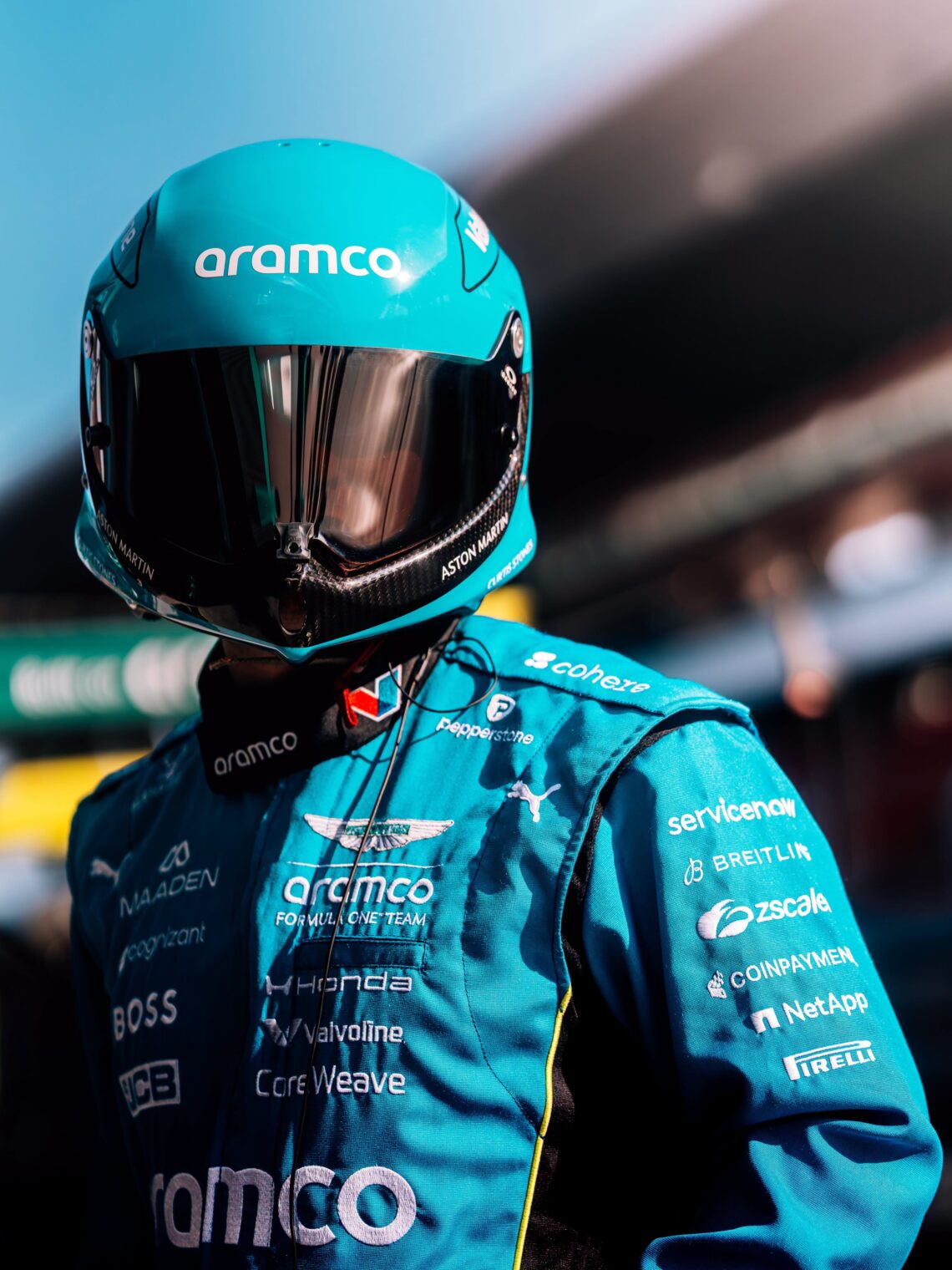
Fernando Alonso brought the AMR26 home in eighth place, scoring four championship points and delivering Aston Martin its best result of the season. Lance Stroll finished 12th. More importantly, the result did not come simply because other cars retired.
Aston Martin raced its way into the points.
And after a season in which the team has spent far too much time looking at the wrong end of the timing screens, that matters.
I thought P12 might be the ceiling
Coming into Sepang, I was one of those people who had effectively written Aston Martin off for the remainder of the season.
The AMR26 had been difficult from the beginning.
The Honda power unit had suffered vibration and reliability problems, the drivers had endured races where simply completing the distance was an achievement, and the performance deficit on power-sensitive circuits had made the car look increasingly isolated at the back.
At one stage, even Aston Martin’s own expectations were cautious.
Yet Sepang offered something different.
The circuit’s mixture of slower corners, technical sections and relatively low-grip conditions suited the AMR26 better than the long, power-dependent layouts that had exposed its weaknesses elsewhere.
Aston Martin had already warned that Sepang could be one of its opportunities.
Then it delivered.
The first sign came on Saturday
Qualifying was not a fluke.
Both Alonso and Stroll reached Q2 for the first time this season.
Alonso qualified 12th and Stroll 14th, with Alonso only 1.524 seconds away from the fastest Q2 time.
The car was still losing significant performance on the straights, but the corners were telling a different story.
Alonso said the car was approximately 1.5 seconds from the front in Q2 — the closest Aston Martin had been all year — while Mike Krack acknowledged that the low-grip conditions had altered the competitive order.
That was the first indication that the AMR26 was not simply a P20 car.
It was a car waiting for the right environment.
Then Sunday arrived
And Sunday gave Aston Martin exactly the kind of race in which adaptability matters.
Rain arrived before the start.
The field had to deal with an interrupted start procedure, mixed conditions and multiple tyre strategies.
Alonso started 12th.
By the end of the race, he was eighth.
That is not merely a statistical improvement.
It is a six-position gain in a race where tyre selection, timing and driver judgement became critical.
Formula 1’s official result confirms Alonso’s P8, 13.372 seconds behind winner Max Verstappen.
And Alonso wasn’t simply hanging on at the back of the points.
He was fighting.
Alonso did what Alonso does
This was a very Fernando Alonso race.
The two-time world champion has made a career out of extracting something from cars that don’t necessarily have the outright performance to compete with the front runners.
Sepang gave him a car that finally responded when he asked something of it.
He managed the changing conditions, survived the opening chaos and then capitalised when the Safety Car compressed the field.
By the closing stages, Alonso was defending his position and keeping faster machinery behind him.
Formula 1’s post-race report describes the race as a well-executed performance from Alonso, who said he was happy for the team.
That is significant.
Because this wasn’t simply Alonso dragging an unwilling Aston Martin across the line.
The car was finally giving him something to work with.
And then there is Honda
This is where the Sepang result becomes much more interesting.
Fernando Alonso has been openly critical of aspects of Aston Martin’s Honda partnership this year.
That criticism has not appeared from nowhere.
Aston Martin’s early-season problems were serious enough for the team to work extensively with Honda to address vibrations and reliability. Honda itself acknowledged that improvements were required in areas including driveability, turbo response and energy management.
But look at what Honda has been doing.
It has been taking the information coming from the track, analysing it with its Sakura operation and turning those findings into incremental changes.
That isn’t glamorous.
It doesn’t necessarily produce a headline-grabbing horsepower number.
But it is engineering.
Before qualifying at Sepang, Honda’s Shintaro Orihara explained that the team had been analysing the data from FP2 with HRC Sakura and using that information to make energy-management and driveability improvements, particularly around the updated turbocharger.
That is precisely the area where the Honda/Aston Martin project needs to improve.
Not simply peak power.
Usability.
The turbocharger tells the story
Honda’s latest development work is particularly revealing.
The ADUO2 development introduced an updated turbocharger intended to improve boost response and driveability.
Honda explained that turbo lag can force the MGU-K to compensate, which consumes electrical energy that could otherwise be deployed elsewhere.
Improve the turbo response and you potentially improve more than just acceleration out of a corner.
You improve energy management.
That is exactly the kind of relationship between the combustion engine, turbocharger, MGU-K and battery that defines the 2026 power-unit regulations.
Honda has described the gains as small rather than transformational.
But small gains accumulated across a lap become usable performance.
And Sepang may have been the first weekend where we could see that philosophy translating into the race result.
Newey’s contribution is not just about a headline car
Then there is Adrian Newey.
It would be easy to say that Newey has arrived and suddenly Aston Martin has a fast car.
That would be too simplistic.
The AMR26 was developed during an enormous transition, with Honda returning as Aston Martin’s works power-unit partner and the regulations fundamentally changing the relationship between electrical and combustion power.
Newey’s real value may ultimately be less about producing one magical aerodynamic solution and more about creating a philosophy where the information coming from the car can be converted into something useful.
That requires the chassis, suspension, aerodynamics, tyres, energy deployment and power unit to work together.
And that is where Aston Martin suddenly looked much healthier at Sepang.
From data to something the driver can actually use
This is the part of Aston Martin’s recovery that interests me most.
Formula 1 teams collect enormous amounts of data.
The difficult part is turning that data into lap time.
A simulator can tell an engineer that a change should work.
A dyno can tell Honda that a power-unit modification behaves differently.
Wind-tunnel numbers can indicate aerodynamic improvement.
But Fernando Alonso doesn’t drive a spreadsheet.
He drives the car.
The ultimate test is whether all of that information becomes something the driver can actually feel and exploit.
Sepang looked like one of the first weekends where Aston Martin’s engineering chain was beginning to connect.
Honda works on driveability and energy management.
Aston Martin integrates the power unit into the chassis.
Newey’s organisation develops the aerodynamic and mechanical platform.
Alonso turns the resulting package into performance.
That is the formula.
Not necessarily for victory yet.
But for actual performance.
And Alonso’s P8 matters
Aston Martin should not get carried away.
Sepang suited the AMR26.
The team still has a significant straight-line deficit, something Alonso and Stroll have openly acknowledged. Alonso himself said before the race that the car lacked performance on the straights but appeared better suited to Sepang.
So this isn’t proof that Aston Martin has suddenly become a front-running team.
It is something more useful:
proof that the baseline isn’t hopeless.
That distinction is enormous.
For months, it was reasonable to wonder whether Aston Martin could even fight its way into the midfield.
At Sepang, it did.
And Alonso did it while navigating one of the strangest races of the season.
I was wrong — and happily so
I said P12 might be the best Aston Martin could realistically achieve.
Today Fernando Alonso finished P8.
Four points went onto the board.
The team demonstrated qualifying pace.
It demonstrated tyre management.
It demonstrated race execution.
Honda demonstrated progress in driveability and energy management.
And Newey’s Aston Martin organisation demonstrated that there is at least something underneath the difficult results we’ve seen for much of 2026.
There is still a long road ahead.
The Honda power unit remains an area that Aston Martin needs to develop. The team still loses too much on the straights, and Sepang’s characteristics cannot be replicated at every circuit.
But that is exactly why today matters.
Aston Martin didn’t prove that it has solved everything.
It proved that there is something worth solving.
And for someone who genuinely thought P12 might be the ceiling, I have absolutely no problem admitting it:
I have never been happier to be wrong.
Because if Honda can continue turning track data into usable driveability, if Newey’s organisation continues unlocking the chassis, and if Alonso keeps extracting everything the AMR26 gives him, Aston Martin may finally be becoming what the project promised it could be.
Not a team hoping for miracles.
A team learning how to manufacture performance.