REV
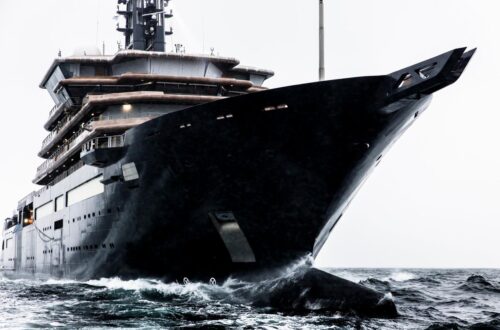
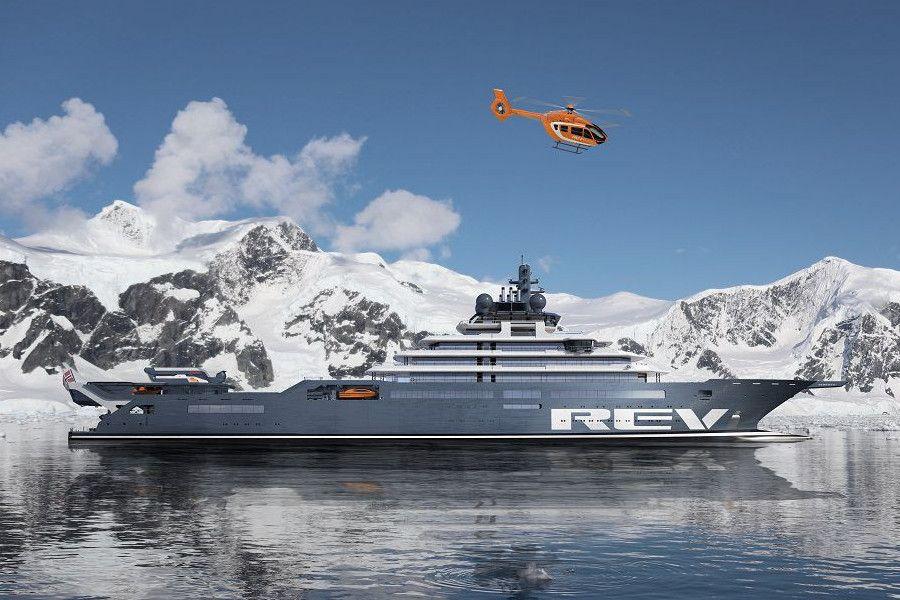
There are yachts built to cross oceans, others designed to explore remote coastlines, and then there is REV Ocean — a vessel conceived around a question that reaches far beyond the world of luxury yachting: how much of our ocean do we still not understand?
At 195 metres, REV Ocean is an extraordinary undertaking. Yet its scale is not simply a statement of wealth or engineering ambition. The vessel has been designed to bring scientists, conservationists and decision-makers into environments where some of the most important questions about the health of our planet remain unanswered.
Behind the project is Norwegian businessman and philanthropist Kjell Inge Røkke, whose relationship with the sea began long before the vessel bearing its name was conceived.
The man behind the mission
Røkke established REV Ocean as a not-for-profit initiative in 2017, following his commitment to the Giving Pledge, through which he promised to give away more than half of his fortune to philanthropic causes.
His connection to the ocean is personal. Before becoming one of Norway’s most prominent businessmen, Røkke worked in the fishing industry. The sea helped shape his early career, and the research vessel represents an attempt to return something to the environment that played such a significant role in his life.
REV Ocean’s stated ambition is to help create what it calls “One Healthy Ocean”. Its work is intended to bridge scientific research, industry, public policy and conservation, with the ultimate goal of turning knowledge into practical solutions.
The organisation’s model is not based on conducting every study independently. Instead, it intends to provide a platform for researchers and institutions whose work requires access to specialist equipment, remote locations and extended periods at sea.
Who is building REV Ocean?
The vessel’s construction began under the Norwegian shipbuilding group VARD, which secured the contract in 2017.
The original design was developed in collaboration with the owner and renowned yacht designer and naval architect Espen Øino. VARD was responsible for the construction, while Øino’s studio worked on the exterior design and naval architecture.
The project has also involved H2 Yacht Design, responsible for the interior, and Damen Shiprepair Vlissingen in the Netherlands, where the vessel is undergoing its final outfitting and completion work.
REV Ocean’s journey has not been without complications. Changes to the vessel’s dimensions and challenges involving stability and weight contributed to delays and a prolonged construction process. The ship was extended from its original length to approximately 195 metres, a substantial modification for a vessel already deep into its build.
The result is a ship that sits between the worlds of the research fleet and the superyacht industry. Its construction reflects the demands of both: the technical requirements of a modern oceanographic platform and the scale, comfort and operational flexibility associated with a major expedition vessel.
The science behind the ship
REV Ocean is not intended to replace established oceanographic institutions or their research vessels. Its purpose is to add capacity, particularly for projects that require advanced equipment and access to regions where scientific data remains limited.
The organisation’s science programme is led by specialists working with universities, conservation organisations, regional authorities and international partners. Its scientific leadership has included marine scientist Dr Eva Ramirez-Llodra, whose work focuses on deep-sea ecosystems and biodiversity.
The research programme is built around several major concerns:
– Climate change and ocean acidification: Understanding how warming, changing chemistry and shifts in ocean conditions affect marine ecosystems.
– Plastic pollution: Investigating the distribution and effects of plastics, including microplastics, throughout the marine environment.
– Unsustainable fishing: Improving knowledge of fish populations, bycatch and the environmental effects of fishing practices.
– Marine protection: Generating evidence that can support the creation and management of marine protected areas.
– Ocean education and capacity building: Giving researchers, including early-career scientists and those from regions with limited access to advanced research vessels, opportunities to participate in fieldwork.
The central principle is that data should not remain aboard the vessel or within a single institution. REV Ocean has committed to making research findings accessible through recognised data platforms, allowing the information collected at sea to support further studies and conservation decisions.
Where will REV Ocean be researching?
The vessel’s first operational science programme is scheduled to begin in 2027, with a ten-mission itinerary extending into late 2028.
The programme is particularly notable for its focus on the South Atlantic, the Caribbean and the Eastern Tropical Pacific — regions containing important underwater ecosystems that remain insufficiently studied.
The planned missions include:
Brazil’s Vitória-Trindade Ridge
An underwater seamount system in the South Atlantic, where researchers intend to map habitats, document biodiversity and establish baseline information that can support future protection and management decisions.
Fernando de Noronha Ridge, Brazil
A programme focused on seamounts, cold-water corals and vulnerable marine ecosystems within Brazilian waters.
The Southern Caribbean
Research into mesophotic and deep-sea environments, alongside efforts to strengthen regional scientific capacity and support marine stewardship.
The Beata Ridge
A deep-sea research mission involving waters between Colombia and the Dominican Republic. The work is intended to support a protected area and a joint monitoring and management framework.
The Sargasso Sea
An important open-ocean ecosystem where research will contribute to international efforts to establish large-scale marine protection beyond national boundaries.
The wider Caribbean
A mission focused on developing the scientific foundation for a proposed multinational marine protected area involving waters connected to Cuba, Haiti and Jamaica.
The Eastern Tropical Pacific
Research across underwater ridges and seamount systems associated with Panama, Colombia, Costa Rica and Ecuador. These missions will examine ecological connectivity between protected areas and help inform regional conservation planning.
The programme also includes research and training around Sargassum, the floating seaweed that has become a significant environmental and economic concern for many Caribbean islands.
For the region, this is particularly relevant. Sargassum is not merely a coastal nuisance; it is part of a complex marine system involving biodiversity, carbon cycling and the accumulation of pollutants. Understanding how it moves, what it carries and how it affects surrounding ecosystems could help improve the scientific basis for future responses.
A floating laboratory with the ability to go deeper
REV Ocean’s research capability is built around an extensive collection of scientific facilities.
The vessel is equipped with nine permanent laboratories, including wet and dry laboratories and spaces for microbiology, molecular biology and filtration. A configurable deck allows mission-specific equipment to be installed depending on the research being undertaken.
Its underwater technology is equally ambitious.
The remotely operated vehicle Aurora is designed to descend to depths of up to 6,000 metres, allowing researchers to observe and sample environments far below the reach of conventional diving operations.
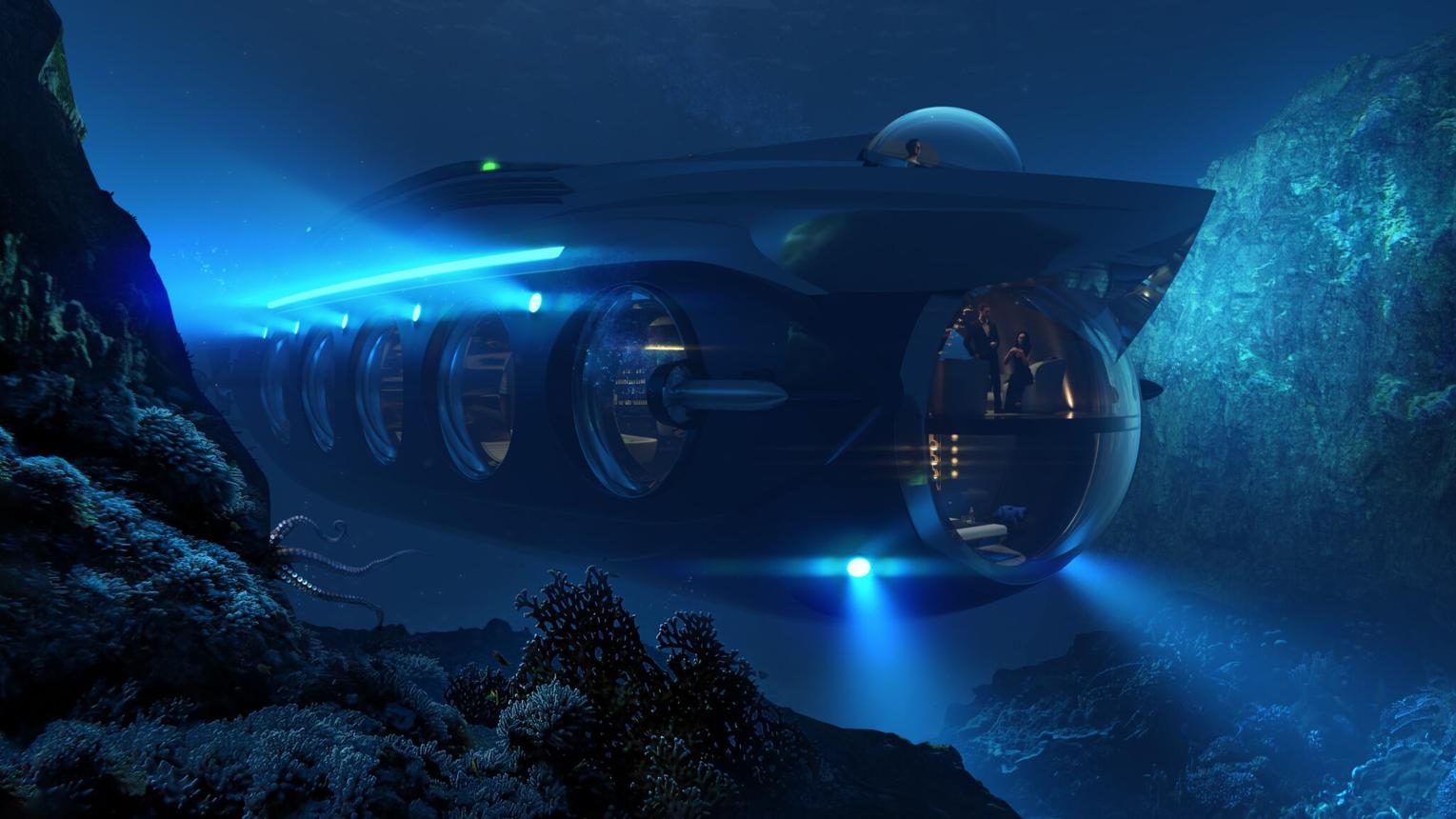
The crewed submersible Aurelia can carry three people to approximately 2,300 metres, with an endurance of up to eight hours.
Together, these systems allow scientists to study the water column, examine seafloor habitats and collect samples from environments that are difficult to access using traditional research methods.
The vessel also incorporates advanced sonar and acoustic systems, oceanographic instruments and specialist sampling equipment. These technologies are intended to provide a more complete picture of marine ecosystems, from the surface to the deep ocean.
Research with a route to policy
Perhaps the most important part of REV Ocean’s ambition is not the equipment itself, but what happens after the data has been collected.
The vessel’s planned missions are designed to bring scientists into direct contact with policymakers, conservation authorities and regional stakeholders. Its laboratories sit alongside spaces intended for meetings, training and scientific collaboration.
This arrangement reflects a broader idea: research can be most useful when the people responsible for protecting an ecosystem are able to engage with the evidence as it is produced.
A seamount mapped for the first time may reveal biodiversity that was previously unknown. A deep-sea survey may identify a habitat that requires protection. A regional study may provide the evidence needed for neighbouring countries to coordinate conservation measures.
In each case, the vessel’s value lies not only in discovery, but in helping those discoveries influence decisions.
The future of expedition yachting
REV Ocean also introduces an unusual financial model to the superyacht world.
The vessel is expected to make a portion of its operational time available for charter, with revenue supporting future research and conservation work. The organisation has presented this as a way to connect private expedition experiences with its broader scientific mission.
It is an ambitious proposition, and one that raises an interesting question for the industry: can the resources traditionally devoted to private luxury be used to support work with a wider public benefit?
REV Ocean does not answer that question on its own. But it offers a striking example of how a vessel can be conceived around a purpose beyond ownership.
At 195 metres, it is undeniably a remarkable piece of engineering. Yet its most important journeys may not be measured in nautical miles, nor in the destinations it visits.
They may be measured in the knowledge it brings back — and in the decisions that knowledge helps the world make.
For REV Ocean, the ocean is not simply a place to explore. It is a system to understand, protect and ultimately restore.