With the road to Naples now taking shape, Luna Rossa and Athena Pathway are entering an important period of development. New technology, changing personnel and a different approach to sailing are beginning to define what the next America’s Cup generation will look like.
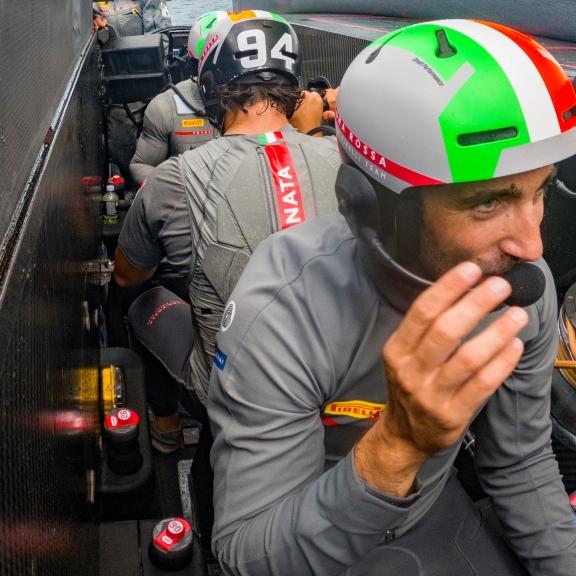
There is something rather interesting happening in the world of competitive sailing. The America’s Cup has always been a contest of money, engineering and exceptional sailors, but the next campaign is beginning to look like a different kind of competition altogether.
For Luna Rossa, the Italian challenger, the immediate priority is refining its AC75 and preparing for the move to Naples. Across the water, Britain’s Athena Pathway is developing its women’s and youth programmes, with the wider ambition of building a sustainable pipeline of talent into professional foiling.
Both organisations are approaching the next campaign from different positions, but they share one thing: the boats are changing, the technology is becoming increasingly sophisticated, and the people behind the sails are just as important as the machines themselves.
And with the 38th America’s Cup scheduled for Naples in 2027, 2026 is proving to be an important year behind the scenes.
### The calendar: two regattas down, Naples ahead
The 2026 preliminary programme has already given the teams two opportunities to test themselves against the opposition. Both were sailed in AC40 foiling yachts rather than the larger AC75s.
2026 – Road to Naples
* 21–24 May – Cagliari, Sardinia
First preliminary regatta. Women’s and youth crews competed alongside the senior teams.
Completed
* 24–27 September – Naples, Italy
Second preliminary regatta. Luna Rossa claimed victory, giving the home team an encouraging result ahead of the 2027 campaign.
Completed
* December – Luna Rossa returns to the water
Max Sirena has indicated that the AC75 should return to sailing in early December following modifications and maintenance.
Upcoming
Sources: America’s Cup and ANSA. Naples, Italy +2
The important distinction is that the 2026 preliminary events are not the America’s Cup itself. They are opportunities to establish racing form, test crew combinations and gather information ahead of the main competition.
The next major dates are already taking shape:
| 2027 event | Dates |
| ————————————- | ————– |
| Youth America’s Cup | 2–6 June |
| Women’s America’s Cup | 5–9 July |
| Louis Vuitton Cup opening fleet races | 22–23 May |
| Challenger round robins | 26 May–11 June |
| Challenger knockout | 12–13 June |
| Semi-finals and final | 16 June–4 July |
| America’s Cup Match | From 10 July |
The America’s Cup Match will be a first-to-seven-wins contest in Naples. ns3155899.ip-51-91-247.eu +2
#The new AC75: less manpower, more intelligence
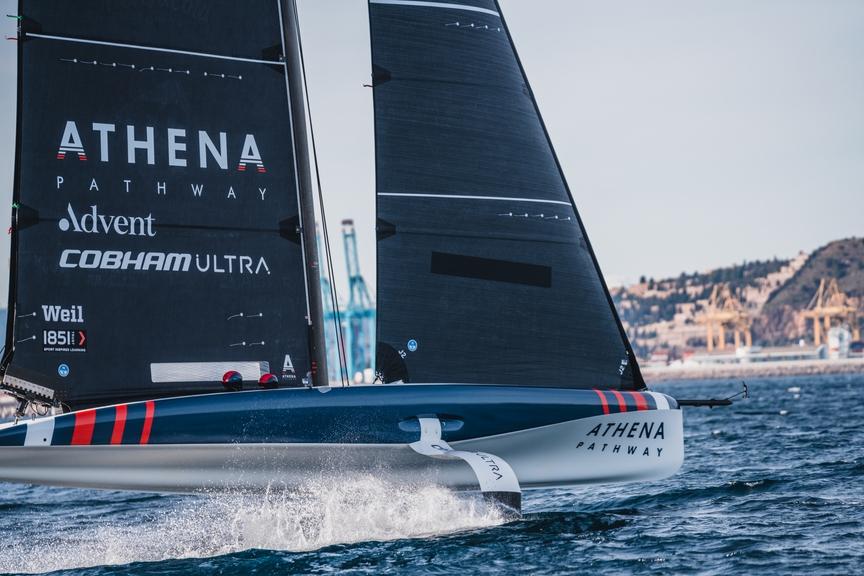
Perhaps the biggest technical change for 2027 is not immediately visible from the outside.
The AC75 remains a 75-foot foiling monohull, but the way the boat is powered and operated has changed.
In Barcelona, teams relied on cyclors, athletes pedalling to generate the hydraulic power required to operate various systems. For Naples, that arrangement has been replaced by limited battery-powered systems.
The new batteries are designed around power output measured from the strongest cyclors in the previous campaign. That means teams will have to manage a finite supply of energy rather than simply relying on the physical output of additional crew members.
The new configuration also introduces five sailors aboard, compared with four in the previous AC75 campaign. At least one must be a woman, while a sixth person, the Guest Racer, can be carried without an operational sailing role.
This creates a different set of decisions for designers and sailing teams. Energy management, sail control, flight control and tactical communication all become increasingly important.
One particularly interesting development is the fifth crew position, often referred to as P5, which has an important role in monitoring systems and managing power usage.
It is a change that could prove just as important as any alteration to the hull itself. Louis Vuitton 38th America’s Cup +2
Sensors: the next competitive advantage
The America’s Cup recently offered a fascinating look at the instrumentation being used to understand these boats.
The teams are no longer simply measuring how quickly a yacht travels. They want to understand exactly what is happening to the boat while it is flying.
Some of the technology includes:
* Fibre-optic strain sensors to measure structural deformation.
* High-precision GPS and inertial measurement units to monitor movement.
* Ride-height sensors to measure the yacht’s position above the water.
* Cameras mounted around foil structures to observe movement and vibration.
* Pressure and temperature sensors monitoring hydraulic systems.
* Load cells measuring forces across the rigging.
Luna Rossa has been observed using GoPro cameras mounted around its foil structures, including a camera positioned near the rudder’s leading edge.
Other teams have experimented with ultrasound microphones capable of detecting carbon-fibre damage.
The idea is to understand how closely the real boat behaves to the simulations created by the design departments. A foil that performs beautifully in a computer model still has to cope with enormous loads, vibration and changing water conditions.
There is also an important regulatory distinction: collecting and analysing data does not mean the boat can independently make sailing decisions. The AC75 remains controlled by its sailors, with strict limitations on the interaction between sensor information and automatic control systems. Louis Vuitton 38th America’s Cup +1
Luna Rossa: new faces, familiar ambitions
Luna Rossa is preparing for its seventh America’s Cup campaign, but the organisation is also looking beyond its senior sailing crew.
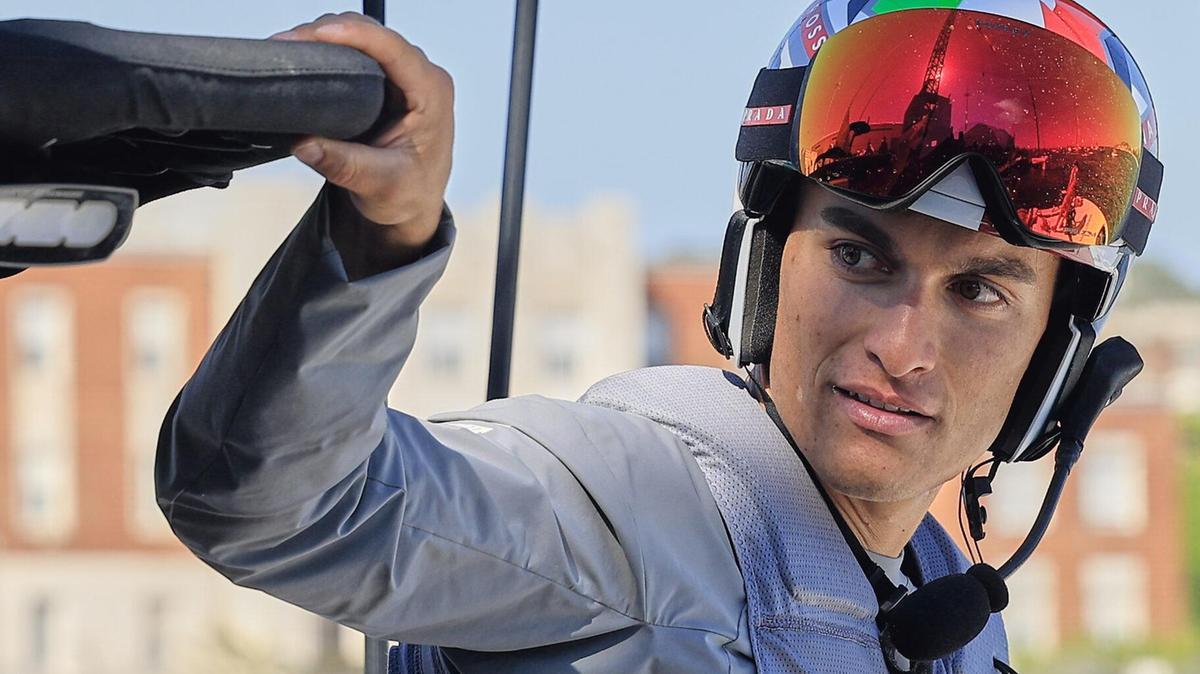
Max Sirena has been quite clear about the importance of investing in the next generation, particularly through the women’s and youth programmes.
One departure, however, has attracted attention.
Francesco Bruni has joined Alinghi.
The experienced Italian sailor had moved into a coaching position within Luna Rossa following the Barcelona campaign. Sirena explained that Bruni had been offered an opportunity by the Swiss team and that Luna Rossa agreed to his departure.
It is a significant change for a team with which Bruni had a long association.
There are also some interesting names entering the wider Luna Rossa development structure:
* Marco Gradoni: A highly regarded young Italian sailor and an important part of the team’s future.
* Federico Figlia di Granara: Another young talent identified by Sirena as part of the next generation.
* Maria Giubilei: A developing talent in the Italian sailing programme.
* Lisa Vucetti: A notable addition to the women’s programme, having joined the team after establishing herself in international 470 sailing.
Sirena has also indicated that more young sailors are expected to enter the organisation in the coming weeks.
It is worth distinguishing these development additions from confirmed appointments to the senior AC75 racing crew. Luna Rossa has not publicly confirmed its complete five-person lineup for 2027. ANSA.it +1
The move to Naples
There is another important development taking place away from the water.
Luna Rossa is continuing its preparations in Cagliari while its new base at Bagnoli, Naples, is being completed.
Sirena said the facility was expected to be finished towards the end of January 2027, with the team anticipating its move between late January and February.
The intention is to complete the final phase of preparation in Naples, close to the racing venue.
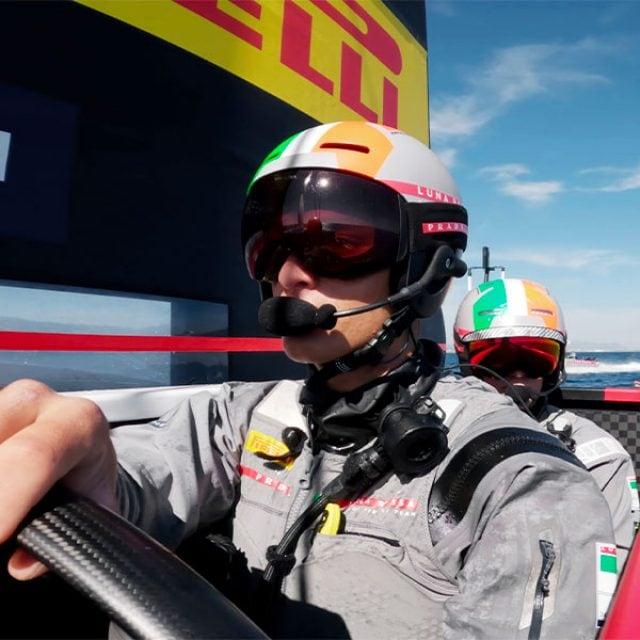
That gives the Italians a relatively short window to establish their new operational base and settle into the final stages of the campaign. ANSA.it +1
Athena Pathway: a new identity, but the same ambition