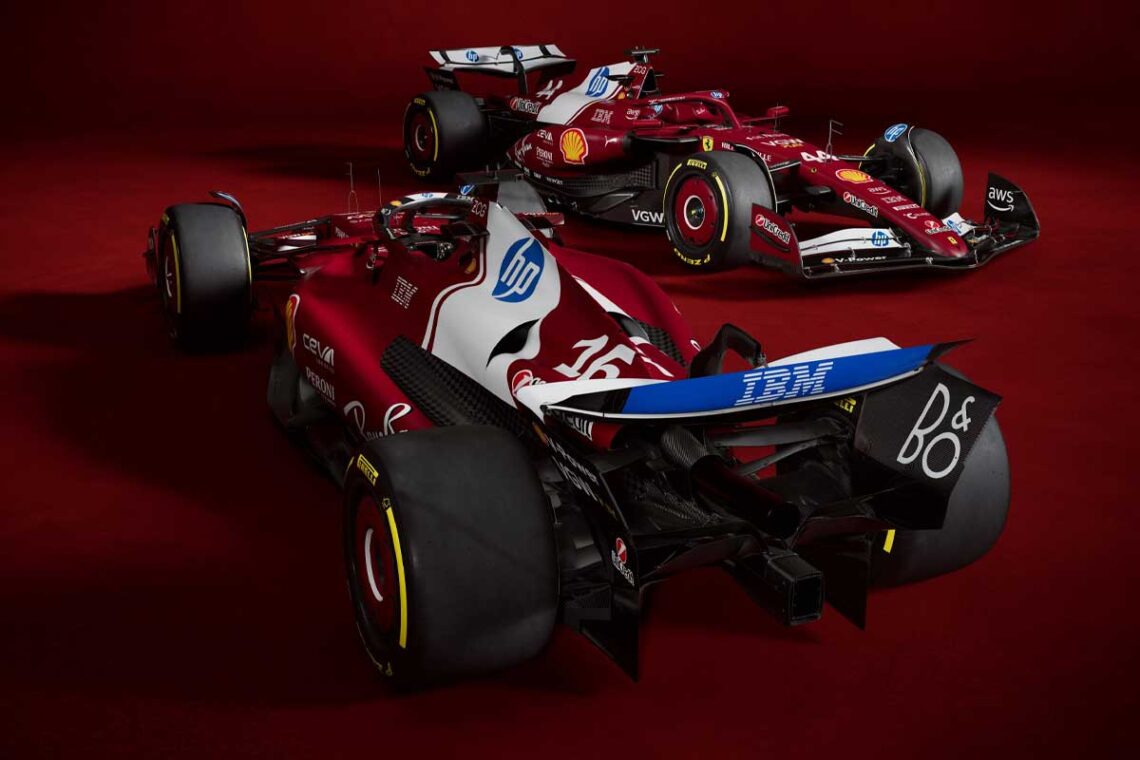
Ferrari’s 2027 Dilemma: Is a Balanced Car More Important Than a Sharper Front End?
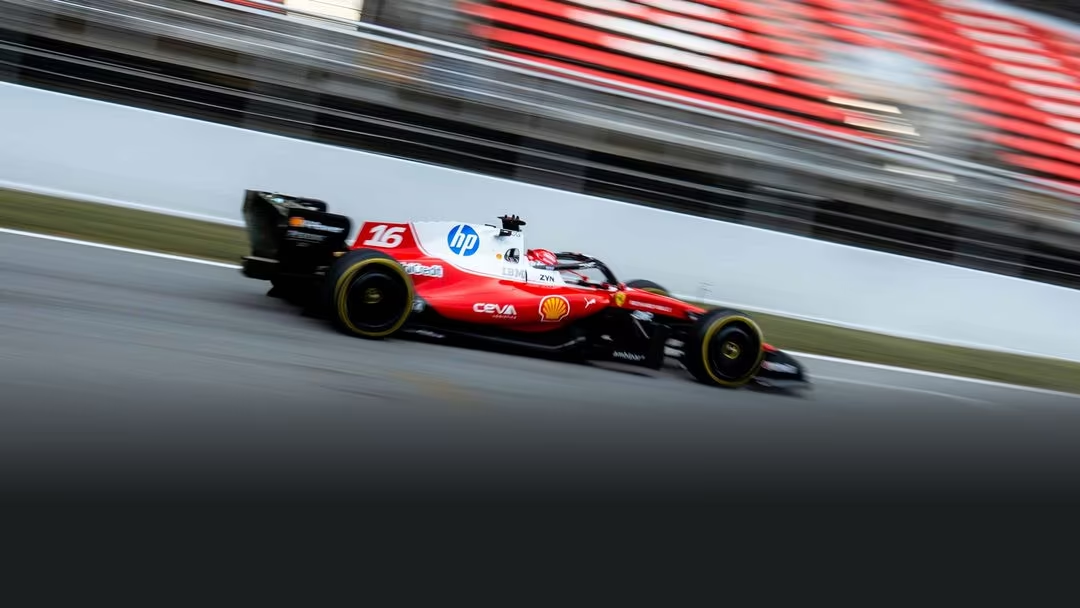
There is a rather interesting question emerging from Maranello as Scuderia Ferrari begins looking beyond the current season. According to La Gazzetta dello Sport, two different philosophies are being discussed for the 2027 car: one with a sharper front end and another with a more balanced approach. It is an interesting distinction, particularly when you consider the drivers involved, but perhaps the more important question is what the championship itself will demand from Ferrari next year.
Because if there is one thing the 2027 calendar tells us, it is that Ferrari cannot afford to build a car around a single characteristic.
Looking at the circuits scheduled for 2027, our indicative assessment places the calendar at approximately 58% cornering and manoeuvrability against 42% straight-line speed. It is not an FIA measurement, but it offers an interesting way of looking at the demands awaiting the teams.
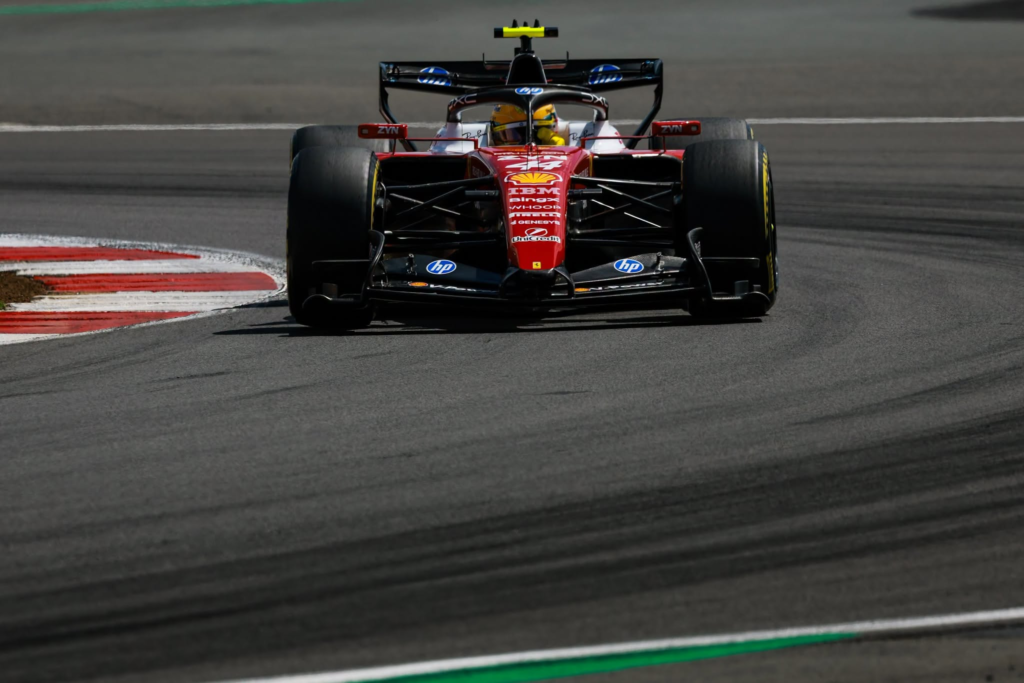
And there are some rather important venues that make the argument for a balanced car particularly compelling.
Take Silverstone, for instance. The sequence through Maggotts, Becketts and Chapel is hardly a place where a car can afford to be nervous. It requires confidence through rapid direction changes, a stable rear end and a front axle capable of responding without unsettling the rest of the car.
Then there is Suzuka. The famous Esses are a test of rhythm and precision, while the Degner corners and the long commitment required through the circuit expose any weakness in the car’s balance. A driver needs to be able to place the car exactly where he wants it, without constantly correcting its behaviour.
And perhaps the most interesting addition is Istanbul Park. Its return to the calendar brings back Turn 8, a long, multi-apex left-hander that demands sustained aerodynamic grip and confidence. It is precisely the sort of corner that can expose a car that is excellent on initial turn-in but struggles to maintain its composure throughout the corner.
Portimão adds another dimension, with its elevation changes, blind approaches and flowing sequence of corners. These are not circuits where straight-line speed alone will save a team.
Of course, 42% of the calendar still represents a substantial straight-line challenge. Monza, Baku and Las Vegas are reminders that efficiency remains essential. Ferrari cannot simply exchange its current weakness for a better cornering package and expect the problem to disappear.
In fact, Las Vegas has already provided a rather uncomfortable reminder of what happens when the SF-26 finds itself short of straight-line performance. Lewis Hamilton described Ferrari’s top-speed deficit as particularly severe after the team’s difficult weekend in Nevada. Both drivers were exposed, and the team struggled to make up the lost ground.
But there was another lesson from Las Vegas, one that goes beyond the speed trap.
If the season has shown us anything, it is that Ferrari needs a machine capable of giving its drivers a little more room for error. Not a car that excuses poor driving, nor one that removes the responsibility from the cockpit, but one that remains predictable when a driver finds himself on the limit.
A car with a sharper front end may offer a wonderful initial response. It can help a driver attack an apex and rotate the car into a corner. But if that responsiveness comes at the expense of rear stability, the advantages can quickly become liabilities.
A balanced car, on the other hand, may offer a more consistent platform. It could allow the driver to make adjustments without constantly fighting the rear axle, preserve confidence through longer corners and offer more predictable behaviour when applying power on the exit.
I am not suggesting that such a car would necessarily be faster than a Project 679 developed around a sharper front-end philosophy. That would be an assumption, and one we cannot yet make. But it does make one wonder whether Ferrari should be looking beyond the immediate preferences of its drivers and considering what the entire championship requires.
There are other complications, too.
Pirelli’s continued development of its compounds adds another layer of uncertainty. Tyres are not simply a question of choosing the softest compound and hoping for the best. Their behaviour under load, temperature management, degradation and the way they respond to different aerodynamic characteristics can all influence a car’s performance.
A car that is predictable and consistent in how it distributes its loads could prove valuable here. A balanced platform would not automatically solve tyre degradation, but it could give Ferrari a more stable foundation from which to manage it.
Then there is the technical side of the regulations.
The 2026 rules have already forced Ferrari into a substantial learning process. The 2027 changes introduce further complications, although it is important to distinguish between confirmed regulatory changes and the development decisions Ferrari itself must make.
One confirmed change is the removal of gearbox homologation for 2027, giving suppliers greater development freedom. That is particularly interesting for Ferrari, which must consider how its transmission, differential behaviour, rear suspension and overall packaging work together.
There are also aerodynamic refinements to consider. The rear wing, floor and diffuser cannot simply be treated as isolated components. They form part of an interconnected system that determines how the car generates and manages downforce.
The exhaust is another area worth watching. The exhaust plume can influence the airflow around the rear of a Formula 1 car, but the traditional blown-diffuser concept should not be confused with the current regulations. Ferrari will have to develop within the aerodynamic restrictions imposed by the FIA rather than assume that an exhaust-generated downforce solution can simply be carried over.
And that is where the challenge becomes particularly interesting.
Ferrari is not just looking at a new rear wing or a revised differential. It is looking at how the entire car works together, from the front axle to the rear suspension, from the floor to the diffuser, and from the power unit to the tyres.
The 2026 regulations have already thrown Scuderia into a difficult development cycle. The 2027 changes mean that simply carrying forward the SF-26’s existing philosophy is unlikely to be enough.
The straight-line deficit remains an issue today, and there is no reason to assume it will disappear simply because the calendar places greater emphasis on cornering. If Ferrari fails to address it, a more responsive front end will not compensate for the time lost on the straights.
Perhaps this is why the idea of a more balanced car deserves serious consideration.
Not necessarily because it would be the fastest solution on paper, and certainly not because it would favour one driver over the other. Rather, because Ferrari needs a platform that can deliver across an increasingly varied championship, manage its tyres, remain predictable under pressure and still possess enough efficiency to compete at circuits such as Monza and Las Vegas.
There is a difference between building a car that can be exceptionally fast in one particular set of circumstances and building one that can remain competitive almost anywhere.
Ferrari has spent much of this season trying to understand the SF-26. It would be a shame to enter 2027 having learned how to make one part of the car work beautifully, only to discover that the rest of it is still asking for attention.
Perhaps the sharper front end is the answer. Perhaps Project 679 will prove that a more aggressive approach is exactly what Ferrari needs.
But with Silverstone, Suzuka and Istanbul waiting, and the demands of Pirelli’s tyres still to be understood, I find myself leaning towards something rather less dramatic.
A balanced car.
Because at this stage, Ferrari does not need another machine that looks wonderful in one corner and becomes a compromise in the next. It needs one that can take a driver through the entire lap, and then do it again, consistently, for the next 300 kilometres.