
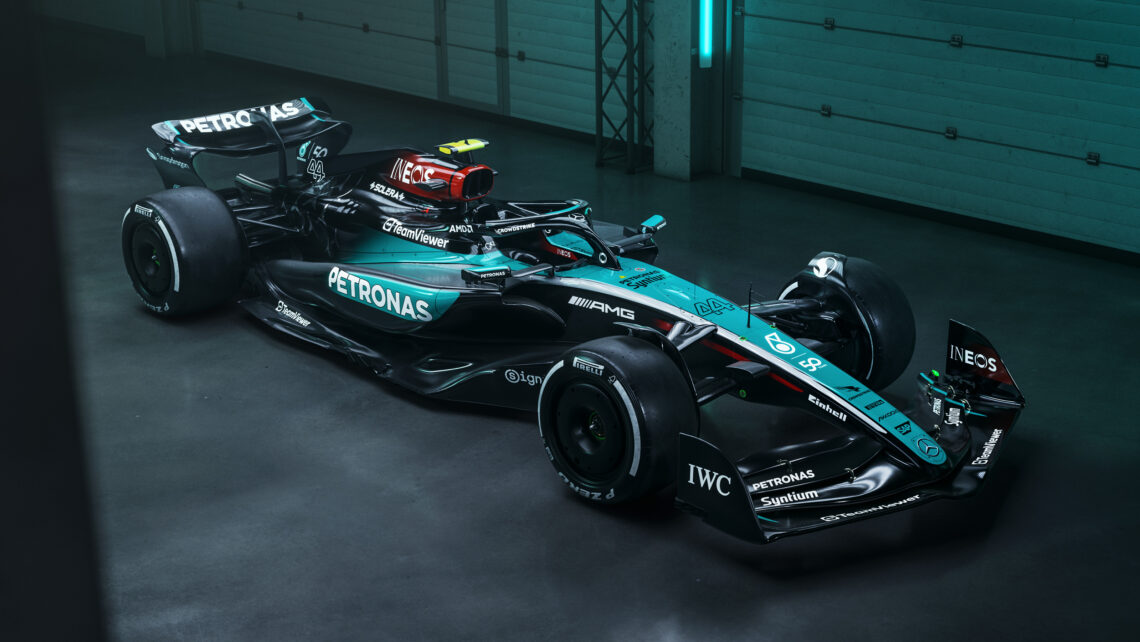
Mercedes-AMG Petronas is heading into the Singapore Grand Prix with a car that looks substantially different beneath the bodywork, but the real story is not simply what has changed. It is whether the team can understand why an upgrade expected to deliver a meaningful performance gain instead coincided with one of its most difficult qualifying sessions of the season.
After months of incremental development, Mercedes finally introduced a major aerodynamic package at Sepang for the Bahrain Grand Prix in Malaysia. The update represented a significant departure from the previous W17 specification, with extensive revisions to the floor, sidepods, rear bodywork and suspension-related aerodynamic elements.
The team had hoped to gain approximately three-tenths of a second per lap. Instead, George Russell and Andrea Kimi Antonelli struggled to extract the expected performance, leaving team principal Toto Wolff searching for answers.
Now Singapore offers Mercedes an immediate opportunity to investigate the package further. The team has confirmed that it will evaluate both its latest and previous aerodynamic specifications over the weekend, providing a much-needed comparison after the difficulties in Malaysia.
According to “Crash.net’s report on Mercedes’ Singapore development plan” (https://www.crash.net/f1/news/1106582/1/mercedes-reveals-singapore-split-car-plan-amid-f1-upgrade-confusion), the objective is to establish whether the new package represents the expected step forward and determine which direction the team should take for the remainder of the season.
What has actually changed on the W17?
Calling the latest Mercedes a completely new car would be misleading. The W17 retains its underlying chassis identity, but the aerodynamic changes are extensive enough to represent a substantial redesign of several key areas.
1. A heavily revised floor
The floor is at the heart of the package.
Mercedes has revised the leading edge, floor geometry, diffuser and aerodynamic elements around the rear wheels. These components influence how air travels beneath and around the car, affecting the generation of downforce and the quality of airflow reaching the rear.
The objective is to produce more aerodynamic load while controlling how efficiently that load is generated.
This is especially important under the 2026 regulations, which have fundamentally changed the aerodynamic philosophy of Formula 1 cars. With teams working under new restrictions and different airflow requirements, small changes to floor geometry can have significant consequences for the balance and behaviour of the entire car.
The new Mercedes floor was developed over several months, with the team expecting a meaningful improvement rather than a minor incremental gain.
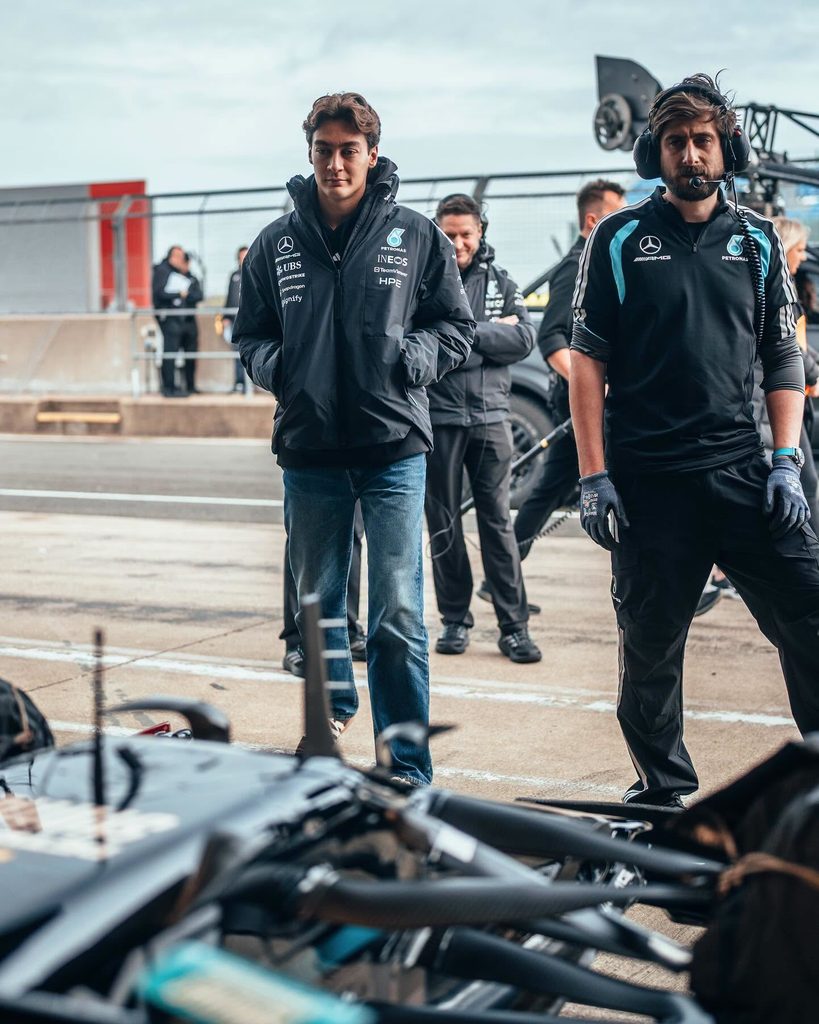
2. A different sidepod profile
One of the most visible changes is the revised sidepod design.
The new profile features more pronounced downward contours directing airflow towards the floor and rear of the car. The changes are intended to improve the management of airflow around the bodywork and support the aerodynamic performance of the rear section.
The redesign also reportedly required changes to the internal cooling architecture. That makes this more than a cosmetic adjustment: changes to the external bodywork and internal packaging must work together to preserve cooling performance while supporting the aerodynamic objective.
Mercedes has also revised the engine-cover bodywork, including elements intended to manage airflow and cooling under demanding conditions.
3. Revised rear bodywork and suspension aerodynamics
The rear section has also received attention, with changes to bodywork and aerodynamic elements around the suspension.
These revisions are intended to improve the way airflow reaches the rear of the floor and diffuser, helping the car generate useful aerodynamic load without compromising efficiency elsewhere.
The challenge is that the floor, sidepods and rear bodywork do not work independently. A change that improves one part of the airflow system can create an unexpected effect somewhere else.
That interconnected nature of modern Formula 1 aerodynamics is precisely why Mercedes needs more data before declaring the upgrade a success or failure.
Autosport’s “technical analysis of the W17 upgrade” (https://www.autosport.com/f1/news/why-mercedes-upgrade-is-still-a-big-question-mark/10861516/) details the revised floor, diffuser, rear-wheel aerodynamic elements and sidepod profile.
Why did the upgrade struggle in Malaysia?
The disappointing debut raised an uncomfortable question: had Mercedes taken the wrong development direction?
The team had expected a gain of around three-tenths of a second per lap, but qualifying told a very different story. Antonelli qualified fourth-fastest, while Russell was eighth-fastest before subsequent grid adjustments.
Wolff admitted that Mercedes had encountered car behaviour it had not experienced earlier in the season. The W17 appeared to be losing more time on the straights while also struggling with understeer through slower corners.
That combination was particularly concerning. If the car was generating less effective performance in the corners while also losing straight-line speed, the expected benefits of the new package were not translating into lap time.
However, the circumstances at Sepang complicated the investigation.
The circuit’s unusually abrasive surface, high temperatures and demanding tyre conditions created a different operating environment from the tracks Mercedes had visited earlier in the year. Russell also noted that the available data still suggested the upgrade should be an improvement.
Because Mercedes introduced the new specification to both cars, the team could not conduct a direct old-versus-new comparison under identical conditions during that weekend.
That left engineers trying to distinguish between three possibilities: the upgrade itself, the car’s setup, and the way Sepang’s particular conditions exposed weaknesses that had not previously appeared.
The distinction is critical. A disappointing weekend does not automatically mean that an aerodynamic concept is fundamentally flawed.
Singapore: old versus new
Mercedes’ approach for Singapore is therefore less about unveiling another complete redesign and more about understanding the one it already has.
The team has confirmed that it will evaluate both the latest update package and the previous specification during the weekend. This comparison should provide additional evidence about how the revised car behaves under different circuit conditions.
Singapore presents a very different challenge from Sepang. Marina Bay is a tight street circuit where traction, braking stability, low-speed balance and driver confidence are particularly important.
If the new floor and bodywork improve aerodynamic performance without introducing unwanted handling characteristics, Mercedes will have a stronger basis for continuing with the revised specification.
If the problems persist, the comparison could help engineers isolate the source of the performance deficit and decide whether setup changes or further development are required.
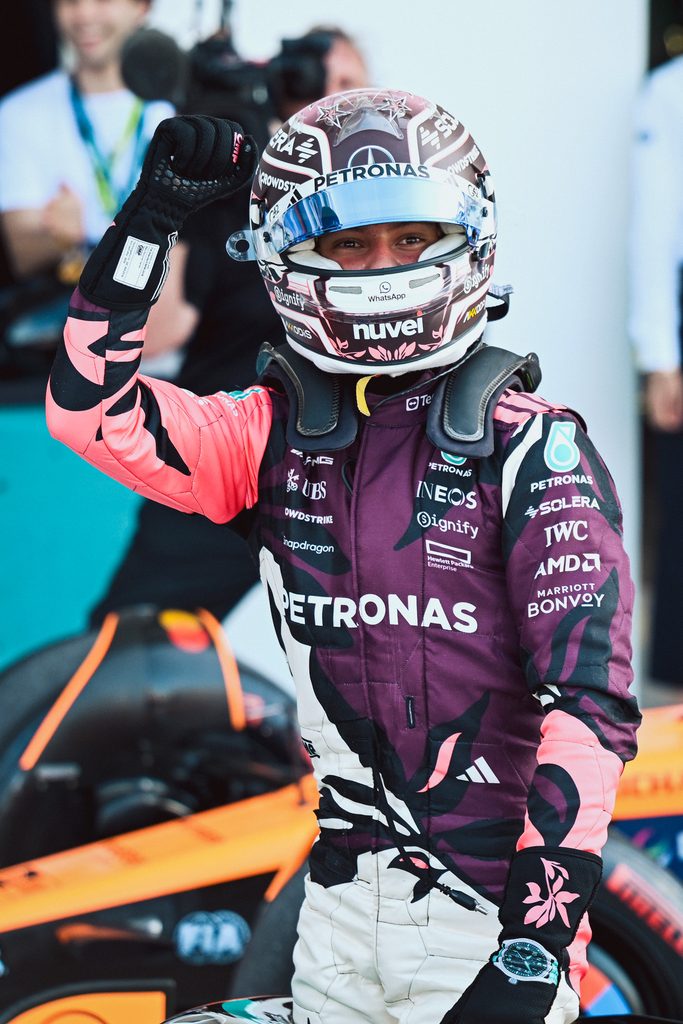
It is important to note that the team has not announced a completely new chassis for Singapore. The confirmed plan is to assess the existing revised package against the previous aerodynamic specification.
There is another complication: George Russell’s engine penalty
The technical investigation comes alongside a separate setback for Russell.
Following his late power-unit failure while running third in Malaysia, Mercedes has confirmed that he will require a new power unit in Singapore, exceeding his permitted component allocation and resulting in a back-of-the-grid start for Sunday’s Grand Prix.
The failure also accelerated the timing of a planned power-unit upgrade under the FIA’s Additional Development and Upgrade Opportunities programme.
That is a separate development from the aerodynamic revisions. The floor and bodywork changes concern the car’s aerodynamic performance, while the ADUO programme allows eligible power-unit manufacturers to introduce additional homologated engine upgrades under the 2026 regulations.
For Mercedes, Singapore is consequently about more than recovering lost pace. It must understand the new aerodynamic package, manage a power-unit change and give Russell the best possible opportunity to recover positions at a circuit where overtaking can be difficult.
The latest situation is outlined in “Formula 1’s report confirming Russell’s Singapore penalty” (https://www.formula1.com/en/latest/article/mercedes-confirm-russell-is-set-for-grid-penalty-at-singapore-grand-prix.4Wp0nfUrqdG5TvhD76T8mw).
What this means for Mercedes’ championship campaign
Despite the difficult weekend in Malaysia, it would be premature to dismiss Mercedes’ development programme.
The team has built a strong position in the championship, and the latest upgrade was intended to maintain its advantage as rivals continue to develop their cars. The fact that the package has not immediately delivered its expected performance does not erase the work behind it.
However, the situation is a reminder of how difficult the first year of a new technical regulation cycle can be. A car can perform consistently well for months, only for a substantial revision to introduce questions that engineers must resolve through data, simulation and track testing.
For Antonelli, who remains central to Mercedes’ championship ambitions, the priority is to restore confidence in the car and convert its underlying potential into results. For Russell, the challenge is more immediate: recover from the engine failure and grid penalty while helping the team understand the revised specification.
And for Wolff, the immediate objective is clarity.
A new look, but not yet a proven step forward
Mercedes has made substantial changes to the W17, particularly beneath the car and around its sidepods and rear bodywork. The revised floor, diffuser and airflow management system represent a significant aerodynamic development, while the sidepod redesign reportedly required corresponding changes to internal cooling architecture.
But the most important part of the Singapore weekend may be what the team learns rather than what it introduces.
Mercedes expected its upgrade to deliver approximately three-tenths of a second per lap. The difficult debut in Malaysia has left that gain unproven in actual results, despite encouraging indications in the development data.
The Singapore comparison between the old and new specifications should provide a clearer picture of whether the package is fundamentally sound and how best to extract its potential.
For now, the W17 is a substantially revised machine, not an entirely new car. Whether those changes ultimately make it a faster one remains the question Mercedes must answer on the streets of Marina Bay.




