
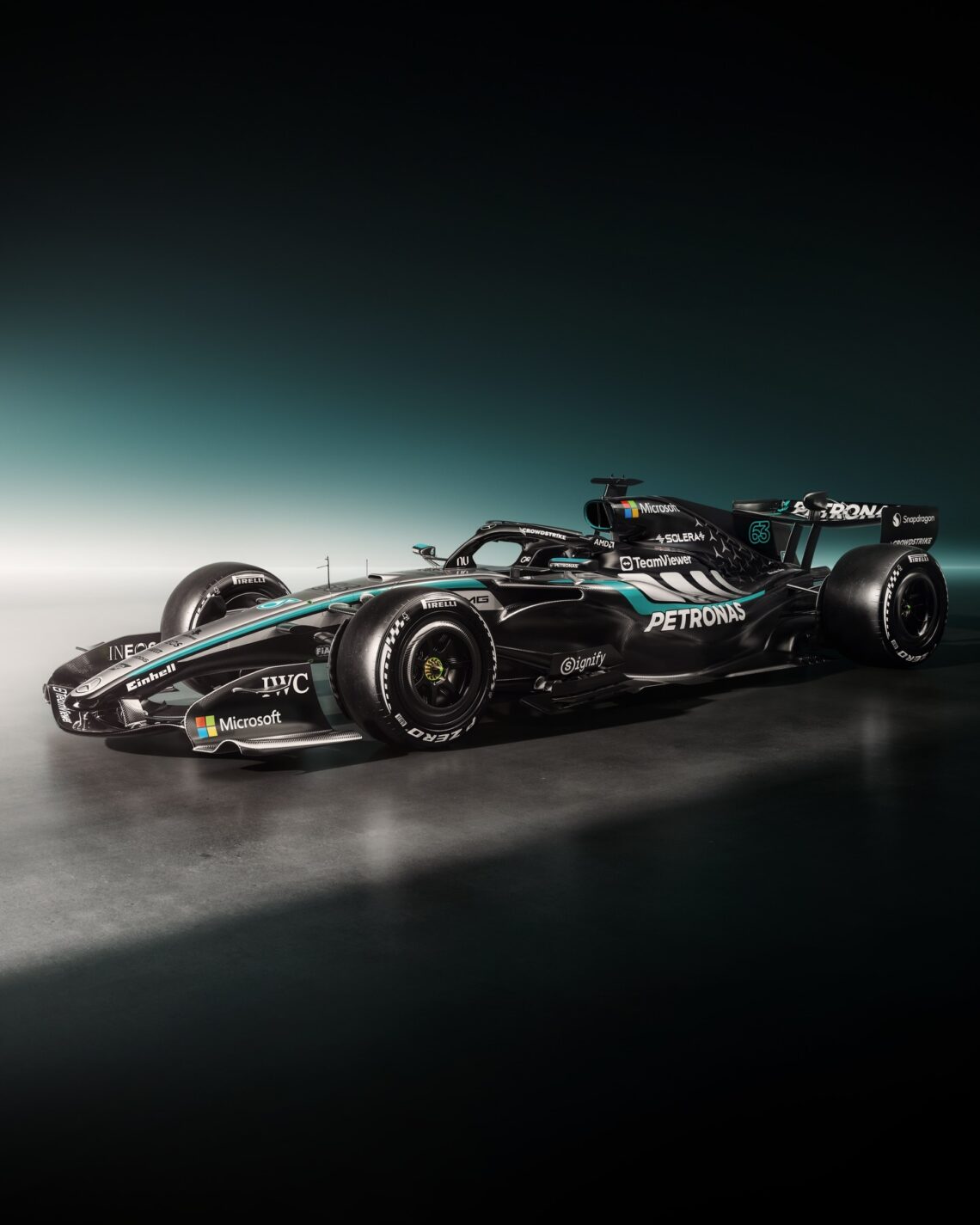
Formula 1 rarely gives a driver the perfect opportunity at the perfect moment. Sometimes, it gives you an upgrade and takes away your starting position. For George Russell, the Singapore Grand Prix could become precisely that kind of weekend.
Following his late power-unit failure in Malaysia, Mercedes has been forced to bring forward the engine change it had originally planned for a later round. The change is particularly significant because it is linked to the team’s Additional Development and Upgrade Opportunities (ADUO) programme, which allows eligible manufacturers to introduce additional homologated power-unit upgrades during the season.
The upgrade was expected to arrive later, potentially at Austin or Mexico City. Instead, Russell now faces the prospect of starting from the back of the grid at one of Formula 1’s most difficult circuits for overtaking.
On paper, it is an unfortunate combination. Yet there is another question worth asking: if Mercedes has finally introduced the power-unit development it has been waiting for, could Russell still emerge from Singapore with a stronger competitive position against his rivals, including Lewis Hamilton?
The answer depends on how much performance the revised power unit delivers, how quickly Russell can recover through the field, and whether Mercedes can turn an early setback into an opportunity.
The ADUO advantage: Mercedes gets its opportunity
The 2026 power-unit regulations introduced a mechanism designed to prevent manufacturers that fall behind in internal-combustion-engine performance from remaining at a disadvantage throughout the regulation cycle.
Under the FIA’s ADUO system, manufacturers whose internal combustion engines fall sufficiently behind the leading benchmark can receive additional homologation opportunities, alongside increased cost-cap and dynamometer-testing allowances.
Mercedes qualified for one additional homologation in 2026 and another in 2027 after the first review period. The FIA’s second review period did not grant further homologations to any manufacturer.
The allowance is important because it gives Mercedes an opportunity to develop its power unit beyond the original homologation specification.
However, there is a distinction between being granted permission to upgrade and knowing exactly how much performance an upgrade will deliver. The FIA has not published the manufacturers’ confidential power-unit performance measurements, and Mercedes has not publicly established a precise horsepower gain for Russell’s new specification.
What is confirmed is that the engine change has been brought forward following the Malaysia failure. Mercedes had previously planned to introduce its ADUO upgrade later in the season, making this a change of timing as well as a response to reliability problems.
The “FIA’s official ADUO announcement” (https://www.fia.com/news/fia-announces-aduo-results-following-first-and-second-review-periods-2026) explains the allowances, while “Autosport’s September report” (https://www.autosport.com/f1/news/george-russell-reveals-when-hell-take-his-own-f1-engine-penalty/10854419/) outlines Russell’s original plan to take his engine penalty when Mercedes introduced the upgrade.
For Mercedes, the immediate priority is to ensure that the new specification delivers the expected performance without introducing another reliability concern.
For Russell, the timing could hardly be more complicated.
Why Singapore is the wrong place to start from the back
Singapore is a circuit where qualifying and track position can determine much of a driver’s race.
Marina Bay’s narrow streets, close barriers and numerous slow corners make it difficult to carry sufficient speed alongside another car. A driver can be substantially faster than the car ahead and still struggle to complete a pass without a mistake, a tyre advantage or assistance from a strategic opportunity.
That is why Russell’s power-unit penalty is so significant.
Mercedes had originally intended to introduce the upgrade at a venue such as Austin, where the layout offers more opportunities to pass. Singapore provides a much less forgiving environment for a recovery drive.
According to “Reuters’ Singapore Grand Prix preview” (https://www.reuters.com/sports/formula1/russells-title-hopes-line-f1-heads-singapore-2026-10-07/), Russell’s engine failure in Malaysia has left him facing a back-of-the-grid start, while his teammate Kimi Antonelli has extended his championship advantage to 84 points.
Russell’s task is therefore not simply to demonstrate that Mercedes has a faster engine. He must make that performance count in a race where every position could require considerable effort to gain.
Overtaking is difficult, not impossible
The temptation is to assume that Singapore makes a recovery drive futile. That would be a mistake.
The 2026 regulations introduce Overtake Mode, which gives an eligible driver an additional electrical-power profile after meeting the required proximity condition at the detection point. Singapore also has five designated Straight Mode zones, allowing cars to reduce drag on specified sections of the circuit.
These systems do not guarantee a pass, but they give drivers additional tools to create a speed advantage.
Russell could benefit if Mercedes’ upgraded power unit delivers stronger acceleration or allows the car to use its electrical energy more effectively. If the W17 has a genuine pace advantage over the cars around it, he may be able to make progress even on a circuit where overtaking is notoriously difficult.
The important point is that additional power is only one part of the equation. Russell must also position the car correctly, preserve his tyres, choose his opportunities and avoid wasting time fighting cars that can defend effectively.
Mercedes will need to provide the right strategy, too. An early pit stop, an undercut or a well-timed safety car could help Russell gain positions without having to pass every rival directly on track.
Singapore is not a circuit where a driver can simply rely on a faster car to solve every problem. It rewards patience and precision as much as outright pace.
Could Russell widen the gap to Lewis Hamilton?
This is where the wider championship picture becomes interesting.
Hamilton’s move to Ferrari has placed him in direct competition with Mercedes’ former leading driver, creating an intriguing comparison between the two teams’ development programmes.
If Russell’s upgraded power unit delivers a meaningful performance improvement, Mercedes could gain an advantage in acceleration, energy deployment or overall race pace. Combined with a strong aerodynamic package, that could help Russell outperform Hamilton over the remaining rounds.
But Singapore presents an unusual test of that possibility.
Russell must recover from the back of the grid, while Hamilton’s race will depend on Ferrari’s own pace, qualifying performance and strategy. The upgraded Mercedes power unit might improve Russell’s ability to pass, but the starting penalty could prevent him from converting that advantage into a strong finishing position.
It is also important to distinguish between widening a gap in a single race and increasing the championship points difference. Russell could finish ahead of Hamilton without significantly changing the overall standings, depending on their starting positions and the points available. Conversely, a strong result from Hamilton combined with a poor recovery drive from Russell could narrow their separation.
There is no evidence that Mercedes deliberately planned the upgrade timing to widen the gap to Hamilton. The timing has been dictated by the power-unit failure and the decision to bring forward the planned specification change.
Nevertheless, the competitive consequences could still be significant.
Mercedes must prove the upgrade works
There is another reason not to declare the new power unit a game-changer before the cars reach the track: reliability.
Russell’s retirement in Malaysia was a costly reminder that performance means little if the machinery cannot finish the race. Mercedes needs to establish that the new specification can deliver its intended benefits while remaining dependable.
The team must also consider the relationship between power delivery and energy management under the 2026 regulations. The fastest power unit on a dyno does not automatically produce the fastest lap if the driver cannot deploy the available energy effectively or if the car struggles in slower corners.
Singapore will therefore test more than Russell’s ability to overtake. It will test whether Mercedes can integrate the new specification into the W17 and extract its potential under difficult conditions.
A strong recovery would demonstrate that the upgrade can deliver a competitive advantage even when the circumstances are unfavourable. A difficult weekend would not necessarily mean the upgrade had failed, but it would leave Mercedes with more questions to answer before Austin.
A setback that could become an opportunity
George Russell arrives in Singapore with a difficult task ahead of him. The power-unit failure in Malaysia has forced Mercedes to introduce its planned upgrade earlier than intended, while the resulting penalty places Russell at a disadvantage on a circuit where passing is notoriously difficult.
Yet the weekend could still offer valuable information.
If the upgraded specification provides a measurable improvement in acceleration, energy deployment or overall performance, Russell may be able to recover more positions than expected. If Mercedes also executes its strategy effectively, the team could limit the damage to his championship campaign.
The comparison with Lewis Hamilton adds another layer to the story. Ferrari will be watching Mercedes’ progress closely, just as Mercedes will be looking for evidence that its development programme can maintain its competitive advantage.
But the real question is not whether Russell can pass cars in Singapore. He can.
It is whether the new power unit will give him enough of an advantage to make those passes count, and whether he can finish ahead of the rivals who matter most.
Singapore may not be the ideal place to introduce an engine upgrade, but Formula 1 rarely offers ideal circumstances. For Russell, the challenge is to turn an unwanted penalty into an opportunity to demonstrate what the revised Mercedes power unit can do.
If he succeeds, the weekend could become more than a recovery drive. It could be an early indication of how much Mercedes has gained from its ADUO development programme — and whether Hamilton and Ferrari will have to work harder to keep Russell behind them for the remainder of the season.




