

Ferrari’s Austin Upgrade: Chasing Downforce as Formula 1’s 2026 Rules Continue to Evolve
The Circuit of The Americas could become another important turning point in Scuderia Ferrari’s 2026 campaign. With the United States Grand Prix scheduled for October 23–25, the Maranello-based team is reportedly preparing a significant aerodynamic development for the SF-26, centred on an evolved floor and further refinements to the car’s aerodynamic package.
The timing is significant. Ferrari has continued developing its challenger despite a difficult run of results, with team principal Fred Vasseur making it clear that the team intends to push its development programme through the end of the season. According to “FormulaPassion’s report on Ferrari’s Austin plans” (https://www.formulapassion.it/f1/f1-news/ferrari-fine-ottobre-austin-fondo-evoluto-sviluppi-aerodinamici-sf26-texas), the team has targeted Austin for a substantial floor evolution following months of aerodynamic work.
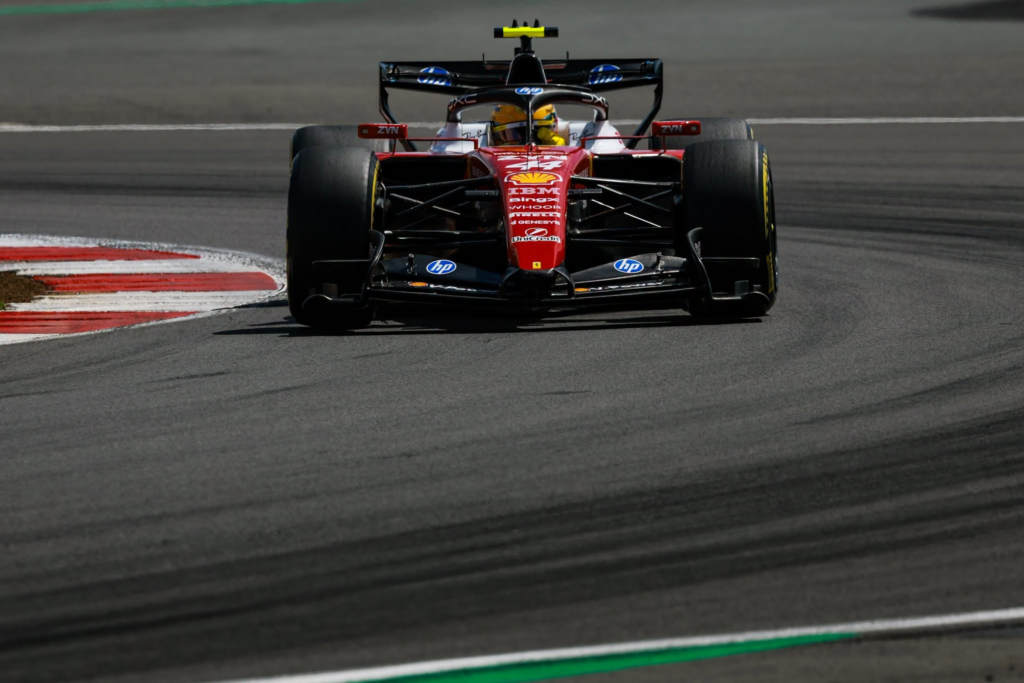
Yet Ferrari’s development story cannot be separated from the wider technical challenge facing Formula 1. The 2026 regulations were introduced with the intention of producing smaller, lighter and more efficient cars, with a significant reduction in aerodynamic downforce. Since the regulations were first presented, however, the FIA has refined its approach, and teams have continued to find performance within the permitted design framework.
For Ferrari, the challenge is now twofold: extract more performance from the SF-26 while understanding how much further development can improve a car designed around a fundamentally different aerodynamic philosophy.
From a 30% reduction to the reality of the 2026 cars
When the FIA presented the 2026 technical regulations in June 2024, it outlined an ambitious transformation of Formula 1’s aerodynamic philosophy.
The original concept targeted a 30% reduction in downforce and a 55% reduction in drag compared with the previous generation of cars. The objective was to reduce aerodynamic dependence, improve efficiency and create a more agile racing car.
The new rules also introduced active aerodynamics, allowing the front and rear wings to change configuration between cornering and straight-line running. These changes were intended to help cars manage the demands of the new power units, which combine combustion power with a substantially greater electrical contribution.
However, the initial simulations presented a more dramatic picture. During the FIA’s technical-regulations discussions, officials acknowledged that early estimates suggested the cars could generate approximately 35–40% less downforce. The governing body also recognised that the figures could change as teams developed a more mature understanding of the regulations.
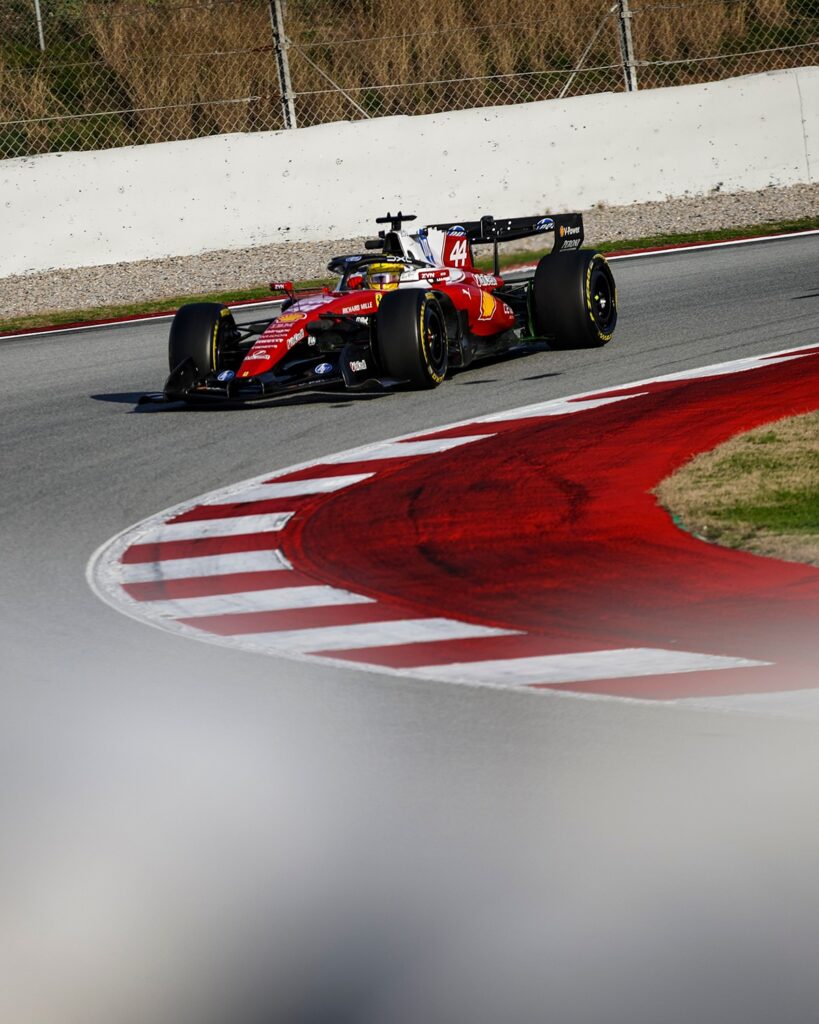
The distinction matters. The 30% figure was the headline target presented with the regulations, while the higher estimate reflected an early stage of technical development. They were not two separate downforce cuts imposed on the same cars.
The FIA subsequently worked with teams to refine the regulations, including adjustments intended to allow greater aerodynamic performance than the earliest concepts permitted.
The result was not the abandonment of the original philosophy, but an evolution of it: the cars would retain the fundamental characteristics of the new rules while giving engineers room to recover some performance through permitted aerodynamic solutions.
The FIA’s original announcement can be read in its “official explanation of the 2026 regulations” (https://www.fia.com/news/new-era-competition-fia-showcases-future-focused-formula-1-regulations-2026-and-beyond).
The 16% question: was another downforce cut coming?
There has been confusion surrounding reports and discussions about the scale of the downforce reduction, including a figure of approximately 16%.
That number should be treated cautiously. The available official material confirms the original 30% target and the early simulations suggesting a 35–40% reduction, but it does not establish a separate, approved 16% downforce cut scheduled to take effect at Austin.
It is important to distinguish the aerodynamic restrictions built into the 2026 regulations from a subsequent decision to reduce the performance permitted under those regulations. The former shaped the cars from the outset; the latter would require specific evidence of an additional regulatory change.
The FIA did introduce refinements during the season. On April 20, 2026, it announced changes following discussions informed by data from the opening three events. Those adjustments, implemented from Miami, focused primarily on energy management, qualifying performance and safety. They included reducing the maximum permitted energy recharge from 8MJ to 7MJ and increasing peak superclip power from 250kW to 350kW.
Those were meaningful changes to how the cars deploy and recover energy, but they were not an announced 16% reduction in aerodynamic downforce.
The FIA’s “official April 2026 announcement” (https://www.fia.com/news/refinements-2026-fia-formula-1-regulations-agreed-all-stakeholders) provides the details.
As of October 7, there is no verified announcement establishing a new blanket downforce reduction specifically for the Austin weekend. Ferrari’s development plans should therefore be assessed against the regulations currently in force, rather than an unconfirmed additional restriction.
Ferrari’s answer: an evolved floor
While the regulatory debate provides the wider context, Ferrari’s immediate concern is performance.
According to reporting by FormulaPassion, the team has earmarked Austin for a significant evolution of the SF-26’s floor, alongside further aerodynamic developments. The work follows an extended development period and forms part of Vasseur’s stated intention to continue improving the car throughout the season.
The floor is particularly important because it helps determine how air moves beneath the car and towards the rear diffuser. Its interaction with the surrounding bodywork influences the aerodynamic load the car can generate and how consistently that load is maintained under changing conditions.
Ferrari has already demonstrated its willingness to revise this area. At the Dutch Grand Prix in August, the team introduced changes to the floor body, floor board and floor edge, accompanied by adjustments to the diffuser and beam wing.
As reported by “RACER’s technical update from Zandvoort” (https://racer.com/2026/08/21/technical-updates-2026-dutch-grand-prix), the stated objective was to increase aerodynamic load across the operating range while improving the robustness of the underlying airflow and directing more energy towards the rear diffuser.
The reported Austin development builds on that direction. However, the exact specification of the new package, the complete list of components and the measured performance gain have not been publicly established in the reporting cited here.
That distinction will become important when Ferrari reaches the circuit. A new floor may produce promising results in simulation, but the real test is whether those gains can be reproduced consistently on track.
What Austin demands from the SF-26
The Circuit of The Americas is a useful venue for evaluating aerodynamic development because it combines several different challenges.
The opening sequence places considerable emphasis on direction changes and balance. The slower technical sections demand traction and stability, while the long back straight rewards an efficient aerodynamic configuration.
Ferrari therefore needs more than a headline increase in downforce. The team must find a balance that allows Charles Leclerc and Lewis Hamilton to maintain confidence through the corners without sacrificing too much straight-line performance.
An effective floor evolution could improve the consistency of the car’s aerodynamic platform, help the drivers exploit the available grip and make the SF-26 more predictable across different corner types.
But the result will depend on how the new components interact with the rest of the car. Greater aerodynamic load is not automatically equivalent to a faster lap if it comes with compromises in drag, balance or tyre performance.
The circuit will also provide an opportunity to compare Ferrari’s progress with that of its direct rivals, several of whom have continued developing their own aerodynamic packages throughout the season.
The bigger challenge facing Ferrari
The upgrade arrives at a time when Ferrari needs to demonstrate that its development direction can deliver sustained progress.
In an interview published by “Autosport on September 1” (https://www.autosport.com/f1/news/how-ferrari-can-push-until-the-end-with-f1-2026-upgrades-and-why-it-will/10851266/), Vasseur confirmed that Ferrari intended to continue developing the car rather than bring its season-long upgrade programme to an early end because of cost-cap concerns.
That strategy makes Austin particularly important. The team is not simply trying to improve its performance for one weekend; it is also gathering knowledge that can inform its future car development.
The wider 2026 regulations have changed the engineering priorities across the grid. Lower drag, active aerodynamics, revised floor geometry and the increased importance of energy management have forced teams to reconsider how they extract performance from the entire car.
Ferrari must solve those challenges while addressing the specific weaknesses of the SF-26. Its progress will depend on whether the aerodynamic gains can be matched by improvements in overall balance, power delivery and race execution.
Austin will test Ferrari’s development direction
The story of the 2026 regulations began with an ambitious target: significantly reduce downforce and drag while creating a lighter, more agile generation of Formula 1 cars. Early simulations suggested an even greater reduction than the headline target, prompting further discussions and refinements as the regulations matured.
By the time the cars reached the track, the objective was no longer simply to reduce aerodynamic performance. It was to establish a workable balance between efficiency, cornering performance, energy management and competitive racing.
Ferrari’s reported Austin floor evolution is part of that ongoing process. It represents the team’s attempt to recover performance within the rules, rather than evidence that the FIA is preparing another blanket reduction in downforce.
The real verdict will come from the circuit. If the new package delivers a measurable improvement in balance, consistency and lap time, Austin could validate months of development work at Maranello. If the gains are smaller than expected, Ferrari will have more questions to answer as the season approaches its conclusion.
For Leclerc, Hamilton and the engineers responsible for the SF-26, the priority is clear: turn aerodynamic development into performance that can be measured on the stopwatch.
And for the FIA, the task remains ensuring that the new generation of cars fulfils its original purpose without allowing the technical rules to become an obstacle to the competition they were designed to improve.




