Pirelli’s Tyre Development: Why 2027 Could Change the Strategy Game
To understand what happened at COTA, we need to look beyond McLaren’s pit wall and examine the tyres themselves.
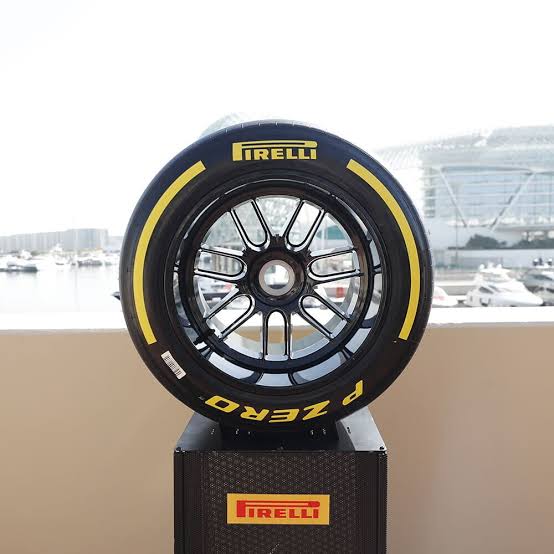
Pirelli is not simply supplying Formula 1 with three compounds marked hard, medium and soft. It is developing a tyre range that must work across different circuits, temperatures, aerodynamic packages and driving styles. Its work for 2027 is particularly significant because the objective includes increasing tyre degradation, potentially making multi-stop strategies more competitive.
That development is already under way, with teams using current-generation cars to help Pirelli evaluate prototype tyres for next season.
What Pirelli Brought to Austin
For the 2026 United States Grand Prix, Pirelli selected three dry-weather compounds:
– C2 — Hard: the most durable of the three compounds selected for Austin.
– C3 — Medium: the middle ground between durability and outright pace.
– C4 — Soft: the fastest option over a short run, but potentially less attractive over a long stint.
The selection was important because COTA places considerable demands on both axles.
The opening sector contains fast corners and rapid changes of direction that load the front tyres. The final sector features repeated acceleration zones, which can increase thermal stress on the rears. Meanwhile, the circuit’s ageing surface contributes to tyre wear, even though the asphalt is not particularly abrasive.
In other words, teams were not merely trying to find the fastest tyre. They needed to find the compound that would retain its performance for long enough to make their chosen strategy work.
The Hard Compound Delivered More Than Expected
Following the race, Pirelli Motorsport Director Dario Marrafuschi said the hard compound performed slightly better than anticipated.
That observation matters when assessing McLaren’s decision.
The team had committed both Norris and Piastri to the hard tyre relatively early, giving them the opportunity to explore a one-stop strategy. Meanwhile, Mercedes extended Antonelli’s opening stint on mediums before switching him to hards at the end of Lap 24.
Antonelli’s approach proved particularly effective. He built a lead during the opening stint, made his stop at a time that allowed him to retain strategic control, and ultimately won by more than 13 seconds.
The hard tyre was not simply a way to survive the closing laps. It was a competitive race tyre capable of delivering consistent performance over a substantial distance.
Pirelli’s assessment after the race also highlighted an important distinction: tyre wear was relatively high, but that did not translate into a significant increase in performance degradation.
Those are two different things.
A tyre can lose physical rubber through wear without suffering an equivalent deterioration in lap time. Conversely, a tyre can lose performance because of heat-related degradation even when its physical condition does not appear particularly severe.
Understanding that relationship is essential to predicting how long a driver can remain competitive.
At Austin, the hard compound rewarded teams that understood its behaviour and were prepared to commit to a longer stint.
Why Pirelli Is Developing Different Tyres for 2027
The next stage of Pirelli’s work is particularly interesting.
The tyre supplier has been testing prototype compounds and construction options intended for the 2027 season. The development programme includes work to increase degradation, with the aim of making tyre management and pit-stop strategy more consequential.
That does not mean Pirelli is simply trying to make tyres wear out as quickly as possible. The challenge is to produce a predictable, competitive range that gives teams meaningful strategic choices without compromising the tyres’ fundamental function.
McLaren has already contributed to this process.
In August, Norris and Piastri participated in a two-day Pirelli test at Mugello, driving the MCL40 on prototype 2027 tyres. Pirelli controlled the programme, which compared prototype compounds against the 2026 dry-weather baseline.
Piastri completed 90 laps, covering approximately 464 kilometres, while Norris completed 114 laps, covering approximately 594 kilometres.
The programme included low- and high-fuel running, continuous push laps and long runs designed to help Pirelli collect data. Red Bull and Audi also participated in the test, and the resulting data was shared across all 11 teams.
That last point is important.
Although the teams compete against one another, Pirelli’s tyre development requires information from a variety of cars and operating conditions. A compound that works well on one chassis may behave differently on another because of differences in aerodynamic load, suspension characteristics, weight distribution and how each car generates tyre temperature.
Testing with multiple teams helps Pirelli build a broader understanding of those differences.
The work is not limited to a single test at a single circuit, either. Earlier development running at the Hungaroring included evaluations of different C3 compound options, alongside C4 and C5 variants. These programmes used screening runs, long runs and qualifying simulations to assess performance and degradation characteristics.
The purpose is to develop a tyre range that behaves as intended across a broad range of conditions.
Will More Degradation Mean More Pit Stops?
Potentially, but there is an important qualification.
Increasing tyre degradation could make two-stop strategies more attractive, particularly at circuits where the time lost during a pit stop can be recovered through faster laps on fresher rubber.
However, tyre degradation alone cannot dictate a race strategy.
Teams must also consider pit-lane time loss, the likelihood of safety cars, traffic, overtaking opportunities, fuel loads and the performance difference between compounds. A tyre that degrades more quickly might encourage an additional stop at one circuit but make little difference at another.
Pirelli’s challenge is to create a range that encourages strategic variation rather than forcing every team into the same solution.
Austin provided a useful example of how small differences in tyre performance can influence the race.
Red Bull’s earlier stop for Verstappen helped trigger a wider response from teams considering two-stop strategies. Mercedes remained committed to extending its first stint, while McLaren ultimately kept both drivers out on their hard tyres.
The strategies unfolded differently, but the underlying calculation was the same: would the additional performance from fresher tyres compensate for the time lost by stopping again?
For Antonelli, the one-stop strategy delivered victory. For McLaren, it delivered fifth and seventh, with Norris losing positions late in the race as the cars behind benefited from fresher tyres.
The race therefore illustrated both sides of the equation. Extending a stint can preserve track position and reduce pit-stop time loss, but it also leaves a driver vulnerable when rivals have a significant tyre-age advantage.
What This Means for McLaren
McLaren’s performance at COTA should not be reduced to a single tyre decision.
Norris finished three places higher than he started, and Piastri held off Russell despite considerable pressure in the closing stages. The team also demonstrated that the MCL40 had competitive long-run pace, even though its qualifying performance remained a weakness.
The hard tyre gave McLaren a route to recovering positions, but it could not eliminate the underlying limitations of the car or guarantee that its drivers would retain their track positions until the finish.
Norris himself said the hard-tyre pace was particularly strong, while acknowledging that pushing the car to remain competitive had consequences during the second stint. Piastri similarly credited the hard compound with making the one-stop strategy possible.
These are useful observations for Pirelli because the development process depends on more than lap times alone. Driver feedback and data from long runs help the supplier understand how tyres behave as conditions change.
For McLaren, the next challenge is to improve qualifying performance and car predictability so that its drivers can start further forward and make better use of the race pace already available.
For Pirelli, the challenge is different: developing tyres that offer the performance, durability and degradation characteristics needed to keep strategy relevant.
The Bigger Picture: Formula 1 Is Still a Tyre-Limited Sport
COTA demonstrated that tyre strategy remains one of the most important variables in Formula 1.
Antonelli won by combining a strong opening stint with an effective one-stop strategy. Leclerc secured second for Ferrari, while Verstappen completed the podium. Hamilton finished fourth, and McLaren’s two drivers recovered to fifth and seventh.
The hard compound proved more competitive than Pirelli had expected, helping make a one-stop strategy the most effective option for much of the field.
But the wider story extends beyond Austin.
Pirelli is already working towards the 2027 tyre range, testing prototype compounds and construction options with current cars. The aim of increasing degradation could make tyre management more influential and open the door to a wider variety of race strategies.
Whether that ultimately produces more two-stop races will depend on the finished tyres, the circuits and the cars competing on them.
For now, Austin has provided a clear illustration of why the tyre supplier’s work matters.
A car can have the pace to challenge for a podium, but if its tyres cannot sustain that pace for long enough, the opportunity can disappear. Equally, a team that understands its tyres can turn a difficult starting position into valuable championship points.
McLaren took that lesson away from COTA.
Pirelli, meanwhile, has another season of development ahead before its next generation of tyres arrives.
In Formula 1, speed gets you into contention. Understanding your tyres can determine where you finish.