The Gearbox Could Be the Beginning of Ferrari’s 2027 Transformation
Ferrari’s road to redemption in 2027 might begin somewhere less glamorous than the front wing or the power unit. It could begin with the gearbox.
On September 21, 2026, the Formula 1 Commission agreed to remove gearbox homologation requirements for the 2027 season, preserving greater development freedom for manufacturers. The decision, subject to the FIA’s approval process, gives teams more flexibility to reconsider their transmission designs as the championship continues to evolve under its latest technical regulations.
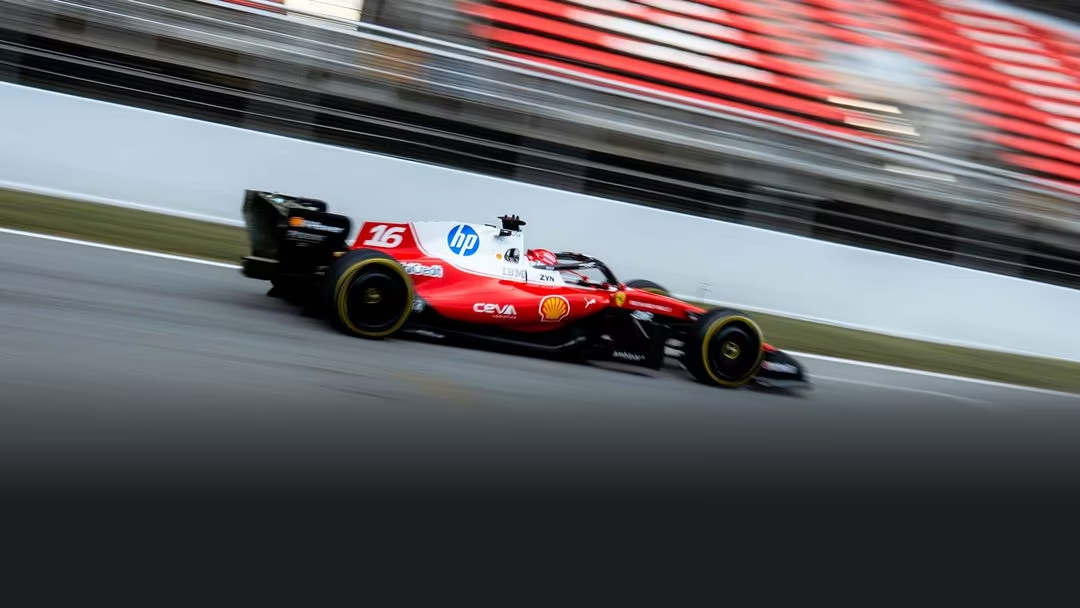
It is an important development for Scuderia Ferrari HP, particularly given the unconventional engineering choices that helped shape the rear of its SF-26.
The gearbox amendment does not confirm that Ferrari will produce an entirely new transmission. Nor does it establish that the team intends to bring in an outside supplier. What it does is create an opportunity to reconsider whether the existing architecture is still the best foundation for the car Ferrari wants to build next season.
For a team whose 2026 aerodynamic concept relied heavily on the positioning of its differential and the packaging of its rear-end components, that freedom could prove particularly valuable.
The FIA’s September announcement can be read in full through its official Formula 1 Commission statement.
The question is no longer simply whether Ferrari can design a faster gearbox. It is whether the transmission, differential, suspension, cooling systems and aerodynamic surfaces can be developed as parts of one coherent package.
That is where Ferrari’s 2027 opportunity begins.
A New Gearbox Strategy Could Unlock the Rear of the Car
Ferrari’s SF-26 attracted attention during pre-season testing for its unusual exhaust-wing arrangement. The small aerodynamic element positioned above the exhaust tailpipe was designed to influence airflow around the rear of the car, helping extend the aerodynamic effect of the diffuser and improve the interaction with the rear wing.
The concept was closely connected to Ferrari’s packaging decisions. The team positioned its differential towards the rear of the permitted range, helping create the space needed for its aerodynamic solution.
The design was legal under the 2026 regulations, but the FIA subsequently amended the 2027 technical rules to prohibit exhaust-wing arrangements of this type.
The restriction closes off one route to additional rear downforce, but it does not eliminate Ferrari’s broader understanding of how airflow behaves around the rear of the car.
That knowledge remains useful.
Ferrari can investigate whether changes to the gearbox casing, differential position, driveshaft geometry and rear suspension could create a more efficient arrangement for the next generation of bodywork.
There are several possible routes.
The first is a targeted revision of the existing transmission, retaining proven mechanical components while improving the space available to aerodynamicists.
The second is a more substantial gearbox redesign, allowing Ferrari to reconsider how the transmission fits within the rear of the chassis and how its surrounding structures interact with the diffuser.
The third is to develop the gearbox and differential together, treating them as a combined mechanical and aerodynamic packaging problem rather than two separate systems.
Each approach has advantages and drawbacks. A comprehensive redesign could provide greater freedom, but it would also introduce additional engineering demands, validation requirements and reliability risks.
Ferrari must establish whether the potential performance gain justifies that investment.
The FIA’s decision creates an opportunity, not a guarantee of success.
The Differential: Where Mechanical Grip Meets Aerodynamic Ambition
The differential is particularly interesting because it influences both the car’s mechanical behaviour and the space available for aerodynamic development.
Its primary job is to allow the driven rear wheels to rotate at different speeds while cornering. Its characteristics also affect how torque is distributed between those wheels, influencing traction and the car’s response when the driver accelerates out of a corner.
Ferrari’s unusual rear-end arrangement demonstrates how a component that appears purely mechanical can influence the aerodynamic possibilities available to a team.
Moving the differential changes the geometry of the driveshafts connecting it to the rear wheels. Those shafts must continue to operate reliably as the suspension moves, the wheels experience different loads and the car passes through its full range of operating conditions.
A revised layout must therefore satisfy several competing requirements.
It must deliver reliable power transmission, maintain suitable driveshaft angles, accommodate suspension movement and preserve the mechanical behaviour required by the drivers.
At the same time, its packaging should give aerodynamicists sufficient freedom to develop the diffuser and surrounding bodywork.
This is where a coordinated redesign could offer more than an isolated upgrade.
Ferrari might discover that a modest change to the gearbox casing and differential position creates enough space to improve the diffuser without requiring a completely new transmission. Alternatively, a more ambitious redesign might deliver a meaningful packaging advantage that cannot be achieved through smaller adjustments.
The engineering decision will depend on the balance between performance, weight, reliability and development time.
Importantly, Ferrari does not necessarily need to move the differential again. Its engineers must first establish whether the current arrangement remains mechanically competitive and whether the aerodynamic benefits of retaining it outweigh the disadvantages introduced by the exhaust-wing restriction.
The best solution is not automatically the most radical one.
It is the one that produces the greatest overall improvement in the car.
Mechanical Grip Versus Aerodynamic Grip: Understanding Ferrari’s Challenge
To understand why Ferrari’s rear-end development matters, it helps to distinguish between mechanical grip and aerodynamic grip.
They work together, but they are not interchangeable.
Mechanical grip comes primarily from the interaction between the tyres, suspension, chassis and road surface. It is influenced by tyre characteristics, suspension geometry, weight distribution, differential behaviour and how effectively the car transfers its load while accelerating, braking and cornering.
A car with good mechanical grip can respond predictably to steering and throttle inputs, maintain traction over bumps and provide its drivers with confidence when changing direction.
Aerodynamic grip, by contrast, comes from the airflow moving around and beneath the car.
Wings, floors and diffusers create pressure differences that generate downforce, pressing the tyres against the track. Within the tyres’ operating limits, that additional vertical load allows them to generate greater cornering force.
The distinction becomes particularly important as speed increases.
Aerodynamic downforce generally rises substantially with vehicle speed, whereas the car’s underlying mechanical characteristics do not increase in the same way.
At slower corners, where aerodynamic loading is reduced, mechanical grip and traction can be especially important. Through faster corners, aerodynamic efficiency can make a decisive difference.
The challenge is that the two systems constantly influence one another.
A suspension configuration that helps the car maintain a desirable ride height can support consistent aerodynamic performance. A more stable aerodynamic platform can make the tyres’ workload more predictable. A differential that delivers torque smoothly can help the driver exploit the available grip without unnecessarily upsetting the rear of the car.
But if the aerodynamic balance changes sharply with speed or ride height, the driver may struggle to trust the car. Likewise, a car with excellent downforce can still lose time if its rear tyres cannot deliver the required traction on corner exit.
Ferrari therefore needs to consider mechanical grip and aerodynamic grip as complementary elements of the same performance problem.
The objective is not simply to produce more downforce. It is to make the available grip predictable, accessible and consistent throughout a lap.
Thermal Efficiency: The Less Visible Route to Performance
Aerodynamics and transmission packaging are only part of the story. Thermal management could also influence Ferrari’s ability to extract consistent performance from the SF-26’s power unit.
Modern Formula 1 cars must manage heat across several interconnected systems, including the internal combustion engine, turbocharger, electrical motor-generator, power electronics, energy store and transmission.
Each system has its own operating requirements, and the cooling package must remove heat without creating unnecessary aerodynamic compromises.
That last point is particularly important.
Radiators and heat exchangers require airflow. The sidepods and associated bodywork must therefore accommodate cooling requirements while directing air efficiently around the car.
A cooling package that demands more airflow than necessary can constrain bodywork design and increase aerodynamic drag. Conversely, a well-integrated system may allow engineers to achieve the required cooling performance with less compromise.
Ferrari’s development opportunity lies in examining the entire thermal-management package rather than treating cooling as an isolated engineering exercise.
Could a more efficient heat exchanger achieve the required performance within a smaller package? Could the team improve airflow through the radiators without disrupting the flow feeding the rear of the car? Could the cooling requirements of the power unit and transmission be accommodated without sacrificing aerodynamic efficiency?
These are the kinds of questions that can influence the design of the complete car.
Coolant chemistry also matters, but it must be considered in the context of the system it serves. A coolant must be compatible with the relevant materials and seals, remain stable under demanding operating conditions and transfer heat effectively.
Ferrari has an established technical relationship with Shell, which supports its Formula 1 fuel and lubricant programme and has also supplied coolants for Ferrari’s endurance-racing Hypercar programme.
However, there is no verified public confirmation of a new Ferrari Formula 1 coolant supplier or a specific 2027 coolant contract. Any claim that the Scuderia is negotiating to replace its existing coolant arrangements would require further evidence.
The broader engineering principle remains clear: thermal efficiency can help Ferrari reduce compromises elsewhere in the car.
The gains may not be as immediately visible as a new wing or a redesigned floor, but the effects can extend across the entire package.
Sustainable Fuel: Ferrari and Shell Must Develop the Power Unit Together
Fuel development adds another dimension to Ferrari’s technical programme.
Formula 1 moved from E10 fuel, introduced in 2022, to advanced sustainable fuels under the 2026 regulations. The new fuel framework prohibits crude-oil-derived components in the race fuel and permits qualifying sustainable production pathways, including those involving captured carbon, waste and non-food biomass.
These fuels are designed to meet demanding performance requirements while reducing lifecycle greenhouse-gas emissions relative to conventional fossil-derived fuel.
The change is significant because sustainable fuel is not simply a replacement product that can be introduced without considering the engine.
Its properties influence combustion behaviour, while the combustion system determines how effectively the fuel’s available energy can be converted into useful work.
Ferrari and Shell therefore have to develop their respective technologies in close coordination.
A formulation suited to a particular combustion system may offer opportunities to improve performance, but the engine’s design, operating limits and reliability requirements remain decisive.
Shell’s longstanding technical relationship with Ferrari provides the foundation for this work. The company has developed advanced sustainable race fuel for Ferrari’s 2026 power-unit programme.
Ferrari has also pursued internal-combustion-engine development through the FIA’s Additional Development and Upgrade Opportunities framework.
The combination of fuel and engine development is important because Ferrari cannot rely on a single component to close a power deficit. It must improve the efficiency of the complete system while operating within the relevant fuel-energy-flow and power-unit regulations.
This also connects to the cooling question.
Combustion efficiency, component temperatures and thermal-management demands are related, although a more efficient fuel formulation does not automatically translate into lower cooling requirements. The result depends on the engine’s combustion characteristics and the overall power-unit design.
Ferrari’s opportunity is to optimise these elements together, ensuring that the fuel, engine, electrical system and cooling package support the same performance objectives.
The 2027 Downforce Challenge: Recovering Performance Without Chasing Numbers
The FIA’s 2026 aerodynamic regulations introduced a substantial reduction in downforce compared with the previous generation of cars, alongside measures intended to reduce drag.
Downforce reductions are often described in approximate terms, with figures around 30% widely cited. A figure of 33% should therefore be treated as an estimate rather than a universal, precisely fixed reduction applicable to every car and operating condition.
For 2027, Ferrari faces a different but related challenge: adapting to further technical changes, including the exhaust-wing restriction, without allowing the car’s overall performance to suffer.
The answer is unlikely to be found in a single component.
Ferrari must consider how the front wing, floor, diffuser, rear wing, suspension and rear-end packaging work together.
If the team can generate sufficient underfloor downforce efficiently, it may be able to achieve its desired cornering performance without relying excessively on the rear wing. If the rear-end airflow remains stable, the drivers may be able to exploit that downforce more consistently.
A well-integrated cooling package could provide additional freedom in bodywork design, while improvements to the gearbox and differential could help reconcile the mechanical requirements with the aerodynamic objectives.
The important distinction is between maximum downforce and usable downforce.
Maximum downforce is the aerodynamic load a car can generate under a particular set of conditions. Usable downforce is the load the driver can exploit predictably across different speeds, ride heights, corners and circuit configurations.
A car that produces impressive peak downforce but becomes unstable when its operating conditions change may be less competitive over a complete race weekend than a car with a slightly lower peak but a more consistent balance.
This is where Ferrari’s 2027 development programme could become particularly significant.
The objective should be to build a car that works across a variety of circuits, rather than one that delivers its best performance only when the track layout, temperature, tyre behaviour and aerodynamic demands happen to suit it.
That requires an engineering philosophy built around integration.
The gearbox should accommodate the aerodynamic package. The differential should support predictable traction. The suspension should help maintain a stable platform. The cooling system should meet thermal requirements without imposing unnecessary aerodynamic costs. The power unit and sustainable fuel should be developed to maximise performance within the regulations.
Each decision should contribute to the same outcome.
A faster Ferrari is not necessarily the one with the most radical gearbox, the largest diffuser or the most aggressive cooling package.
It is the one in which every component works with the others.
The Mercedes, McLaren and Red Bull Benchmark
Even if Ferrari succeeds in producing a more consistent car for 2027, it must still close the performance gap to its principal competitors.
Mercedes, McLaren and Red Bull will not be standing still. Each will be developing its own interpretation of the regulations, searching for aerodynamic efficiencies, improving power-unit performance and refining the relationship between mechanical grip and aerodynamic balance.
Ferrari cannot assume that a more integrated SF-26-derived design will automatically make it competitive with all three.
The Scuderia must first establish whether its proposed changes produce measurable gains. It must then demonstrate that those gains remain available across different circuits, weather conditions and tyre compounds.
The gearbox amendment gives manufacturers greater freedom to develop their transmissions, but that freedom is available within a competitive environment. An innovation that provides Ferrari with an advantage today could become a starting point for a rival’s development tomorrow.
The same applies to sustainable fuel, thermal efficiency and aerodynamic integration.
The advantage will belong to the team that develops, validates and implements its solutions most effectively.
Ferrari’s engineers can create the conditions for a competitive car, but they cannot guarantee a championship simply by improving the hardware.
And that brings us to the other half of Ferrari’s problem.
The Pit Wall: Ferrari’s Other Championship Challenge
There is a point at which engineering stops being the only determining factor.
A Formula 1 team can develop a competitive car, improve its power unit and give its drivers the grip needed to fight at the front. It can arrive at a circuit with a promising setup and a strong qualifying position.
Then Sunday arrives.
A safety car changes the strategic picture. An unexpected weather shift alters tyre expectations. A rival pits early, forcing the team to reconsider its plan. One driver needs fresh tyres, while the other is trying to protect track position.
These are the moments when the quality of a team’s decision-making becomes as important as the performance of its machinery.
Ferrari’s challenge has not always been a lack of engineering ambition. Its difficulties have also included race-management decisions, strategic calls and the coordination required to respond effectively when a race departs from expectations.
The concern heading into 2027 is that a more competitive car could still be undermined by indecision between the pit wall and the drivers.
A strategy does not need to be perfect to win a race, but it needs to be decisive, adaptable and communicated clearly.
If the team delays a pit stop while a rival commits to an undercut, the advantage of a faster car can disappear. If the pit wall hesitates during a safety-car period, the opportunity to gain track position may be lost. If the drivers and strategists are not aligned on how to respond to changing conditions, the team risks making decisions too late.
These problems cannot be solved by redesigning the gearbox.
They require better preparation, clearer decision-making responsibilities, effective communication and the confidence to commit to a strategy when the available information supports it.
Ferrari must also recognise that strategy is not simply a matter of making the correct call with hindsight. Decisions are made with incomplete information, and even a well-reasoned choice can produce an unfavourable outcome.
The objective is to improve the decision-making process, not to eliminate uncertainty from racing.
That means preparing alternative strategies before the race, identifying the circumstances that would trigger a change of plan and ensuring the drivers understand what the team is trying to achieve.
A faster car gives the pit wall more opportunities. Better decisions allow Ferrari to convert those opportunities into results.
Neither is sufficient on its own.
Can Ferrari Win in 2027?
Ferrari’s 2027 prospects will depend on two transformations taking place at the same time.
The first is technical.
The Scuderia has an opportunity to reconsider its gearbox and rear-end architecture, develop a replacement for the prohibited exhaust-wing concept, improve the integration of its aerodynamic and mechanical systems, and continue refining its power unit in partnership with Shell.
The objective should be a car that delivers predictable performance across different circuits rather than relying on isolated strengths.
The second transformation is operational.
Ferrari must ensure that its race strategy, communication and decision-making are capable of exploiting whatever performance its engineers deliver.
A competitive car can put the team in a position to win. A well-prepared pit wall can help it stay there.
Even if Ferrari closes the gap to Mercedes, McLaren and Red Bull, there is no guarantee that it will emerge as the strongest team. Its rivals will bring their own developments, and the competitive order will depend on how successfully each manufacturer interprets the regulations.
But Ferrari’s most important opportunity may lie in changing the way it approaches the problem.
Instead of treating the gearbox, differential, cooling package, sustainable fuel, aerodynamics and race strategy as separate challenges, the Scuderia needs to understand how each influences the others.
That is how it can build a car that works as a complete system.
And it is how the team can give its drivers a more predictable platform, its engineers a clearer development direction and its strategists a better opportunity to turn performance into points.
The gearbox amendment of September 21 may not, by itself, transform Ferrari’s fortunes. The exhaust-wing ban will not decide the championship on its own. Neither will a new fuel formulation or a more efficient cooling package.
But together, these developments form part of a broader opportunity to rethink the SF-26’s successor from the ground up.
Ferrari has the engineering heritage to pursue that opportunity.
The question is whether Maranello can combine its technical ambition with the consistency, clarity and discipline required to win across an entire season.
Because in Formula 1, building a fast car is only the beginning.
Winning a championship requires every part of the team to perform at the same level.