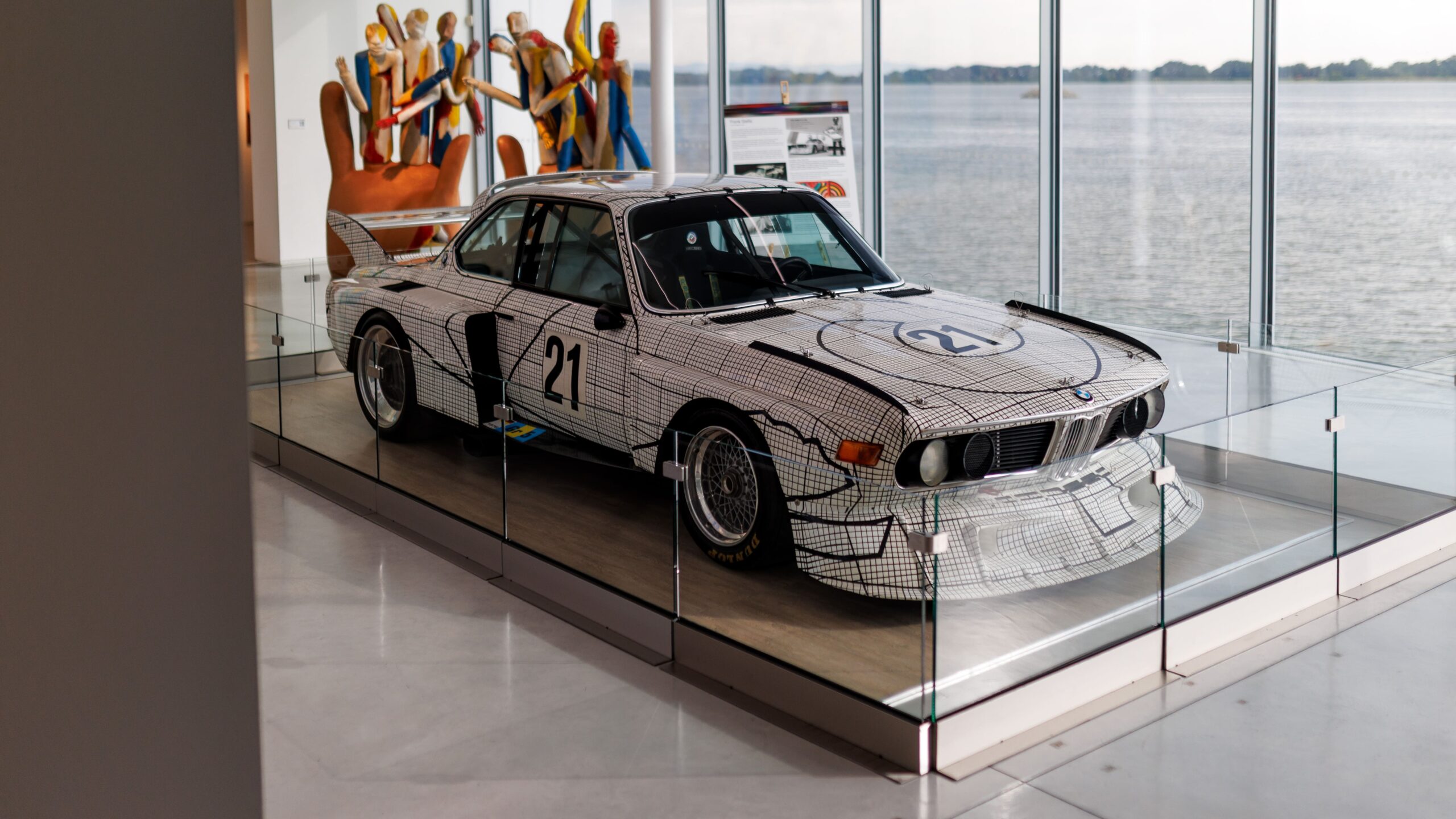
BMW M CEO Frank van Meel, would love to change that, and his head of design would too. Speaking to the executives on the sidelines of the 24 Hours of Le Mans, the publication asked them about the cars they dream of building, and van Meel responded, “I’m in love with the original M1, but I would love to do a new one.” BMW M Head of Design Oliver Heilmer shared his enthusiasm for a revival of the moniker, but his response gives us a little more insight into just how seriously he and his colleagues toy with the idea.

“And honestly, I’m all for the idea, but here’s the thing: as far as the car itself goes, it can’t be a restomod, it shouldn’t look too modern either, it can’t be a hybrid or an EV, nor can it be a semi-automatic. I’m not entirely sure why the corporate boardroom loves the concept, but I know why it holds a piece of my soul. As a child, every time we had to head to the capital, we had to pass a red, broken-down M1 resting just off the village of Bridgetown. It was an unofficial monument, a bleeding slice of automotive royalty rotting gracefully under the Caribbean sun. They recently removed the chassis after all these years, and honestly, even the drive down that road doesn’t feel the same.”

To honor that memory, a true successor to the E26 M1 cannot be a tech-laden showcase of batteries and screens. If BMW M wants to build a real supercar, it must be an unadulterated monument to raw mechanical engineering.The Blueprint: Pure Mechanical PurismIn an era where performance is artificial dominated by electric motors, heavy battery packs, and torque-vectoring software a new M1 must stand as an analog counter-revolution. Building a machine that avoids looking too futuristic while evading the nostalgic traps of a restomod requires absolute discipline.
The Engine
An Un-Electrified Masterpiece Forget the hybrid V8s or quad-motor EV platforms. A true M1 requires a direct evolution of Paul Rosche’s legendary M88 straight-six. Imagine a bespoke, naturally aspirated 4.0-liter inline-six breathing through mechanical individual throttle bodies. Utilizing modern metallurgy, lightweight titanium connecting rods, and diamond-like carbon (DLC) coated valve trains, this engine would effortlessly scream to a 9,000 rpm redline. It would reject turbochargers in favor of instant, linear throttle response, pushing a pure, mechanical 550 horsepower directly to the rear wheels.
The Drivetrain
The Return of the Gated Six-Speed A dual-clutch semi-automatic or a paddle-shifted gearbox has no place here. The cockpit must feature a heavy, metallic, gated 6-speed manual transmission. The tactile, metallic clack-clack of selecting a gear connects the driver to the mechanical synchronizers in a way software never can. Combined with a traditional three-pedal setup and a pure mechanical limited-slip differential, the driving experience would rely entirely on human skill, not computer algorithms.Designing Without the “Futuristic” TrapOliver Heilmer’s design department wouldn’t need to look forward to digital screens; they would need to look back at foundational proportions. To keep the car from looking like a spaceship or a lazy throwback, the design must be dictated entirely by aerodynamic function and stance.
The Silhouette
A wedge profile, a low-slung nose, and a mid-engine cabin bias that honors Giorgetto Giugiaro’s original lines without copying them.The Materials: Rather than masking the car in digital displays and aggressive LED light strips, the body should rely on raw material engineering—naked carbon-fiber weave accents, magnesium center-lock wheels, and a clean, un-badged rear deck flanked by the iconic dual BMW roundels.The Cockpit: The interior should be stripped bare. Analog gauges with physical needles, a stitched leather steering wheel devoid of buttons or dials, and highly contoured bucket seats. No infotainment screens. The soundtrack is provided exclusively by the mechanical symphony echoing through the firewall right behind the driver’s skull.
The Soul of the Machine
The tragedy of modern performance cars is that they lack a sense of place and permanence; they feel like rolling computers destined for software obsolescence. The original M1 was special because it was a physical, mechanical triumph.When a car like that sits by the side of the road in a village like Bridgetown, it leaves an indelible mark on anyone who passes it. It holds your gaze because its shape speaks of speed, engineering, and raw human effort. If BMW M ever finds the perfect window of opportunity to build a new M1, they must leave the hybrid batteries and automatic gearboxes in the lab. They need to build a car that feels alive—something whose mechanical heartbeat will be missed long after the chassis is gone. Further Automotive Insight To see how BMW M’s design language is currently transitioning between its racing heritage and the modern era, you can explore this technical breakdown covering their latest concepts: The Unveiling of BMW M’s High-Performance VisionThis deep dive panel discussion from Le Mans features Frank van Meel and Oliver Heilmer discussing the emotional thresholds of performance, design philosophies, and what makes an M car truly carry a soul.