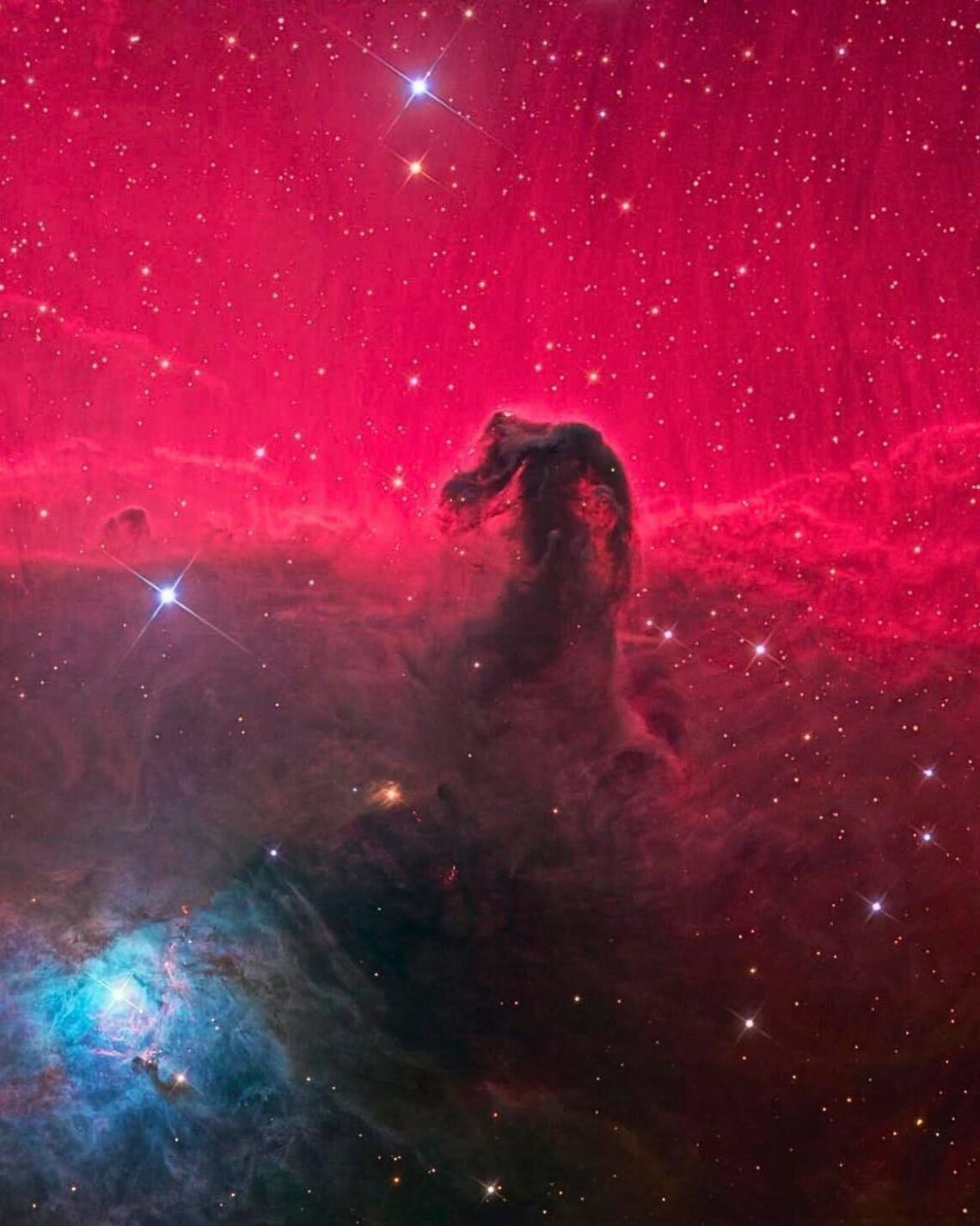
There is something rather unsettling about looking into the universe and discovering that some of its most beautiful sights are actually scenes of destruction. Clouds resembling enormous eyes, skulls suspended in darkness and glowing formations that look almost deliberately sculpted are not the work of an artist. They are the remains of stars, enormous collections of gas and dust, and stellar nurseries where entirely new solar systems may eventually emerge.
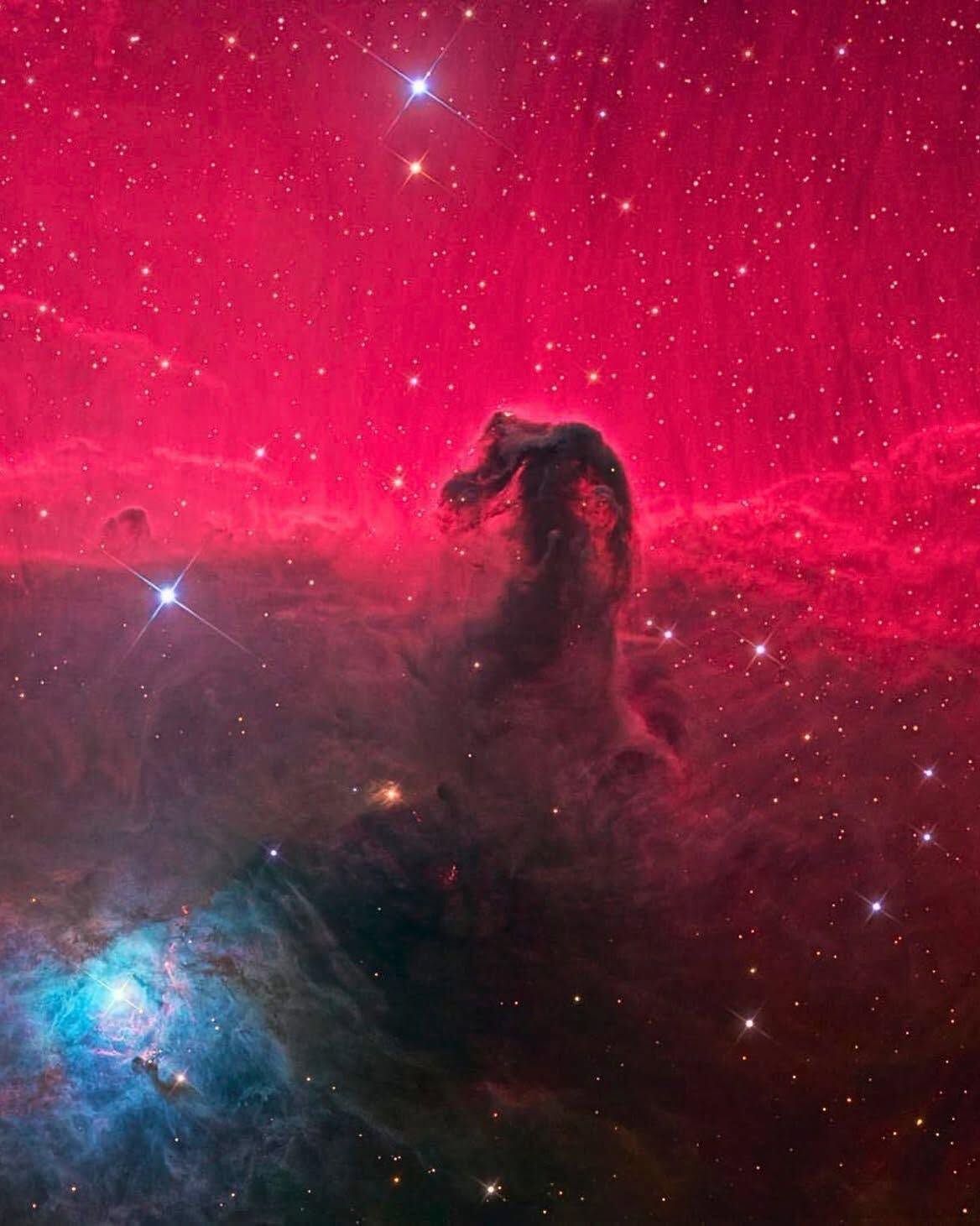
NASA’s James Webb Space Telescope has given us an extraordinary opportunity to look deeper into these formations. Its infrared instruments allow astronomers to observe regions that were previously difficult to study, revealing structures hidden behind thick clouds of cosmic dust.
Some of the latest images released in 2026 are particularly striking. And while their appearances might suggest something out of science fiction, their stories are grounded in the extraordinary processes that shape our universe.
Here are five nebulae worth looking at twice.
1. Cassiopeia A: The beautiful aftermath of a stellar explosion
Released November 23, 2026
Imagine a star so massive that its final moments involve an explosion powerful enough to scatter its outer layers across space. That is essentially what we are looking at with Cassiopeia A.
Located approximately 11,000 light-years from Earth, Cassiopeia A is one of the best-studied supernova remnants in our galaxy.
The star responsible exploded roughly 340 years ago as observed from Earth, although the explosion itself happened thousands of years earlier because of the time required for its light to reach us.
Webb’s Mid-Infrared Instrument, or MIRI, allows astronomers to examine the material left behind, including heated dust and elements created during the star’s life and death.
What makes this particularly interesting is that the debris of such explosions helps distribute elements throughout the galaxy. Material produced inside stars can eventually become part of new stars, planets and, ultimately, the ingredients necessary for life.
There is something poetic about that. The death of one star contributes to the possibility of another generation of worlds.
2. The Cat’s Head Nebula: A cosmic nursery
Released October 29, 2026
Not everything in the universe is about destruction. Some of its most extraordinary formations are places where stars are only beginning their lives.
The Cat’s Head Nebula offers a look into the complicated environment of interstellar gas and dust, where radiation from young stars shapes the surrounding material into pillars, cavities and intricate structures.
Observations using Webb’s infrared instruments, alongside Hubble imagery, allow astronomers to examine different aspects of this region.
What appears to be a collection of colourful clouds is actually an environment undergoing constant change. Radiation and stellar winds from young stars interact with surrounding gas, sometimes compressing it and contributing to the conditions needed for further star formation.
These are not simply beautiful clouds floating peacefully in space. They are part of a much larger process that has been shaping galaxies for billions of years.
3. NGC 7129: Where new stars begin
Released October 6, 2026
If the death of a star is fascinating, its birth is perhaps even more extraordinary.
NGC 7129 is a reflection nebula and star-forming region approximately 3,300 light-years away in the constellation Cepheus.
Here, young stars illuminate surrounding dust, producing the striking colours and shapes captured by astronomical instruments.
Webb’s Near-Infrared Camera, or NIRCam, helps reveal young stellar objects and structures within the surrounding clouds.
One of the most interesting aspects of regions such as NGC 7129 is that stars do not simply appear fully formed. They develop within dense clouds of material, gathering mass as gravity pulls gas and dust together.
Some of these young stars may eventually develop planetary systems. Others may evolve very differently depending on their mass and environment.
It is a reminder that when we look at a nebula, we may be looking at the earliest stages of something that could eventually resemble our own Solar System.
4. The Exposed Cranium Nebula: A cosmic skull
Released February 25, 2026
Perhaps the most unsettling image in this collection is planetary nebula PMR 1, better known as the Exposed Cranium Nebula.
Its appearance is difficult to ignore. The formation resembles a transparent human skull, with a dark dividing structure running through its centre, giving the impression of a brain enclosed within a cosmic shell.
But this is no skull, and there is no mystery involving an enormous celestial creature.
What we are seeing is material expelled by a dying star. As a star similar in mass to our Sun reaches the later stages of its life, it can shed its outer layers into space, producing an expanding shell of gas.
The remaining stellar core becomes extremely hot and illuminates the surrounding material.
Webb’s NIRCam and MIRI instruments provide different views of the nebula, allowing astronomers to study its gas, dust and internal structure.
Eventually, the central star will cool into a white dwarf.
The resemblance to a human skull is entirely coincidental, but it makes for one of the most memorable examples of how nature can produce structures that appear almost deliberately designed.
5. NGC 2392: The Lion Nebula
Released August 10, 2026
If the Exposed Cranium Nebula looks like something from a science-fiction horror film, NGC 2392 brings something rather more theatrical.
Known by its familiar nickname, the Lion Nebula, this planetary nebula surrounds a dying star and features intricate structures of glowing gas.
Planetary nebulae have nothing to do with planets despite their name. The term originated because early astronomers thought some of these objects resembled planetary discs when viewed through smaller telescopes.
In reality, they represent a stage in the evolution of certain stars as they shed their outer layers.
Webb’s infrared observations allow astronomers to examine the distribution of material and the interactions between the central star and its surrounding gas.
The result is a formation that looks almost like a cosmic portrait, with layers of material extending into the darkness.
It is another reminder that the universe has a rather unusual sense of aesthetics.
Why James Webb sees what we cannot
There is an important distinction between the photographs produced by Webb and the images we might take with an ordinary camera.
The telescope primarily observes infrared wavelengths, which are invisible to human eyes. This is particularly useful because infrared light can reveal objects and structures hidden behind clouds of dust.
Its two particularly important instruments for these observations are NIRCam and MIRI.
NIRCam observes near-infrared light, helping researchers identify stars, young stellar objects and structures within distant regions.
MIRI observes mid-infrared wavelengths, making it particularly useful for examining dust, molecules and warmer material.
The colours in Webb’s published images are assigned to different wavelengths to make the information visible to us. They are scientifically meaningful visualisations, rather than literal photographs of what our eyes would see if we were floating nearby.
And that distinction matters. Webb is not simply taking prettier pictures of space. It is giving scientists a different way to investigate the physical processes taking place within it.
We are looking at the past
Perhaps the most extraordinary detail is that these images do not show the universe as it exists today.
Light takes time to travel. When Webb observes a nebula thousands of light-years away, it is collecting light that began its journey thousands of years ago.
In the case of Cassiopeia A, we are observing the aftermath of an explosion whose light reached Earth centuries ago, even though the actual event occurred much earlier.
The telescope is effectively looking backwards through time, allowing us to study stages of cosmic evolution that happened long before modern civilisation existed.
And while these five formations are separated by enormous distances and different stages of stellar evolution, they share something important: they show us that the universe is constantly changing.
Stars are born, they evolve, they die, and their material becomes part of something new.
The universe is stranger than fiction
There is no shortage of extraordinary things happening beyond our planet. We have become accustomed to seeing images of distant galaxies, black holes and planets orbiting unfamiliar stars, but nebulae offer something particularly special.
They allow us to see the ingredients of creation and destruction occupying the same frame.
A dying star can leave behind the material that contributes to future generations of stars. A seemingly dark cloud can conceal the beginnings of a new solar system. And a formation that looks remarkably like a human skull is, in reality, part of the natural evolution of a star.
Perhaps that is what makes the James Webb Space Telescope so compelling. It does not need to discover an alien civilisation or photograph something impossible to remind us how little we know about the universe.
Sometimes, all it needs to do is point towards the darkness.
And what it finds is extraordinary.
Image and research references
NASA James Webb Space Telescope: https://science.nasa.gov/mission/webb/
NASA Webb image gallery: https://webbtelescope.org/images
NASA Cassiopeia A observations and research.
NASA NGC 7129 and planetary nebula observations.