SEO slug: formula-1-2027-changes-drivers-calendar-engines-pirelli
Meta description: Formula 1 is preparing for another important season in 2027. From driver changes and returning circuits to Nike, Pirelli, engine manufacturers and the move towards a 60/40 power split, here’s what is changing.
Tags: Formula 1, F1 2027, FIA, Pirelli, Nike, Formula 1 Calendar, 60/40 Power Split, Engine Regulations, Portimão, Istanbul Park, Motorsport
Formula 1 has never been particularly good at standing still. Just when teams begin understanding one generation of machinery, another set of regulations arrives, manufacturers reconsider their investments, drivers change seats and the championship finds another corner of the world to conquer.
But 2027 is shaping up to be a particularly interesting season. Following the introduction of the new power-unit regulations in 2026, the championship is already preparing adjustments intended to make the cars more enjoyable to drive, particularly during qualifying. There are also changes to the calendar, returning circuits, an expanded Sprint programme and a new commercial partnership with one of the world’s largest sporting brands.
Then there is the question of manufacturers. With Audi, Honda, Ford and General Motors becoming increasingly important to the championship’s future, Formula 1 is entering a period in which its traditional relationships with automotive manufacturers are being reshaped.
So, what exactly is changing in 2027?
The Driver Market: Who Is Staying and Who Is Leaving?
While 2027 is not expected to bring another complete reshuffling of the grid, several important driver decisions have already been made.
One of the more interesting developments concerns Cadillac, which has decided to retain Valtteri Bottas alongside Sergio Perez for its second season in Formula 1.
There had been speculation that American driver Colton Herta could replace Bottas, particularly given Cadillac’s ambitions to establish itself as an American presence in the championship. However, the team has opted for experience and continuity instead.
Bottas brings 10 Grand Prix victories and considerable experience from his Mercedes years. For a relatively young operation, his technical feedback and familiarity with the demands of a Formula 1 team could prove valuable.
Racing Bulls has also confirmed that Liam Lawson and Arvid Lindblad will continue together in 2027. Lawson’s position had attracted speculation, but his performances have earned him another opportunity.
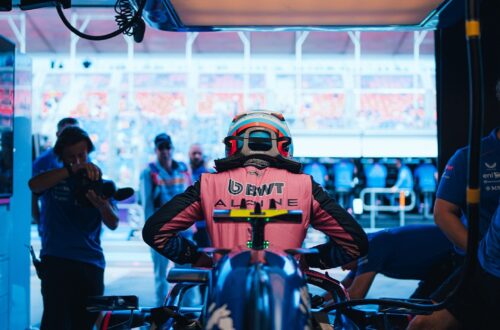
At Aston Martin, Fernando Alonso and Lance Stroll will continue their partnership, while Alpine has committed to Pierre Gasly and Franco Colapinto.
The most notable departure among the announced driver changes is Esteban Ocon, who is set to leave Haas, with Rafael Camara expected to take his place. Ollie Bearman’s future with the team has also been the subject of contract discussions.
Elsewhere, Ferrari is expected to retain Charles Leclerc and Lewis Hamilton, while McLaren continues with Lando Norris and Oscar Piastri.
The 2027 grid is therefore developing around continuity rather than wholesale change, although some seats and contractual details remain subject to confirmation.
The Calendar: Portugal and Türkiye Return
Perhaps one of the most welcome developments for traditional Formula 1 fans is the return of two circuits that have been absent since 2021.
The 2027 championship will feature 24 Grands Prix across 22 countries.
Portugal’s Autódromo Internacional do Algarve, better known as Portimão, returns after hosting the championship during the pandemic seasons of 2020 and 2021.
The circuit is particularly interesting because of its elevation changes, blind crests and flowing corners. It is a track that rewards commitment while demanding considerable confidence from drivers.
Then there is Istanbul Park.
The Turkish Grand Prix returns under a five-year agreement running through 2031, with the circuit’s famous Turn 8 once again awaiting the drivers. Its long, multi-apex left-hander has become one of the most recognisable corners in modern Formula 1.
However, not every circuit is returning.
Zandvoort will disappear from the calendar following its final scheduled appearance in 2026. The Circuit de Barcelona-Catalunya will also sit out 2027 as part of a rotational arrangement with Spa-Francorchamps.
Madrid, meanwhile, will continue hosting the Spanish Grand Prix at the Madring.
This is an interesting development. Rather than simply adding more races, Formula 1 is increasingly looking at how it distributes its existing events between destinations.
The 2027 calendar at a glance
| Round | Grand Prix | Date |
|---|---|---|
| 1 | Bahrain | March 12–14 |
| 2 | Saudi Arabia | March 19–21 |
| 3 | Australia | April 2–4 |
| 4 | Japan | April 9–11 |
| 5 | China | April 16–18 |
| 6 | Miami | April 30–May 2 |
| 7 | Canada | May 21–23 |
| 8 | Monaco | June 4–6 |
| 9 | Portugal | June 18–20 |
| 10 | Great Britain | July 2–4 |
| 11 | Austria | July 9–11 |
| 12 | Belgium | July 23–25 |
| 13 | Hungary | July 30–August 1 |
| 14 | Italy | September 3–5 |
| 15 | Spain (Madrid) | September 10–12 |
| 16 | Azerbaijan | September 24–26 |
| 17 | Türkiye | October 1–3 |
| 18 | Singapore | October 8–10 |
| 19 | United States | October 22–24 |
| 20 | Mexico City | October 29–31 |
| 21 | São Paulo | November 5–7 |
| 22 | Las Vegas | November 18–20 |
| 23 | Qatar | December 3–5 |
| 24 | Abu Dhabi | December 10–12 |
Istanbul Park’s appearance remains subject to FIA circuit homologation.
More Sprint Racing: Ten Weekends Instead of Six
Formula 1 is also increasing its Sprint programme from six events to ten.
For some fans, this is welcome news. For others, it raises questions about how much practice time teams should sacrifice in favour of additional competitive sessions.
The 2027 Sprint venues will be:
- Bahrain
- Australia
- Japan
- Canada
- Monaco
- Great Britain
- Italy
- São Paulo
- Qatar
- Abu Dhabi
Five venues will host a Sprint for the first time: Bahrain, Australia, Japan, Monaco and Abu Dhabi.
Monaco is particularly interesting. Its narrow streets and limited overtaking opportunities have traditionally made qualifying the defining competitive session of the weekend. Adding a Sprint creates another opportunity for drivers to compete, although it also introduces another challenge when track position is so difficult to gain.
For the teams, more Sprint weekends mean additional competitive running and potentially greater exposure to damage, component usage and operational pressure.
The 60/40 Split: Formula 1 Is Reconsidering Its Engines
Now we get to one of the most important technical developments.
The 2026 regulations introduced a much greater electrical contribution to Formula 1’s power units, moving towards an approximately equal division between combustion and electrical power.
However, the first season of the new regulations exposed some problems.
Drivers raised concerns about energy management, particularly during qualifying. Rather than simply driving at the limit, they sometimes had to consider where and when electrical energy would be deployed, harvested or conserved.
Max Verstappen was among the most outspoken critics.
Following discussions between the FIA, Formula 1, teams and power-unit manufacturers, an agreement was reached to rebalance the engines over two seasons.
The change will happen in stages:
2027: 58/42
The internal combustion engine will account for approximately 58% of the power contribution, with electrical power providing 42%.
2028: 60/40
The combustion engine’s contribution will increase to approximately 60%, with the electrical component accounting for the remaining 40%.
This means 2027 is a transitional year rather than the final destination.
What changes mechanically?
The agreed adjustments include:
| Component | 2026 baseline | 2027 | 2028 |
|---|---|---|---|
| Internal combustion engine output | 400 kW | 420 kW | 450 kW |
| MGU-K maximum output | 350 kW | 300 kW | 300 kW |
| Fuel-flow increase | Baseline | +5% | +13% |
| Energy harvesting maximum | 350 kW | 375 kW | 400 kW |
The figures show the direction of travel: more combustion power, less peak electrical deployment and increased opportunities to recover energy.
The intention is to make qualifying more representative of a driver’s ability to push the car, rather than requiring excessive energy-management compromises.
Importantly, this is not a return to the old V8 or V10 era. The 2027 cars will remain turbocharged hybrid V6 machines running sustainable fuel.
The FIA has also agreed to changes in fuel-energy flow and energy-management flexibility.
For manufacturers, this means another round of development and adaptation, even though the current generation of power units has only recently arrived.
The Manufacturers: Audi, Honda, Ford and General Motors
The manufacturer landscape is another reason 2027 deserves attention.
Formula 1’s 2026 regulations attracted several major automotive names, but their roles are not identical.
Audi
<underline>Now a full constructor and power-unit manufacturer.</underline>
Audi completed its takeover of Sauber and entered Formula 1 as a works team in 2026. Its power-unit development is centred in Neuburg, Germany, while the team’s chassis operations continue through its established European infrastructure.
For Audi, 2027 is another opportunity to develop its own engine and establish itself as a genuine competitor.
Honda
<underline>Aston Martin’s works power-unit partner.</underline>
Honda returned as a full works power-unit partner in 2026, supplying Aston Martin through its collaboration with the Silverstone-based team.
This is particularly important because Aston Martin is no longer relying on a customer engine arrangement. The partnership gives Honda an opportunity to integrate its power-unit development with the team’s chassis and aerodynamic programme.
Ford
Supporting Red Bull Powertrains.
Ford’s return to Formula 1 comes through its technical partnership with Red Bull Powertrains.
The partnership supports the development of the power units used by Red Bull Racing and Racing Bulls. It is an important return for a manufacturer with a substantial history in the championship.
General Motors
The manufacturer behind Cadillac’s longer-term ambitions.
Cadillac currently uses Ferrari power units, but General Motors is developing its own Formula 1 engine programme.
Its ambition is to introduce a GM-built power unit in 2030. This is an important distinction: GM is not arriving as a fully independent engine supplier in 2027.
Renault
Renault’s departure from power-unit manufacturing for Formula 1 is also significant. Following the closure of its Viry-Châtillon engine programme at the end of 2025, Alpine moved to Mercedes power units for 2026.
The result is a championship in which several manufacturers are investing in different ways, from complete works programmes to technical partnerships.
There is also a longer-term discussion about limiting manufacturers to supplying two teams each from 2030. That proposal belongs to the future engine framework, not a new restriction coming into effect in 2027.
Nike Joins Formula 1: A New Relationship Between Motorsport and Fashion
One of the newest commercial developments is Formula 1’s partnership with Nike.
Beginning in 2027, Nike will become Formula 1’s official apparel and uniform supplier.
The agreement will see Nike produce co-branded uniforms for Formula 1 event personnel, alongside footwear, clothing and accessories aimed at fans.
The partnership also extends into F1 Academy, where Nike will provide performance apparel and support initiatives aimed at the next generation of female racing talent.
This is more than a uniform supplier changing hands.
Formula 1 has spent several years expanding beyond its traditional motorsport audience, increasingly positioning itself within fashion, entertainment and lifestyle culture.
Nike is an enormous addition to that strategy.
For a championship whose teams already work with luxury fashion houses, lifestyle brands and global sportswear companies, the partnership presents another opportunity to turn racing identity into something people wear away from the circuit.
It is also worth remembering that Nike’s agreement is with Formula 1 itself, not a replacement for individual team clothing sponsors.
Pirelli: The Tyre Manufacturer Isn’t Going Anywhere
There is another important piece of stability amid all these changes.
Pirelli will remain Formula 1’s exclusive tyre supplier through the end of 2028.
The extension was confirmed in June 2026, keeping the Italian manufacturer responsible for supplying Formula 1, Formula 2, Formula 3 and F1 Academy.
Pirelli has supplied Formula 1 exclusively since 2011, although its involvement in the championship stretches back to 1950.
The 2026 generation of cars already brought significant changes to tyre requirements, including narrower tyres designed to complement the new-generation machinery.
The front tyres became 25mm narrower, while the rears became 30mm narrower compared with the previous generation. The 18-inch wheel diameter was retained.
For 2027, Pirelli’s task is not simply to manufacture another set of tyres. It must continue developing compounds and constructions that work with cars whose aerodynamic characteristics, energy deployment and weight distribution have changed.
There is no confirmed announcement of another wholesale tyre-size revolution for 2027.
Instead, the focus remains on performance, durability, thermal behaviour and providing teams with the right balance between grip and degradation.
For the teams, understanding how these tyres respond to different temperatures and circuit surfaces will remain a significant competitive advantage.
Other Sporting Changes: Shorter Races and More Flexible Regulations
There are several less publicised changes that deserve attention.
From 2027, the standard Grand Prix race distance will be reduced from 305km to 290km, corresponding to approximately two or three fewer laps.
This adjustment is connected to the revised fuel-flow and power-unit framework.
The FIA has also approved changes to race operations when weather or other interruptions affect proceedings.
A hard stop time will be introduced for the end of racing activity, replacing the previous three-hour overall limit. The two-hour limit on actual racing remains.
Free Practice sessions will also have greater flexibility to be extended when interrupted.
Another technical adjustment concerns gearbox homologation. Its removal for 2027 is intended to preserve greater freedom for gearbox suppliers to develop their products.
Pre-season testing will take place at Bahrain from February 24–27, 2027, with four days of running planned.
Looking Further Ahead: Is Formula 1 Preparing for Another Engine Revolution?
While 2027 has plenty of changes of its own, the bigger conversation is already moving towards 2030.
On November 20, 2026, the FIA announced that Formula 1 stakeholders had reached an agreement in principle on a technical framework for a return to V8 engines from 2030.
The proposed direction involves a 2.1-litre turbocharged V8 running advanced sustainable fuels, with a limited hybrid component.
It is an interesting development, particularly given how much of the championship’s recent identity has been built around electrification.
The intention is to create a simpler, lighter and less expensive power unit while bringing back some of the characteristics that fans associate with traditional Formula 1 engines.
However, these are future proposals, not the regulations governing the 2027 cars. The definitive 2030 rules still require formal approval.
It also puts manufacturers in an interesting position. Audi, Honda, Ferrari, Mercedes, Red Bull Powertrains and General Motors will all need to consider how their long-term investments align with the next generation of engines.
2027: A Year of Adjustment, Not Reinvention
Formula 1 is entering an interesting period.
The championship is expanding its Sprint programme, bringing back historic circuits, attracting new commercial partners and adjusting the very engines that were supposed to define its latest technical era.
There are familiar faces staying, new drivers finding their place and manufacturers building relationships that could define the next decade.
But perhaps the most important development is the 60/40 power split.
It is an acknowledgement that introducing new technology is only part of the challenge. That technology must also work in a racing environment where drivers are expected to compete at the limit, manufacturers need room to innovate and spectators want to see racing rather than energy-management exercises.
2027 will not bring Formula 1 back to the past, nor will it abandon the electrification that has become part of modern automotive development.
Instead, it is an attempt to find a better balance.
And if the championship gets that balance right, the changes could be more important than another new team or another circuit on the calendar.
The next chapter of Formula 1 is not simply about who builds the fastest car. It is about deciding what a Formula 1 car should be.