HOPE: A Monster Movie That Left Me Wanting More
South Korea has the monsters, the ambition and the visual effects. But does Na Hong-jin’s latest science-fiction spectacle have enough world around it to make its invasion feel truly enormous?
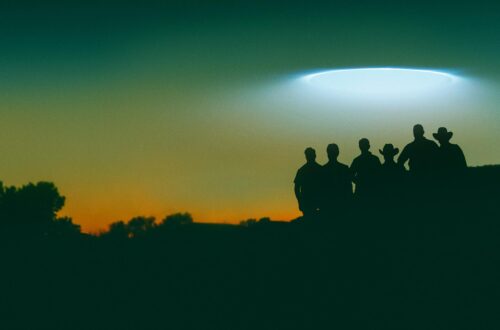
There is something refreshing about sitting down to watch a monster movie that doesn’t immediately reach for the familiar playbook of Godzilla, King Kong or Japan’s traditional Kaiju cinema. South Korea’s Hope, directed by Na Hong-jin, offers something different: an extraterrestrial encounter that begins in an otherwise unremarkable coastal town and gradually develops into something considerably more ambitious.
And honestly, I wanted to love it.
After finally watching Hope, I came away with mixed feelings. Not because the film was particularly bad, nor because its visual effects were disappointing, but because something about its overall presentation felt smaller than the premise deserved.
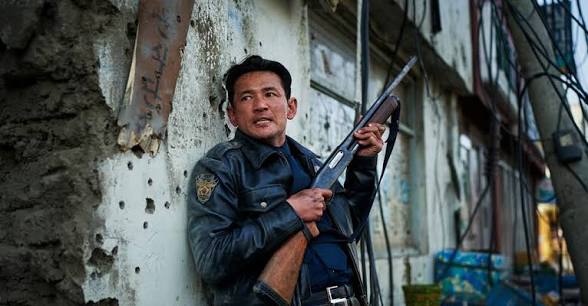
The idea is enormous. Something extraterrestrial arrives in a small South Korean community near the Demilitarized Zone. Livestock is slaughtered, residents are threatened, and the local authorities find themselves dealing with something that goes well beyond their usual responsibilities.
It is an interesting setup, particularly when you consider the possibilities.
But where is everyone else?
An invasion that feels strangely isolated
One of my biggest reservations is how contained the entire situation feels.
When something from another world crashes into a populated area, particularly something capable of causing the level of destruction depicted in Hope, I naturally expect the world beyond that immediate location to become part of the story.
Where is the military response? Where are the national authorities? What is happening beyond the town? Surely an incident of this magnitude would attract considerably more attention than a handful of local police officers and armed residents.
I understand the creative decision to keep the story intimate. Na Hong-jin deliberately places the action in an isolated community, allowing the audience to experience the confusion and terror alongside its residents. The setting near the DMZ also gives the film an interesting atmosphere of suspicion and military anxiety.
However, there is a difference between making an invasion feel personal and making the world around it feel nonexistent.
For a production carrying such a grand premise, I wanted to see more consequences beyond the immediate surroundings. A little more institutional panic, a little more military involvement and perhaps a glimpse of how an entire country might react to an extraterrestrial threat.

Instead, the film often feels as though its enormous premise has been squeezed into a relatively small cinematic space.
The visuals deserve recognition
Now, one area where I genuinely have very little to complain about is the ambition behind the action.
The creature designs, the physical performances and the movement throughout the action sequences demonstrate just how far South Korean genre filmmaking is willing to push itself.
There are moments when the action carries an almost Attack on Titan-like energy. The scale, the frantic movement, the sense of ordinary people being completely outmatched by something considerably more powerful — it creates an interesting visual language.
I wouldn’t necessarily compare the two productions directly, but I can appreciate the ambition.
South Korea has spent years developing an international reputation through its thrillers, horror films and increasingly ambitious action productions. Hope feels like another attempt to demonstrate that Korean cinema can compete in a genre traditionally associated with Hollywood’s enormous production budgets.
And although I have seen criticism directed at the film’s computer-generated creatures, I personally found the visual effects more than acceptable. They weren’t something that pulled me out of the experience, and there was enough physical action and environmental destruction to keep the spectacle entertaining.
The film may not have the immaculate visual polish of a major Hollywood science-fiction franchise, but I would rather see a production take creative risks than play everything safely.
Where was the humour?
This is perhaps a more personal criticism, but something I particularly enjoy about Asian cinema is its ability to introduce humour when you least expect it.
Japanese and South Korean films often have a wonderful understanding of tonal contrast. One moment you’re watching something incredibly serious, the next a character delivers an unexpected line, reacts in an absurdly human way or finds themselves in a situation that is unintentionally hilarious.
It is one of those qualities that makes many Asian productions so memorable.
Hope does have moments of black comedy, particularly through the personalities of its villagers and local authorities. However, I found myself wanting more of that unexpected humour.
With an extraterrestrial invasion unfolding in a small community, there is enormous potential for awkward human reactions, absurd misunderstandings and the sort of comedy that makes a terrifying situation feel strangely believable.
Instead, much of the film’s humour felt less prominent than I would have liked.
Perhaps I was expecting too much of the distinctly unpredictable character comedy that has made so many Korean films enjoyable.
An ambitious film that doesn’t quite reach its potential
What makes Hope interesting is that it isn’t simply trying to be another monster movie.
Na Hong-jin, the filmmaker behind The Wailing, is clearly interested in something beyond the conventional battle between humanity and an invading species. The film gradually introduces a more complicated perspective on its extraterrestrial visitors, challenging the audience’s initial assumptions about who the monsters actually are.
That is an interesting direction, and I appreciate the decision not to give audiences another straightforward humans-versus-aliens spectacle.
But at 156 minutes, I wanted the film to do more with its world, its characters and the consequences of its central event.
There is enough material here for something considerably larger. Perhaps that is the point. Perhaps the intention was never to deliver a conventional alien invasion blockbuster.
Nevertheless, I finished the film feeling that its ambitions were greater than what appeared on screen.
And that brings me back to the title.
Hope is a curious name for a film that left me feeling rather hopeless about the scale of its own universe.
I enjoyed seeing South Korean cinema take another step into large-scale science fiction. I appreciated the creature work, the action and the willingness to experiment with a genre that has become increasingly familiar.
I simply wanted more.
More world-building. More consequences. More unexpected humour. And perhaps a little more of that grand cinematic spectacle that makes an extraterrestrial invasion feel like an event the entire world should be talking about.
My verdict: Hope is worth watching, particularly if you enjoy Asian science fiction and unconventional monster movies. It has ambition, personality and some genuinely entertaining action. But for all its extraterrestrial spectacle, I never quite felt that the world was ending.