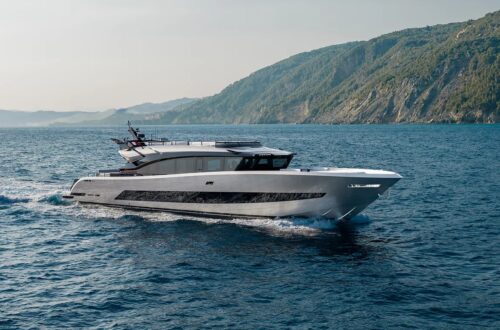
The boundary between tarmac and open ocean has officially blurred. In a definitive construction milestone, the Ferrari Hypersail project has transitioned out of its initial structural phase and charged directly into the high-stakes world of advanced systems integration.

The 100-foot fully foiling monohull prototype has officially “kissed the deck”—marking the successful integration of its massive, organic carbon-fiber coachroof and deck structures with the raw hull shell freshly removed from its mold in Pisa, Italy. With the structural backbone locked down, the project enters Phase 2, turning its focus toward the complex internal organs that will give this racing machine its life.
The Next Frontier: Complex Systems Integration
Because the Hypersail is designed to run with zero combustion engines on board, Phase 2 is entirely focused on turning the vessel into a self-sufficient energy ecosystem. The teams are currently laying down the groundwork for:
- Energy & Power Generation: Integrating the 100 square meters of solar arrays, wind turbines, and kinetic hydro-harvesting systems.
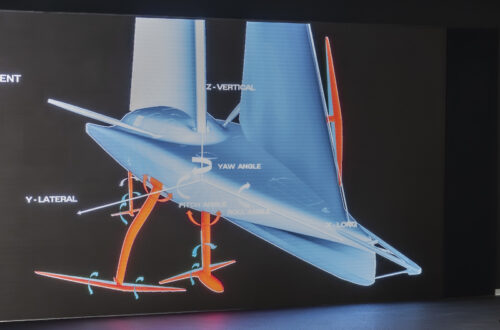
- High-Pressure Hydraulics: Installing the high-performance actuators and hydraulic networks required to control the massive forces of the automated, F1-derived flight control systems and the innovative canting keel.
- Electrical Backbones: Wiring the complex array of on-board computers, sensor arrays, and instrumentation necessary to stabilize a 30-meter craft flying at speeds approaching 50 knots.
Inside the Shipyard: Meet the Minds Driving the Evolution

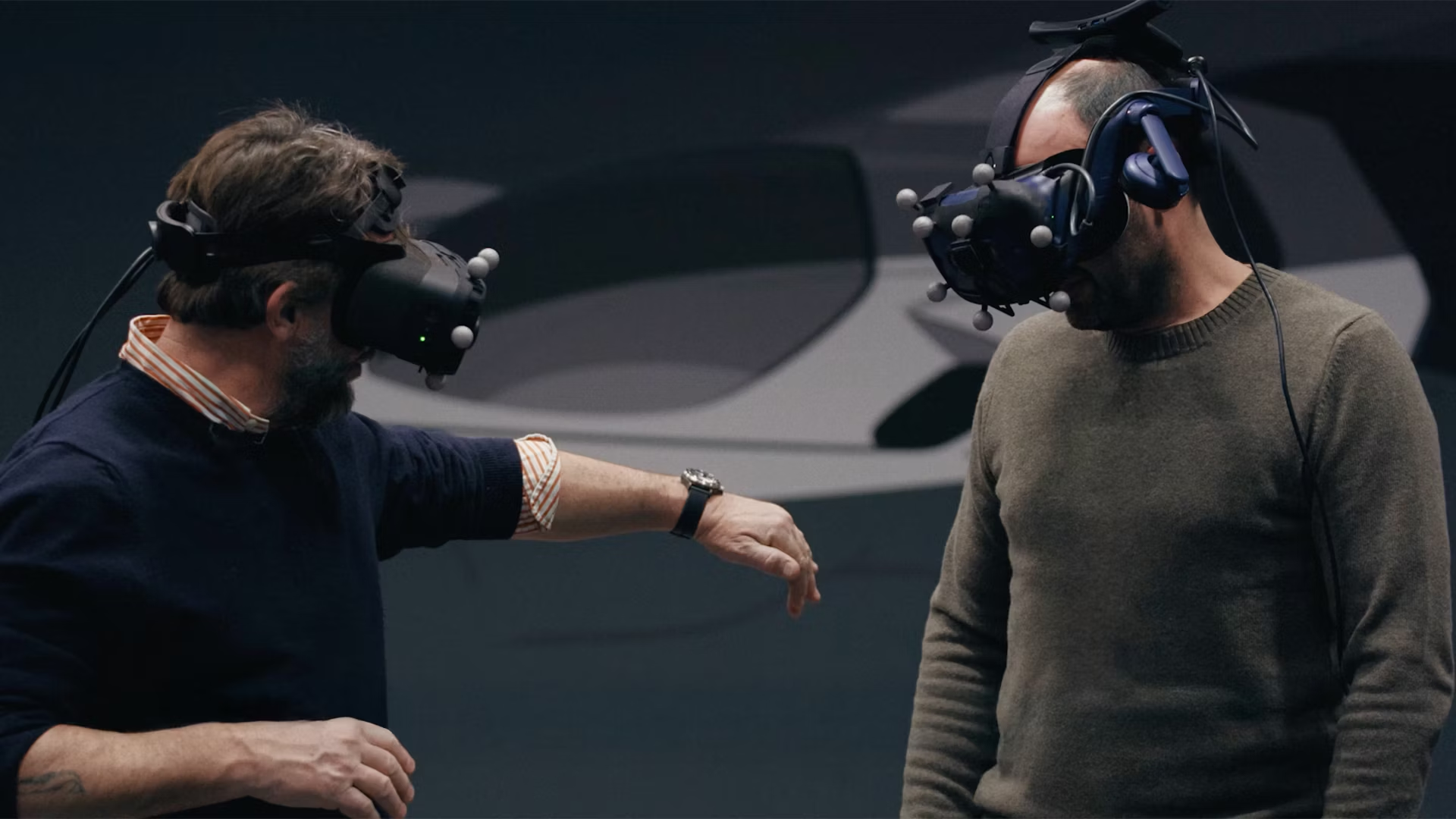
A recently released behind-the-scenes video from Ferrari gives an uncompromised look at the raw human capital making this project a reality. The scale of the operation is immense, combining a massive multidisciplinary team of aerodynamicists, carbon-fiber craftsmen, and structural engineers. From Maranello’s hypercar division to the shores of Tuscany, the project is sustaining a deep pool of world-class technical talent.
Three key figures guide us through the complex reality of building a 100-foot flying laboratory:
1. Enrico Voltolini – Project Leader
Taking the helm for this intensely operational phase is Enrico Voltolini. A brilliant nautical engineer and elite athlete, Voltolini is the ultimate bridge between technical theory and extreme on-the-water reality. He brings an elite pedigree to the table, having served as a core trimmer and grinder for the Luna Rossa Prada Pirelli America’s Cup team and racing in the high-octane SailGP championship. His deep familiarity with ultra-high-performance foiling software and structural mechanics makes him uniquely qualified to oversee a vessel designed to fly across oceans.

2. The Shipyard Overseer & Manager
On the ground in Pisa, the Shipyard Manager anchors the physical construction, orchestrating the army of specialized shipwrights and composite technicians. His job is a lesson in unpretentious precision: ensuring that massive plies of vacuum-compressed carbon fiber and titanium components meet the exact tolerances required to withstand six-meter ocean swells while soaring on three points of contact.
3. Lead Communications
Providing the narrative framework for the project, the Lead Communications specialist bridges the gap between raw engineering and the historic soul of the Prancing Horse. They underscore how the design—cloaked in a striking interplay of exposed Grigio Hypersail carbon and the historic Giallo Fly yellow—is guided entirely by a balance of airflow, thermal management, and raw aerodynamic performance.
The Technical Reality: “Hypersail isn’t just a boat; it’s an extension of endurance racing. The lessons learned managing autonomous energy systems under brutal ocean conditions will directly cross-contaminate the engineering of Ferrari’s next generation of road cars.”
As Phase 2 advances in the shipyard, the countdown to the late-2026 launch and subsequent sea trials draws closer. The raw structure is complete; now, the engineering teams are giving the beast its nerves and muscle.