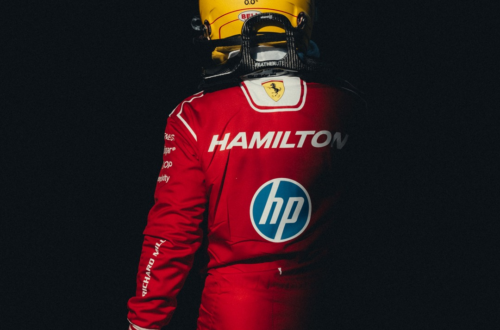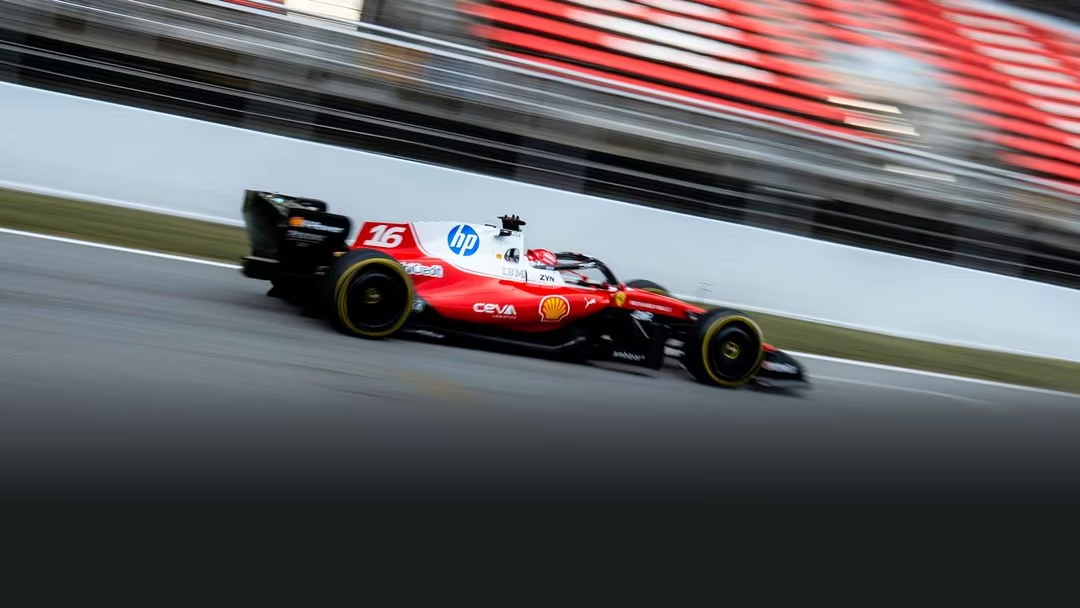
As the FIA concludes its post-Miami review period, the Additional Development and Upgrade Opportunities (ADUO) system has moved from a theoretical safety net to a vital financial and technical lifeline. Designed to prevent a repeat of the 2014 “unmatchable” dominance, ADUO targets the ICE Performance Index to ensure struggling manufacturers aren’t locked out of the championship before the 2026/27 seasons even mature.

Here is the current projected grid alignment based on the latest performance index thresholds.
- Rally Saudi Arabia Cancelled: WRC Championship Will Be Decided in SardiniaThe 2026 FIA World Rally Championship has just been rewritten. According to RACER, Rally Saudi Arabia has been cancelled as the final round of the WRC season, meaning the championship will now conclude much earlier than planned at Rally Italia Sardegna from October 1–4. The Saudi Arabian event had been scheduled for November 12–15 and was supposed to close the WRC calendar for a second consecutive year. Instead, the championship will finish in Italy. And that changes everything. Saudi Arabia Drops Off the WRC Calendar The decision comes after months of uncertainty surrounding the situation in the Middle East. The FIA and WRC Promoter said they had worked extensively with the Saudi Automobile and Motorcycle Federation, local organizers and championship stakeholders to find a way to keep the WRC event on schedule. Ultimately, the governing body concluded that ongoing regional developments and their effect on logistics meant the WRC element could not proceed this year. FIA President Mohammed Ben Sulayem said the decision was not an easy one, particularly given the amount of preparation that had already gone into the event. Importantly, Saudi Arabia itself has not cancelled the rally entirely. The event will still take place on November 12–15 as part of the FIA Middle East Rally Championship, but it will no longer count toward the 2026 World Rally Championship. Sardinia Becomes the Championship Finale That leaves Rally Italia Sardegna as the final round. Originally scheduled to be the penultimate event of the season, the Sardinian gravel rally will now decide both the drivers’ and co-drivers’ championships. The 2026 WRC calendar consequently falls from 14 rounds to 13. There had been speculation that another rally could be brought into the calendar to replace Saudi Arabia. Rally Catalunya was among the events discussed. But no replacement has been selected. Instead, the FIA has opted to end the championship one round earlier. Elfyn Evans Suddenly Has Everything in Front of Him The biggest sporting consequence belongs to Elfyn Evans. The Toyota driver heads into Sardinia with a 17-point advantage over teammate Sami Pajari, while Oliver Solberg sits third, 21 points behind Evans. There are now a maximum of 35 points available in the final round. That means the championship remains mathematically open. Evans cannot simply arrive in Sardinia and assume the title is secured. But the Welshman has been handed a substantially different championship situation than the one he would have faced with two rallies remaining. Instead of potentially having 70 points available across Saudi Arabia and Sardinia, there are only 35. Every stage in Sardinia therefore carries considerably more weight. The Evans Story For Evans, this could become one of the defining moments of his career. The Toyota driver has finished runner-up in the championship five times in the last six seasons, repeatedly finding himself close to the ultimate prize without securing it. Reuters reports that a championship in Sardinia would make Evans Britain’s third World Rally Champion, following Colin McRae in 1995 and Richard Burns in 2001. Now, instead of having to fight through two final rounds, Evans has one. One rally. One set of gravel stages. One final opportunity. But Pajari and Solberg are still within striking distance. Toyota Has Already Secured One Championship While the drivers’ championship remains undecided, Toyota does not have to worry about the manufacturers’ title. Toyota has already secured the manufacturers’ championship for the sixth consecutive year. That gives the Japanese manufacturer a little breathing room heading into Sardinia. But internally, the focus will now shift almost entirely toward the drivers’ title. And Toyota has three drivers occupying the top three positions. That makes the final rally particularly interesting. Evans has the points advantage. Pajari has the opportunity to attack. Solberg has arrived late in the championship fight but has put himself firmly into contention following his victory in Chile. Three Toyota drivers. One championship. One rally remaining. What Does the Cancellation Mean for the WRC? There is also a larger question surrounding the future of Rally Saudi Arabia. The event only made its WRC debut in 2025 as part of a long-term agreement between Saudi Arabia and the championship. The FIA has made clear that the cancellation is not being presented as the end of the Saudi Arabian WRC project. Ben Sulayem said the FIA’s confidence in the organizers and the long-term future of the rally remains unchanged, while WRC Promoter CEO Éric Boullier said the intention is to work toward bringing the event back to the WRC in 2027. That distinction matters. This is a cancellation of the 2026 WRC round, not an announcement that Saudi Arabia has permanently lost its place on the championship calendar. Another Motorsport Event Affected The decision also comes amid a much wider disruption to international motorsport in the region. RACER notes that the WRC cancellation follows the loss or postponement of several other major motorsport events in the Middle East, including Formula 1’s Bahrain and Saudi Arabian Grands Prix, the FIA World Endurance Championship’s Qatar and Bahrain events, and MotoGP’s Qatar race. That makes the WRC decision particularly significant. The championship has now chosen certainty rather than trying to force another event into the calendar. And for the teams, that means they know exactly where the 2026 season will end. Sardinia Just Became Much Bigger Rally Italia Sardegna was already going to be a demanding gravel event. Now it carries the weight of an entire championship. The event runs from October 1–4, and when the final stage is complete, the 2026 World Rally Champion will be known. There will be no Saudi Arabian finale waiting six weeks later. No final comeback opportunity. No second chance. Everything now comes down to Sardinia. For Evans, it is an opportunity to finally turn years of near-misses into a championship. For Pajari, it is a chance to overturn a 17-point deficit. For Solberg, the target is even further away, but 35 points remain available. And for Toyota, it becomes an unusual situation: the manufacturer has already secured its championship while three of its own drivers fight for the sport’s biggest individual prize. The WRC Ends in Italy The cancellation of Rally Saudi Arabia changes the ending of the 2026 season completely. What was supposed to be a 14-round championship ending in Jeddah will instead become a 13-round championship decided on the gravel roads of Sardinia. The Saudi event will continue as a Middle East Rally Championship round in November, while the WRC looks toward a potential return in 2027. But for 2026, there is only one destination left. Sardinia. And with Evans, Pajari and Solberg separated by just 21 points at the top of the standings, the final rally of the year has suddenly become the only rally that matters.
- errari 499P Evo: The Test That Reveals Ferrari’s Next HypercarFerrari 499P Evo: The Test That Reveals Ferrari’s Next Hypercar Ferrari didn’t leave Texas after winning the Lone Star Le Mans. Instead, Maranello stayed at the Circuit of the Americas and put its most important endurance-racing project back onto the track. The Ferrari 499P Evo, the heavily revised development version of Ferrari’s Le Mans Hypercar, completed two days of testing at COTA on September 8 and 9 as the manufacturer continues preparing for the 2027 FIA World Endurance Championship. The camouflage-covered prototype is beginning to reveal what Ferrari has planned for the next chapter of the 499P. And this is considerably more than a cosmetic update. From Victory to Development The timing of the test was almost perfect. Ferrari had just taken its first WEC victory of the 2026 season at COTA with the #50 499P of Miguel Molina, Antonio Fuoco and Nicklas Nielsen. The result ended a difficult start to Ferrari’s title defence and gave the team an ideal opportunity to remain at the circuit and gather additional data. The #50 Ferrari won the six-hour race after a dramatic closing phase, while Toyota’s leading #7 suffered a hydraulic failure with less than 15 minutes remaining. Ferrari therefore left Austin with something it desperately needed: a victory and a huge amount of additional track data. Then the development programme began. James Calado, Antonio Fuoco, Nicklas Nielsen and Yifei Ye all participated in the test, with Calado, Nielsen and Ye experiencing the 2027 development car for the first time. Ferrari also ran its current-specification 499P during the programme, allowing the engineers to make direct comparisons between the existing car and the prototype. Ferrari has not released official lap-time results from the test, so there is no meaningful public ranking of the 499P Evo against the other Hypercars from these sessions. The objective was different. This was engineering work. Four Evo Jokers The biggest story surrounding the new 499P is what Ferrari is allowed to change. The 499P is an LMH rather than an LMDh, meaning Ferrari operates within the FIA WEC homologation system that restricts major technical changes during a car’s competitive life. Ferrari has four remaining Evo Joker allocations available for the next major evolution. The manufacturer has previously used one Joker, introduced during 2024, which concentrated on brake cooling and associated aerodynamic changes. The upcoming 2027 car could therefore represent the most extensive evolution of the 499P since its introduction. Ferrari has been careful not to describe the prototype as an entirely new car. It isn’t. The underlying 499P remains recognizable, but Ferrari is effectively using the available development allowance to attack areas where the original concept can still be improved. And the changes visible on the test car are substantial. The Front End Has Changed The nose immediately gives away the evolution. The splitter remains recognizable, but it has been raised and reshaped, with sharper edges around the central section. The lighting arrangement has also changed. The previous configuration has been replaced by a slimmer arrangement incorporating a central LED strip, while additional lighting elements remain toward the outside of the nose. But the headlights aren’t simply a styling exercise. Ferrari has reworked the airflow around the front of the car. The previous brake-cooling arrangement, which incorporated openings inside the headlight area, has been redesigned. New openings have appeared around the central lighting section, while additional aerodynamic deflectors help guide airflow underneath the bodywork and toward the side of the car. There is also a new opening between the front wheel arch and the side bodywork. That is particularly interesting because airflow management around the wheel arches is critical on a modern Le Mans Hypercar. Ferrari is clearly attempting to gain more control over the air travelling around the front wheels rather than simply chasing additional downforce. The Sidepods Are Different Moving rearward, Ferrari has also reworked the central bodywork. The vents above the side skirts have been shortened and repositioned, while additional openings have appeared farther back. The prototype also features a large opening ahead of the rear wheel arch. This is where the 499P Evo starts to look less like a conventional facelift and more like a carefully re-engineered aerodynamic package. Every opening has a purpose. Every surface is being used to control either cooling, pressure or airflow. The challenge for Ferrari is making all of those changes work together without creating compromises elsewhere. Ferrari Has Completely Reworked the Rear The rear of the prototype may be where the biggest visual changes can be found. The rear wing is substantially different. Ferrari has introduced a new wing architecture with additional side supports and a revised multi-element profile. Below it, the previous beam-wing arrangement has also disappeared. Instead, the prototype features a horizontal red LED element positioned in the central rear section. The diffuser has been revised as well. Ferrari has raised the rear bodywork to make room for a substantially different diffuser arrangement, with two larger openings separated by a central section. The bodywork surrounding the rear wheels has also been redesigned. Taken together, these changes suggest Ferrari is looking at the entire aerodynamic balance of the 499P rather than simply adding one or two isolated components. The Real Target: Low-Speed Performance There is an important reason for that. The 499P has already demonstrated extraordinary speed. Ferrari won Le Mans with the car in 2023 and 2024, then went on to take the 2025 WEC manufacturers’ and drivers’ championships. But endurance racing isn’t won by being spectacular at one type of circuit. The car has to work at Monza. It has to work at Spa. It has to survive Le Mans. It has to deal with slow corners at Interlagos. It has to deal with the very different demands of Fuji. Ferrari’s development philosophy has therefore increasingly focused on making the 499P more versatile, particularly in the areas where low-speed performance and tyre management have presented challenges. That philosophy is continuing with the Evo. Monza Was the Beginning. COTA Is the Next Layer. The COTA test was not Ferrari’s first outing with the new prototype. The development programme began publicly at Monza in late July. There, Ferrari ran the camouflage-covered 499P Evo for two days with Fuoco, Antonio Giovinazzi, Alessandro Pier Guidi and Miguel Molina sharing driving duties. Ferrari described the programme as the evaluation and validation of a range of technical and aerodynamic solutions. COTA represents the next stage. Ferrari now has data from two very different circuits. Monza is dominated by long straights, heavy braking zones and relatively low aerodynamic drag requirements. COTA is much more varied. It combines long straights with high-speed direction changes, technical corners and substantial braking zones. That makes the Texas circuit a useful laboratory for understanding whether the new aerodynamic package actually works across a wider operating window. Ferrari’s next scheduled development work will continue later in the year, with testing planned at Fuji, Silverstone and Barcelona. So, What Did Ferrari Actually Learn? Ferrari has not released the kind of test sheet that would allow us to say the 499P Evo was definitively faster by a specific number of seconds. That distinction matters. The COTA test was not a race. There was no qualifying session. There was no Balance of Performance comparison. And Ferrari was not required to show its full performance potential. Instead, the value comes from the engineering data. Ferrari can compare the new aerodynamic package against the current 499P, study tyre behaviour, evaluate cooling, examine high- and low-speed balance and determine which of the prototype’s new solutions deserve to survive into final homologation. Ferrari itself described the earlier Monza test as positive and said the programme was helping engineers understand which of the new elements offered the most promising directions for 2027. The 499P Isn’t Finished Yet Perhaps the most important detail is that what we are seeing today is not necessarily the final 2027 Ferrari 499P. The prototype is still under development. Some of the visible aerodynamic solutions may change before homologation. Others may disappear completely. Ferrari has essentially created a rolling laboratory. The camouflage isn’t hiding a finished car. It is hiding a collection of ideas. And Ferrari has until homologation to decide which ones make the final cut. That makes the coming months particularly interesting. The 499P has already become one of Ferrari’s most successful modern racing cars. It has won Le Mans three consecutive times and helped return Ferrari to the top of the World Endurance Championship. But the competition has changed. Toyota remains a major force. Cadillac is increasingly competitive. BMW, Alpine, Aston Martin and Genesis are developing their own Hypercar programmes, while the 2027 grid is expected to become even more significant with additional manufacturers entering the category. Ferrari therefore isn’t developing the Evo because the 499P has failed. It is developing it because the competition is catching up. Ferrari’s Next Weapon The 499P Evo currently looks like evolution in the most literal sense. The silhouette remains unmistakably Ferrari. The V6 hybrid architecture remains at the heart of the car. But underneath the camouflage, Ferrari is changing the way the car breathes, turns, cools itself and generates aerodynamic performance. The COTA test adds another chapter to that development story. There are no headline lap times yet. There doesn’t need to be. For Ferrari, the important result is the data. The 2027 499P is being built one test, one aerodynamic surface and one engineering decision at a time. And if Ferrari gets those decisions right, the next version of the 499P could arrive not as a replacement for the car that conquered Le Mans, but as its most complete evolution yet.
- Ferrari Hypersail Meets ABB: The Electrical Architecture Behind Ferrari’s Flying YachtFerrari’s ocean-going experiment just gained a new technology partner—and this time, the story is about electricity, not horsepower. Ferrari Hypersail has added ABB as a Premium Partner and Electrification Partner, bringing one of the world’s major electrification and automation companies into Ferrari’s increasingly ambitious sailing project. Announced on September 14, 2026, the partnership goes considerably deeper than putting another logo around the project. ABB will contribute expertise in Direct Current technology, marine electrical systems, energy storage, intelligent monitoring and energy management—all areas that become critical when the goal is to create a 100-foot ocean-going yacht capable of operating for weeks using renewable energy. And this is where Ferrari Hypersail becomes much more than a sailing project. It becomes an energy-management laboratory. A Yacht That Has to Make Its Own Energy Ferrari Hypersail is being developed as a 100-foot, full-foiling monohull designed to operate using renewable energy. The concept is extraordinary. Instead of simply carrying enough conventional energy onboard to complete a voyage, Hypersail is being designed around the idea of generating, storing and managing its own energy while at sea. Ferrari says the yacht must be capable of remaining self-sufficient for weeks at a time in some of the most hostile environments on Earth. That changes everything. Every watt matters. Every electrical conversion matters. Every piece of equipment consuming energy has to justify its existence. And when the yacht is flying above the water on foils at high speed, the electrical system cannot simply be an afterthought. It becomes part of the performance architecture. Why ABB Matters ABB brings more than 25 years of experience in Direct Current technology to the project, backed by more than 700 patents in the field. Its role will cover several critical areas, including DC system integration, energy management, intelligent power distribution, energy storage, monitoring and marine electrical systems. That might sound industrial rather than exotic. But look at what Ferrari is asking this system to do. Hypersail’s electrical architecture will operate as a self-sufficient microgrid, using both 48-volt and 800-volt DC systems. Those systems will be responsible for supplying energy to critical functions including navigation, foil controls, safety systems and propulsion. The significance of the 800V architecture should not be overlooked. High-voltage DC allows substantial electrical power to be moved with lower current for a given power requirement, which can help reduce losses and conductor requirements. In a project where weight, efficiency and available energy are constantly being balanced, that becomes particularly valuable. The Microgrid at Sea Think of Hypersail less like a conventional yacht and more like a floating, moving microgrid. Energy is generated. Energy is stored. Energy is distributed. Energy is consumed. And all of those processes have to remain synchronized while the boat is moving through an environment that is anything but stable. The yacht has to deal with salt spray, extreme cold, pressure, constant motion and rapidly changing operating conditions. ABB’s role is therefore about making the electrical architecture resilient enough to operate under those circumstances while extracting as much useful energy as possible from the renewable sources available onboard. This is one of the reasons the partnership is so interesting. Ferrari isn’t simply looking for an electric boat. It’s looking at how energy should be generated, controlled and distributed when there is no conventional energy infrastructure around you. Where Ferrari’s Automotive DNA Enters the Water Ferrari’s involvement makes the project even more intriguing. The company has already identified Hypersail as a technology-transfer opportunity, with its own development work touching areas including energy management, the e-axle, software dynamic control and human-machine interface technologies. That means the project sits somewhere between yacht design, motorsport engineering and automotive research. The vehicle isn’t on four wheels. But the engineering questions are remarkably familiar. How do you manage energy? How do you control a complex machine in real time? How do you reduce losses? How do you extract maximum performance from limited resources? How do you build systems capable of operating at the edge of their performance envelope? Those questions are just as relevant on the ocean as they are on a racetrack. The Ocean Becomes the Test Track There is another reason ABB’s involvement matters. For ABB, Ferrari Hypersail becomes a demanding real-world test environment for technologies that could eventually have applications far beyond sailing. The company says the lessons learned from the project could contribute to future power systems for shipping, renewable-energy infrastructure, industrial microgrids and data centers. That is an important distinction. Hypersail may be an extreme project, but the engineering problems it is trying to solve aren’t confined to the ocean. Renewable energy is inherently variable. Energy storage needs to be intelligently managed. Power distribution needs to become increasingly efficient. And industries are searching for ways to reduce conversion losses while handling increasingly large electrical loads. A 100-foot flying yacht is certainly an unusual place to investigate those problems. But that is precisely what makes it interesting. Ferrari Is Building Something Different The Hypersail project has never really looked like a conventional Ferrari project. There is no V12 sitting behind the driver. There is no exhaust note. There isn’t even a traditional road beneath it. Instead, Ferrari is applying its engineering philosophy to a machine that has to deal with wind, waves, hydrofoils, renewable energy and ocean endurance. Now ABB is adding another layer. Direct Current. The partnership gives Hypersail an electrical backbone designed around efficiency and self-sufficiency rather than simply supporting conventional onboard systems. And that could ultimately be one of the most important parts of the entire project. Because the spectacular images of Hypersail flying above the water will inevitably grab the attention. But underneath that spectacle is something far less visible: A complex energy system constantly deciding where power needs to go, how much can be stored and how efficiently the yacht can continue operating. The Ferrari That Doesn’t Need a Road Ferrari has spent decades perfecting the relationship between power, weight, aerodynamics and control. Hypersail takes those principles somewhere completely different. The road becomes the ocean. The tires become foils. The engine becomes an integrated electrical system. And now, with ABB involved, the energy architecture is becoming just as important as the shape of the yacht itself. The result could be one of Ferrari’s most unconventional technology experiments yet. Not because it is trying to build the fastest Ferrari on land. But because it is asking a much broader question: How far can a high-performance machine go when it has to create and manage the energy that keeps itself moving? For Ferrari Hypersail, ABB may have just become one of the most important pieces of that answer.
- Antonelli Conquers Madrid: The Madring’s First Grand Prix Belongs to MercedesAntonelli Conquers Madrid: The Madring’s First Grand Prix Belongs to MercedesKimi Antonelli has won the first Formula 1 race at Madrid’s new Madring, but the story of the inaugural Spanish Grand Prix is as much about a missed McLaren victory, Ferrari heartbreak and a circuit already facing questions as it is about Mercedes’ latest triumph.There are certain moments in Formula 1 that become part of the sport’s history.Today was one of them.The first Formula 1 Grand Prix at the Madring is officially in the books — and Kimi Antonelli is its first winner.But if Lando Norris had been given the opportunity to write the script himself, this race would almost certainly have ended very differently.Instead, a perfectly timed Virtual Safety Car, a costly McLaren pit stop and a circuit that made overtaking extraordinarily difficult combined to hand Antonelli his eighth victory of the 2026 season.More importantly, the young Italian has extended his championship advantage to 81 points over Mercedes teammate George Russell.Norris Had Madrid in His HandsLando Norris started from pole.He had already produced one of the defining qualifying laps of the weekend, beating Antonelli by just 0.011 seconds to establish the first-ever pole position at the Madring.And in the early stages of the race, Norris looked every bit like a driver who intended to turn pole into victory.The McLaren had pace.Norris had control.Antonelli was close enough to apply pressure but not close enough to make the decisive move.Then the race changed.A Virtual Safety Car created the strategic opening.Antonelli was able to pit at precisely the right moment, while McLaren’s timing worked against Norris. To make matters worse, the team suffered a seven-second pit-stop delay, turning what had looked like a straightforward victory into a fight for the podium.Norris emerged behind Antonelli.And at the Madring, that was almost enough to decide the race.The Track Became the Third DriverThis was the question surrounding Madrid before the lights went out:Could the Madring produce good racing?The answer, at least on its first outing, was complicated.The circuit is fast.It is visually spectacular.It has elevation changes, high-speed sections and the heavily banked La Monumental.But it is also narrow.And when a faster car catches a slower one, there simply aren’t many places to put the car alongside.Norris discovered that problem first-hand.Despite having the pace to challenge Antonelli, he couldn’t simply drive around the Mercedes.Max Verstappen was even more difficult to dislodge.The result was a race in which strategy became disproportionately important because track position was so valuable. The Guardian described the event as largely processional, with the circuit’s limited overtaking opportunities becoming one of the defining features of the afternoon.That isn’t necessarily the final verdict on Madrid.But it is certainly the first warning.Verstappen Takes SecondMax Verstappen quietly turned the race into another reminder of why Red Bull cannot be discounted.He finished second, separating Antonelli from Norris and keeping McLaren from completing the podium’s top two positions.For Verstappen, it was another opportunity to collect points in a championship fight that continues to evolve around Antonelli.But Antonelli is making that fight increasingly difficult.Eight victories.A massive championship advantage.And now the distinction of becoming the first winner at the Madring.Norris Salvages ThirdThird place will probably feel strange for Norris.On one hand, a podium at a new Grand Prix is a strong result.On the other, this was a race he appeared capable of winning.He started from pole.He led.He had the pace.Then strategy took the victory away.Norris himself acknowledged after the race that he believed he deserved the win, while Antonelli admitted that Norris was unfortunate.That honesty says quite a lot.Mercedes won.But McLaren may have had the fastest overall race package.Ferrari: Leclerc Saves the Day While Hamilton’s Race Ends EarlyAnd then there is Ferrari.After the chaos of Monza, Madrid was supposed to be the reset.Instead, Ferrari leaves the first Madring Grand Prix with Charles Leclerc fourth and Lewis Hamilton retired.Leclerc’s fourth place is valuable.It keeps him near the front of the championship battle and, more importantly, prevents another Ferrari weekend from becoming a complete disaster.But Hamilton’s retirement is the much bigger story.The seven-time World Champion suffered brake problems in the early stages, forcing him out of the race. Hamilton later explained that he believed the Ferrari had the pace to fight for victory, making the mechanical failure even more frustrating.After the difficulties at Monza, this is precisely the kind of weekend Ferrari did not need.The team needed points.It needed reliability.It needed execution.Instead, one Ferrari finished fourth while the other never saw the chequered flag.Antonelli Is Running Away With the ChampionshipThere is a bigger story developing underneath all of this.Kimi Antonelli is no longer simply the young Mercedes driver having an exceptional season.He is becoming the championship favourite.The Madrid victory takes him to 292 points, while George Russell sits second on 211.That is an enormous advantage.And with Ferrari’s Leclerc still chasing and Hamilton suffering another setback, the championship is beginning to look increasingly like Antonelli’s to lose.The Italian is only 20 years old.Yet he is driving like someone who has been here for a decade.What About Aston Martin?For Aston Martin, Madrid provided another difficult chapter.Fernando Alonso failed to reach the points, while the team continues its search for the performance that Adrian Newey’s arrival has made everyone expect.The official Madring report noted that Alonso was eliminated in Q1 and started deep in the field, finishing behind the midfield battle rather than threatening the front.That doesn’t mean Newey’s project has failed.But the stopwatch is becoming increasingly difficult to ignore.Aston Martin has the resources.It has Honda.It has Newey.It has Alonso.What it doesn’t yet have is a car consistently capable of fighting Mercedes, Ferrari, Red Bull and McLaren.Madrid didn’t change that.The First Madring Grand Prix Has a ProblemAnd here is perhaps the most important conclusion from today.The Madring looks fantastic.But Formula 1 isn’t a beauty contest.It is racing.If the circuit makes qualifying hugely important because overtaking is nearly impossible, then strategy and track position can become more important than outright race pace.That is exactly what happened today.Norris had the car to win.Antonelli had the strategy.And Verstappen had the position.The result was decided by a combination of all three.Perhaps the circuit will improve as rubber goes down.Perhaps teams will discover better lines.Perhaps the cars will evolve.But after one Grand Prix, the Madring has already given Formula 1 something to discuss.Madrid Belongs to AntonelliUltimately, however, history will not remember today as the race Norris lost.It will remember it as the race Kimi Antonelli won.Mercedes has conquered Madrid.Antonelli has strengthened his championship lead.Verstappen has finished second.Norris has taken third after watching a likely victory disappear during the pit cycle.Leclerc has salvaged fourth.Hamilton has suffered another painful retirement.And Formula 1 has discovered that the spectacular new Madring may need to prove that it can deliver the kind of racing the sport expects from a modern Grand Prix venue.The first chapter belongs to Mercedes.The first name written into Madring’s history is Kimi Antonelli.And with an 81-point championship advantage, the frightening question for everyone chasing him is becoming increasingly simple:Who is going to stop him?
- Aston Martin’s Newey Revolution Still Has Something to Prove in MadridThe first session at the new Madring was supposed to give Aston Martin another opportunity to show that the pieces are finally coming together. Instead, FP1 left more questions than answers. There is something almost poetic about Aston Martin arriving in Madrid. A new circuit. A new chapter of the Spanish Grand Prix. A car shaped during one of the biggest technical transitions Formula 1 has seen in years. And, standing at the centre of it all, Adrian Newey. But after the first 60 minutes of running at the Madring, Aston Martin still looks like a team searching for the answer. Fernando Alonso finished FP1 in 15th, while Lance Stroll ended the session roughly seven-tenths behind his teammate. The more immediate concern, however, wasn’t simply the position on the timing screen. Alonso also brushed the wall as drivers began learning a circuit that offers very little forgiveness. For a team that desperately needs evidence of progress, it wasn’t the opening statement many were hoping for. Madrid Was Always Going to Be Different The Madring is unlike anything Formula 1 has raced on before. Built around Madrid’s IFEMA exhibition centre and the surrounding roads, the circuit combines fast sections, elevation changes, blind corners and the heavily banked Turn 12 known as La Monumental. Drivers arrived having done most of their preparation in simulators rather than through traditional track running. That matters. FP1 is therefore not simply a conventional practice session. Every team is learning the circuit. Every driver is searching for braking references. Every engineer is trying to understand tyre behaviour. And every setup decision has been made with incomplete information. So Aston Martin’s 15th place should not yet be treated as a verdict. But it should be treated as a warning. Mercedes Sets the Standard At the front, George Russell immediately established Mercedes as the benchmark of the opening session. Russell’s 1:34.077 put him 0.286 seconds ahead of teammate Kimi Antonelli. Charles Leclerc was third for Ferrari, with Lewis Hamilton fourth, while Max Verstappen and Lando Norris completed the top six. That is significant for Aston Martin because this is precisely the group it needs to begin closing. Instead, Alonso was more than a second away from Russell’s benchmark. That doesn’t mean Aston Martin is a second slower in genuine race performance. Fuel loads, tyre programmes and run plans can completely distort an FP1 classification. But it does mean the team hasn’t yet produced the obvious headline: Newey’s Aston Martin has arrived. Alonso Still Has to Carry the Story And then there is Fernando Alonso. At 45, Alonso remains one of the most experienced drivers on the grid, but his future beyond 2026 remains uncertain. That makes every race increasingly important. Alonso has indicated that his decision about continuing into 2027 isn’t simply about whether Aston Martin can produce a faster car. He is also watching how the future regulations shape the driving experience and whether the new generation of Formula 1 machinery is something he still wants to compete with. That creates an uncomfortable situation for Aston Martin. The team isn’t simply trying to build a championship-winning car. It is also trying to convince one of the greatest drivers of his generation that the project is worth waiting for. And Madrid was supposed to be another opportunity to make that argument. Newey’s Aston Martin Has Not Failed It is important not to make the mistake of blaming Adrian Newey for what is currently appearing on the timing screen. A Formula 1 team is not transformed simply because one of the greatest aerodynamic designers in history walks through the door. Aston Martin’s 2026 project involves a new Honda works power-unit relationship, a new generation of regulations, changes throughout the technical organisation and a car designed within an entirely different aerodynamic philosophy. The AMR26 is a much larger project than one man’s arrival. Newey’s job is to create the foundation. The stopwatch is asking how quickly that foundation can become a winning structure. The Aston Martin Question The real question after FP1 isn’t: “Why is Alonso only 15th?” It is: “When does Aston Martin start looking like the team everyone expected it to become?” Because expectations have changed. Before Newey, Aston Martin could be described as an ambitious midfield team trying to reach the front. With Newey, Honda and Lawrence Stroll’s long-term investment, the standard is different. Second-best is no longer enough. A podium is no longer the ultimate dream. The project was built around the possibility of eventually fighting Ferrari, Mercedes, Red Bull and McLaren. That is why a P15 in FP1 attracts attention that it might not have two years ago. And Yet, This Is Only FP1 There is still plenty of time to change the story. FP2 should provide a much clearer picture of Aston Martin’s long-run pace, tyre management and balance. The team can also learn from Alonso’s wall brush and begin refining the car around the unique demands of the Madring. Qualifying will be particularly important. Drivers have already warned that overtaking could be difficult around the new circuit, making track position extremely valuable. If that proves correct, Aston Martin cannot afford to hide in the midfield. It needs to find performance quickly. Madrid Could Become a Test of Patience For Alonso, this may be another weekend of patience. For Newey, it is another chapter in a much longer project. For Aston Martin, however, the clock is becoming increasingly visible. The team has invested heavily in the future. Honda is now part of that future. Newey is part of that future. Alonso has been part of that vision. And yet Formula 1 ultimately remains brutally simple. The stopwatch doesn’t care about the plan. It doesn’t care how much money was invested. It doesn’t care who designed the car. It doesn’t care how impressive the new headquarters are. It only cares about the lap time. After FP1 in Madrid, Aston Martin hasn’t delivered that lap time yet. But perhaps the most important thing is that there are still two practice sessions, qualifying and a Grand Prix between this first impression and the final judgement. The Madring has only just opened its doors. Now Aston Martin has to show us what is really inside the AMR26. Aston Martin’s Newey Revolution Still Has Something to Prove in Madrid The first session at the new Madring was supposed to give Aston Martin another opportunity to show that the pieces are finally coming together. Instead, FP1 left more questions than answers. There is something almost poetic about Aston Martin arriving in Madrid. A new circuit. A new chapter of the Spanish Grand Prix. A car shaped during one of the biggest technical transitions Formula 1 has seen in years. And, standing at the centre of it all, Adrian Newey. But after the first 60 minutes of running at the Madring, Aston Martin still looks like a team searching for the answer. Fernando Alonso finished FP1 in 15th, while Lance Stroll ended the session roughly seven-tenths behind his teammate. The more immediate concern, however, wasn’t simply the position on the timing screen. Alonso also brushed the wall as drivers began learning a circuit that offers very little forgiveness. For a team that desperately needs evidence of progress, it wasn’t the opening statement many were hoping for. Madrid Was Always Going to Be Different The Madring is unlike anything Formula 1 has raced on before. Built around Madrid’s IFEMA exhibition centre and the surrounding roads, the circuit combines fast sections, elevation changes, blind corners and the heavily banked Turn 12 known as La Monumental. Drivers arrived having done most of their preparation in simulators rather than through traditional track running. That matters. FP1 is therefore not simply a conventional practice session. Every team is learning the circuit. Every driver is searching for braking references. Every engineer is trying to understand tyre behaviour. And every setup decision has been made with incomplete information. So Aston Martin’s 15th place should not yet be treated as a verdict. But it should be treated as a warning. Mercedes Sets the Standard At the front, George Russell immediately established Mercedes as the benchmark of the opening session. Russell’s 1:34.077 put him 0.286 seconds ahead of teammate Kimi Antonelli. Charles Leclerc was third for Ferrari, with Lewis Hamilton fourth, while Max Verstappen and Lando Norris completed the top six. That is significant for Aston Martin because this is precisely the group it needs to begin closing. Instead, Alonso was more than a second away from Russell’s benchmark. That doesn’t mean Aston Martin is a second slower in genuine race performance. Fuel loads, tyre programmes and run plans can completely distort an FP1 classification. But it does mean the team hasn’t yet produced the obvious headline: Newey’s Aston Martin has arrived. Alonso Still Has to Carry the Story And then there is Fernando Alonso. At 45, Alonso remains one of the most experienced drivers on the grid, but his future beyond 2026 remains uncertain. That makes every race increasingly important. Alonso has indicated that his decision about continuing into 2027 isn’t simply about whether Aston Martin can produce a faster car. He is also watching how the future regulations shape the driving experience and whether the new generation of Formula 1 machinery is something he still wants to compete with. That creates an uncomfortable situation for Aston Martin. The team isn’t simply trying to build a championship-winning car. It is also trying to convince one of the greatest drivers of his generation that the project is worth waiting for. And Madrid was supposed to be another opportunity to make that argument. Newey’s Aston Martin Has Not Failed It is important not to make the mistake of blaming Adrian Newey for what is currently appearing on the timing screen. A Formula 1 team is not transformed simply because one of the greatest aerodynamic designers in history walks through the door. Aston Martin’s 2026 project involves a new Honda works power-unit relationship, a new generation of regulations, changes throughout the technical organisation and a car designed within an entirely different aerodynamic philosophy. The AMR26 is a much larger project than one man’s arrival. Newey’s job is to create the foundation. The stopwatch is asking how quickly that foundation can become a winning structure. The Aston Martin Question The real question after FP1 isn’t: “Why is Alonso only 15th?” It is: “When does Aston Martin start looking like the team everyone expected it to become?” Because expectations have changed. Before Newey, Aston Martin could be described as an ambitious midfield team trying to reach the front. With Newey, Honda and Lawrence Stroll’s long-term investment, the standard is different. Second-best is no longer enough. A podium is no longer the ultimate dream. The project was built around the possibility of eventually fighting Ferrari, Mercedes, Red Bull and McLaren. That is why a P15 in FP1 attracts attention that it might not have two years ago. And Yet, This Is Only FP1 There is still plenty of time to change the story. FP2 should provide a much clearer picture of Aston Martin’s long-run pace, tyre management and balance. The team can also learn from Alonso’s wall brush and begin refining the car around the unique demands of the Madring. Qualifying will be particularly important. Drivers have already warned that overtaking could be difficult around the new circuit, making track position extremely valuable. If that proves correct, Aston Martin cannot afford to hide in the midfield. It needs to find performance quickly. Madrid Could Become a Test of Patience For Alonso, this may be another weekend of patience. For Newey, it is another chapter in a much longer project. For Aston Martin, however, the clock is becoming increasingly visible. The team has invested heavily in the future. Honda is now part of that future. Newey is part of that future. Alonso has been part of that vision. And yet Formula 1 ultimately remains brutally simple. The stopwatch doesn’t care about the plan. It doesn’t care how much money was invested. It doesn’t care who designed the car. It doesn’t care how impressive the new headquarters are. It only cares about the lap time. After FP1 in Madrid, Aston Martin hasn’t delivered that lap time yet. But perhaps the most important thing is that there are still two practice sessions, qualifying and a Grand Prix between this first impression and the final judgement. The Madring has only just opened its doors. Now Aston Martin has to show us what is really inside the AMR26.
The ADUO Recovery Brackets (2026-2027)
The 10% & 8% Bracket: Extreme Recovery
Manufacturers: Honda (Aston Martin)
- The Status: Honda currently sits at the extreme end of the deficit scale, reportedly exceeding a 10% performance gap compared to the Mercedes benchmark.
- The Benefit: As the only manufacturer in this tier, Honda receives a massive $11 million budget cap allowance and 190 additional dyno hours. For 2026 only, they have the unique “accelerator” option to pull forward $8 million from future budget caps to fix fundamental vibration and energy recovery issues immediately.
- Upgrade Slots: Two major homologation upgrades for 2026 and two for 2027.

The 6% & 4% Bracket: The Mid-Field Struggle
Manufacturers: Ferrari
- The Status: Despite their chassis’ mechanical grip, Ferrari’s SF-26 power unit is estimated to be 24–36 HP (4-6%) behind the benchmark.
- The Benefit: Ferrari qualifies for $4.65 million in cost cap relief and 110 extra dyno hours.
- Upgrade Slots: Two additional upgrades in both 2026 and 2027. Internal reports suggest Ferrari is targeting their second engine of the season for a major ICE component overhaul.

The 2% Bracket: The Efficiency Gap
Manufacturers: Audi and Red Bull Powertrains (RBPT)
- The Status: Audi is currently hovering in the 2-4% bracket, reflecting the growing pains of a new manufacturer. RBPT, however, is the “outlier”—consensus suggests they sit within the 2% margin, meaning they currently receive no ADUO support.
- The Benefit (Audi): A $3 million budget allowance and 70 extra dyno hours.
- Upgrade Slots: One additional homologation upgrade for 2026 and one for 2027.
The Unfiltered Grid: Who Benefits?
| Team | Power Unit | Est. Deficit | ADUO Relief (USD) | Add. Upgrades (’26/’27) |
| Mercedes / McLaren / Williams | Mercedes | Benchmark | $0 (Ineligible) | 0 / 0 |
| Red Bull / VCARB | RBPT-Ford | < 2% | $0 (Ineligible) | 0 / 0 |
| Audi (Sauber) | Audi | 2.5% | $3,000,000 | 1 / 1 |
| Ferrari / Haas | Ferrari | 4.8% | $4,650,000 | 2 / 2 |
| Aston Martin | Honda | > 10% | $11,000,000* | 2 / 2 |