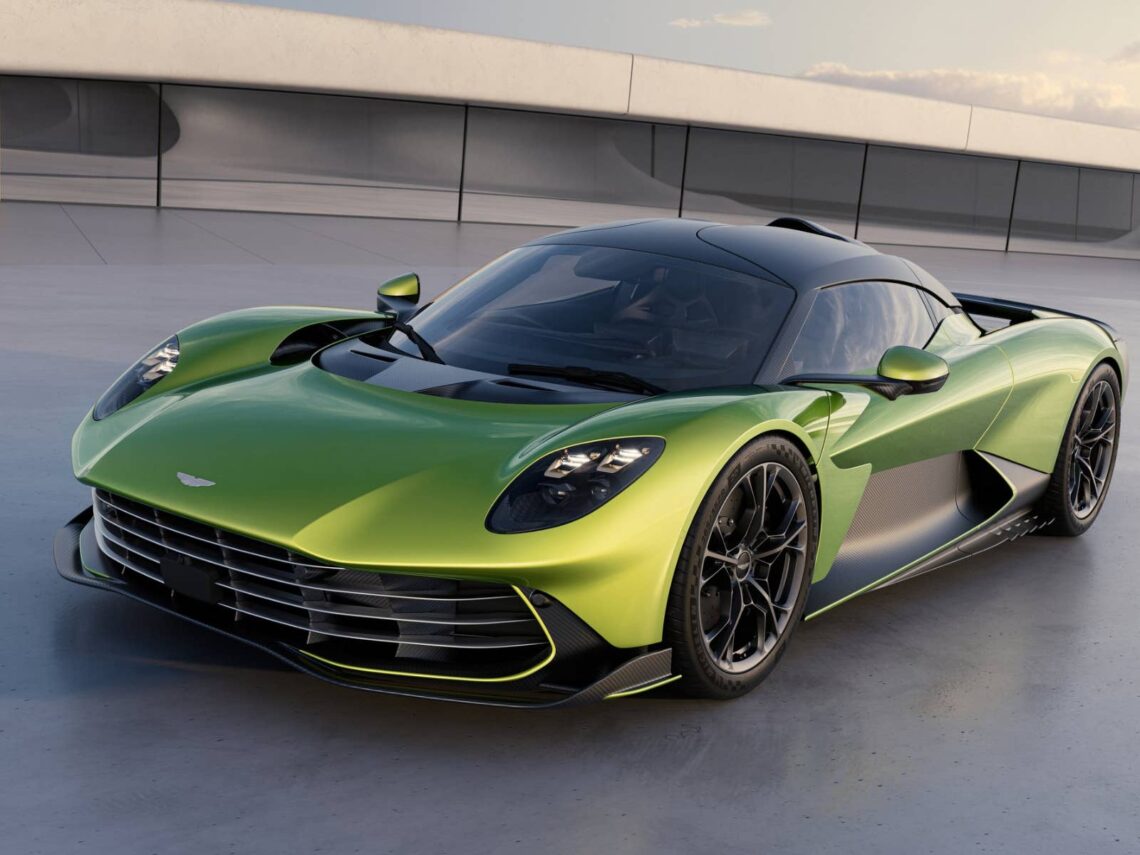
Aston Martin Valhalla Spider: Britain’s Open-Top Answer to Ferrari’s PHEV Supercars
Aston Martin’s Valhalla is already one of the most technically ambitious cars ever to wear the famous wings. Now, the British marque could be preparing to take the formula into the open air.
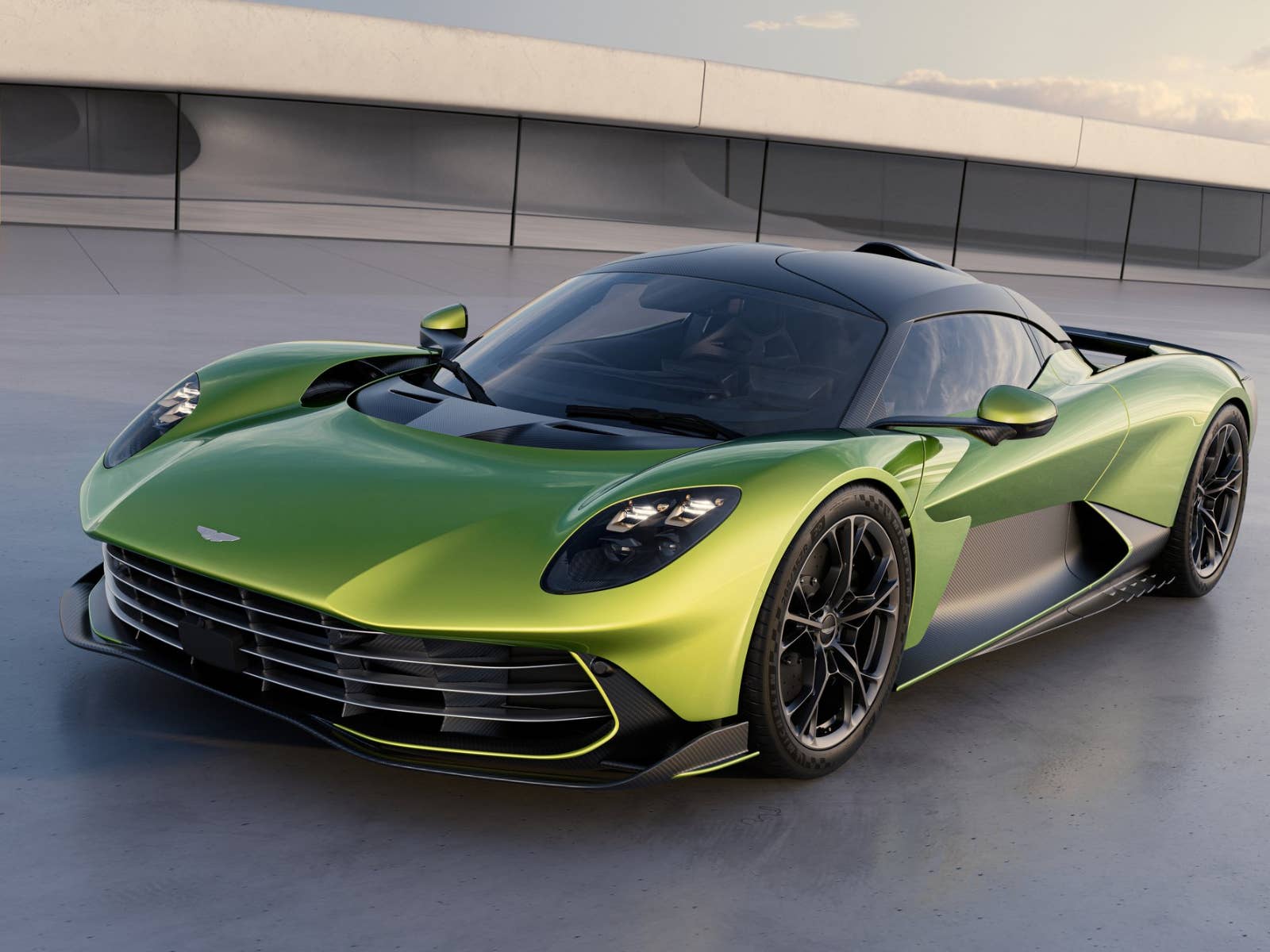
According to a report cited by Autoblog, Aston Martin is preparing a Valhalla Spider, with an unveiling potentially coming as early as November 2026. If that timing proves correct, the new Spider would arrive directly into one of the most exclusive corners of the modern supercar market, where Ferrari and Lamborghini are already pushing hybrid performance to extraordinary levels.
The interesting part is that this would not simply be a Valhalla with its roof removed. The reported configuration could use a targa-style roof, potentially allowing Aston Martin to preserve some of the structural and aerodynamic characteristics that make the Valhalla so technically distinctive.
And underneath it all is a powertrain that makes the Valhalla considerably more than an open-air grand tourer.
The Valhalla is already a technological statement
The production Valhalla is Aston Martin’s first series-production mid-engine supercar and its first plug-in hybrid. Aston Martin officially lists the car at 1,079 PS, with a 4.0-liter twin-turbocharged V8 working alongside three electric motors.
Two electric motors sit on the front axle, providing torque vectoring, while a third electric motor is integrated into the eight-speed dual-clutch transmission at the rear.
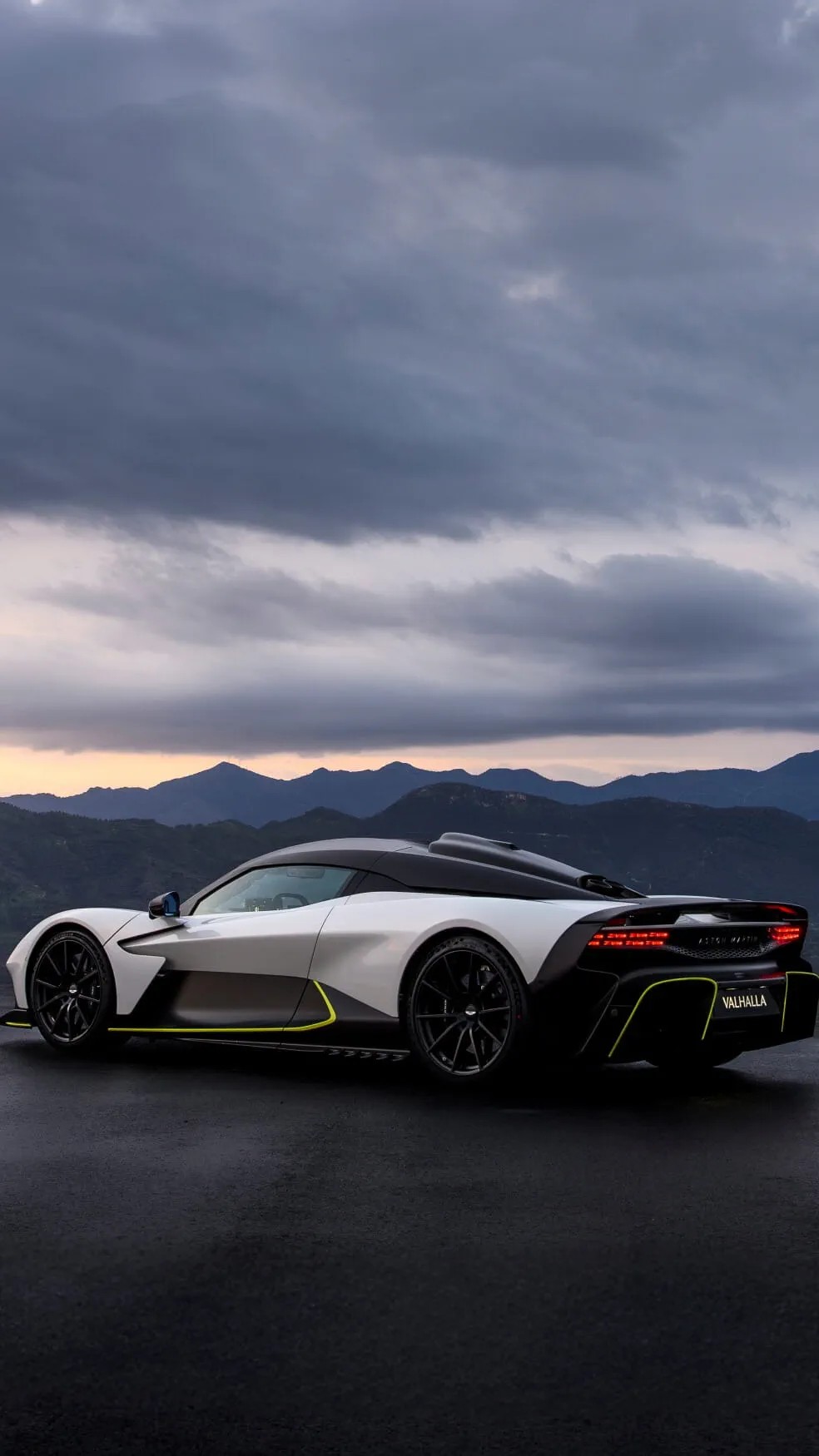
The result is an all-wheel-drive hybrid system capable of sending extraordinary amounts of power to the road.
Aston Martin quotes 0-100 km/h in 2.5 seconds, a top speed of 350 km/h (217 mph) and more than 600 kg of downforce at 150 mph in Race mode.
That last figure is particularly important.
Valhalla isn’t relying solely on horsepower. Its aerodynamic package includes active front and rear aerodynamic elements, with the rear T-Wing able to rise substantially in Race mode. The system can also function as an air brake, while the front aero works with the rear wing to manage the car’s balance under heavy braking and high-speed cornering.
This is where the Spider becomes an intriguing engineering exercise.
Turning the Valhalla into a Spider
Removing a fixed roof from a high-performance carbon-fiber supercar creates obvious engineering challenges.
The roof is part of the structure, and changing it can affect rigidity, weight distribution, aerodynamics and ultimately the way the suspension responds.
Aston Martin has not yet officially released the full specification of a Valhalla Spider, so the reported November debut, production numbers and exact roof mechanism should be treated as unconfirmed until Aston Martin announces them. Autoblog reports that the Spider could be considerably more limited than the 999-car Valhalla coupe.
The reported targa configuration could be particularly clever.
Rather than turning Valhalla into a conventional full convertible, Aston Martin could retain a substantial structural section behind the occupants while giving the driver and passenger an open-air experience.
That approach would also raise an interesting question: can Aston Martin preserve the visual identity of Valhalla while giving it a completely different driving atmosphere?
Ferrari is the obvious target
The timing is significant.
Ferrari’s latest generation of hybrid supercars has demonstrated just how far the Italian manufacturer is willing to push electrification without abandoning the drama of a high-output combustion engine.
The reported Valhalla Spider would enter that same conversation, particularly alongside Ferrari’s 849 Testarossa Spider, as referenced by Autoblog.
The Lamborghini Revuelto is another obvious point of comparison, although Lamborghini has not yet produced an open-top Revuelto.
This means Aston Martin potentially has an interesting space to occupy: an open-air, mid-engine, plug-in hybrid supercar combining British design with a very serious motorsport-inspired aerodynamic package.
One engine, three electric motors
The Valhalla’s hybrid system deserves attention because the electric motors aren’t simply there to make the specification sheet look impressive.
The two front motors allow Aston Martin to independently control torque at the front wheels.
That gives the car genuine torque-vectoring capability, allowing the electronics to influence the car’s behavior as it enters and exits corners.
The front motors also provide torque fill between gear changes and eliminate the need for a conventional mechanical reverse gear.
The rear electric motor, meanwhile, is integrated into the transmission and assists with starting the V8, battery charging and torque fill.
Aston Martin’s official specification puts the combustion engine at 828 PS, with the three electric motors contributing another 251 PS, producing the combined 1,079 PS figure.
That is a very different philosophy from simply adding a large battery to a conventional supercar.
And then there’s the V8
At the heart of Valhalla is a 4.0-liter twin-turbocharged flat-plane-crank V8.
It produces 828 PS on its own and is described by Aston Martin as the most powerful V8 it has fitted to a production Aston Martin.
The engine uses a dry-sump lubrication system, hot-V architecture and dedicated charge-air cooling.
The result is a powertrain designed to operate as part of the hybrid system rather than alongside it.
That’s an important distinction.
Valhalla’s electronics can fill in torque where the turbocharged V8 would traditionally have a response gap, while regenerative braking feeds energy back into the battery.
The objective is not simply maximum output. It is to make the entire powertrain respond more quickly and consistently.
The roof may change the experience — but not the mission
The biggest question surrounding a Valhalla Spider may ultimately have little to do with horsepower.
It will be about how much of the coupe’s dynamic character Aston Martin can retain.
The Valhalla coupe has a quoted dry weight of 1,655 kg. An open-top version could add mass depending on the structural reinforcement and roof mechanism required. Autoblog notes that some weight penalty is expected, although the Valhalla’s carbon-fiber construction could help keep the increase under control.
For a normal convertible, that might be a relatively minor concern.
For a car designed around active aerodynamics, torque vectoring, hybrid torque deployment and track-focused chassis control, every kilogram matters.
The Spider therefore has to be more than beautiful.
It has to remain a Valhalla.
A more attainable open-top Aston than Valkyrie Spider
There is another reason the project makes sense for Aston Martin.
The company’s Valkyrie Spider occupies an entirely different level of exclusivity, with only 85 examples planned.
Valhalla gives Aston Martin another route into the open-top hyper-performance market without going quite as extreme.
The coupe is already limited to 999 cars, while the Spider is expected to be even more exclusive. Pricing has not been officially announced for the Spider, but the Valhalla coupe has been reported at around the $1 million mark.
That makes the Spider less of a mainstream derivative and more of a collector’s proposition from the beginning.
The next chapter of Aston Martin’s hybrid era
What makes the Valhalla Spider particularly interesting is what it represents.
Aston Martin is no longer treating electrification as something that has to replace the character of its performance cars.
Instead, the Valhalla demonstrates the company’s attempt to use electric power as another performance tool.
Instant torque.
Torque vectoring.
Regeneration.
Torque fill.
EV capability.
And a 4.0-liter twin-turbo V8 still providing the emotional center.
If the reported Spider arrives toward the end of 2026, it could become one of the year’s most closely watched supercar launches.
Ferrari has shown that the future of the exotic car can be hybrid.
Lamborghini has embraced the same philosophy.
Now Aston Martin appears ready to put its own interpretation into the open air.
And if the reported targa roof becomes reality, the Valhalla Spider may prove that the future of the British supercar doesn’t necessarily mean giving up the roof—or the engine, the sound, or the drama that made these cars special in the first place.