Alpine A310 VISION: A French Icon Reimagined for a New Era
There is a particular art to revisiting an automotive icon. Too much reverence, and the result becomes a nostalgic exercise. Too much reinvention, and the original spirit disappears beneath the surface. Alpine’s answer is the A310 VISION: a one-off concept that looks to the past not to recreate it, but to imagine what it might have become.
Unveiled at the Paris Motor Show on 12 October 2026, the concept celebrates one of the most distinctive chapters in the French marque’s history. Its arrival coincides with two milestones: 55 years since the four-cylinder Alpine A310 was introduced and 50 years since the V6 version arrived.
Rather than simply dressing a modern sports car in familiar retro cues, Alpine’s design team has returned to the original car’s proportions, geometry and character, exploring how those qualities might translate into a contemporary vision of performance.
A310: The Shape of a Different Kind of Sports Car
When Alpine introduced the A310 in 1971, it offered a different expression of the sporting character established by the celebrated Berlinette.
Its low stance, wide body and sharply defined silhouette gave it an identity that was unmistakably its own.
The A310 was not defined by ornament. Its appeal lay in the relationship between its proportions and its purpose: a sculptural body, taut surfaces and a geometric design that made the car instantly recognisable. The later V6 version brought a more muscular character, including widened rear wings, while retaining the essential visual identity of the original.
These are the qualities Alpine has chosen to revisit.
For the A310 VISION, the design team placed an original A310 at the centre of its studio, using the car as a physical reference. Sketches, observations of its volumes and close analysis of its lines informed a process intended to preserve the original’s emotional impact without becoming trapped by its period.
The result is a design study that asks a compelling question: what would the A310 look like if its creators had access to today’s materials, technologies and design vocabulary?
Retro-Futurism, the Alpine Way
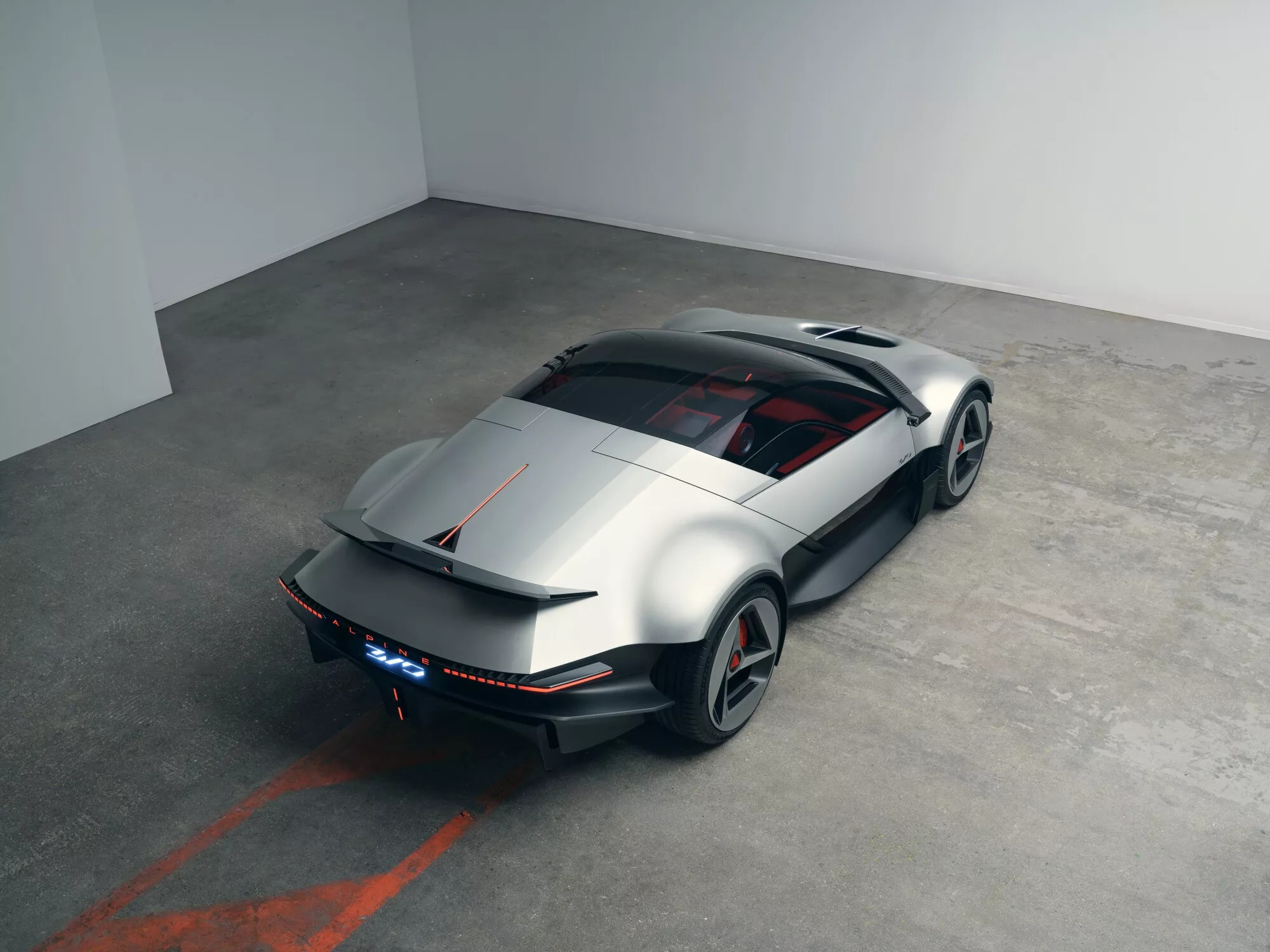
The A310 VISION’s silhouette is deliberately dramatic. Measuring 4.55 metres long and just 1.18 metres high, it stretches across a 2.03-metre rear width, with a wheelbase of 2.45 metres.
The resulting proportions give the concept a low, broad and purposeful presence.
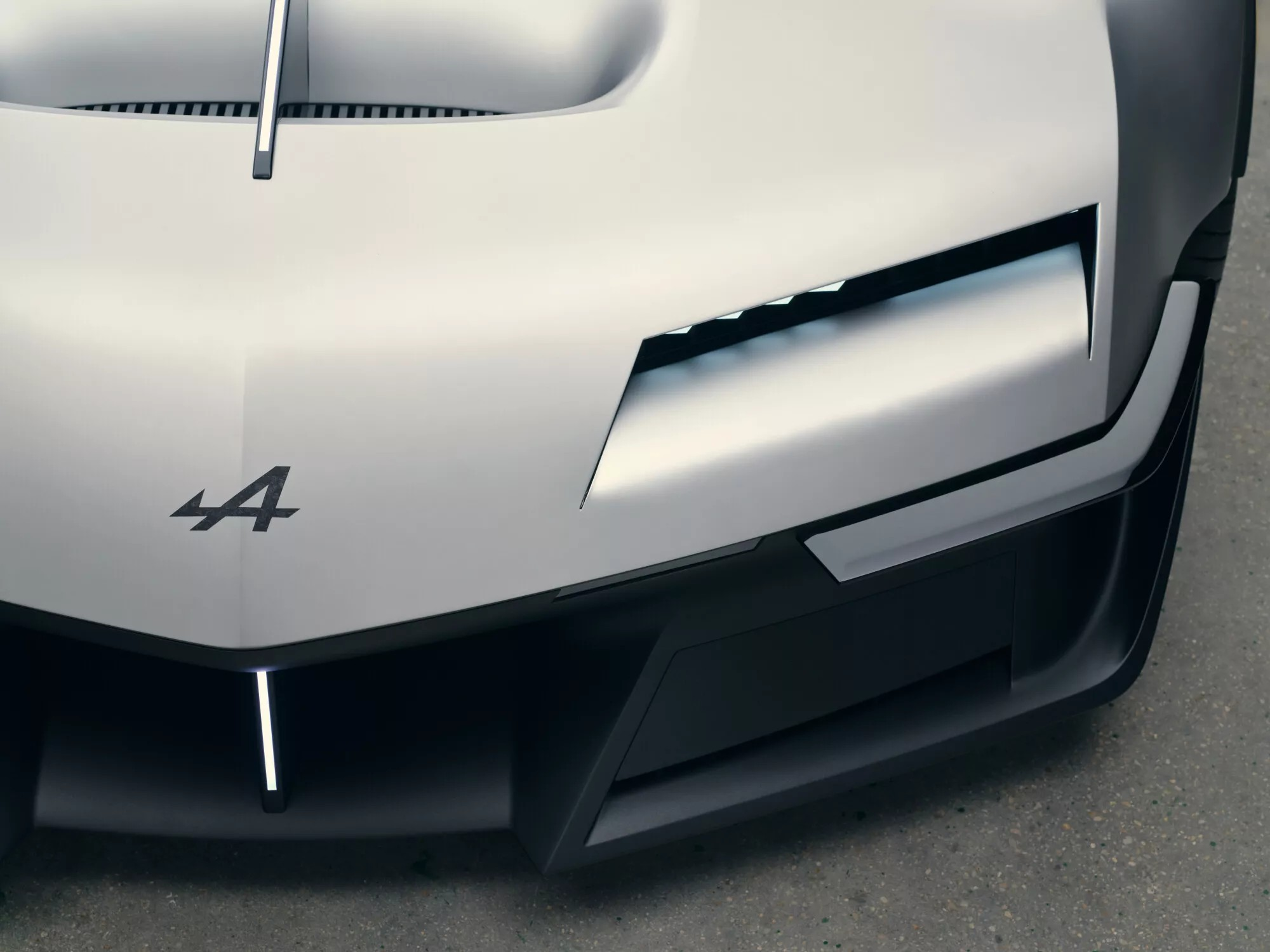
Its aluminium bodywork contrasts with a black lower section whose organic treatment draws inspiration from Formula 1. Above it, a semi-transparent cabin introduces a lighter, almost architectural quality, creating a visual tension between solid bodywork and the apparent delicacy of the glass-like enclosure.
The wheels offer another connection to Alpine’s history. Their triangular, A-shaped motif references the full-metal wheels of the early A310 models, translating a historical detail into a contemporary design signature.
It is a careful balance: familiar enough to communicate its ancestry, yet sufficiently radical to stand apart from the cars that inspired it.
Aerodynamics as Part of the Design
On the A310 VISION, the technical vocabulary is written into the body itself.
At the front, the headlights are integrated into a sculpted section that creates a distinctive “pop-down” effect when the car starts. The bonnet incorporates an S-duct-inspired recess, while a central blade, known as the “Y zero”, runs through the car and draws the eye towards the rear.
At the back, a split two-part wing introduces a translucent quality reminiscent of ice and mountain landscapes. Blade-shaped rear lights also incorporate an aerodynamic downforce function, allowing visual expression and aerodynamic intent to occupy the same space.
These features are not merely decorative references to motorsport. They demonstrate how Alpine is using the concept to explore the relationship between form, airflow and identity, with the design language shaped by the possibilities of its new Alpine Performance Platform, or APP.
A Glimpse Inside
Although the exterior is the principal focus, the semi-transparent cabin offers a glimpse of the atmosphere Alpine imagines within.
Organic seat forms, bold colour-blocked elements and physical controls inspired by high-end hi-fi equipment suggest an interior intended to be experienced through touch as well as sight. Rather than presenting a fully specified production cabin, the concept uses these details to extend its design narrative into the cockpit.
The approach is deliberately suggestive. Alpine is showing the direction of its creative thinking rather than presenting a finished interior ready for a showroom.
The Platform Behind the Vision
The Alpine Performance Platform provides the broader technical context for the concept. Designed to explore the possibilities of high-performance sports cars while retaining modularity, APP gives the brand a foundation for experimenting with different proportions, volumes and interpretations of its design language.
The A310 VISION demonstrates that creative freedom. It is not, however, an announcement of a new production A310, nor confirmation of a future model’s technical specifications.
Instead, it serves as a design laboratory: a way for Alpine to examine its heritage and consider how the qualities that made its earlier cars distinctive might inform the sports cars of tomorrow.
Looking Forward Without Looking Back
Alpine has spent decades building its identity around lightweight sports cars, French design sensibility and motorsport expertise. Founded by Jean Rédélé in 1955, the marque has continued to develop that identity through its road cars and its participation in international competition.
The A310 VISION sits within that wider story. It recognises that automotive heritage is not simply a collection of shapes to reproduce, but a set of ideas that can be reinterpreted as technology and expectations evolve.
There is no promise of production, no confirmed powertrain and no announced customer version attached to this concept. Its significance lies elsewhere: in the freedom to imagine a familiar icon through a different lens.
The original A310 made a statement through its distinctive proportions and uncompromising design. More than half a century later, the A310 VISION revisits that philosophy with new materials, new aerodynamic ideas and a decidedly contemporary attitude.
For Alpine, the future does not require abandoning the past. Sometimes, it begins by asking what the past might have looked like if it had been born today.