Aston Martin and Honda in 2027: Can Adrian Newey Rescue the Green Machines?
The road to redemption begins in Sakura
If 2026 was supposed to be the beginning of Aston Martin’s championship ambitions, it has instead become a reminder of just how difficult it is to build a winning Formula 1 team.
The arrival of Adrian Newey, the construction of Aston Martin’s technical infrastructure and the return of Honda as a dedicated works power-unit supplier created expectations that the team could eventually challenge the established front-runners. Yet the reality of the Honda RA626H has been considerably more complicated.
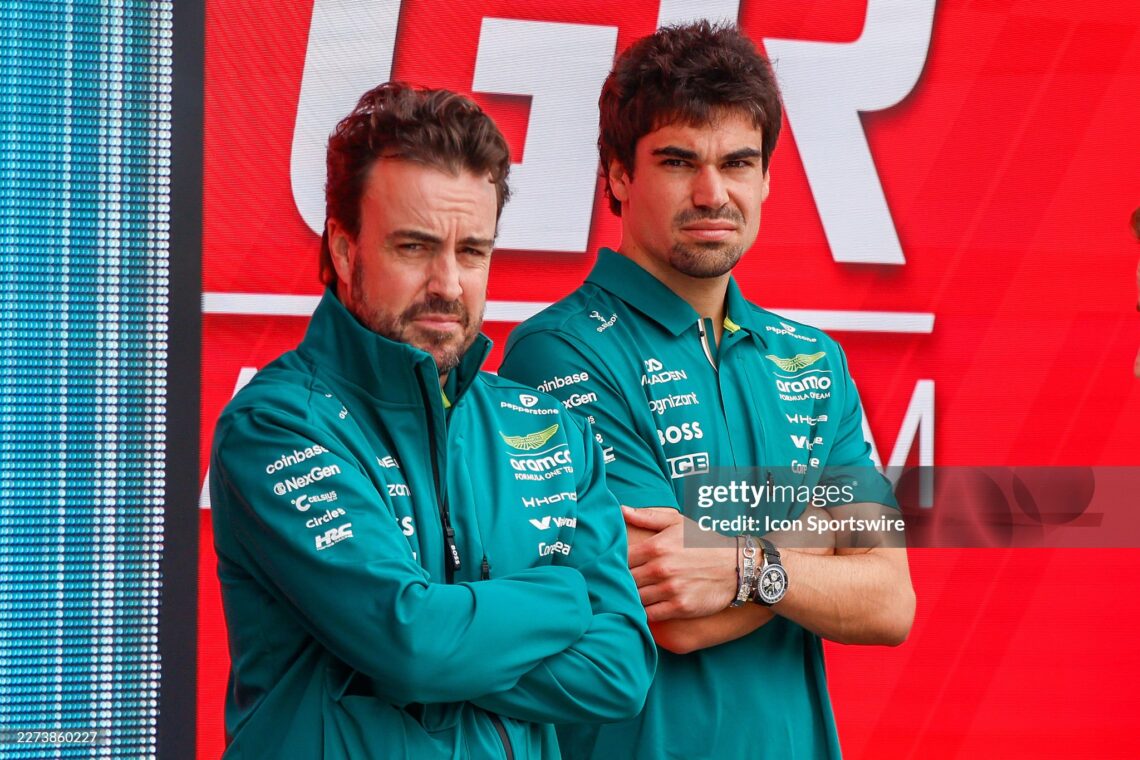
Vibrations, reliability concerns, a deficit in combustion-engine performance and inconsistent energy deployment have all contributed to a frustrating campaign for Fernando Alonso and Lance Stroll. Newey has been tasked with improving the chassis while Honda works to resolve the weaknesses of its power unit.
Now, attention is turning towards 2027.
Honda has acknowledged that its internal-combustion engine remains a significant weakness relative to its competitors. The manufacturer is preparing a more substantial development step for next season, while changes to the technical regulations will alter the balance between combustion and electrical power.
There is also a new name leading Honda’s power-unit development programme: Yoichiro Fukao, who took over as Large Project Leader on October 1, 2026.
The question is whether these changes can transform Aston Martin from a team managing its limitations into one capable of fighting for meaningful results.
And perhaps more importantly, after a difficult season for Alonso, will 2027 finally give the Spaniard a car worthy of his experience?
Honda RA626H: What changes are coming for 2027?
The first thing to understand is that Honda is not abandoning the RA626H concept. The 2027 project is a continuation of its current power-unit programme, with the principal objective of improving combustion performance and integrating the engine more effectively into Aston Martin’s next chassis.
Honda’s chief engineer, Shintaro Orihara, has been unusually direct about the challenge. In an interview published by Motorsport.com in August 2026, he acknowledged that the combustion engine’s performance was poor relative to rival manufacturers and said that improving it was the immediate priority.
Honda’s intention is to introduce a more substantial step in combustion performance for 2027. The manufacturer has also been working closely with Aston Martin to improve power-unit integration, recognising that the engine and chassis must be developed together.
This is an important distinction. The next engine specification is not simply about finding a little more horsepower. Honda needs to improve the efficiency and performance of combustion, maintain reliability and deliver power in a way that the driver can use consistently.
The manufacturer’s development programme must also account for the revised fuel-flow regulations scheduled for 2027. Honda has warned that combining increased fuel-flow allowances with higher performance targets will create additional reliability demands.
In other words, Honda has to make the engine stronger without making it fragile.
For Aston Martin, that is the central engineering challenge heading into the winter.
The combustion engine comes first
Honda’s public comments suggest that outright combustion performance is the principal weakness it intends to address before concentrating on smaller optimisation gains elsewhere in the power unit.
That makes sense in the context of the team’s current problems. Better energy management can improve lap times, but it cannot completely compensate for an internal-combustion engine that lacks performance against its rivals.
The manufacturer must first close that fundamental gap.
There will still be work to do on electrical deployment, turbo response, calibration and overall driveability. Alonso needs predictable power delivery through corners and enough performance on the straights to defend and attack.
But Honda’s stated priority is clear: improve combustion performance first, then continue refining the wider system.
The exact power output of the 2027 engine, the expected horsepower gain and its final specification have not been publicly confirmed. Any precise figures circulating before Honda releases verified data should therefore be treated cautiously.
What we can say is that Honda has publicly targeted a meaningful improvement for 2027, while acknowledging that returning to the very front of the field may take longer.
Orihara’s stated ambition has been to bring Honda closer to the leading manufacturers at the beginning of 2027, with a return to the top competitive group targeted for later in 2027 or 2028.
That is a development target, not a guarantee.
Yoichiro Fukao: The new man leading Honda’s power-unit programme
One of the most significant changes ahead of 2027 is taking place inside Honda itself.
On September 14, Honda announced that Yoichiro Fukao would become Large Project Leader of its Formula 1 power-unit development programme, effective October 1. He succeeded Tetsushi Kakuda as part of a planned leadership transition.
Fukao is not an outsider brought in to replace Honda’s engineering culture. He has been with the company since 2002 and has extensive experience in engine and gearbox control systems, hybrid technology and Formula 1 development.
His career includes work on production hybrid systems, involvement in Honda’s MotoGP programme and senior responsibilities within its Formula 1 project. He has also held control-system development responsibilities and served as Deputy Leader of the F1 Project.
That background is particularly relevant to the RA626H.
The problems facing Aston Martin extend beyond the engine’s maximum output. The power unit must deliver its performance consistently, and its combustion, turbocharging, electrical systems and control software must work together.
Fukao’s experience in control systems and hybrid development gives him a background directly relevant to those challenges.
However, it would be premature to suggest that his appointment will immediately produce a faster engine. Honda described the change as a planned transition intended to transfer technical expertise to the next generation of engineers and establish a stronger development framework for the regulations ahead.
His appointment is not evidence that Kakuda alone was responsible for the 2026 difficulties, nor does it mean Honda is starting its development programme again.
Instead, Fukao inherits an existing technical project and a demanding objective: make the RA626H’s successor more competitive while maintaining reliability.
His impact will be judged by the quality of Honda’s development decisions and the performance of the engine on track, not simply by the title he holds.
The 2027 regulations: What does the 60/40 split actually mean?
There is an important regulatory change that Aston Martin and Honda must prepare for.
The 2026 power-unit regulations placed unprecedented emphasis on electrical energy, creating challenges around deployment, recovery and the balance between combustion and electrical power.
After concerns about energy management emerged during the opening races, the FIA, Formula 1, teams and manufacturers agreed changes for 2027 and 2028.
These changes introduce a staged rebalancing of the contribution from the internal-combustion engine and the electrical energy-recovery system.
The distinction matters because the often-discussed 60/40 split is not the immediate 2027 specification.
Under the revised framework, the intended balance moves towards approximately 58% combustion and 42% electrical contribution in 2027, followed by 60% combustion and 40% electrical contribution in 2028. The precise regulatory provisions govern the technical implementation; these percentages should be understood as the intended power balance rather than a literal guarantee of the contribution on every lap.
The changes also include adjustments to fuel-energy flow and electrical deployment, alongside greater flexibility in energy management.
For Honda, this creates both an opportunity and a challenge.
A greater relative contribution from the combustion engine could make improvements to the V6 particularly valuable. Honda has already identified combustion performance as its biggest weakness, so the direction of the regulations aligns with the area it is prioritising.
But there is no free performance.
The fuel-flow changes and increased performance demands will place pressure on reliability. Honda must improve the engine while ensuring that its components can withstand the demands of a race weekend.
The electrical system will remain important, too. A more combustion-focused balance does not eliminate the need for effective energy recovery and deployment.
For Alonso, the ideal result would be a power unit that combines stronger acceleration, consistent electrical assistance and predictable behaviour under braking and cornering.
That is what would make the revised regulations useful to Aston Martin in practical racing terms.
Can Adrian Newey compensate for the weaknesses of Honda’s engine?
This is perhaps the most interesting question facing Aston Martin.
Newey has built a reputation for producing highly competitive cars, and the team’s decision to place him at the centre of its technical ambitions reflects its determination to change its position in Formula 1.
But aerodynamic excellence cannot completely erase an engine deficit.
A chassis can reduce drag, improve cornering efficiency and allow a driver to carry more speed through bends. It can also be designed to package the power unit more effectively, manage cooling requirements and improve the overall relationship between the engine and the car.
Those are meaningful advantages.
If Newey produces a chassis with better aerodynamic efficiency, Aston Martin could lose less time through corners and require less power to achieve a given speed on the straights. A better-balanced car could also help Alonso extract more performance from the tyres and improve consistency over a race distance.
However, there is a limit to what the chassis can achieve.
If Honda’s engine lacks substantial combustion performance, the Aston Martin will still struggle on power-sensitive circuits. A beautifully designed car cannot manufacture horsepower that the engine does not produce.
Nor can aerodynamics fully compensate for poor energy deployment or unpredictable throttle response.
The most promising development is therefore not a scenario in which Newey rescues a defective engine through clever design. It is one in which Honda and Aston Martin solve their respective problems together.
Newey’s next chassis must be designed around a more competitive power unit, while Honda must understand the chassis requirements early enough to optimise the engine’s packaging, cooling and performance characteristics.
The relationship between the two sides could be decisive.
In 2026, both were learning how to work together under difficult circumstances. By 2027, they will have a season of experience, more data and a clearer understanding of the weaknesses that need to be addressed.
That knowledge should help, although it cannot guarantee that Aston Martin will emerge as a front-runner.
Fernando Alonso: Can 2027 be a better season?
For Alonso, 2026 has been an especially frustrating season because the car has not consistently allowed him to demonstrate the qualities that made him a two-time world champion.
His experience remains valuable, particularly when a team is developing a new car and trying to identify the source of performance losses. He can describe how the car behaves under braking, how power delivery affects corner exits and where the balance changes during a lap.
But experience has limits when the machinery is not competitive.
A driver can compensate for certain weaknesses through technique and setup choices. He cannot completely overcome an engine that lacks performance or a system that delivers energy inconsistently.
The 2027 project offers Alonso three potential improvements.
First, a stronger Honda combustion engine could reduce the team’s straight-line deficit.
Second, improved integration between the power unit and Newey’s chassis could make the car more predictable and efficient.
Third, the regulatory changes could produce a power-unit balance that better rewards the combustion-engine development Honda is prioritising.
If all three developments work as intended, Aston Martin should be in a better position to compete.
However, a better season does not automatically mean race victories or a championship challenge. Honda itself has indicated that it may need until later in 2027 or 2028 to return to the leading group.
Alonso’s prospects will depend on how much progress the manufacturer makes over the winter, how effectively Newey’s chassis uses the available power and how quickly the team can turn its development work into reliable race performance.
There is also the question of consistency. A car that delivers one impressive qualifying result but struggles over a race distance is not yet a competitive package.
For Alonso, a genuine improvement would mean being able to compete more regularly, convert qualifying positions into points and fight opponents on pace rather than spending races managing the limitations of the machinery.
That is a realistic objective for the project. Anything beyond it will depend on the size of Honda’s step and the quality of the chassis.
The 2027 engine is not a guaranteed reset
It is tempting to treat the beginning of a new season as an opportunity to erase every problem from the previous year.
Formula 1 rarely works that way.
Honda must develop the engine while preserving reliability, and the revised regulations will introduce additional technical demands. Improvements to combustion performance may also change the engine’s behaviour, requiring further calibration and integration work.
The manufacturer has already learned that finding more performance in one area can expose weaknesses elsewhere. A more powerful engine is of little value if it becomes unreliable, and a reliable engine cannot deliver competitive results if its performance remains substantially behind the opposition.
Aston Martin faces the same challenge with the chassis. Newey can improve the aerodynamic concept, but the team must still execute the design, manage tyre performance and develop the car throughout the season.
There is no guarantee that Mercedes, Ferrari or Red Bull-Ford will stand still while Honda attempts to close the gap.
The real measure of success will therefore be relative performance: how much of the deficit Aston Martin can remove, how consistently it can score points and whether its development rate is competitive with that of its rivals.
Conclusion: A more promising direction, but not a promise of victory
Aston Martin enters 2027 with a clearer understanding of what went wrong and a more focused development programme.
Honda is prioritising combustion-engine performance, preparing further improvements and working more closely with Aston Martin on integration. Yoichiro Fukao has taken charge of the power-unit development programme, bringing experience in control systems and hybrid technology at a time when the manufacturer needs to improve both performance and reliability.
The revised regulations should also give Honda an opportunity to benefit from a greater relative contribution from combustion power, although the associated fuel-flow changes will create additional reliability demands.
Meanwhile, Adrian Newey has the opportunity to design the next Aston Martin around lessons learned from the difficult 2026 season.
If the chassis is more efficient and the engine is stronger, Alonso could find himself in a significantly more competitive position. But neither development can compensate indefinitely for shortcomings in the other.
The important point is that Aston Martin does not need a miracle from a single engineer or a single engine upgrade. It needs the entire organisation to deliver a better-integrated car.
Honda must provide the power. Newey must produce the chassis. The engineers must make the systems work together. And Alonso must be given a machine capable of turning his experience into results.
The first target should be to escape the limitations that defined 2026 and become a consistent points-scoring team. The next is to close the gap to the front.
Whether that happens early in 2027 or requires another season of development remains uncertain.
But the direction is clear: Honda is working towards a more competitive power unit, Aston Martin has a year of hard-earned technical lessons behind it, and the next chapter of the partnership will be measured by performance rather than promise.
For Alonso, that may be the most important change of all. After a season spent fighting the car as much as its rivals, 2027 needs to be the year Aston Martin finally gives him something he can fight with.