The Unknowns Creating Fashion You Might Actually Wear to Dinner
By DLifestyle Magazine
There is a difference between looking at a piece of clothing and wanting to wear it. Fashion has always enjoyed pushing boundaries, but sometimes I wonder whether we have become so accustomed to the theatrical side of the industry that we forget the simple pleasure of getting dressed.
I want something different. I want individuality, craftsmanship, a silhouette that catches the eye and a garment that makes me feel as though I have discovered something before everybody else. Something I could wear to dinner without looking as though I have accidentally walked off a theatrical production.
And yet, I don’t want ordinary either.
With mainstream fashion houses continuing to dominate the conversation, I have been looking further afield, towards designers who are still finding their voices and creating pieces that don’t necessarily follow the commercial formula.
Two names caught my attention: Tidjane Tall and Ilya Migmoon.
They are very different designers, but both understand something that can sometimes get lost in fashion: a garment should have a personality of its own.
Tidjane Tall: when the silhouette does the talking
Let me start with Tidjane Tall.
His work with hair-like textures, feather effects and sculptural detailing initially left me a little demotivated. I am not necessarily looking for another wardrobe filled with elaborate feathers, extravagant textures or garments that require an entire occasion to justify their existence.
But then I looked beyond the materials.
What Tall does with a silhouette is remarkable.
A graduate of the Institut Français de la Mode in Paris, Tall’s collection Resonance in the Room is deeply personal. It draws from the history of his grandfather, Baïdy Tall, who founded La Boule Noire, an exclusive cabaret club in 1970s Ivory Coast.
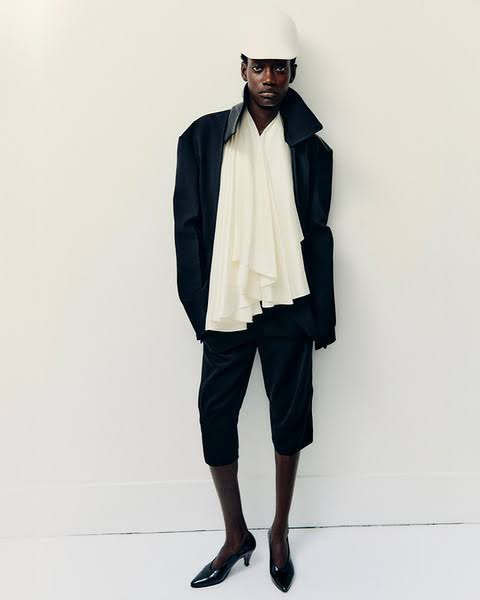
That history is important because the collection is not simply an exercise in unusual materials. It explores identity, Blackness, elegance and individuality through clothing.
His grandfather’s cabaret represented a world of cultural exchange, freedom and expression. Tall takes that atmosphere and translates it into contemporary fashion.
One of the most interesting techniques involves laser-cut silk and crepe, manipulated to resemble the texture of Nigerian women’s wigs. The result creates feather-like fringes that move with the body.
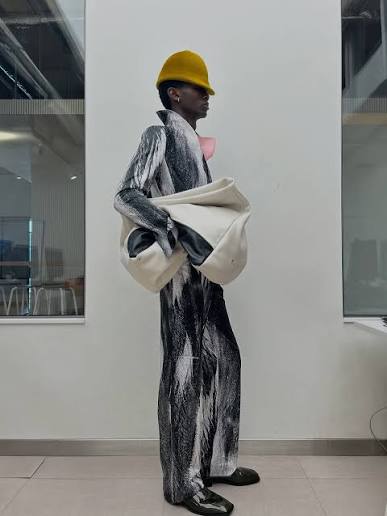
It is a clever transformation. Rather than simply attaching feathers to a garment, he takes the visual language of hair and turns it into something architectural.
And this is where I find his work particularly interesting.
The silhouette becomes the statement. The garments have structure, movement and a presence that doesn’t depend entirely on decoration.
His work also challenges the idea that eveningwear must remain confined to traditional formal occasions. In his own description of the collection, accessories can become garments, bags can become necklaces, and eveningwear can find its way into everyday life.
That is the direction I would like to see more of: creativity that doesn’t lose sight of the person who has to wear the clothes.
Tall received several distinctions at the 2026 International Talent Support competition, including the I:C Fondazione Sozzani Award. His collection was subsequently presented at Fondazione Sozzani during Milan Fashion Week.
For a designer still establishing his name, that is a meaningful step.
I would certainly like to see what happens when he takes the same attention to proportion and construction and applies it to a more extensive everyday wardrobe.
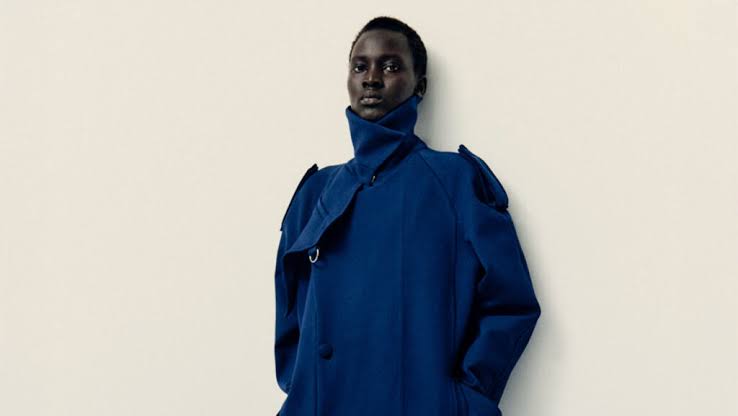
Because there is something there. And it isn’t just the feathers.
Ilya Migmoon: Victorian imagination in a modern wardrobe
Next up is Ilya Migmoon.
Now, if you thought Tall was a little too experimental, Migmoon might require a second look.
His work is theatrical, romantic and, at times, wonderfully excessive. There are corsets, feathers, exaggerated proportions, sculptural shapes and references that seem to have travelled through several centuries before arriving in the modern world.
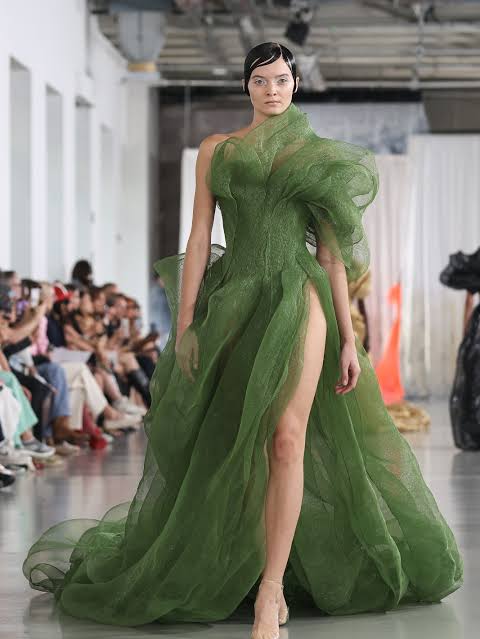
There is a distinctly Victorian sensibility running through his work, but it isn’t simply historical dress reproduced for the present day.
Migmoon is interested in the construction behind historical clothing. He has spoken about studying Victorian corsets, traditional tailoring and hand embroidery. Growing up around ballet also helped shape his understanding of the body, posture, movement and costume.
His family background in ballet is particularly revealing. His parents were ballet performers, and the world of backstage costume, rehearsal and performance became part of his visual education.
It helps explain the recurring narrow waists, dramatic proportions and feathered structures.
And yes, I am going to say it: there are moments in his work that bring to mind the spirit of Alexander McQueen.
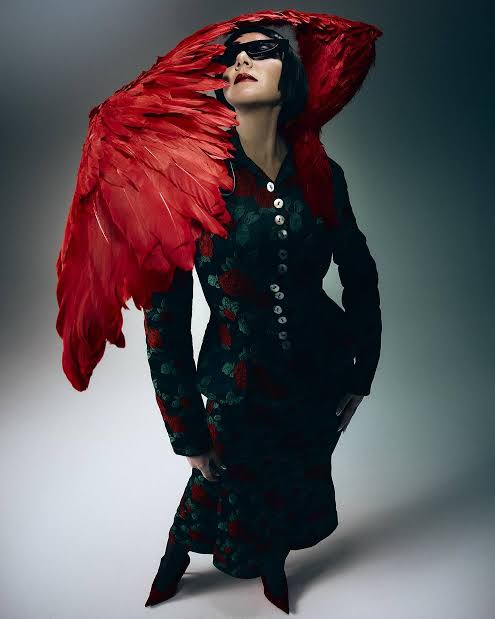
Not because the two designers are interchangeable, but because Migmoon understands that clothing can be unsettling, beautiful and theatrical at the same time. He appreciates the drama of historical costume and the power of a silhouette that refuses to disappear into the background.
Some of his pieces might make getting to dinner a little difficult. A dramatic train, an oversized feathered construction or a sculptural corset isn’t necessarily designed for squeezing into a restaurant chair.
But that is almost beside the point.
These are the pieces that make you stop, look again and pay attention to the individuality of the designer.
Migmoon has already dressed performers and public figures, including Cardi B and Rosalía. His work has attracted attention from international stylists, while his distinctive bird-inspired aesthetic has become a recognisable part of his creative identity.
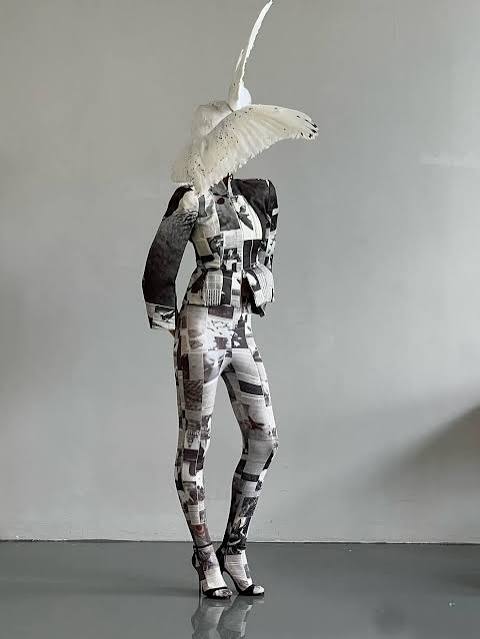
Yet I find his next step more interesting than the celebrity appearances.
He has spoken about wanting to expand beyond the elaborate feathered creations for which he is known, introducing more lace, embroidery, beading and different approaches to fabric. He has also discussed developing a broader clothing offering, including dresses, corsets, tops and pieces that retain the underlying construction of his more elaborate designs.
That is where I would like to see him go.
Imagine the same Victorian references, the same attention to the waist and the same sense of drama, but translated into something that could be worn with a beautifully tailored trouser, a simple skirt or an evening jacket.
The theatricality doesn’t have to disappear. It simply needs to find another way of living.
The difference between being fashionable and being memorable
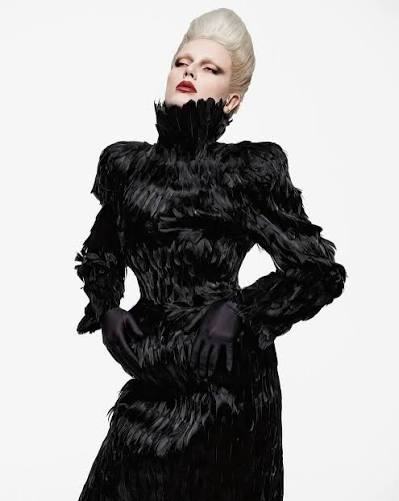
What interests me about these two designers is that neither seems particularly concerned with making every garment immediately familiar.
Tall uses personal history, heritage and silhouette to create a language of his own. Migmoon draws from historical costume, ballet and theatrical imagination to build a world that is recognisable without relying on conventional luxury branding.
They are not producing the same kind of fashion, and that is precisely why I wanted to put them together.
One makes me think about how a garment moves and how its silhouette can transform the person wearing it. The other makes me think about how far historical references can be pushed before clothing becomes something closer to performance art.
But both leave me with the same question: why should getting dressed be predictable?
I don’t necessarily want to wear a ten-foot train to dinner. I don’t need every outfit to be covered in feathers, and I certainly don’t want to look as though I am auditioning for a period drama.
What I do want is to find a designer who makes an ordinary evening out feel a little less ordinary.
A beautifully cut jacket with an unexpected construction. A dress with a silhouette I haven’t seen a dozen times before. A detail that makes someone ask where I found it.
That, to me, is the appeal of discovering designers before their names become household fixtures.
Fashion needs the extravagant, the experimental and the occasionally impractical. But it also needs to remember that clothing is meant to be worn.
And somewhere between the runway and the dinner table is where I think the next interesting fashion conversation should begin.