Audi’s Long Game: How Mattia Binotto Is Building a Formula 1 Team for 2027
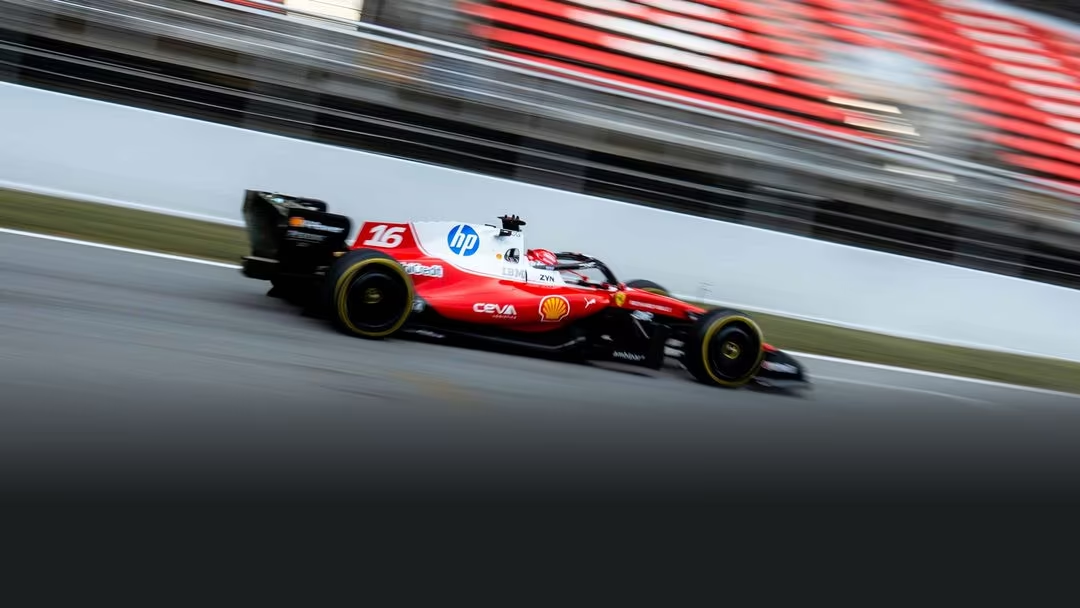
The R26 is more than Audi’s first Formula 1 car. It is the foundation of a factory operation that must bring together a new power unit, an evolving chassis and a team learning how to compete at the highest level.
By DLifestyle Magazine
There is a difference between buying your way into Formula 1 and building a team capable of winning it. Audi has chosen the second, more complicated route.
The German manufacturer entered Formula 1 in 2026 by taking over the Sauber operation, bringing its own power unit into competition and beginning the process of integrating its engineering facilities in Neuburg, Germany, with the chassis and race operations in Hinwil, Switzerland. A technology office in Bicester, England, provides access to the engineering talent concentrated in Britain’s motorsport industry.
That is an ambitious undertaking even before the first lights go out.
At the centre of the project is Mattia Binotto, the former Ferrari team principal who now leads Audi’s Formula 1 programme. His experience is particularly relevant because Audi’s challenge is not simply to make a faster car. It must develop the working relationships, engineering processes and technical infrastructure that allow improvements to arrive consistently rather than as isolated successes.
The question is whether the decisions being made during 2026 can give Audi a stronger foundation for 2027.
A change in leadership, but not a change in ambition
Audi’s original leadership structure paired Binotto with Jonathan Wheatley, who joined the project in April 2025 after his long association with Red Bull Racing. The two helped prepare the former Sauber organisation for its transformation into a full works team.
Wheatley departed with immediate effect in March 2026 for personal reasons. Audi subsequently placed Binotto in the team principal role, adding trackside responsibilities to his existing duties as head of the overall project. In April, Audi appointed Allan McNish as racing director, giving the team a dedicated leader for trackside operations.
The restructuring matters because a works team has more moving parts than a conventional customer operation. Audi is responsible for the development of its own power unit, while also designing and operating the chassis. Decisions about engine performance, cooling, energy deployment, gearbox behaviour and aerodynamic development must ultimately work together.
McNish’s appointment creates a clearer division of responsibilities: he leads the racing operation, while Binotto can concentrate more heavily on the wider technical and organisational project.
That does not automatically produce a more cohesive team. Cohesion comes from clear accountability, reliable communication and engineers working towards shared targets. But a structure that gives the right people the authority to make decisions is an important starting point.
Audi has publicly maintained its ambition to challenge for the world championship by 2030. The immediate task is to build the organisation that could make that possible.
Sources: “Audi’s management restructuring announcement” (https://www.audi.com/en/press-releases/new-management-structure-for-the-audi-f1-project-17076) and “Formula 1’s report on Allan McNish’s appointment” (https://www.formula1.com/en/latest/article/allan-mcnish-announced-as-new-racing-director-at-audi.7tvoImWOKBhXlW4Qb1XAZ9).
The R26: A foundation rather than a finished product
Audi’s first Formula 1 challenger, the R26, was developed for the sport’s major 2026 technical reset. That timing offered an opportunity: every team had to adapt to new chassis and power-unit regulations, rather than simply carry forward an established car concept.
However, Audi was taking on an additional challenge. It was introducing its own power unit at the same time as becoming a works team.
The R26’s early performance suggested that the project had a useful starting point. Formula 1’s analysis after the opening three rounds identified competitive midfield pace, but also highlighted reliability, race starts, drivability and energy management as areas requiring attention.
The car was not without promise, but its potential needed to be converted into repeatable results.
One of the most interesting features was its sidepod design, which attracted attention because Audi was willing to pursue its own aerodynamic approach. The important question is not whether a component looks different from a rival’s. It is whether the complete aerodynamic package delivers the desired balance, cooling performance and efficiency across different circuits.
Aerodynamic development is rarely a matter of finding one spectacular component. It is the process of improving how the front wing, floor, sidepods, rear bodywork and suspension work together.
For Audi, the R26’s early development is therefore about understanding which parts of the original concept are delivering the expected results and which need to be refined.
The power unit: The real long-term test
Building a Formula 1 engine is one challenge. Making it competitive, reliable and easy for a driver to use is another.
Audi has been developing its 1.6-litre turbocharged V6 hybrid power unit at Neuburg since 2022. The programme includes the combustion engine, energy recovery system, energy storage, electric motor and associated control systems. Audi also develops its gearbox at the German facility.
The 2026 regulations place greater emphasis on electrical power, energy management and the interaction between the combustion engine and electric motor. This makes the integration of the power unit with the chassis especially important.
A car can have a competitive engine on paper and still lose time if its power delivery is inconsistent, its energy deployment is poorly managed or its gear changes unsettle the car.
This is where Audi’s 2026 development programme becomes particularly interesting.
At the Barcelona Grand Prix, Audi introduced an initial power-unit update focused primarily on drivability. According to reporting by Autosport, the changes helped address an existing weakness in the R26’s power delivery. Audi racing director Allan McNish subsequently confirmed that the team did not intend to introduce another major power-unit hardware upgrade during the remainder of 2026.
Instead, Audi was reserving its larger hardware development for 2027.
That is an important distinction. Audi is not simply waiting for next year. It has been refining the systems already available, learning how to extract performance from the package and managing its development expenditure within Formula 1’s financial restrictions.
Source: “Autosport — Audi will not upgrade its power unit again until 2027” (https://www.autosport.com/f1/news/audi-wont-upgrade-f1-power-unit-again-until-2027/10843491/).
Why drivability can be worth more than a headline horsepower figure
Consider what happens when a driver exits a slow corner.
The driver opens the throttle, the combustion engine responds, the electric motor contributes its available torque, and the gearbox shifts through the next gears. If those systems do not work smoothly together, the driver can lose traction, compromise the car’s balance or struggle to deploy the available power consistently.
That is why drivability matters.
Nico Hülkenberg has described the issue in terms of throttle response, torque delivery and consistency. These are small details that can have a measurable effect when a driver is operating at the limit.
The same applies to energy management. Under the 2026 regulations, electrical deployment and energy recovery are central to lap time. The team must understand not only how much energy the car can use, but where and when it can deploy it most effectively.
Improving these systems can make the existing power unit more effective without necessarily increasing its maximum output.
For a new manufacturer, that learning process is particularly valuable. Every race supplies data about temperatures, energy use, component reliability, gear changes and driver feedback. The challenge is to turn that information into changes that work in practice.
What could change for 2027?
Audi’s larger power-unit hardware programme is the most significant publicly identified development direction for next season. McNish has said that the more substantial changes are planned for 2027, while emphasising that hardware development takes time.
The exact specifications, performance gains and final configuration have not been publicly established in sufficient detail to assign Audi a projected horsepower figure or promise a particular improvement in lap time.
Nevertheless, the development priorities are clear.
First, power-unit performance. Audi will be looking to improve the underlying hardware while retaining reliability. More peak output is useful, but it must translate into performance across an entire lap.
Second, integration. The engine, electrical systems, gearbox and chassis must behave as one package. Better integration can improve acceleration, consistency and the driver’s confidence in the car.
Third, energy deployment. A more effective relationship between energy recovery and delivery could help Audi use the available electrical power more efficiently throughout a lap.
Fourth, cooling and packaging. Any hardware revision must work within the aerodynamic and thermal constraints of the car. An engine upgrade that creates additional cooling demands can require changes elsewhere in the chassis.
Finally, reliability. A faster power unit is of limited value if it cannot complete races consistently. Audi’s debut season has already demonstrated how technical problems can erase the benefit of competitive pace.
These are development objectives rather than confirmed specifications for the 2027 engine. The results will depend on the hardware Audi ultimately introduces and how it compares with the progress made by rival manufacturers.
The chassis cannot stand still while the engine improves
There is another important consideration: Audi cannot spend the remainder of 2026 treating the power unit as its only priority.
The R26’s aerodynamic package, mechanical balance, tyre behaviour and race-start performance all influence its competitiveness. Formula 1’s early-season assessment highlighted race starts as a particular weakness, alongside drivability and energy management.
A car that qualifies well but loses positions at the start can compromise its entire race. Likewise, an aerodynamic upgrade that produces more downforce in one operating condition may not deliver the same benefit at every circuit.
Audi therefore needs to develop the car as a complete system.
That means correlating wind-tunnel and computational fluid dynamics results with track data, understanding how the tyres respond to different loads and temperatures, and ensuring that the aerodynamic balance remains predictable for both drivers.
The team also needs to distinguish between a problem with the chassis and one caused by the power unit. When the engine’s torque delivery changes, the driver may experience a difference in rear-end stability that initially resembles an aerodynamic or mechanical issue.
The more effectively Audi can separate those variables, the more efficiently it can direct its engineering resources.
Building a team that can develop faster
Binotto’s experience at Ferrari gives him a useful perspective on the demands of a major Formula 1 organisation. But Audi’s challenge is different from taking over an established front-running team.
It is building the processes, facilities and working relationships required to compete at the front in the first place.
That involves much more than recruitment. Engineers need clear development priorities. The power-unit and chassis departments must share information quickly. Trackside feedback must reach the relevant designers and return to the circuit as effective changes.
The leadership restructuring also places greater importance on making sure the race operation and factory development programme work in harmony. McNish’s responsibility for trackside operations can help give Binotto more time to concentrate on the wider technical programme, provided that communication between the two remains effective.
Audi’s works-team structure offers a further advantage: the manufacturer can coordinate its engine and chassis development without the same division of responsibilities that exists between a customer team and an external power-unit supplier.
That does not guarantee success. It does, however, give Audi the opportunity to align decisions that might otherwise be made separately.
Why 2027 could be an important year
Audi is not promising to arrive in 2027 as a championship contender. Its stated target is to challenge for the title by 2030, and that longer timetable is important when assessing its progress.
The 2027 season could nevertheless be a meaningful step in the project.
The team will have a full season of experience with its own power unit, a clearer understanding of the R26’s strengths and weaknesses, and an opportunity to introduce more substantial hardware changes. It will also have more operational experience of running a works team across a full championship.
The critical measure will be whether those improvements translate into consistent performance rather than isolated results.
Audi will need to demonstrate that its power unit is becoming more competitive, that reliability is improving, that the chassis can extract the available performance and that its race operations are making fewer costly mistakes.
Its rivals will not stand still, either. Every manufacturer is developing its own package, and Audi’s progress must be measured against that moving target.
The verdict: Audi is building for the long term
The most important story about Audi in 2026 is not a single upgrade or a headline-grabbing lap time. It is the work required to turn a new factory operation into a cohesive Formula 1 team.
Binotto’s leadership, McNish’s trackside role, the early refinement of the R26 and the decision to reserve more substantial power-unit hardware development for 2027 all form part of that process.
The Barcelona drivability update demonstrated the value of improving how the existing package performs. The larger hardware programme offers another opportunity, but its actual benefit remains to be seen.
If Audi can combine better power delivery with improved reliability, effective energy management and a chassis that makes good use of the available performance, it could enter 2027 with a much stronger platform.
That is the opportunity in front of the German manufacturer: not an instant transformation, but a series of technical and organisational improvements that compound over time.
Audi has set its championship ambition for 2030. The real test is whether the decisions made now bring that target closer.
For a manufacturer entering Formula 1 with its own engine and its own ambitions, 2027 may prove less about making a dramatic leap overnight and more about demonstrating that the foundations are finally beginning to work together.