
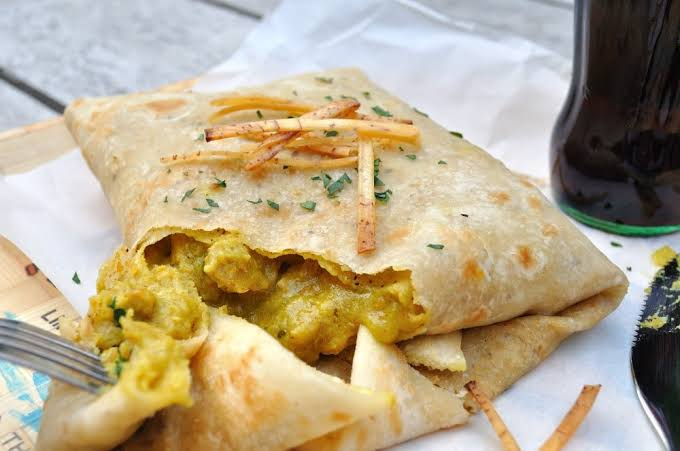
Chat & The Burger: I Know I Said Burgers, But Have You Had a Roti Lately?
Two establishments, two rotis, one familiar craving, and a reminder that sometimes the best bites come with a little surprise.
Now, I know I said I’d be doing burgers, but have you had a roti lately?
You see, I’m not entirely sure where roti originated. Trust me, I’ll be doing the work to find out shortly. But before we get into the history, the origins, and the cultural journey of this humble dish, I decided to try a couple for myself.
Two establishments. Two rotis. One chicken, the other beef.
One was a little too generous with the salt. The other surprised me in all the right ways.
And since I’m bringing this section to a close, I can say that these are two of my favourite spots I’ve visited so far. Not necessarily because either one delivered a perfect meal, but because both offered something worth remembering.
Let’s start with the first.
The First Roti: Familiar Territory, With a Little Too Much Salt
You’ve probably seen these places on TikTok, Instagram, or Facebook. If you’ve been paying attention, you’ll have an idea of where I’m talking about. Both establishments have been around for a while, and their names are certainly familiar to me.
These aren’t newcomers trying to make a name for themselves overnight. They’re established businesses, the sort of places you know by name, even if you haven’t stopped by in a while.
The first roti arrived after approximately ten minutes. Presentation-wise, it was exactly what you’d expect: a roti accompanied by a little green salad on the side.
Nothing particularly elaborate, but then again, a roti doesn’t need a grand entrance.
For the uninitiated, a roti is a substantial meal built around a flatbread or roti skin, wrapped around a filling that can include meat, potatoes, curry gravy, and a variety of seasonings. Depending on the cook, the recipe, and the establishment, the flavour can change considerably.
Peppers bring heat, mango can introduce sweetness, potatoes add substance, and the curry ties everything together. Salt and pepper play their part, too, although, as I discovered, there’s a fine line between seasoning a dish and allowing the salt to take over.
The first was a chicken roti, and the chicken itself deserves some credit.
It was soft, tender, and well-seasoned. Whatever the kitchen did with that chicken, it worked. I was hungry, and the chicken certainly didn’t disappoint.
The problem was everything surrounding it.
The curry was good, but the salt was a little heavy-handed. So much so that the accompanying salad became something of a reprieve rather than simply a side dish.
The potatoes were cooked, the roti skin was thin, and the gravy brought everything together as it should. Yet the seasoning was difficult to overlook. Whether the potatoes were cooked perfectly or the chicken was tender almost became secondary to the amount of salt running through the dish.
And that’s unfortunate, because there was plenty to like.
I ate it, of course. I was hungry, and let’s be honest, these boutique establishments aren’t exactly cheap. When you’re paying for a meal, you want to enjoy the whole experience, not spend half of it wishing the seasoning had been dialled back a notch.
Still, a roti is a roti, and the kitchen got several things right. The chicken was good, the curry had potential, and the presentation was familiar.
It simply needed a lighter hand.
The Second Roti: Beef, Mango Chutney, and a Pleasant Surprise
The second establishment took a little longer
There were orders ahead of mine, and the wait was somewhere in the region of 30 to 35 minutes, possibly longer. I had some time to kill, so I put on footage of Luna Rossa going up against Emirates Team New Zealand and settled in.
By the time I’d watched approximately 52 minutes, I was well into the wait.
Now, before anyone gets carried away, I understand that a busy kitchen has orders to fulfil. A longer wait doesn’t automatically mean poor service, and the staff were excellent throughout. Still, if you’re hungry, 30 minutes can feel considerably longer than it sounds on paper.
When the roti finally arrived, the presentation was much like the first: the roti accompanied by a small salad.
But there was a twist.
Mango chutney.
I’ll admit, I questioned it at first. Mango chutney alongside a beef roti wasn’t quite what I had anticipated. I looked at it, wondered what the kitchen was going for, and then took a bite.
And suddenly, it made sense.
The sweetness of the mango chutney brought something special to the dish. It balanced the curry, softened the overall flavour profile, and gave the beef a little more room to shine.
More importantly, the salt was handled with a much lighter touch.
The result was a roti that felt more balanced from the first bite. The curry was good, the gravy and sauce worked together, and the sweetness from the chutney added another dimension without completely taking over.
Then there was the beef.
Soft, tender, and surprisingly easy to eat. I managed to clear the meat cleanly from a piece of gristle, which was a welcome detail, and the beef itself cut more easily than the roti skin.
Yes, you read that correctly.
The dough put up more of a fight than the meat.
By the time my knife had finished working through the thicker sections of the roti, my arm was beginning to feel the effort. The skin was substantial, and while that sort of thickness can make a roti feel hearty, there’s a point at which it begins to work against the meal.
But here’s the thing: the bite was excellent.
The beef, the curry, the gravy, and that sweet mango chutney came together beautifully. The chutney nearly stole the show, not because it overwhelmed the other ingredients, but because it brought them into balance.
It was the sort of combination that makes you stop questioning a decision and start appreciating it.
Sometimes the unexpected addition is exactly what a dish needs.
The Salad: A Missed Opportunity on Both Plates
Now, we need to talk about the salad.
Both establishments served their rotis with a small helping of greens, including lettuce, cabbage, carrots, and a few other ingredients.
No onions. No ranch dressing. No elaborate sauce. Not even a drizzle of olive oil.
Just the vegetables.
And while I appreciate the simplicity, I couldn’t help thinking that a little more attention here would have made a difference.
I’m not suggesting that every salad needs to be dressed in a complicated vinaigrette or buried beneath a mountain of toppings. Sometimes less really is more.
But a light dressing, perhaps a little citrus or a modest drizzle of olive oil, could have brought the vegetables together and given them a little more character.
As they were, the greens offered a welcome contrast to the rich, starchy curry gravy. Their rougher texture and natural juices helped break up the heaviness of the roti, which is no small achievement when you’re working your way through such a substantial dish.
So, the salad wasn’t entirely without purpose.
It just felt like an opportunity neither establishment fully embraced.
The Roti Itself: A Lesson in Balance
Here’s where things get interesting.
A good roti isn’t simply a matter of putting meat inside flatbread and pouring curry over it. The ingredients have to work together.
The skin needs to hold its filling without becoming an obstacle. The potatoes should contribute substance without turning the entire dish into a mouthful of starch. The curry should bring warmth and depth, while the meat needs to be tender enough to complement the bread rather than compete with it.
And then there are the personal touches.
A little more pepper here. A different curry blend there. Perhaps some mango chutney to introduce sweetness, or a particular combination of spices that becomes the signature of a kitchen.
That’s part of what makes comparing rotis interesting. Two establishments can serve what appears to be the same dish and deliver entirely different experiences.
One might lean heavily on the curry, another might focus on the meat, and a third might introduce ingredients that you wouldn’t ordinarily expect.
The difference isn’t necessarily about one restaurant having the better recipe. It’s about how each kitchen approaches the same idea.
In this case, the chicken roti had tender meat and a good foundation, but the salt was too prominent. The beef roti offered a more balanced curry, a pleasant sweetness from the mango chutney, and tender meat, although its thicker skin could have been easier to cut.
Neither was perfect.
But one had me thinking about what the other could have done differently, while the other had me appreciating a combination I hadn’t expected to enjoy quite so much.
And that’s what makes a food review worth writing.
The Atmosphere: Two Blue Lagoons
Food is only part of the experience.
Sometimes, the setting is just as memorable as what’s on the plate, and both of these establishments understand that.
The atmosphere at each is spectacular. The sunsets are incredible, and there’s something about sitting down in a place where the surroundings invite you to slow down and enjoy yourself.
The staff at both establishments were exemplary.
Good service can make a difference to an ordinary meal, and attentive service can elevate an already enjoyable one. What stood out here was that the staff were excellent without making the experience feel dependent on a tip.
They did their jobs well, and that deserves recognition.
Both establishments have their own appeal, and both have earned a place among my favourite spots so far.
Of course, boutique dining comes at a price. You expect a little more when you’re paying a little more, and that expectation extends beyond the view and the service. The food has to deliver, too.
One kitchen gave me a chicken roti with tender meat but an overly salty curry. The other gave me a beef roti with a memorable mango chutney combination, a well-balanced sauce, and meat that was a pleasure to eat, even if the skin needed a little work.
There are lessons in both experiences.
And there are reasons to return.
The Verdict: Two Favourites, Two Different Experiences
So, where does that leave us?
The chicken roti had its moments. The chicken was soft and well-seasoned, the potatoes were cooked, and the curry had the makings of something good. But the salt was too dominant, and it took away from what could have been a more enjoyable meal.
The beef roti was the surprise of the two. The mango chutney was an unexpected addition that worked remarkably well, the beef was tender, and the curry and gravy came together beautifully. The thicker skin was a drawback, but the flavour made up for much of the disappointment.
Both salads could have benefited from a little more attention, and both establishments have room to improve.
But this isn’t a story about finding two terrible rotis. Far from it.
These are two places I genuinely enjoy visiting, and the atmosphere, the service, and the overall experience are part of the reason why.
As for which establishment served which roti, I’ll leave that for you to figure out.
The two contenders are Blue Lagoon, The Loft, and Sunset Beach.
You’ve seen the social media posts. You know the names. And if you’ve visited them, you might already have an idea of which roti belongs to which kitchen.
I’m not giving away the answer just yet.
After all, a little mystery never hurt anyone.
And while I know I promised you burgers, sometimes you have to put the burger down, pick up a roti, and remind yourself that there’s a whole lot more to eat.
Until the next bite, keep exploring.