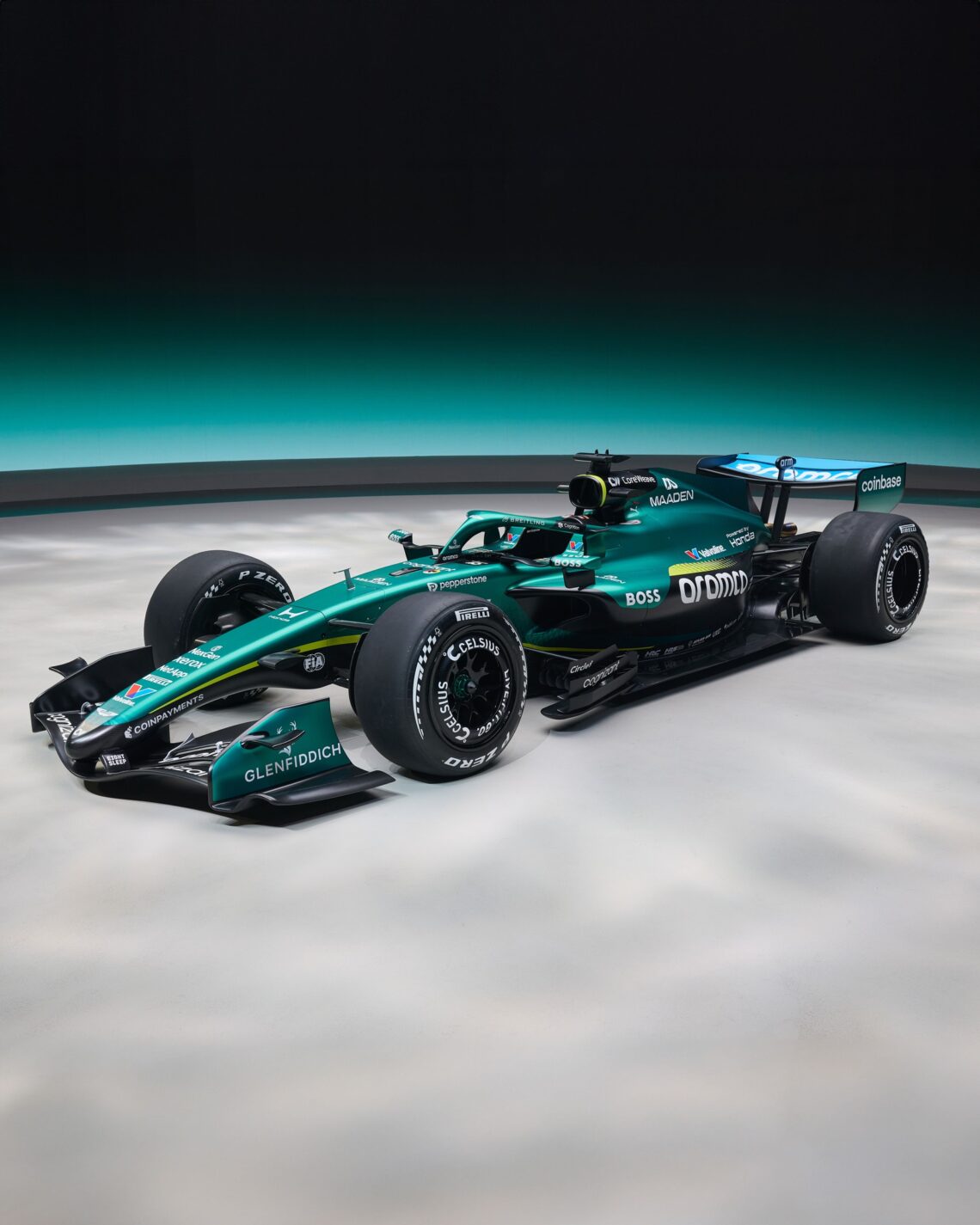
Lance Stroll’s Insane 40-Place Grid Penalty: What It Actually MeansFormula 1 has produced some spectacular grid penalties over the years, but Lance Stroll’s 40-place drop at the 2026 Spanish Grand Prix is one of those numbers that looks almost absurd on paper.There aren’t even 40 cars on the Formula 1 grid.So how exactly does a driver receive a 40-place penalty—and, more importantly, how is it actually applied?The answer lies in Aston Martin’s power-unit allocation.Forty Places From Five ComponentsStroll’s Aston Martin AMR26 arrived at the Madring with a substantial number of new power-unit components.According to Formula 1’s official report, Aston Martin fitted Stroll’s fifth internal-combustion engine, fifth turbocharger, sixth energy store, fifth MGU-K and seventh power-unit ancillary component. Each component carries its own penalty when the permitted allocation is exceeded.The breakdown was:5th ICE: 10 places5th turbocharger: 10 places6th energy store: 5 places5th MGU-K: 5 places7th PU-ANC: 10 placesTotal: 40 grid places. This isn’t a 40-place penalty because Stroll committed one enormous offence.It’s five separate power-unit allocation penalties added together.Why Are Some Components Worth 10 Places and Others Five?The 2026 regulations establish different penalties depending upon the power-unit element being exceeded.The first time an allocation is exceeded, the penalty is generally 10 grid places, while subsequent instances for the same category carry smaller penalties. The regulations also specify that penalties incurred at the same event are accumulated. In Stroll’s case, that produced the unusual combination of three 10-place penalties and two five-place penalties.Ten plus ten plus five plus five plus ten.Forty.But Stroll Doesn’t Actually Move Back 40 PlacesThis is where the headline becomes slightly misleading.Formula 1 doesn’t have a mechanism that literally moves a driver 40 positions behind a 20-car field.The regulations contain a specific provision for penalties greater than 15 grid places.When the accumulated penalty exceeds 15 places, the driver is required to start at the back of the field. So Stroll’s 40-place penalty effectively becomes:Start at the back.There is no additional 20-place punishment carried into another race simply because there weren’t enough positions available.The penalty is applied to the Spanish Grand Prix grid.Stroll’s Qualifying Situation Made It Even StrangerThere was another complication.Stroll didn’t set a qualifying time at the Madring after Aston Martin encountered a suspected water-pressure problem with the car. Formula 1 reported that the issue prevented him from establishing a representative qualifying time. So this wasn’t a case of Stroll qualifying, say, P15 and then being mathematically moved down 40 positions.The FIA’s final grid simply placed him at the rear, following the application of his power-unit penalties and the relevant regulations. The official starting grid listed Stroll last among the race starters. The Penalty Doesn’t Mean He Has To Serve Anything During The RaceThis distinction is important.A grid penalty is fundamentally different from a drive-through or stop-go penalty.Stroll doesn’t start the race and then drive through the pit lane to “serve” the 40 places.He pays the penalty before the race even begins by losing his starting position.Once the lights go out, there is no remaining 40-place penalty hanging over the car.If he starts last and finishes sixth, for example, that sixth-place finish is his actual race result. The grid penalty doesn’t subtract another 40 positions from his finishing position.Why Did Aston Martin Take The Penalty?This is where the story becomes much more interesting than the number itself.Aston Martin clearly needed additional power-unit components badly enough to accept the consequences.The team had already experienced reliability concerns during the Madring weekend. Stroll encountered a suspected battery issue in FP2, while Fernando Alonso also suffered a clutch problem during FP1. Then Stroll’s newly configured car ran into another problem in qualifying.So Aston Martin was essentially forced into a difficult trade-off:Use additional components and accept the grid penalty—or risk continuing with components that the team no longer considered suitable.For a team fighting to understand a difficult 2026 power-unit package, taking the penalty can make sense.The grid is temporary.Reliability problems can destroy an entire weekend.And Then Came The Cruel TwistStroll’s weekend became even more significant once the race began.His Aston Martin later stopped on track, triggering a Virtual Safety Car.That VSC had enormous consequences for the race because Lando Norris was leading at the time. Rivals were able to take advantage of the neutralisation to pit, while Norris’s timing left him badly compromised. He eventually recovered to finish third.Norris subsequently criticised both the Madring and the VSC procedure, arguing that the rules should be reconsidered so that drivers aren’t disproportionately punished by the timing of a neutralisation. So Stroll’s weekend went from:40-place penalty → back of the grid → reliability problem → VSC → major impact on the race leader.That’s quite a weekend.The Bigger Aston Martin ProblemThe 40-place figure is spectacular, but the underlying story is more important.Aston Martin isn’t simply dealing with a driver starting at the back.It’s dealing with power-unit allocation pressure and reliability concerns at a critical point in its first season of the new Honda partnership.Newey’s Aston Martin project was always going to be a long-term undertaking, but the 2026 regulations were supposed to represent the beginning of the team’s transformation into a genuine works operation.Instead, weekends like Madrid demonstrate just how difficult the transition can be.And that makes Stroll’s 40-place penalty more than an amusing statistic.It is a warning light.Aston Martin didn’t lose 40 positions on the grid. It lost track position because it had already consumed too much of its power-unit allocation.And in a season where reliability, energy deployment and power-unit efficiency can determine whether a car fights at the front or spends Sunday recovering from the rear, that’s the part of this story worth watching.

The Lifestyle Magazine, a mix of the old and the new.