2026 Toyota Crown: When a Sedan Wants to Be Something More
A Sedan That Refuses to Follow the Rules
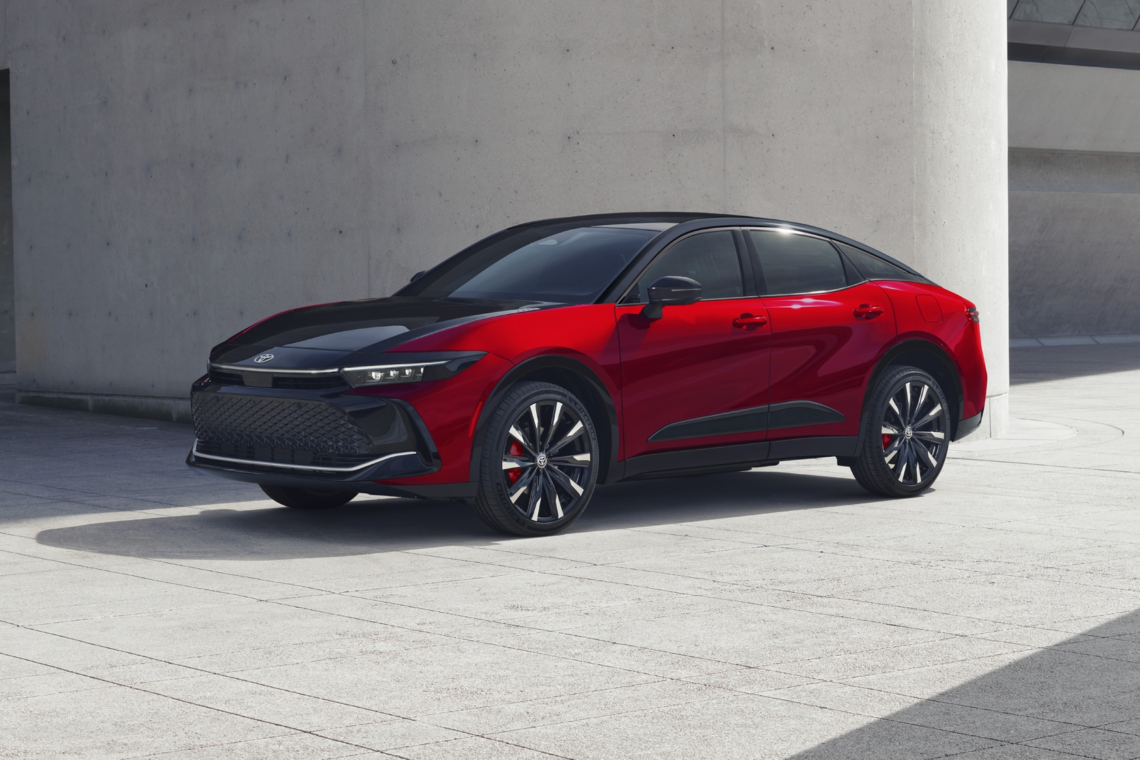
The modern automotive industry has spent years blurring the boundaries between sedans, SUVs and crossovers. Toyota’s Crown is a particularly interesting example of that transformation: a vehicle that retains the proportions of a traditional four-door car while borrowing the elevated driving position and standard all-wheel-drive configuration often associated with crossovers.
For 2026, the Crown returns without major changes, continuing a formula that prioritises comfort, technology and hybrid power while attempting to deliver something more distinctive than an ordinary family sedan.
In its October 24, 2026 review, Edmunds awarded the Crown an overall score of 7.1 out of 10. The assessment praised its comfortable ride, advanced in-car technology and the stronger performance available in the Platinum trim, while raising concerns about its price, storage practicality and the fuel consumption of its most powerful version.
The result is a car with a clear identity, even if its position in the market remains complicated.
A Different Approach to the Hybrid Sedan
Toyota has built its reputation on making hybrid technology accessible to a broad range of drivers. The Crown takes that established expertise and packages it in a vehicle positioned above more conventional offerings such as the Camry.
Its appeal begins with its unusual proportions. The body has a sleek, sloping roofline, while the raised ride height gives occupants a higher seating position than they would typically find in a conventional sedan. Standard all-wheel drive adds another practical element to the package.
The Crown is not trying to be a traditional luxury limousine, nor is it a full-sized SUV. Instead, it occupies the space between those categories, appealing to drivers who want the refinement of a larger car without completely abandoning the efficiency associated with hybrid technology.
For 2026, the lineup comprises the XLE, Limited, Nightshade and Platinum grades. The Nightshade and the addition of standard heated and ventilated front seats arrived as part of the previous model year’s updates, rather than being new developments for 2026.
That distinction matters: the latest Crown is an evolution of an established formula, not a redesigned model.
Two Hybrid Personalities: Efficiency or Performance?
The Crown’s most important engineering decision is its powertrain. Toyota offers two distinct hybrid systems, allowing buyers to choose between fuel economy and a more performance-oriented driving experience.
The XLE, Limited and Nightshade use a 2.5-litre four-cylinder hybrid system producing 236 combined horsepower. The Platinum receives Toyota’s more powerful Hybrid MAX setup, pairing a 2.4-litre turbocharged four-cylinder engine with electric motors to deliver 340 combined horsepower and approximately 400 lb-ft of combined torque. All four trims feature standard all-wheel drive.
The difference is substantial.
The standard hybrid is designed around everyday usability and efficiency. It provides enough power for routine driving, although Edmunds found its performance less impressive than that of the Platinum.
The Hybrid MAX, meanwhile, gives the Crown a more convincing sporting character. Edmunds recorded a 0–60 mph time of approximately six seconds for the Platinum during its testing, demonstrating that this is not simply a comfortable hybrid designed to transport its occupants from one destination to another.
The Platinum also benefits from adaptive suspension, which helps balance comfort with more controlled body movements when the driver selects a sportier setting.
However, there is a trade-off. The more powerful Crown sacrifices a significant portion of the fuel economy that makes the standard hybrid so appealing.
The Fuel-Economy Question
Toyota estimates that the standard hybrid achieves 41 mpg combined, while the Platinum’s Hybrid MAX powertrain carries a combined estimate of 30 mpg. These figures are based on US EPA ratings.
Edmunds’ own testing raised a more immediate concern.
During its standardised test route, the publication recorded just 26.9 mpg in the Platinum. That result falls below the official combined estimate, although one test cannot establish that every owner will experience the same consumption.
Nevertheless, it highlights an important consideration for buyers.
The Crown’s hybrid identity creates an expectation of efficiency. Drivers choosing the standard powertrain have a stronger case for that expectation, while those selecting the Platinum must decide whether the additional performance justifies the extra fuel consumption.
For a vehicle marketed around the balance between comfort, technology and efficiency, that distinction matters.
The Platinum is arguably the more compelling car to drive, but the less powerful models make a stronger financial argument at the fuel pump.
A Cabin Built Around Technology
Where the Crown performs particularly well is its technology offering.
Edmunds awarded the vehicle 9.7 out of 10 for in-cabin technology, making this one of its strongest areas in the assessment.
A 12.3-inch central touchscreen provides access to Toyota’s multimedia system, while wireless Apple CarPlay and Android Auto make smartphone integration straightforward. USB charging connections are available for both front and rear passengers, and a wireless charging pad adds another layer of convenience.
Toyota has also retained physical controls for frequently used functions. This is a welcome decision in an era when manufacturers increasingly move basic vehicle settings into touchscreen menus.
The Crown’s climate controls use physical rocker switches, making adjustments easier without requiring drivers to navigate through multiple digital screens.
The overall approach is practical: technology should improve the driving experience rather than become a distraction.
Toyota Safety Sense 3.0 also comes standard across the lineup, bringing driver-assistance features that include adaptive cruise control and Proactive Driving Assist. These systems are intended to support the driver, particularly during everyday journeys and congested traffic.
The result is a vehicle whose technological strengths are more convincing than its premium positioning might initially suggest.
Comfort Comes First, but Luxury Has Its Limits
The Crown’s elevated seating position is central to its identity.
Rather than sitting low in a conventional sedan, occupants enjoy a higher vantage point over the road. Combined with a comfortable ride and a cabin designed to limit wind and road noise, this makes the Crown well suited to daily commuting and longer journeys.
Edmunds awarded the car 7.4 out of 10 for comfort.
There are, however, areas where Toyota could do better.
The front seats are adequate rather than exceptional, and Edmunds questioned whether the available lumbar adjustment was sufficient for a vehicle at this price point. Rear passengers receive generous space, but the relatively upright seatback can make finding the ideal position more difficult.
Noise insulation also varies with the powertrain. The Platinum’s Hybrid MAX system remained relatively quiet during testing, while the standard hybrid became noticeably louder under hard acceleration.
These are not necessarily deal-breakers, but they illustrate the difference between delivering a comfortable vehicle and delivering a genuinely luxurious one.
The Crown gets much of the fundamentals right. Its challenge is convincing buyers that its cabin and seating experience justify the additional money over less expensive alternatives.
Practicality: The Compromise Behind the Design
The Crown’s unconventional proportions bring benefits, but they also create compromises.
The trunk provides 15.2 cubic feet of cargo capacity, which Edmunds considers average. The rear seats fold down to provide additional room when necessary.
However, the cabin lacks the small-item storage solutions that make some rivals particularly convenient. The glovebox is small, there is no dedicated overhead sunglasses compartment, and storage around the front console is relatively limited.
These details might seem minor, but they become important in a vehicle intended to serve as a comfortable everyday car.
The Crown’s higher stance may appeal to drivers who prefer easier entry and exit, while its sedan-like body retains a more streamlined appearance than a conventional SUV. Yet buyers seeking maximum cargo flexibility may find that a dedicated crossover better suits their needs.
This is the central compromise of the Crown: it borrows the characteristics of two vehicle categories without entirely replicating the strengths of either.
The Price of Being Different
The Crown’s pricing is perhaps its most difficult obstacle.
For the US market, Toyota lists the 2026 range with starting manufacturer suggested retail prices of:
– XLE: $41,440
– Limited: $45,950
– Nightshade: $48,765
– Platinum: $54,990
These are US-market base prices before applicable taxes, registration and other dealer charges.
At these prices, the Crown competes with a range of hybrid sedans and more premium-oriented vehicles.
The problem is that a buyer does not necessarily need to spend Crown money to obtain excellent fuel economy, a comfortable ride or modern infotainment.
Edmunds places the 2026 Toyota Camry at 8.4 out of 10 and the Honda Accord at 8.3, both ahead of the Crown’s 7.1. The Hyundai Sonata Hybrid also scores higher, at 7.8.
These results do not mean that the Crown is an inferior car in every respect. Rather, they suggest that its competitors offer a stronger overall balance of price, efficiency and everyday usability.
The Crown’s higher price must therefore be justified by something beyond basic transportation.
For some buyers, that something will be its distinctive styling, elevated driving position, standard all-wheel drive and availability of the powerful Hybrid MAX system.
For others, those advantages may not be enough.
Verdict: A Distinctive Toyota Searching for Its Audience
The 2026 Toyota Crown is an interesting answer to a question the automotive industry continues to ask: what happens when customers want the comfort and proportions of a sedan but prefer the driving position and versatility associated with a crossover?
Toyota’s answer is a vehicle that looks different, delivers a comfortable ride and offers a choice between an efficient hybrid powertrain and a much more powerful turbocharged alternative.
Its strongest qualities are clear. The cabin technology is excellent, the standard hybrid promises respectable fuel economy, and the Platinum delivers more performance than its unusual shape might suggest.
Yet its shortcomings are equally important. The price is high relative to several accomplished hybrid rivals, storage is limited in places, and the Platinum’s fuel consumption weakens the efficiency argument.
Edmunds’ 7.1 out of 10 rating reflects those competing qualities: a car with a distinctive personality that does not consistently outperform more conventional alternatives.
The Crown is at its best when buyers value what makes it different. It is not the obvious choice for someone seeking the cheapest route to hybrid efficiency, nor is it a direct substitute for a traditional luxury car. Instead, it occupies a niche for drivers who want something between those two worlds.
Whether that niche is worth the premium depends on the buyer.
For Toyota, the Crown demonstrates that a sedan does not have to follow established conventions to remain relevant. The harder task is persuading customers that being different is worth paying for.