Peugeot, Citroën and Opel are stepping away from factory-backed world championship racing. For Stellantis, this is less about abandoning motorsport and more about deciding which parts of its sporting heritage are still worth financing.
There is something rather familiar about the announcement coming out of Stellantis this week. Another manufacturer is stepping away from the world stage of motorsport, another programme is being brought to an end, and another group of engineers and racing personnel must consider what comes next.
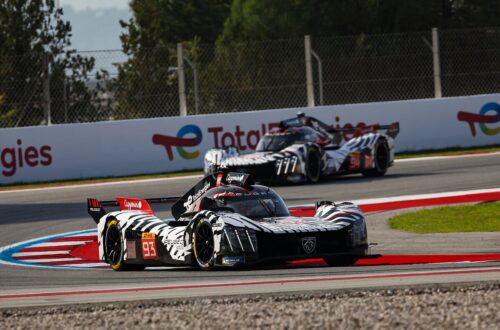
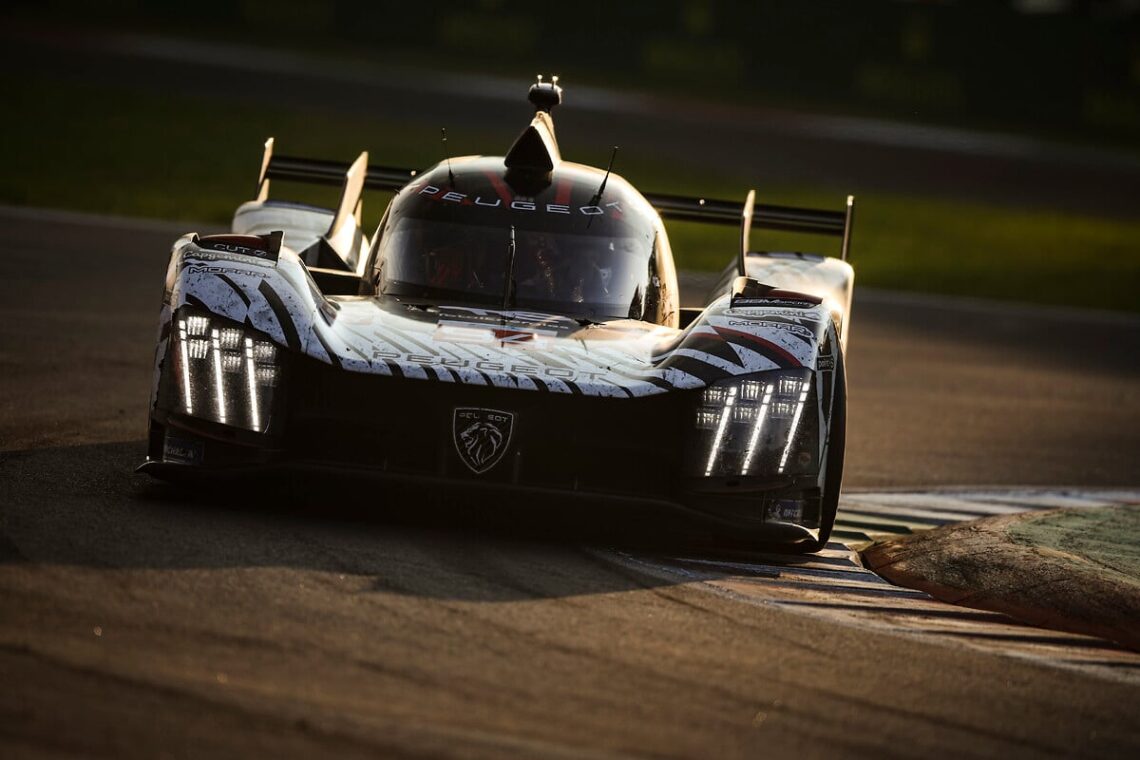
On November 23, Stellantis officially announced that it would end its factory-backed participation in the FIA World Endurance Championship and Formula E. Peugeot’s 9X8 Hypercar programme will conclude with the 2026 WEC season, while the group’s Formula E commitments through Opel and Citroën will end after Season 13, in the summer of 2027.
The announcement follows reports first published by Le Figaro, which suggested the company was preparing to withdraw its investment in several motorsport programmes.
But there is a bigger question here. Why is Stellantis leaving, and how many times have these brands found themselves in a similar position?
To understand the decision, it helps to look beyond the racing calendar and back at the history of the manufacturers involved.
The financial picture behind the decision
Stellantis is not making this decision in isolation.
Under chief executive Antonio Filosa, the company has been attempting to reverse a difficult financial period, restore profitability and redirect investment towards products that can deliver stronger commercial returns.
In February 2026, Stellantis disclosed approximately €22.2 billion in charges associated with its business reset, including adjustments to its electric vehicle strategy, manufacturing capacity and product expectations.
Its wider Value Creation Programme targets €6 billion in savings by 2028.
The company has also been reassessing how quickly consumers are adopting electric vehicles, the cost of manufacturing, its European industrial footprint and the pressure coming from Chinese competitors.
This is where motorsport enters the discussion.
Factory racing programmes are expensive. They require dedicated engineering departments, research and development, logistics, specialist facilities, drivers, testing and substantial annual operating budgets.
According to Autocar, Stellantis Motorsport costs approximately €300 million annually.
That is a considerable commitment for a manufacturer attempting to introduce new products, improve quality and rebuild its position in several major markets.
And when the company is looking at where to put its next billion euros, the question becomes whether racing is producing enough commercial value to justify the investment.
Peugeot: A familiar departure from endurance racing
Peugeot’s relationship with endurance racing has never been particularly straightforward.
The manufacturer has enjoyed considerable success at Le Mans, including victories in 1992, 1993, 2009 and 2011. Its diesel-powered 908 programme established Peugeot as a serious competitor against established endurance racing manufacturers.
Yet in January 2012, PSA Peugeot Citroën announced that it would withdraw from the 24 Hours of Le Mans and the newly established World Endurance Championship.
The explanation was familiar: the difficult economic environment in Europe and the need to concentrate resources on new commercial models.
The 208, 3008 HYbrid4 and 508 were among the vehicles requiring attention.
Ten years later, Peugeot returned to the top category of endurance racing with the 9X8, a radical prototype designed to represent a new chapter in the brand’s engineering identity.
The car attracted considerable attention, particularly for its original wingless aerodynamic concept.
However, the programme struggled to translate that ambition into results. Its revised 9X8 failed to secure a WEC victory across 34 starts, despite substantial development work.
Now, fourteen years after its previous withdrawal, Peugeot is leaving endurance racing once again.
There is an uncomfortable similarity between the two decisions. In both instances, the company has chosen to redirect resources towards its commercial business rather than continue an expensive factory programme.
Citroën: Four departures from the World Rally Championship
Citroën’s history is even more revealing.
The French manufacturer is one of the most successful names in modern rallying, with Sébastien Loeb becoming synonymous with the brand’s dominance.
But its relationship with the World Rally Championship has been marked by repeated departures.
The BX 4TC programme ended prematurely in 1986. The company subsequently withdrew from factory WRC competition in 2005 and again in 2016, with the latter being a temporary break to prepare for the new regulations.
Its final factory withdrawal came in 2019.
That decision followed Sébastien Ogier’s announcement that he would leave the team. Citroën stated that it could not envisage competing for the championship without an available driver capable of fighting for the title.
The numbers behind its rallying history remain extraordinary: 102 WRC victories and eight manufacturers’ championships.
Citroën also left the World Touring Car Championship after the 2016 season, having dominated the series following its arrival in 2014.
The decision was partly driven by the group’s desire to concentrate its motorsport resources elsewhere, including its DS-branded Formula E activities.
Now, the Citroën name is again facing a factory racing departure, this time in Formula E.
There is a recurring pattern: when a programme no longer fits the manufacturer’s priorities, the racing operation becomes expendable, regardless of its heritage.
Opel: An electric racing programme that barely gets started
Opel presents a slightly different case.
The German manufacturer has a long history in rallying and touring car competition, but its latest Formula E commitment was supposed to represent a fresh opportunity.
In March 2026, Opel announced its intention to enter Formula E with the new Gen4 generation of cars.
The timing was important. Formula E was preparing for a significant technological step, and Opel was positioning itself as part of that electric performance movement.
Yet Stellantis has now announced that its official Formula E involvement will end after Season 13, in summer 2027.
That means Opel’s factory-backed commitment will be remarkably short-lived.
For the brand, this raises questions about the value of entering an expensive championship only to withdraw almost as quickly.
It also illustrates how quickly corporate priorities can change, particularly when several brands are competing for investment within the same automotive group.
What happens to the people and the technology?
Importantly, Stellantis has not announced the complete closure of its motorsport engineering operation.
The company says it intends to retain and redeploy employees affected by the decision, moving expertise towards customer racing and high-performance vehicle development.
This includes continued support for customer rally programmes and performance derivatives across brands such as Peugeot, Lancia, Opel and Alfa Romeo.
The group also intends to maintain its involvement in developing performance models for Alfa Romeo and Maserati.
That is a significant distinction.
Stellantis is not saying that motorsport has no value. It is saying that its involvement needs to have a more direct relationship with its commercial products.
The technology developed through competition can still be used in road-going performance cars, while customer racing offers a different financial structure from funding an entire factory championship programme.
There is also a question of what happens to the Citroën Formula E operation. It is structured differently from Opel’s factory entry, with the Monaco Sports Group holding the team operation and licence. Formula E has indicated that the team will determine its own future, so the end of Stellantis funding does not necessarily mean the team itself disappears.
The bigger picture: Fourteen brands, limited resources
When we covered Stellantis at the Paris Motor Show, what stood out was the scale of its ambition.
Eight brands, approximately 60 vehicles on display and a portfolio attempting to address almost every part of the automotive market.
Peugeot, Citroën, Opel, DS, Fiat, Jeep, Alfa Romeo, Lancia and Maserati each carry different histories and different expectations. The group has to balance affordability, electrification, performance, heritage and commercial viability across an enormous portfolio.
That is not an easy exercise.
And perhaps this is where the motorsport decision becomes more understandable.
The company is no longer looking at racing as an isolated exercise in brand prestige. It is examining which programmes contribute directly to the future of its products.
Peugeot’s endurance programme, Citroën’s Formula E participation and Opel’s new electric racing ambitions are being sacrificed in favour of a more concentrated approach.
The question is whether this will ultimately strengthen the brands or leave them with less visibility at a time when manufacturers are fighting harder than ever for consumer attention.
We have seen this before. The question is whether they will return.
Peugeot has already left endurance racing once and returned a decade later.
Citroën has repeatedly stepped away from rallying before finding another reason to return.
Now Stellantis is bringing several factory programmes to an end simultaneously.
It is tempting to view this as another chapter in the long history of manufacturers abandoning motorsport when the financial pressure becomes too great. But the more interesting question is what happens after the departure.
Motorsport has always been a tool for manufacturers to establish identity, develop technology and create an emotional connection with customers. The challenge is that the cost of maintaining that presence has grown, while the relationship between a racing car and a showroom vehicle is not always easy to demonstrate.
Stellantis is choosing to redirect its resources.
Whether that proves to be a sensible commercial decision or a loss of sporting identity will depend on what its brands produce next.
For now, the Peugeot 9X8 will leave the WEC, Opel and Citroën will conclude their Formula E commitments, and another generation of factory-backed racing programmes will come to an end.
But if history tells us anything, it is that in motorsport, a departure does not always mean goodbye.