The Global Automotive Shift: Who Is Really Winning the Electric Vehicle Market?
How China is expanding its automotive influence, why Europe is gaining momentum, and what the latest international research tells us about the future of the global car industry.
The electric vehicle conversation has changed. For years, the question surrounding the automotive industry was whether electric vehicles could realistically challenge the internal combustion engine. Today, that question is increasingly outdated. Electric vehicles have established themselves as a permanent part of the global automotive landscape. The more important question is now who controls the market, who manufactures the vehicles, who supplies the batteries, and ultimately, who stands to benefit from the transition.
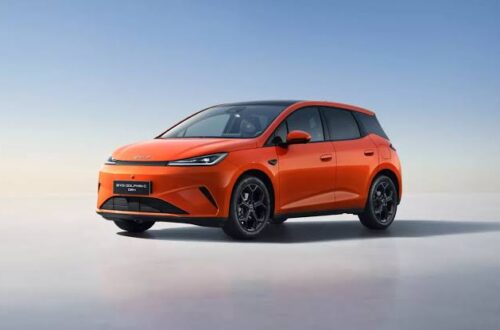
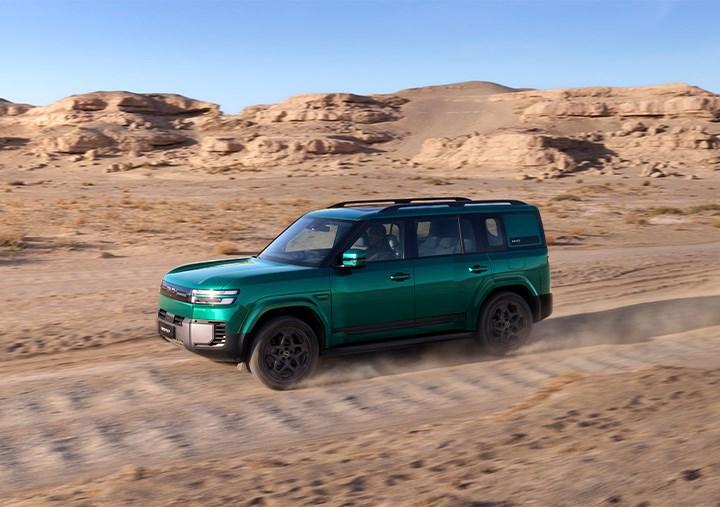
China’s growing international presence has made that question particularly important. Its manufacturers are no longer competing exclusively within their domestic market. They are expanding into Europe, Latin America, Southeast Asia and other emerging automotive markets, supported by substantial manufacturing capacity, competitive pricing and increasingly sophisticated international distribution networks.
But understanding this transition requires more than following vehicle launches and manufacturer announcements. It requires examining the numbers, the economics and the policies shaping the industry.
At DLifestyleMagazine, we believe that understanding the future of the automotive industry means looking beyond individual manufacturers. It means examining the global market as a connected ecosystem.
Three research institutions, three perspectives
To establish a meaningful picture of the international EV market, we have identified three particularly important sources of industry intelligence: the International Energy Agency (IEA), BloombergNEF and Benchmark Mineral Intelligence.
Each approaches the electric vehicle transition from a different perspective. Together, they provide a useful foundation for understanding where the market stands today and where it may be heading.
International Energy Agency: Understanding the bigger picture
The International Energy Agency’s Global EV Outlook 2026 provides one of the most comprehensive examinations of the electric vehicle transition.
Its research extends beyond sales figures, examining government policies, manufacturing capacity, battery production, charging infrastructure, energy consumption and international trade.
One of its most important findings concerns China’s manufacturing position.
According to the IEA, China accounted for nearly 75% of global electric car production in 2025. Its manufacturers produced approximately 16 million electric cars, while Chinese electric car exports exceeded 2.5 million units.
That is an important distinction. China is not simply producing vehicles for domestic consumption. Its manufacturing capacity increasingly exceeds domestic demand, creating a commercial incentive to establish international markets.
The IEA also identifies the growing importance of emerging economies, particularly in Southeast Asia and Latin America, where affordable Chinese imports are helping accelerate EV adoption.
Its research makes clear that electrification is not simply an environmental transition. It is becoming an important question of industrial competitiveness and energy security.
BloombergNEF: Following the money and the future
Where the IEA examines the broader economic and policy environment, BloombergNEF provides another important perspective: forecasting.
Its Electric Vehicle Outlook 2026 projects approximately 23.3 million passenger electric vehicle sales globally during the year, representing an 11% increase over 2025.
The report also identifies China as the dominant contributor to global EV sales, while recognising the growing importance of Europe, Southeast Asia, India, Mexico and Brazil.
What makes BloombergNEF particularly useful is its examination of the economics behind electrification.
Battery pricing, vehicle affordability, manufacturing investment, charging infrastructure and total ownership costs all influence whether an EV can compete commercially with a conventional vehicle.
There is also an important consideration for established manufacturers.
Building an electric vehicle is one challenge. Building one profitably, at scale, while maintaining competitive pricing and supporting an international dealer network is another.
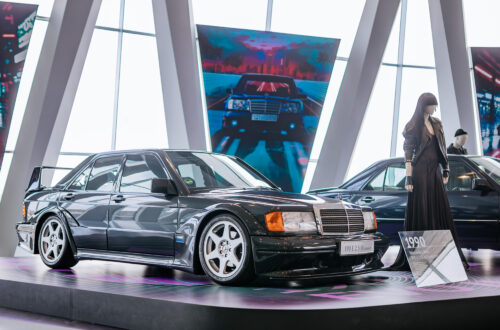
For manufacturers such as Mercedes-Benz, BMW, Volkswagen, Toyota and Ford, the transition is not simply about developing new platforms. It is about protecting their commercial positions while competing against manufacturers that may have different cost structures and supply-chain advantages.
BloombergNEF’s projections provide a useful framework for understanding those pressures.
Benchmark Mineral Intelligence: What the market is actually doing
Forecasts are important, but actual sales provide another level of understanding.
Benchmark Mineral Intelligence is particularly useful because it tracks the changing performance of the global electric vehicle market, including regional sales, battery supply chains and manufacturer activity.
Its report published on 12 November 2026 provides one of the latest available global sales snapshots.
According to Benchmark, 2.09 million electric vehicles were sold globally in October, bringing total sales for January through October to 17.5 million.
October sales increased by 8% compared with the same month in 2025.
However, the regional figures tell a more interesting story.
Europe recorded approximately 510,000 EV sales during October, an increase of 36% year-on-year. North America returned to annual growth, although Benchmark cautions that the comparison reflects a weaker market following the expiration of the US federal EV tax credit.
China recorded approximately 1.14 million sales in October, but its year-to-date market remained below the previous year’s level.
Rather than interpreting that decline as a loss of international competitiveness, it is important to consider what Chinese manufacturers are doing elsewhere.
Benchmark reported that Chinese passenger-car new-energy vehicle exports approached 600,000 units during October, setting another monthly record.
This is where domestic demand and international expansion begin to intersect.
China: From domestic dominance to international expansion
China’s position in the global automotive industry deserves particular attention.
For decades, established manufacturers in Europe, Japan, South Korea and the United States have enjoyed considerable influence over international vehicle markets.
That balance is changing.
Chinese manufacturers are increasingly establishing themselves in territories traditionally dominated by established automotive groups.
BYD, Geely and Chery are among the companies expanding their international presence, while other Chinese manufacturers are pursuing their own overseas strategies.
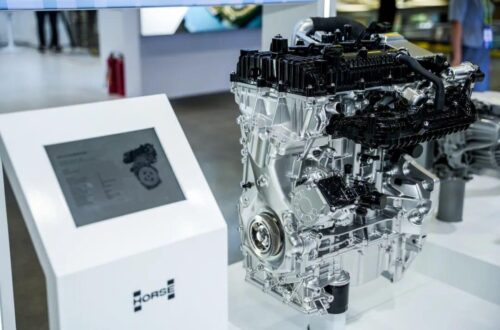
Their competitive advantages are not limited to vehicle pricing. Battery manufacturing, vertical integration, production capacity and rapidly developing vehicle technology are becoming increasingly important.
The expansion into Europe is particularly significant. Chinese manufacturers are attempting to establish themselves in a market with a long automotive history, established premium brands and demanding consumers.
Latin America is another important opportunity. Mexico, Brazil and other regional markets offer opportunities for manufacturers seeking to establish a stronger presence outside China.
The significance of these developments extends beyond the number of vehicles exported. International distribution, local assembly, after-sales support and consumer confidence will determine whether these manufacturers can maintain their positions over the longer term.
China’s automotive ambitions should therefore be examined as an international industrial strategy rather than simply an EV sales campaign.
The challenge for established automotive manufacturers
The changing market presents a difficult situation for traditional automotive manufacturers.
European companies have invested heavily in electrification, but they are facing pressure from Chinese competitors with significant advantages in battery supply and manufacturing scale.
American manufacturers are also navigating a changing regulatory and commercial environment, while Japanese manufacturers continue to explore different approaches to electrification, including hybrids and other powertrain technologies.
There is no single solution for every manufacturer.
Some companies will compete through premium positioning and technological differentiation. Others will concentrate on affordability, production efficiency and global volume.
The competition will also extend beyond passenger vehicles. Electric commercial vehicles, buses, delivery fleets and heavy transport are becoming increasingly important parts of the wider transition.
What happens next?
The global EV market should not be judged through a single year’s sales performance.
Regional differences, government incentives, consumer affordability, charging infrastructure and manufacturing economics will continue to influence adoption.
China’s international expansion is particularly important because it could reshape the competitive environment in markets that have traditionally depended on European, Japanese and American manufacturers.
However, international growth does not automatically guarantee profitability. Trade restrictions, tariffs, local manufacturing requirements, distribution costs and consumer preferences remain significant obstacles.
For this reason, we believe the industry needs to be examined through three complementary lenses.
The IEA helps establish the policy, economic and energy context.
BloombergNEF provides projections and insight into the commercial economics of electrification.
Benchmark Mineral Intelligence provides the latest sales data and regional developments against which those projections can be assessed.
Together, these sources provide a stronger foundation for understanding the direction of the global automotive industry.
The DLifestyleMagazine perspective
We are entering a period in which the balance of automotive influence may look very different from what it did just a decade ago.
The established manufacturers are not disappearing, and the internal combustion engine is not simply vanishing overnight. However, the commercial advantages that once protected traditional automotive markets are being challenged.
China’s growing manufacturing capacity, international exports and battery supply-chain influence are changing the competitive landscape.
The question is no longer simply whether consumers will embrace electric vehicles.
It is whether the manufacturers that built the modern automotive industry can adapt quickly enough to remain competitive against a new generation of international competitors.
At DLifestyleMagazine, this is a market worth watching closely. Not because electrification represents the end of automotive heritage, but because the next chapter of that heritage is being written in factories, research laboratories, shipping ports and increasingly competitive international markets.
The automotive industry is changing. The real story is who will control its next chapter.