The Five Largest Yachts at FLIBS 2026: From a 305-Foot Ocean Giant to Italian Speed
By DLifestyleMagazine | Luxury, Yachting & Marine Innovation
From an ocean-research support yacht built for exploration to an American superyacht inspired by Hollywood’s golden age, the 2026 Fort Lauderdale International Boat Show brings together five extraordinary vessels that demonstrate just how diverse the world of superyachts has become.
There are boat shows, and then there is Fort Lauderdale.
Returning from October 28 to November 1, the 67th annual Fort Lauderdale International Boat Show (FLIBS) transforms South Florida’s waterways into a showcase of some of the world’s most impressive yachts, marine technology and luxury lifestyle products. The 2026 edition features vessels ranging from innovative new models to established superyachts whose scale alone commands attention.
But length is only part of the story.
Some yachts are designed to cross oceans in exceptional comfort. Others are built around speed, entertainment and architectural sophistication. And one of this year’s most remarkable vessels has a purpose that extends well beyond private leisure: supporting scientific research and marine exploration.
According to Forbes contributor Bill Springer, five yachts stand out among the largest vessels expected at this year’s show: Draak, Scout, Carpe Diem, Herakles and Silver Lining.
Together, they offer a fascinating look at how different shipyards approach the business of building floating luxury residences.
1. Draak — 305 Feet of Ocean Exploration
Builder: Oceanco
Length: 305 feet (approximately 93 metres)
Purpose: Scientific research, marine exploration and expedition support
The largest yacht featured in the Forbes preview is not simply a statement of private wealth. It represents a different direction for the superyacht industry.
Meet Draak.
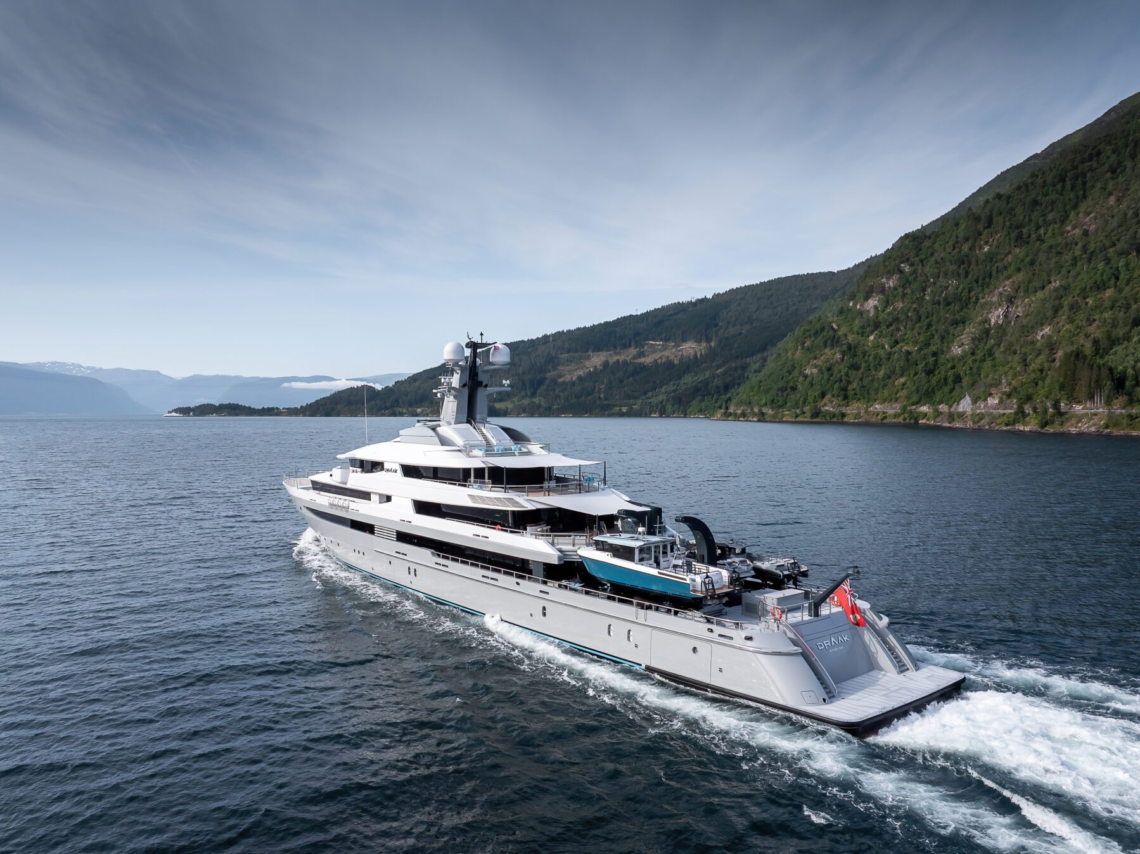
Built by Dutch shipyard Oceanco and originally delivered in 2014, the 305-foot vessel has undergone a substantial transformation to become part of the Inkfish ocean research fleet associated with Gabe Newell, the technology entrepreneur best known for co-founding Valve.
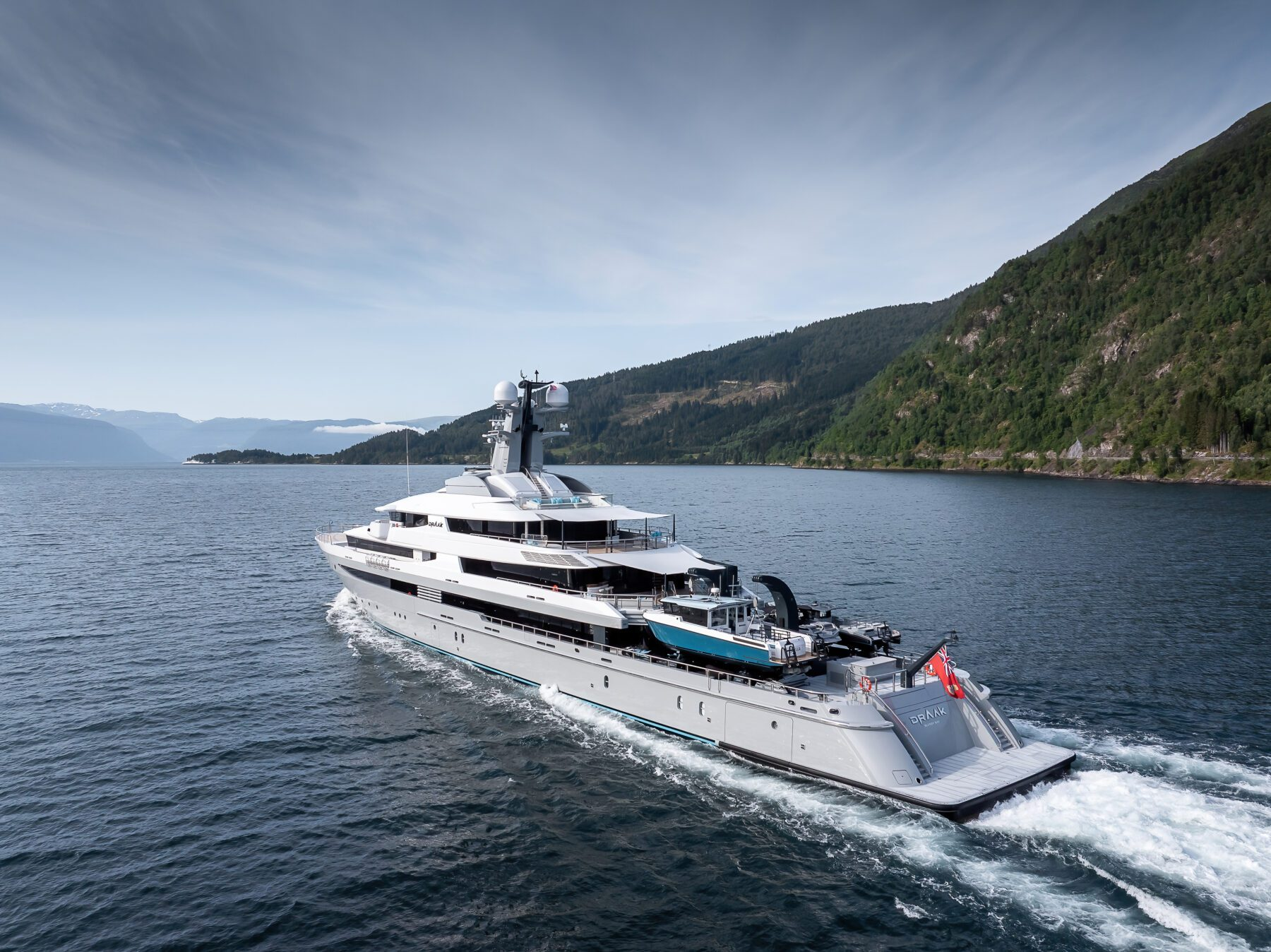
Previously known as Equanimity and Tranquility, Draak has been reconfigured as a companion vessel to Leviathan, the much larger 365-foot yacht also built by Oceanco.
The two vessels are intended to operate together, with Draak providing additional capabilities for marine exploration and scientific work.
The transformation illustrates an increasingly interesting aspect of the luxury-yachting world: a superyacht’s value can extend beyond the accommodation and amenities it offers its owner. Its size, equipment and onboard facilities can also support complex activities at sea.
Draak’s refit includes extensive equipment-handling capabilities, a dedicated dive centre, a medical treatment area and a hyperbaric chamber. These facilities can support diving operations and provide specialised resources for marine research.
The distinction is important. Draak is not simply a conventional pleasure yacht with a research label attached. Its role within the Inkfish fleet requires the vessel to support operations that demand equipment, specialist facilities and coordination between ships.
Its relationship with Leviathan is central to that mission. Rather than expecting one vessel to perform every task, the fleet can distribute functions between its yachts and supporting equipment.
For the superyacht industry, this is a compelling example of how an existing luxury vessel can be repurposed to serve a specialised operational role.
At 305 feet, Draak will also be one of the most visually imposing vessels at the show, towering over the marina at Pier 66.
Its appearance at FLIBS is a reminder that the future of yachting may involve more than ever-larger private residences. It can also encompass exploration, scientific support and access to environments that remain difficult to reach.
Why it matters: Draak combines the scale of a superyacht with the practical requirements of an ocean-research support vessel, demonstrating how luxury marine engineering can serve a broader purpose.
2. Scout — 209 Feet Built for Adventure
Builder: Royal Hakvoort
Length: 209 feet (approximately 64 metres)
Launched: 2019
Design: H2 Yacht Design
If Draak represents the specialised research fleet, Scout showcases the appeal of the explorer yacht.
Built by Dutch shipyard Royal Hakvoort and delivered in 2019, Scout was designed for owners interested in travelling beyond the familiar routes of conventional luxury cruising.
Explorer yachts are a distinct category. While traditional superyachts often prioritise outdoor entertainment areas, beach clubs and expansive social spaces, explorer vessels place additional emphasis on range, resilience and the ability to operate in more demanding environments.
Scout’s design reflects that philosophy.
Its steel hull is built to an ice-class specification, while its rugged exterior styling gives it a more expedition-oriented appearance than the sleek profiles associated with many Mediterranean motor yachts.
The vessel features a helideck, a forward observation lounge and extensive exterior living areas. These features support a lifestyle in which the journey itself can be as important as the destination.
A helicopter facility can provide additional flexibility when travelling to remote locations, while an observation lounge offers guests a comfortable place to watch the surrounding landscape.
Scout’s reported cruising range of approximately 4,800 nautical miles also makes long-distance travel a central part of its appeal. Actual range depends on operating speed, sea conditions and other factors.
Inside, the yacht combines expedition-oriented design with the comfort expected of a vessel in this class.
For prospective buyers, an established yacht such as Scout offers another advantage: it is already built. Commissioning a custom superyacht can involve years of design, engineering and construction, whereas purchasing an existing vessel can offer a more immediate route into the explorer-yacht market.
Of course, any acquisition requires careful assessment of the yacht’s condition, maintenance history, equipment and operating costs.
Nevertheless, Scout demonstrates why the explorer category continues to attract attention among owners who want to combine long-range cruising with the comforts of a luxury residence.
Why it matters: Scout represents a version of luxury in which independence, long-distance capability and access to remote destinations are just as important as interior design.
3. Carpe Diem — An American Superyacht with Hollywood Character
Builder: Trinity Yachts
Length: 191 feet (approximately 58 metres)
Delivered: 2011
Interior design: Carol Williamson & Associates
Not every superyacht needs to look as though it belongs in the future.
Carpe Diem takes a different approach, drawing inspiration from Art Deco design and the visual language of Hollywood’s golden age.
Built in the United States by Trinity Yachts, the 191-foot yacht combines substantial proportions with an interior that emphasises contrast, craftsmanship and carefully selected materials.
Its design reflects a period when luxury interiors often relied on distinctive woods, polished surfaces and dramatic combinations of light and dark.
Inside Carpe Diem, Macassar ebony, cherry wood, white onyx and tufted silk contribute to an atmosphere that is both sophisticated and theatrical.
The aesthetic continues throughout the vessel, creating a consistent relationship between the interior spaces and the yacht’s exterior entertaining areas.
The owner’s collection of vintage Hollywood photography adds another layer to the design, reinforcing the connection between the vessel and classic cinema.
This is not minimalism for the sake of minimalism. Carpe Diem embraces decorative richness, using materials and visual references to create an identity that is recognisably different from the lighter, more contemporary interiors found on many modern yachts.
Its main-deck owner’s suite includes a private study and lounge area, together with separate bathrooms. Additional guest accommodation includes VIP suites and double cabins, with flexible arrangements available in the forward VIP area.
These features make the yacht suitable for extended stays with family and guests, while its spacious social areas allow entertaining to remain central to the onboard experience.
Carpe Diem also represents the capabilities of American yacht construction in a market often associated with Dutch, Italian and German shipyards.
The United States has a long history of building large luxury yachts, and Trinity Yachts became known for custom vessels that combined substantial interior volumes with long-range cruising capability.
Carpe Diem is a reminder that a yacht’s character does not come from its dimensions alone. Design choices can be just as important in determining how a vessel feels and how its spaces are experienced.
Why it matters: Carpe Diem shows that classic decorative influences and American yacht-building expertise still have a place in a luxury market increasingly drawn to contemporary styling.
4. Herakles — Italian Design with Serious Speed
Builder: Mangusta
Model: Mangusta 165
Length: 165 feet (approximately 50 metres)
Reported top speed: 34 knots
Reported cruising speed: 26 knots
At the opposite end of the design spectrum sits Herakles.
Where Scout is about long-distance exploration and Carpe Diem emphasises decorative sophistication, this Mangusta-built yacht places speed firmly among its priorities.
The 165-foot Herakles belongs to a class of high-performance luxury yachts designed to combine substantial onboard accommodation with the ability to travel quickly.
Mangusta has built its reputation around sleek motor yachts that blend Italian styling with performance-oriented engineering. Herakles demonstrates the appeal of that formula on a particularly impressive scale.
According to the Forbes preview, the yacht has a reported top speed of 34 knots and a cruising speed of 26 knots.
For a vessel measuring approximately 50 metres, those are striking figures.
At 34 knots, the yacht is capable of travelling at approximately 39 miles per hour. That may not sound extraordinary compared with a sports car, but achieving such speeds on a yacht of this size requires a very different approach to propulsion, hull design and weight management.
Herakles uses triple MTU engines and waterjet propulsion, according to YachtBuyer. The combination supports its high-performance character.
Waterjets work by drawing water into the propulsion system and expelling it at high velocity to generate thrust. Depending on the vessel’s design, this arrangement can offer advantages in manoeuvrability and high-speed operation.
The yacht’s exterior profile reinforces the impression of movement even when it is stationary.
But Herakles is not designed around speed alone. Its interior accommodates up to 12 guests, while its outdoor spaces include a foredeck Jacuzzi, sunpads and several areas for dining and entertaining.
A dedicated cinema suite offers another option when guests want to spend time indoors.
The result is a yacht that combines the social facilities of a luxury vessel with a performance profile more commonly associated with smaller, faster motor yachts.
That combination comes with practical considerations. High-speed operation can increase fuel consumption substantially compared with slower cruising, and actual performance depends on loading, sea conditions and the vessel’s operating configuration.
For owners who value the ability to cover distances quickly, however, Herakles offers a very different proposition from the long-range explorer.
Why it matters: Herakles demonstrates that even at superyacht scale, speed remains a defining part of the luxury experience.
5. Silver Lining — American Craftsmanship and Entertaining at Sea
Builder: Christensen
Length: 164 feet (approximately 50 metres)
Guest capacity: Up to 16 in its six-stateroom configuration
Interior design: Kimberly Graham
Completing the five-yacht lineup is Silver Lining, a Christensen-built superyacht that places spacious accommodation and entertaining at the centre of its design.
At approximately 164 feet, it is only slightly shorter than Herakles, yet the two vessels offer different interpretations of life at sea.
Herakles is defined by its high-performance character. Silver Lining places greater emphasis on interior volume, guest accommodation and the ability to move comfortably between social spaces.
The yacht accommodates up to 16 guests in six staterooms, although its charter configuration is reported to accommodate 12 guests. It also has accommodation for 11 crew members.
Its main-deck owner’s suite occupies the full beam of the yacht, creating room for a private office, two walk-in closets and separate bathrooms.
A full-beam VIP suite on the lower deck provides another substantial accommodation option, while the remaining guest cabins offer a mix of king-sized and flexible sleeping arrangements.
An elevator serves the yacht’s decks, including the sundeck, helping guests move between its various living and entertainment areas.
Interior designer Kimberly Graham has used high-gloss black walnut and marble finishes to create a sophisticated atmosphere without relying on the same Art Deco influences seen aboard Carpe Diem.
The main salon benefits from large windows and a formal dining area designed for 12 guests.
Upstairs, the full-beam skylounge offers an onyx-topped bar, seating and additional dining space. Outside, a bridge-deck dining area accommodates 12, with adjustable wind protection and overhead heating and cooling to help maintain comfort in changing conditions.
The sundeck provides another focal point, with an eight-person Jacuzzi, bar, barbecue facilities and sunpads.
Silver Lining also features an aft area engineered for touch-and-go helicopter operations, adding another dimension to its onboard facilities.
These details illustrate the complexity of designing a superyacht around the needs of multiple guests. It is not simply a matter of fitting bedrooms and lounges into a hull. Designers must consider movement between spaces, privacy, dining arrangements, service requirements and the relationship between indoor and outdoor living.
For owners who intend to spend extended periods aboard with family or friends, those details can be just as important as the yacht’s exterior profile.
Why it matters: Silver Lining demonstrates how American yacht construction can deliver substantial guest accommodation and a carefully planned entertaining environment within a 164-foot vessel.
Beyond the Five: A Changing Superyacht Market
The five yachts highlighted by Forbes illustrate the variety of vessels on display at FLIBS, but the broader show also reflects changes taking place across the marine industry.
The official show programme identifies more than 50 anticipated debuts, including new models featuring hybrid propulsion and lightweight construction.
One notable example is the Pearl 100 Hybrid, a 100-foot yacht that introduces hybrid propulsion to the Pearl Yachts range.
Another is the Delta 72, which uses carbon-fibre construction developed in collaboration with Mannerfelt Design. Its lightweight structure is intended to help reduce fuel consumption and extend range.
These developments are significant because the luxury yacht market faces many of the same questions confronting the automotive industry: how to improve efficiency, reduce environmental impact and preserve the performance and comfort customers expect.
Hybrid propulsion is not a universal solution, and its benefits depend on the vessel’s operating profile, the propulsion system and how often it can operate in its more efficient modes.
Nevertheless, the appearance of these technologies alongside established superyachts suggests that the industry’s future will involve more than simply building larger vessels.
Owners and designers are also considering how yachts move through the water, how they consume energy and how onboard systems can be made more efficient.
At the same time, the demand for explorer yachts and research-support vessels demonstrates that range and operational capability remain important priorities.
The industry is therefore developing in several directions at once: high-speed luxury, long-range exploration, spacious private accommodation and more efficient propulsion.
The Verdict: Five Yachts, Five Different Ideas of Luxury
The largest yachts at the 2026 Fort Lauderdale International Boat Show demonstrate that there is no single formula for a superyacht.
Draak is built around marine exploration and scientific support. Scout offers an expedition-oriented approach to long-distance cruising. Carpe Diem brings Art Deco elegance and Hollywood-inspired character to American yacht construction. Herakles prioritises high-speed performance, while Silver Lining focuses on spacious accommodation and entertaining.
Their differences are what make the lineup interesting.
Length may attract the first glance, but the engineering, interior architecture and intended purpose of each vessel tell the more compelling story.
As FLIBS opens its docks to the international yachting community, these five yachts offer a snapshot of an industry that continues to push the boundaries of size, design and capability.
And while Draak may command attention through sheer scale, the wider lesson is that the next chapter of luxury yachting will be defined not only by how large a yacht can be, but by what its owners want it to accomplish.
For some, that means travelling faster. For others, it means reaching places few luxury vessels can comfortably explore. And for an increasingly specialised segment of the market, it means using the capabilities of a superyacht to support a greater understanding of the ocean itself.
At Fort Lauderdale this year, all three ambitions have a place on the water.