Tedson Motors ETNA: Giving the Lamborghini Gallardo a Second Life, One Revolution at a Time
A 10,000rpm naturally aspirated V10, a gated six-speed manual gearbox and a carbon-fibre body. Croatian coachbuilder Tedson Motors is reimagining the Lamborghini Gallardo, bringing the analogue supercar experience into a new generation of bespoke performance machines.
There was a time when driving a Lamborghini meant more than managing a collection of electronic systems. It meant listening to an engine climb through its rev range, feeling the mechanical connection through the steering wheel and deciding precisely when to engage the next gear. It was an experience built around the relationship between driver and machine.
For Croatian automotive specialist Tedson Motors, that philosophy is at the centre of its latest project: the ETNA.
Based on the first-generation Lamborghini Gallardo, the ETNA is a comprehensive reinterpretation of one of Lamborghini’s most important modern supercars. Rather than replacing its original character with forced induction or electrification, Tedson has chosen to develop the Gallardo’s naturally aspirated 5.0-litre V10, reduce its weight, revise its suspension and, in most cases, return it to a traditional gated manual transmission.
The result is a machine that looks towards the future of bespoke engineering while deliberately holding on to something from the past.
Returning to the Gallardo’s mechanical roots
Introduced in 2003, the Lamborghini Gallardo became a defining model for the Italian manufacturer. Produced until 2013, it helped establish Lamborghini’s presence in a broader supercar market, with more than 14,000 examples manufactured.
Its naturally aspirated V10 became an important part of that identity.
Tedson’s ETNA retains the original 5.0-litre engine architecture, but the company has substantially reworked the powerplant. Revised internal components and an improved intake system raise output to approximately 600 horsepower, with published figures ranging from 592 to 600 hp.
Perhaps more interestingly, the engine’s redline rises to 10,000rpm.
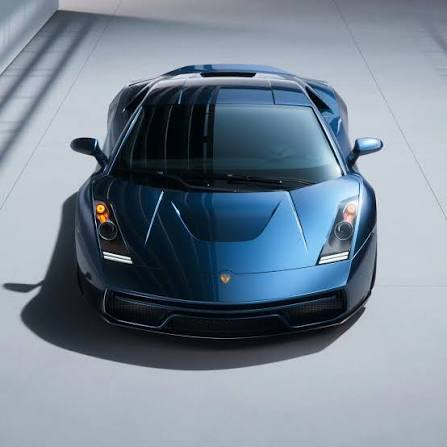
This is not simply a power increase. It represents a deliberate engineering decision to extract more performance through engine speed rather than relying on turbocharging. The result is a supercar whose mechanical character remains closely connected to the naturally aspirated V10 experience that made the original Gallardo distinctive.
The exhaust system has also been redesigned, incorporating titanium construction to reduce weight while giving the engine a more pronounced soundtrack.
The return of the gated manual
One of the ETNA’s most significant features is its transmission.
The original Gallardo was offered with a traditional six-speed gated manual as well as Lamborghini’s E-Gear automated manual transmission. While E-Gear brought a more modern approach to gear changes, it never quite replicated the physical involvement of the gated gearbox.
Tedson intends to convert most E-Gear-equipped donor cars to a six-speed gated manual configuration.
There is an important distinction here: the company has indicated that it wants to preserve original factory-manual Gallardos because of their greater historical significance. Its focus is therefore on giving cars originally equipped with E-Gear a new manual identity.
For enthusiasts, this may be one of the most appealing aspects of the entire project. The gated gearbox is not merely a styling reference; it changes the relationship between driver and vehicle.
The ETNA also retains the Gallardo’s hydraulic steering, another feature that reinforces its analogue philosophy.
Carbon fibre, titanium and a substantial weight reduction
Performance is not exclusively about increasing horsepower. Tedson has also concentrated on reducing the Gallardo’s mass.
The ETNA receives extensive carbon-fibre bodywork, custom carbon-fibre bucket seats and a lightweight titanium exhaust system. Combined, these changes are intended to remove approximately 450 pounds (around 204kg) compared with the original vehicle.
The car is also approximately six centimetres wider across its axles, giving it a more substantial stance and a revised platform for improved stability.
Suspension development has involved Dutch specialist JRZ, with the ETNA receiving a bespoke setup informed by Lamborghini’s Super Trofeo and GT3 racing programmes.
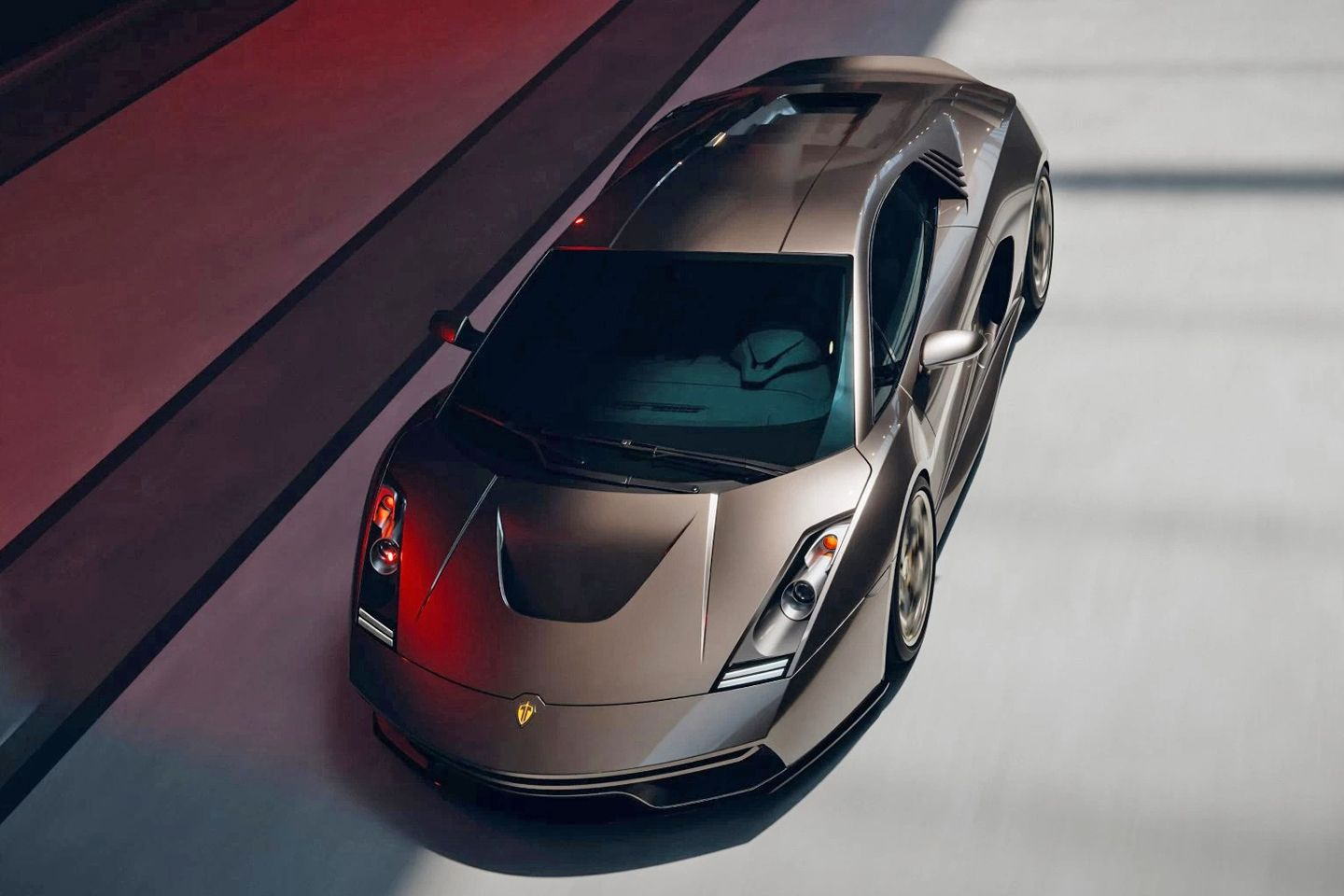
The result is a package intended to deliver more precise responses and improved control, rather than simply producing a more powerful road car.
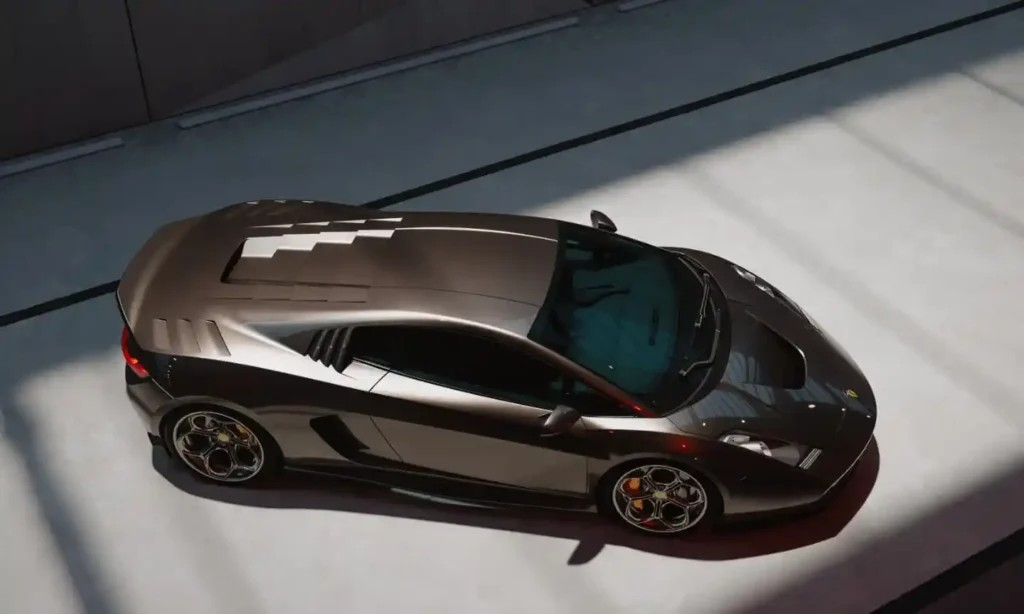
Tedson has also commissioned 19-inch AL13 R110 wheels specifically for the project.
A familiar silhouette with a different personality
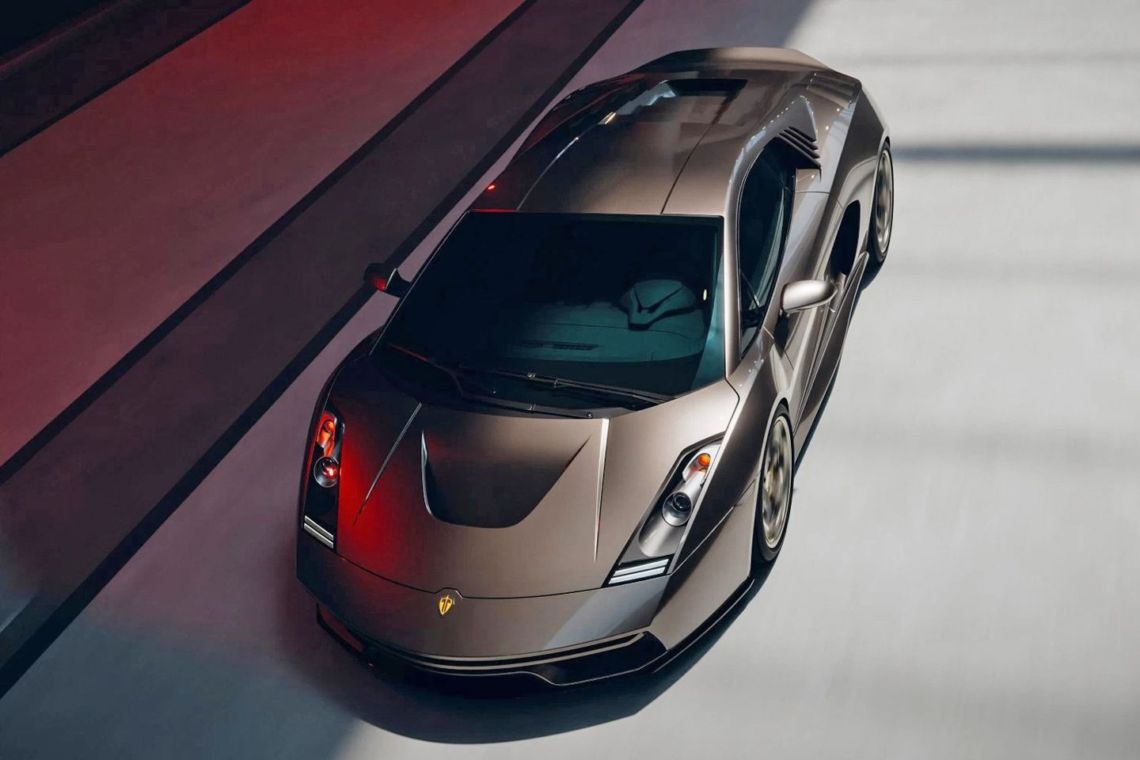
The Gallardo’s original proportions remain recognisable, but the ETNA receives a revised exterior treatment.
The front bumper has been redesigned, with new lighting details and more pronounced aerodynamic elements. The rear receives particular attention, including revised lighting, a redesigned engine cover, a subtle rear spoiler and bespoke exhaust outlets.
The wider bodywork gives the car a more planted appearance without abandoning the basic design language of the original Gallardo.
Inside, Tedson is pursuing the same balance between modern craftsmanship and traditional driving involvement. Bespoke carbon-fibre seating and personalised trim materials form part of the programme, with customers able to specify finishes and details according to their preferences.
This is not intended to be a mass-produced conversion. Each ETNA is a bespoke commission.
Just 77 examples
Tedson Motors has limited production to 77 examples worldwide, including an initial Launch Edition series of just nine cars.
Each conversion is expected to require approximately 12 months, reflecting the extensive work involved in rebuilding and personalising the donor vehicle.
The announced starting price is approximately US$800,000, before the cost of acquiring the original Lamborghini Gallardo. Individual specifications and optional finishes can influence the final figure.
The Launch Edition deliveries are scheduled to begin in autumn 2026, with the remaining production expected to follow into 2027.
A completed bespoke Grigio Titanio commission, featuring a white central racing stripe and dark-blue pinstripes for a Texas-based racing driver, has also demonstrated how far the personalisation programme can go.
The growing appeal of the analogue supercar
The ETNA arrives at an interesting point in the automotive industry’s development.
Manufacturers are increasingly incorporating electrification, sophisticated driver assistance systems and software-controlled performance into their latest vehicles. These technologies have brought undeniable improvements in efficiency, responsiveness and outright performance.
But they have also created a market for something different: cars that prioritise mechanical involvement.
The restomod movement has traditionally concentrated on classic Porsche 911s, historic Ferraris and older Mercedes-Benz models. Tedson’s decision to reinterpret the Gallardo suggests that the market is now looking towards the early generation of modern supercars as well.
There is an important question surrounding the ETNA: is it a restoration, a restomod or a completely new interpretation of an existing supercar?
Regardless of the terminology, the engineering ambitions are clear. Tedson is taking a recognisable Lamborghini, retaining the naturally aspirated V10 and rebuilding much of the experience around the driver.
The Gallardo was already an important chapter in Lamborghini’s history. The ETNA is an attempt to give that chapter another life.
And at 10,000rpm, it is certainly not doing so quietly.