Sunreef Wing: The AI-powered sail that could change how we navigate the oceans
A new generation of automated sailing is taking shape as Sunreef introduces a rotating, self-adjusting wing sail for its catamarans. But while the Polish shipbuilder is looking to simplify sailing through artificial intelligence, Ferrari is approaching the same ocean from an entirely different direction with its ambitious Hypersail project.
For centuries, sailing has relied on a relatively familiar principle: capture the wind, control the sail and convert aerodynamic force into forward movement. The materials have evolved, the engineering has become more sophisticated, and modern yachts have introduced increasingly advanced sail-handling systems. Yet the fundamental relationship between sailor, sail and wind has remained largely unchanged.
Sunreef Yachts now wants to challenge that arrangement.
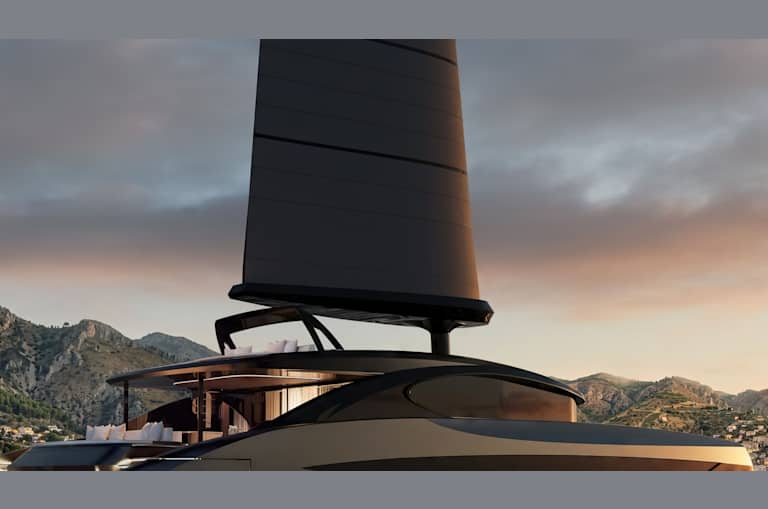
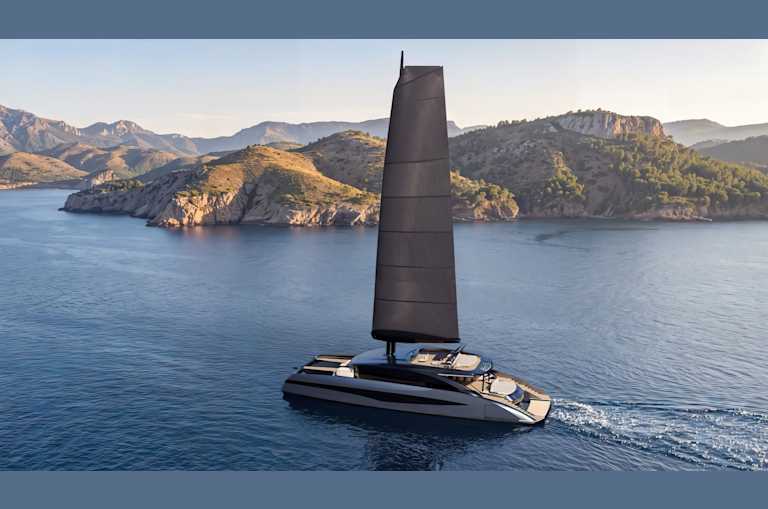
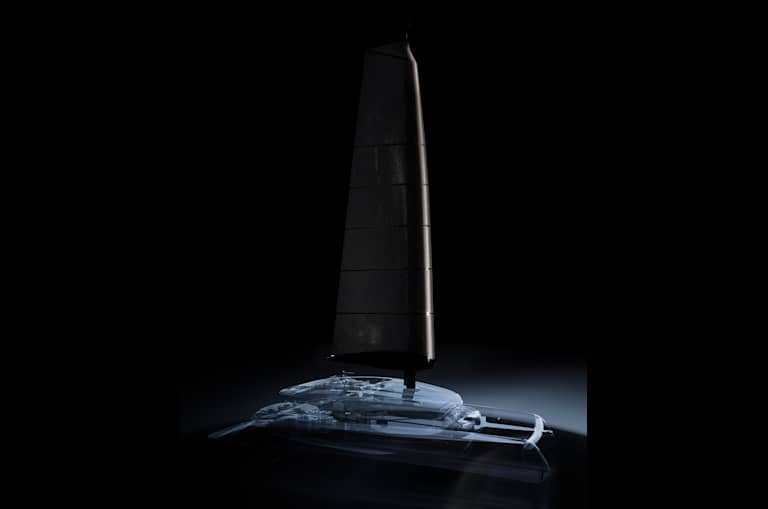
Its newly introduced Sunreef Wing is an automated wing-sail system designed to replace conventional sail-handling arrangements with a self-supporting aerodynamic structure capable of rotating through 360 degrees and adjusting its own profile to changing wind conditions.
The technology is particularly interesting because it is not simply about making a yacht sail faster. Sunreef is attempting to integrate propulsion, navigation, automation and onboard energy management into one coordinated system.
And artificial intelligence sits at the centre of that ambition.
How does the Sunreef Wing actually work?
Unlike a conventional mainsail, which is a flexible fabric surface supported by a mast and controlled through sheets, halyards and winches, the Sunreef Wing uses a self-supporting aerodynamic structure.
Think of the difference between a traditional sail and an aircraft wing.
An aircraft wing is designed to maintain a carefully engineered aerodynamic profile as air moves around it. Sunreef is applying a similar principle to wind propulsion.
The wing is mounted on a rotating support, allowing it to turn through a full 360 degrees. This means it can orient itself according to the apparent wind rather than depending on a crew member to manually adjust the sail’s position.
Apparent wind is particularly important here. It is the wind experienced by a moving yacht, combining the natural wind with the airflow created by the yacht’s own movement.
As the yacht changes speed or direction, the apparent wind changes too. The wing must respond accordingly if it is to maintain efficient propulsion.
This is where Sunreef introduces its adaptive camber control.
Camber refers to the curvature of an aerodynamic surface. By changing that curvature, the wing can alter how air flows around it, adjusting its aerodynamic characteristics to suit the prevailing conditions.
Rather than relying on a fixed profile, the system is designed to continuously modify the wing’s shape while sailing.
The result is an aerodynamic surface that can adjust both its orientation and its profile without requiring the conventional sequence of sail-handling manoeuvres.
What role does artificial intelligence play?
The AI component is arguably the most significant part of the project.
Sunreef intends to use an intelligent control system that continuously analyses sailing conditions and coordinates several elements of the yacht.
These include:
– The wing: Adjusting its orientation and aerodynamic profile.
– The rudders: Coordinating steering corrections with the wing’s aerodynamic forces.
– The propulsion system: Managing the relationship between wind propulsion and engine power.
– Energy management: Coordinating the wing, engines, hydrogeneration and solar generation.
In practical terms, the system is intended to make decisions based on changing conditions rather than waiting for the crew to make every adjustment.
For example, as the yacht changes heading, the apparent wind changes. The AI-assisted system can analyse those conditions and coordinate the wing’s position and profile with the rudders and propulsion system.
The objective is to maintain efficient operation while reducing the amount of manual intervention required.
Sunreef also intends to introduce voice commands, giving owners and crew another way to interact with the system.
Integrated safety functions are also planned to monitor operations and provide information to those onboard.
It is important, however, to distinguish between automated assistance and autonomous navigation. Sunreef has described an intelligent system for coordinating sailing and onboard operations; that does not establish that the yacht can independently navigate an ocean passage without human supervision.
A different approach to sail handling
One of the more interesting features is the ability to raise and lower the wing automatically.
According to Sunreef, this can even be performed while the yacht is at anchor with the wind coming from astern.
That is a significant departure from conventional mainsail handling, where positioning the yacht into the wind is normally part of the process of raising or lowering the sail.
The shipyard also says the system uses fewer moving parts and additional fittings than a conventional rig, potentially reducing maintenance requirements.
There are still technical questions surrounding the system, particularly how the wing will be depowered or reduced in strong winds, and how its emergency operation will work. These are important considerations for any yacht expected to operate in changing offshore conditions.
The performance claims: 50% more lift and 40% more propulsion
Sunreef is making some ambitious performance claims.
Under optimal apparent-wind conditions, the shipyard says its Wing can generate:
– 50% more aerodynamic lift than a conventional sail of equivalent area.
– 40% more propulsive force than a conventional sail of equivalent area.
The company also anticipates improved upwind performance.
These figures are worth examining carefully. Lift is the aerodynamic force generated by the wing, while propulsive force is the component that contributes to moving the yacht forward.
They are related, but they are not interchangeable.
A wing can generate substantial lift without all of that force translating into forward movement. The direction of the force, the yacht’s heading, the apparent wind and the efficiency of the hull all influence the final result.
Consequently, Sunreef’s figures should be treated as manufacturer claims under specified optimal conditions, rather than independently demonstrated performance across all sailing conditions.
Nevertheless, the principle is compelling: a more controllable aerodynamic profile could allow a yacht to extract more useful energy from the wind.
The wing is also part of an energy-generation strategy
Perhaps the most ambitious aspect of Sunreef’s proposal is that the wing is not intended to serve propulsion alone.
The company says the system can harness apparent wind to generate energy even when the yacht is operating under motor power.
This is intended to work alongside two other technologies already associated with Sunreef’s Eco approach: hydrogeneration and Solar Skin.
Solar Skin integrates solar panels into the yacht’s composite structure, while hydrogeneration uses the movement of water relative to the yacht to generate electricity.
An intelligent energy-management system is intended to coordinate these sources with the engines and onboard electrical systems.
The objective is to manage the available energy more efficiently, reducing dependence on conventional fuel consumption and supporting greater onboard energy independence.
Exactly how much electricity the wing could generate while motoring, and the energy balance after accounting for aerodynamic drag and the power required to operate its mechanisms, have yet to be established publicly.
The rollout: a technology for the wider Sunreef fleet
Sunreef intends to introduce the Wing progressively across its sailing catamaran portfolio.
That is an ambitious objective, particularly because the requirements of a 50-foot sailing catamaran are not necessarily the same as those of a substantially larger multihull.
Structural loads, stability, mast support, aerodynamic forces and the integration of the wing with existing deck and flybridge arrangements will all influence how the system is implemented.
The shipyard has yet to confirm which models will receive the technology first or provide a definitive installation and delivery schedule.
But the direction is clear: Sunreef wants automated wind propulsion to become part of its wider approach to luxury sailing.
And that brings us to another project attempting to redefine what a yacht can do with advanced engineering.
Ferrari Hypersail: A different kind of flying machine
Ferrari’s Hypersail project is often discussed alongside the latest developments in sailing technology, but its engineering philosophy is fundamentally different from Sunreef’s.
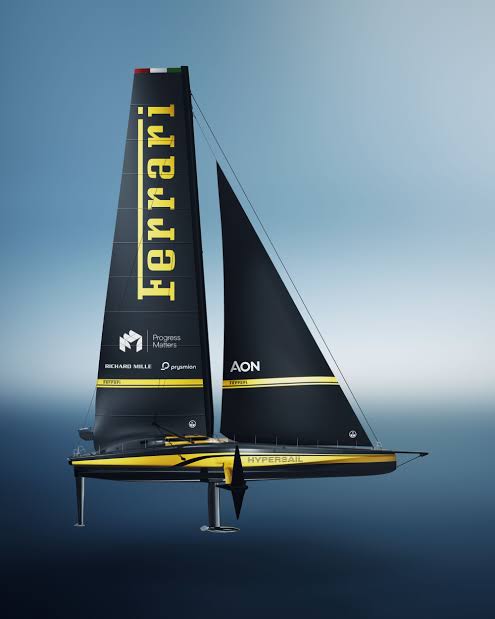
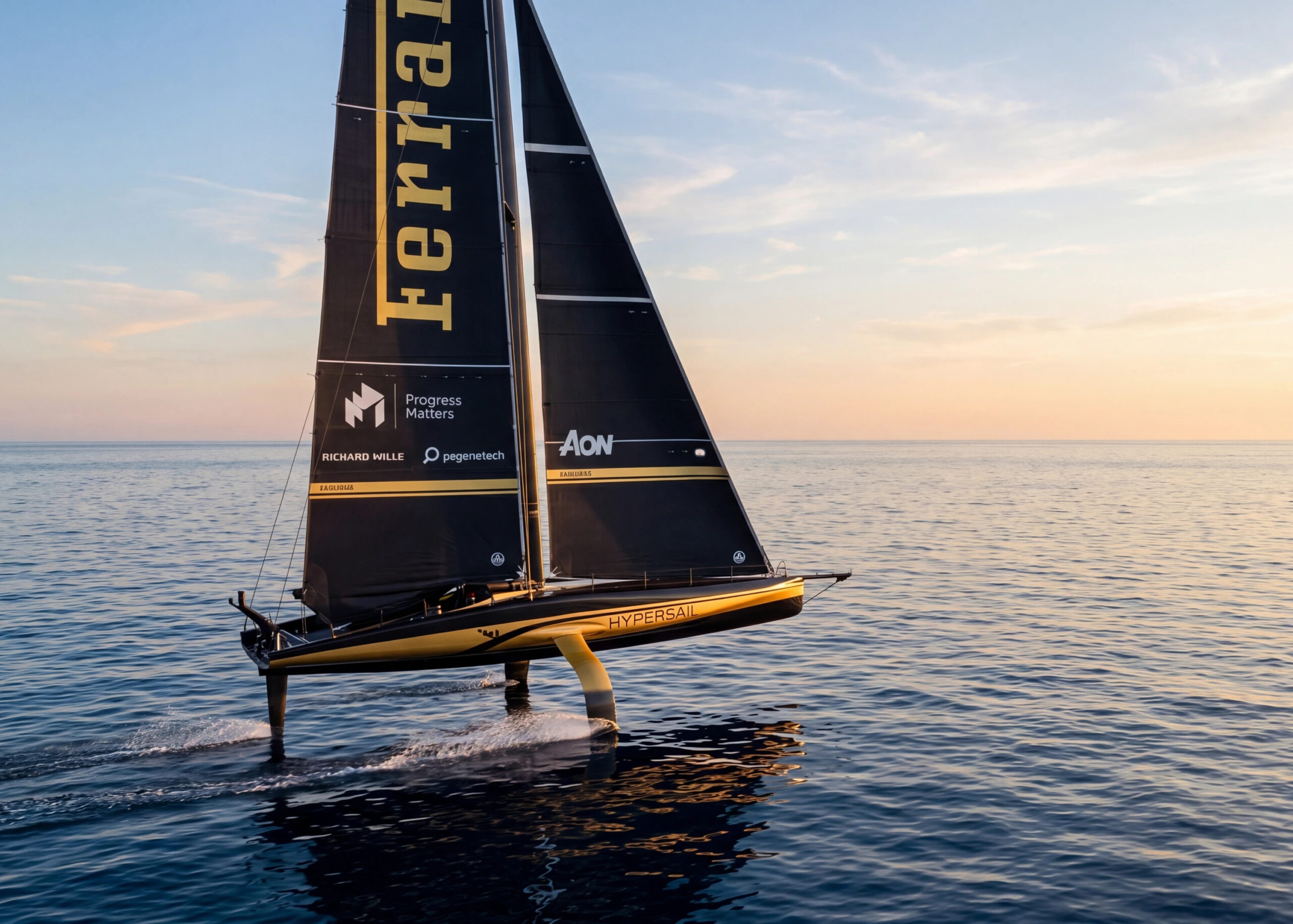
Where Sunreef is developing an automated wing sail for sailing catamarans, Ferrari is engineering a 100-foot ocean-going monohull designed to lift itself above the water on hydrofoils.
Led by team principal Giovanni Soldini and designed by naval architect Guillaume Verdier, Hypersail is an offshore performance project that brings Ferrari’s experience in vehicle dynamics, electronic control and high-performance engineering into the marine environment.
Its central innovation is not an AI-controlled replacement for a conventional mainsail.
It is the integration of an advanced foiling system with electronic flight control.
The distinction matters.
A hydrofoil works somewhat like an underwater aircraft wing. As water passes around the foil, it generates lift, allowing the yacht’s hull to rise above the surface and substantially reduce hydrodynamic resistance.
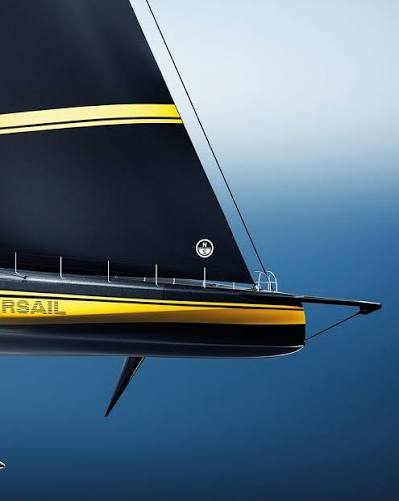
Hypersail is designed around three principal support points: lateral foils, a wing incorporated into its canting keel and a smaller wing on the rudder.
Together, these components help stabilise the yacht while it is travelling in flight.
Ferrari calls its electronic control architecture Flight Control.
Sensors monitor variables including speed, wind, waves and the yacht’s attitude. An onboard computer processes that information and coordinates adjustments to the foils and steering surfaces.
The aim is to maintain stability and control while the yacht is travelling at extreme speeds in constantly changing ocean conditions.
This is where Ferrari’s automotive experience becomes particularly relevant. The company is applying principles associated with electronic vehicle-dynamics management to a vessel whose balance depends on the interaction between water, wind and moving aerodynamic surfaces.
What about Ferrari’s new sail?
There is an important distinction between Hypersail’s sail arrangement and the Sunreef Wing.
Hypersail is not simply installing a, AI-operated wing sail like the one Sunreef has announced.
Ferrari’s disclosed sail arrangement uses a conventional fabric sail plan, supported by a rotating mast and an advanced control architecture.
The mast and its aerodynamic configuration are designed around the yacht’s unusual foiling characteristics. Its rig has to work with a vessel that can travel at very high speeds while maintaining a controlled flying attitude.
The sail itself provides the wind propulsion. The foils underneath the yacht provide lift and stability.
These are two different jobs, and Ferrari’s engineering has to make them work together.
The distinction is especially important because a yacht travelling on foils experiences a different range of dynamic conditions from a conventional displacement sailing yacht.
The aerodynamic forces generated by the sails must be balanced against the forces acting on the underwater foils. The entire system must work as one coordinated platform.
Ferrari is therefore concentrating its automation efforts on controlling the yacht’s flight and dynamic behaviour rather than replacing the conventional sail with an independently rotating rigid wing.
Sunreef versus Ferrari: two different interpretations of intelligent sailing
Both projects demonstrate how automation is beginning to influence the design of modern sailing vessels, but their priorities are quite different.
Sunreef is developing a system intended to make sailing more accessible, reduce crew workload and improve the efficiency of its catamarans.
Ferrari, meanwhile, is pursuing a high-performance offshore platform where electronic control is essential to maintaining stability at speed.
The difference can be broken down into three areas.
1. Wind propulsion
Sunreef’s Wing is itself an adjustable aerodynamic propulsion surface. Its orientation and camber are designed to change automatically.
Ferrari’s Hypersail uses a conventional fabric sail arrangement to capture the wind, with its mast and sail configuration integrated into the yacht’s performance requirements.
2. Artificial intelligence and automation
Sunreef’s AI-assisted system is intended to coordinate sail position, wing profile, rudders and propulsion, alongside energy management and voice-command interaction.
Ferrari’s Flight Control system concentrates on the yacht’s dynamic behaviour, particularly foil control, stability and steering adjustments. It should not be confused with Sunreef’s proposed AI-managed wing-sail system.
3. The ultimate objective
Sunreef wants to make sailing simpler and more energy-efficient across a range of luxury catamarans.
Ferrari wants to push the limits of offshore sailing performance, exploring how a 100-foot monohull can sustain foiling flight over long ocean passages.
The next chapter of sailing
What makes these developments particularly interesting is that neither project is simply about replacing traditional sailing equipment with something more modern.
They represent two different directions for the future of marine engineering.
Sunreef is looking at the relationship between wind propulsion, intelligent automation and the everyday operation of a luxury yacht. Ferrari is exploring the limits of speed, stability and control in offshore racing.
One is attempting to reduce the complexity of sailing. The other is embracing extraordinary engineering complexity to achieve something that has traditionally been difficult to imagine on a 100-foot monohull: sustained flight across the ocean.
Both approaches point towards a future in which the relationship between the sailor and the vessel becomes increasingly digital.
The sails may still capture the wind, but the systems behind them are becoming considerably more intelligent.