DLIFESTYLE MAGAZINE | FORMULA 1 | 2026 SEASON REVIEW
Scuderia Ferrari: A Season of Reconstruction, Hard Questions and the Search for Redemption
There is a particular kind of pressure that follows Scuderia Ferrari, one that has little to do with the stopwatch and everything to do with history. Ferrari is not simply another Formula 1 constructor competing for points. It is a team measured against its own mythology, its championship-winning past and the expectation that Maranello should always be capable of producing something extraordinary.
The 2026 season has brought that expectation into sharp focus. With a new generation of Formula 1 machinery, sweeping technical changes and the continuing partnership of Charles Leclerc and Lewis Hamilton, Ferrari entered a new era with much to prove. The question was never simply whether the Scuderia could build a fast car. It was whether it could bring the engineering, strategy, driver performance and organisational consistency together to challenge for the championship.
Ferrari’s story this year is therefore about more than its results. It is about a team attempting to rebuild its competitive foundations while competing under one of the most significant technical rule changes in modern Formula 1.
And as the season develops, one question remains unavoidable: is Ferrari laying the groundwork for a championship, or merely finding new ways to postpone the one its supporters have been waiting for?
1. The season so far: promise, victories and missed opportunities
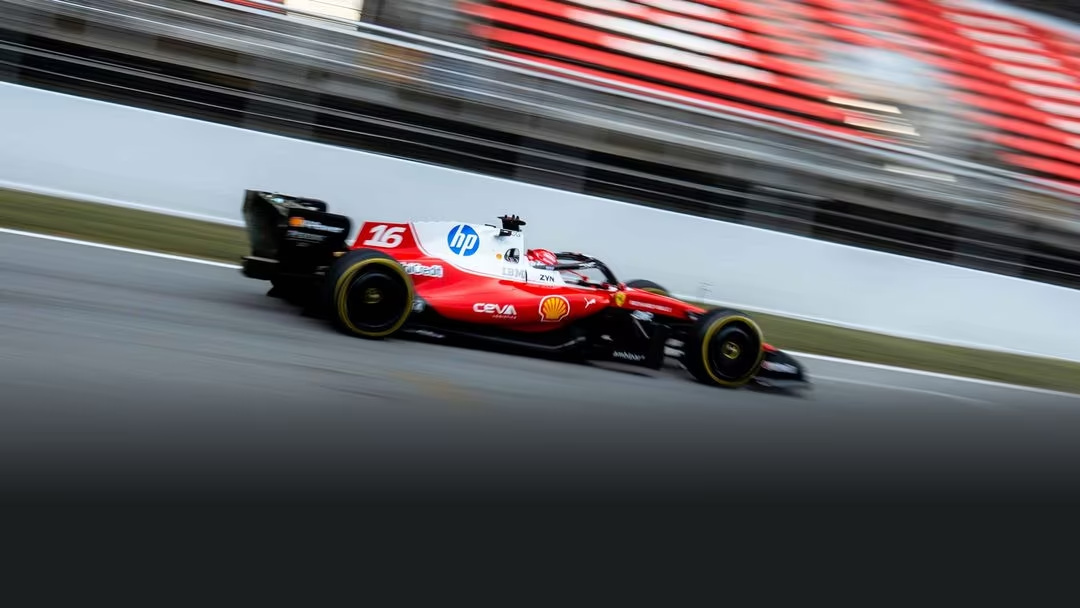
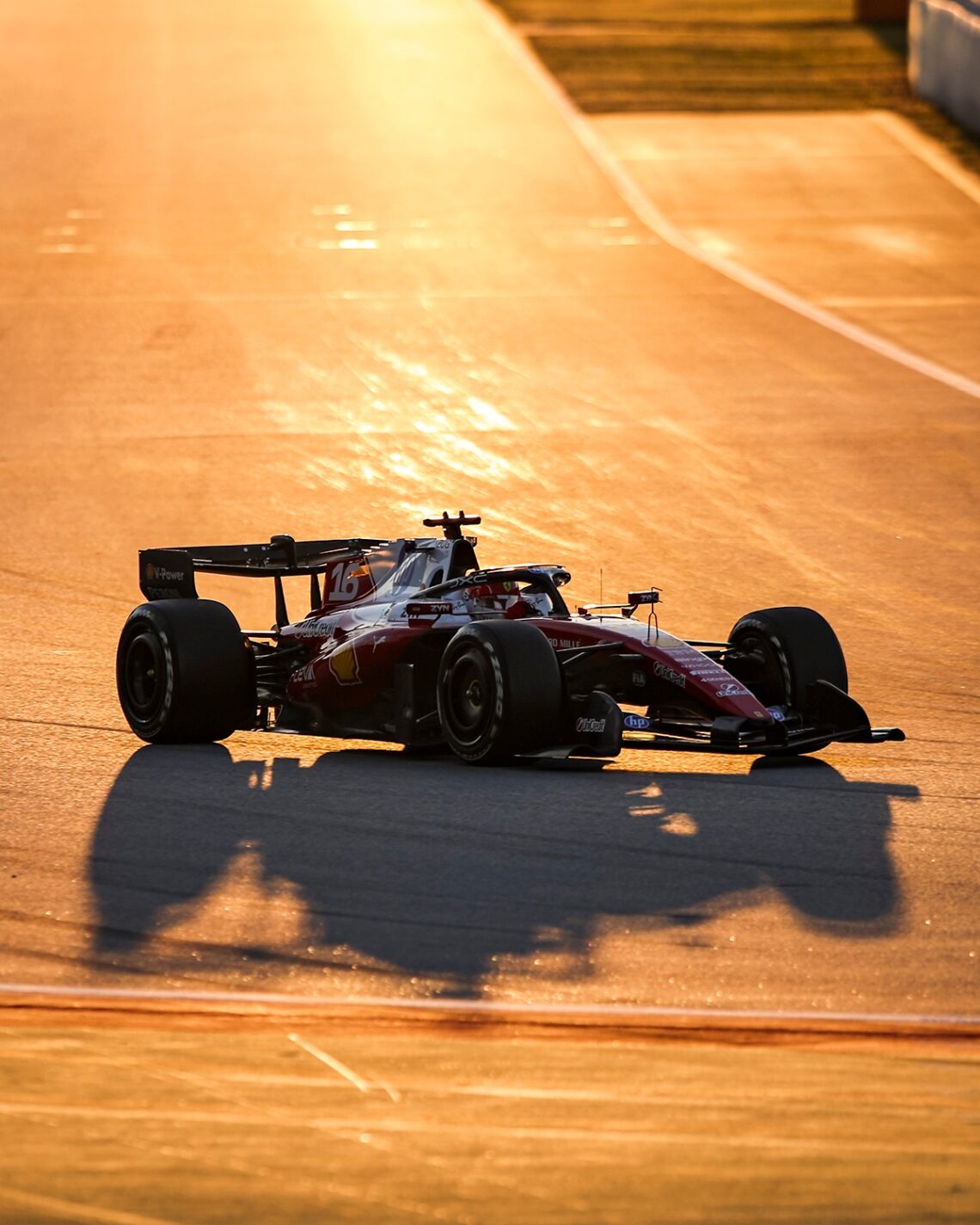
Ferrari’s campaign has not been without its successes. The Scuderia has shown that the SF-26 possesses genuine race-winning potential, with Lewis Hamilton securing his first Grand Prix victory for Ferrari in Barcelona and Charles Leclerc adding another win at the British Grand Prix. Those results have demonstrated that Ferrari’s development programme can deliver meaningful performance gains, even if the team has struggled to sustain that form consistently.
Yet the victories have not erased the wider concerns. Mercedes has remained Ferrari’s principal obstacle in the constructors’ championship, while inconsistent execution and the car’s changing competitive form have prevented Maranello from turning individual successes into a sustained title challenge.
The Singapore Grand Prix on October 11 offered a particularly frustrating example. Ferrari looked capable of securing a double podium, with Leclerc and Hamilton running second and third behind Max Verstappen. When a Virtual Safety Car created a pit-stop opportunity, both Ferrari drivers were called in. Hamilton missed the pit entry, however, and the opportunity disappeared. Leclerc finished second, while Hamilton ultimately fell to sixth after tyre degradation and further lost positions. Hamilton accepted responsibility for the error.
The incident matters because it illustrates the difference between building a competitive car and operating a championship-winning team. Ferrari had the pace to contend for a strong result, but the final outcome depended on decisions, timing and execution.
That is the recurring theme of Ferrari’s 2026 season: the ingredients are there, but the complete package has not always come together.
2. Fred Vasseur: stability under pressure
At the centre of Ferrari’s reconstruction remains team principal Fred Vasseur. His position has attracted considerable attention as the season has progressed, particularly as results have fluctuated and questions have emerged about the team’s internal structure.
The speculation intensified around the Azerbaijan Grand Prix, when comments by former Red Bull team principal Christian Horner about a possible future with Ferrari helped fuel talk of a potential leadership change. Ferrari subsequently made clear that Vasseur retained the support of chairman John Elkann and chief executive Benedetto Vigna. Both Leclerc and Hamilton also publicly backed their team principal.
The distinction between speculation and confirmed organisational change is important. There is no publicly confirmed appointment of Horner to replace Vasseur.
Vasseur’s response has been to emphasise stability, continued recruitment and the need to improve the team’s technical capabilities. He has also resisted the temptation to attribute difficulties to individual employees, instead framing results as a collective responsibility.
That approach is understandable. Formula 1 teams rarely recover by repeatedly changing leadership whenever performance dips. But stability cannot become an excuse for standing still, particularly at Ferrari, where the expectation is not simply to compete but to win championships.
The real test of Vasseur’s leadership is whether the structure he has assembled can translate Ferrari’s technical resources into repeatable performance on Sundays.
3. The people behind the car: Ferrari’s changing technical structure
Ferrari’s recruitment strategy has become one of the more significant stories behind its 2026 campaign. Rather than relying exclusively on internal promotions, the Scuderia has continued to bring in experience from rival organisations.
One of the most important established appointments is Loïc Serra, Ferrari’s chassis technical director, who joined from Mercedes. His role is particularly relevant in a season defined by new chassis and aerodynamic regulations. Ferrari has also strengthened its technical leadership through appointments including Franck Sanchez, associated with its aerodynamic development.
These appointments reflect a broader shift in how Ferrari is approaching its problems. The objective is not merely to produce another set of upgrades, but to improve the organisation’s ability to identify weaknesses, develop solutions and bring those solutions to the circuit efficiently.
Reports in August also identified two further additions to Ferrari’s chassis operation:
Carlos Sanchez Martinez, reportedly recruited from Aston Martin for a stress-engineering role.
Luciano Nicomede, reportedly recruited from Mercedes as a senior chassis composite designer.
These appointments were reported by F1technical.net, but their precise responsibilities and the full extent of their integration into Ferrari’s programme should be treated as reported information rather than assumed to represent a wholesale restructuring.
The significance is nonetheless clear. Structural engineering, composite design and stress analysis are essential to producing a car that is not only aerodynamically effective but also sufficiently light, stiff, reliable and predictable.
In a regulatory cycle where small performance differences can decide a race, these details matter.
Hamilton’s race-engineering change
Ferrari has also made a notable change to Hamilton’s trackside support. In January, the team confirmed that Riccardo Adami would move from his position as Hamilton’s race engineer to a role within the Ferrari Driver Academy, overseeing its test-previous-cars programme. Ferrari said a new race engineer for car number 44 would be announced separately.
The change followed a difficult first season together in 2025, which included tense radio exchanges and an adjustment period as Hamilton adapted to Ferrari.
A driver-engineer relationship is about much more than radio communication. It involves trust, a shared technical vocabulary, the interpretation of tyre behaviour and the ability to make decisions under pressure. For a driver joining a new team after more than a decade at Mercedes, that relationship can be crucial.
The change should not be mistaken for a solution to every problem Hamilton has faced, but it represents a practical attempt to improve the working environment around him.
The larger question is whether Ferrari can build the same level of consistency across the engineering group as a whole.
4. The SF-26: Ferrari’s technical battle with Mercedes
The SF-26 represents one of the most important engineering projects Ferrari has undertaken in recent years. The 2026 regulations changed the chassis, power unit, battery systems, tyres and sporting framework, forcing teams to rethink how their cars generate performance and use energy. Ferrari unveiled the car on January 23, with Leclerc and Hamilton continuing as its drivers under Vasseur’s leadership.
The initial challenge was finding a competitive baseline. Early testing suggested that Ferrari had work to do, but subsequent developments helped transform the car into a credible challenger.
Aerodynamics: finding performance beneath the bodywork
Ferrari’s development programme has been extensive. At Miami, the team introduced a substantial collection of updates. Barcelona brought another significant package, including a revised front wing and floor, with changes designed to improve aerodynamic performance and the airflow around the car.
These components cannot be considered independently. The front wing influences the airflow reaching the floor and sidepods; the floor generates a substantial portion of the car’s aerodynamic load; and the bodywork determines how air moves around and exits the car.
The challenge is not simply generating more downforce. It is producing that downforce consistently across different speeds, cornering conditions and ride heights, without introducing excessive drag or making the car difficult for the drivers to control.
Ferrari has also pursued an unusually active development schedule. Rival teams have noticed the frequency of its updates, and Mercedes team principal Toto Wolff publicly questioned how aggressively Ferrari could continue developing under the cost cap. Vasseur, however, said the team intended to keep pushing through the season.
The power unit: closing the gap
Aerodynamics alone cannot solve every problem. Ferrari has also been working to improve its power unit under the 2026 regulations, where the relationship between combustion power, electrical deployment and energy recovery is central to lap time.
The FIA’s Additional Development and Upgrade Opportunities system, commonly known as ADUO, provides eligible manufacturers with additional opportunities to improve their power units. Ferrari introduced an engine development at the Austrian Grand Prix in June and a further update around Monza in September. The latter was reported to include combustion-chamber and turbocharger revisions, with the potential for improved output and energy delivery.
The important distinction is between a technical change and a proven competitive advantage. A more powerful engine can help on the straights, but the full benefit depends on reliability, energy deployment, cooling and how well the car’s aerodynamic package uses that performance.
Ferrari’s drivers have continued to identify power and chassis performance as areas requiring attention. The SF-26 has shown enough pace to win races, yet the team has not consistently matched Mercedes across every circuit and qualifying session.
5. The next major step: Austin and the final SF-26 upgrade
As of October 16, attention is turning to the United States Grand Prix in Austin, where reports indicate Ferrari is preparing what could be its final major aerodynamic package of the season.
The reported changes include:
• A revised floor intended to improve downforce and aerodynamic consistency.
• Modified sidepods and narrower inlets.
• Revised bodywork and cooling arrangements.
• Potential weight-saving measures.
These details have appeared in specialist motorsport reporting, but Ferrari has not publicly confirmed the complete specification or any specific lap-time gain. The package should therefore be treated as a reported development plan, not a performance improvement already demonstrated on track.
Why does this matter? The floor and sidepods work together to manage the airflow beneath and around the car. A better-integrated design could improve aerodynamic efficiency, increase usable downforce and make the car less sensitive to changes in ride height. Revised cooling arrangements may also help accommodate changes to the bodywork without compromising thermal management.
However, the success of an upgrade is not measured by how different the car looks. It is measured by whether the new components deliver their intended performance across qualifying and race conditions.
Austin will provide Ferrari with an opportunity to assess whether the latest changes can restore momentum after the difficult run of results that preceded Singapore.
The timing is significant, too. Ferrari must decide how much remaining development capacity to devote to its current car and how much to direct towards the 2027 challenger. Vasseur has previously defended the decision to continue developing the SF-26 rather than abandoning it early, noting that some development work can carry over into the next season.
6. The rumours: could Christian Horner join Ferrari?
Few names have generated more speculation around Ferrari’s management than Christian Horner.
The former Red Bull team principal has spoken of Ferrari as a dream destination, prompting speculation that he could eventually replace Vasseur. The timing has made the rumours particularly persistent: Ferrari has endured a difficult stretch of results, and the team’s championship ambitions remain larger than its current performance.
But there are three distinct facts to separate. First, Horner has expressed interest in Ferrari. Second, reports have suggested that Vasseur’s position is attracting renewed scrutiny. Third, Ferrari has publicly reaffirmed its confidence in Vasseur, with both drivers supporting him.
Those facts do not establish that negotiations are taking place or that a change is imminent. As of October 16, there is no publicly confirmed appointment of Horner to Ferrari.
Would Horner make sense for Ferrari? His record at Red Bull makes him an obvious name to discuss. He helped build an organisation that won multiple drivers’ and constructors’ championships, and he has experience managing technical leadership, driver relationships and a highly competitive racing operation.
But Ferrari is not Red Bull, and leadership styles do not transfer automatically between organisations. Maranello has its own corporate structure, Italian motorsport culture and relationship between the road-car business and racing division.
Replacing Vasseur would also risk disrupting a technical programme that has already seen significant recruitment and development.
The more immediate question is whether Ferrari needs a new team principal or a stronger supporting structure around the existing one. Hamilton’s own comments have suggested that there are improvements he would like to see within the organisation, although he has not publicly identified specific individuals who should be replaced.
Other recruitment to watch
The more tangible story is Ferrari’s continued recruitment of technical specialists. The reported arrivals of Carlos Sanchez Martinez and Luciano Nicomede fit a broader effort to reinforce the chassis department.
Ferrari’s challenge is to integrate these specialists into an organisation where aerodynamicists, structural engineers, power-unit developers, strategists and trackside engineers must work as a single system.
There is no reliable public confirmation in the sources reviewed of another major incoming technical director or a confirmed wholesale change to Ferrari’s senior leadership as of October 16.
For a magazine article, that distinction matters: the recruitment of individual engineers is supported by reporting, while suggestions of a new management regime remain speculative.
7. Charles Leclerc and Lewis Hamilton: two drivers, one objective
Ferrari’s driver pairing remains one of the most compelling in Formula 1. Leclerc represents the team’s long-term hopes, while Hamilton brings seven world championships, extensive experience of winning at the highest level and a perspective shaped by his years at Mercedes.
The difficulty is that neither reputation nor talent can compensate indefinitely for weaknesses in the machinery or the operation around it.
For Leclerc, the priority is a car that can consistently fight for pole positions and convert strong qualifying performances into victories. His speed over a single lap has repeatedly shown what he can do when the package is competitive, but Ferrari must give him a car capable of sustaining that performance over an entire weekend.
Hamilton’s challenge is different. He has had to adapt to Ferrari’s engineering processes, working relationships and the characteristics of a new-generation car. His Barcelona victory showed that the partnership can produce a winning result. Singapore, however, demonstrated how quickly an otherwise promising afternoon can unravel.
The team needs to give both drivers a predictable platform, reliable technical feedback and a strategy operation that maximises their opportunities.
Neither driver needs another public debate about whether Ferrari made the right choice in signing him. What they need is a car that gives them a realistic chance to fight for the championship.
8. What can we realistically expect for the remainder of 2026?
Ferrari enters the closing phase of the season with a clear but difficult task: recover consistency, maximise the Austin package and turn its technical progress into points.
Three priorities stand out:
Prove the final upgrade works. The reported Austin package is an opportunity to improve the SF-26’s aerodynamic efficiency. Ferrari needs measurable gains in qualifying and race pace, rather than another collection of parts that produces inconsistent results.
Eliminate avoidable lost points. The Singapore pit-entry error is a reminder that performance must be matched by execution. Strategy, communication, tyre management and driver decision-making all need to be dependable when the opportunity arises.
Build the foundation for 2027. Ferrari must continue extracting value from the SF-26 without sacrificing the next car. Its technical recruitment and the lessons learned from this year’s new regulations could prove more consequential than any single late-season upgrade.
Ferrari’s championship prospects should be judged against the actual points deficit and the remaining calendar, not simply against the optimism surrounding a new component. Mercedes has established a strong position, and the recent results have made a title recovery more difficult. At the same time, the changing competitive order under the 2026 regulations means that development can still alter the picture.
The most realistic expectation is that Ferrari will continue to fight for victories and podiums while trying to consolidate its position in the constructors’ championship. A late surge is possible, but it would require both technical gains and near-flawless weekends.
For 2027, the stakes are arguably even greater. Ferrari will have another opportunity to convert its investment in people, engineering and development into a more complete championship package.
Conclusion: Ferrari needs more than a faster car
Ferrari’s 2026 season has already delivered moments that seemed to promise a genuine resurgence. Hamilton has won in red, Leclerc has demonstrated the pace to lead the team, and the SF-26 has undergone a sustained programme of technical development.
But a championship is not won by isolated victories or the number of upgrades delivered to a circuit. It is won when the car, the drivers, the engineers, the strategy team and the leadership function together, repeatedly, under pressure.
Vasseur’s task is to turn Ferrari’s expanding technical resources into a coherent competitive advantage. The engineers must ensure that each new component makes the car better, rather than merely different. The strategists must convert opportunities into points. And the drivers must be given the confidence that the team can deliver when the stakes are highest.
The Austin package may offer another step forward, but it will not answer every question surrounding Maranello. The more important test is whether Ferrari can sustain progress, resolve its operational weaknesses and carry the lessons of this season into the next.
For a team whose last drivers’ championship came in 2007 and whose last constructors’ title followed in 2008, the wait has become part of the story. Yet Ferrari’s history also explains why the expectation never disappears.
The Scuderia does not need another reminder of what it once was. It needs to demonstrate, on track, what it is capable of becoming.
Sources for editorial verification
Formula 1 — Ferrari team profile and 2026 statistics — https://www.formula1.com/en/teams/ferrari
Formula 1 — Ferrari responds to Vasseur and Horner speculation — https://www.formula1.com/en/latest/article/ferrari-move-to-end-speculation-over-vasseurs-future-amid-horner-speculation-plus-barretto-analysis.5vNkTkDQSbhS9Pnh8mulTm
Autosport — Ferrari’s 2026 upgrade strategy — https://www.autosport.com/f1/news/how-ferrari-can-push-until-the-end-with-f1-2026-upgrades-and-why-it-will/10851266/
Formula 1 — Hamilton’s race-engineering change — https://www.formula1.com/en/latest/article/hamilton-to-get-new-race-engineer-for-2026-season-as-adami-moves-to-ferrari.1WVOwZfz9mnJ1XKjmgz8Yu
Reuters — Ferrari’s Singapore Grand Prix pit-stop incident — https://www.reuters.com/sports/formula1/hamilton-apologises-pit-lane-miss-costs-ferrari-double-podium-singapore-says-vasseur-2026-10-11/
Grandprix.com — Reported SF-26 upgrades for Austin, October 16, 2026 — https://www.grandprix.com/news/ferrari-plans-floor-and-sidepod-changes-for-austin-push.html
Editorial note: The Austin upgrade details and individual engineering hires are identified as reported rather than officially confirmed where appropriate. The Christian Horner story remains speculation, not a confirmed Ferrari appointment.