Formula 1’s next tyre may not simply be softer—it is being engineered to work differently
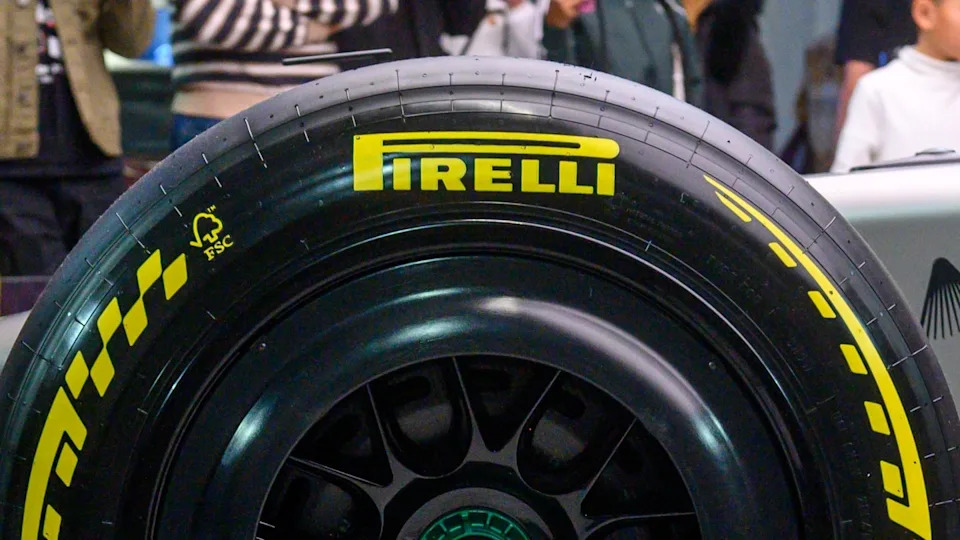
Formula 1 is already looking beyond the 2026 regulation revolution, and one of the most important developments for 2027 is happening underneath the cars: Pirelli is changing the way its tyres behave under load.
The Italian tyre manufacturer is developing a new generation of Formula 1 tyres specifically intended to generate more heat and experience greater performance decay during a stint. The objective is straightforward: create more opportunities for multi-stop strategies and prevent the race from settling too frequently into a predictable one-stop pattern.
But there is an important distinction here.
Pirelli is not simply making the rubber softer.
The company has confirmed that it has been working on the construction of the tyre itself.
The construction is the key
An F1 tyre is far more complicated than the rubber that touches the circuit.
Inside the tyre is a carefully engineered structure containing the carcass, reinforcing layers and belt system. These elements determine how the tyre deforms under braking, acceleration and cornering, how it carries the enormous loads generated by an F1 car and, importantly, how much heat is produced within the tyre.
For 2027, Pirelli’s engineers have been testing different structural solutions designed to increase degradation.
Pirelli chief engineer Simone Berra confirmed that the company has tested solutions intended to increase degradation at the front axle, as well as different solutions targeting the rear axle.
He also confirmed that Pirelli has been working on the structure to generate more heat generation and thermal degradation.
That is perhaps the most important technical detail to emerge so far.
Pirelli has not publicly disclosed exactly which internal components are being altered, meaning it would be wrong to say that the company has definitively changed a particular belt, ply or carcass material.
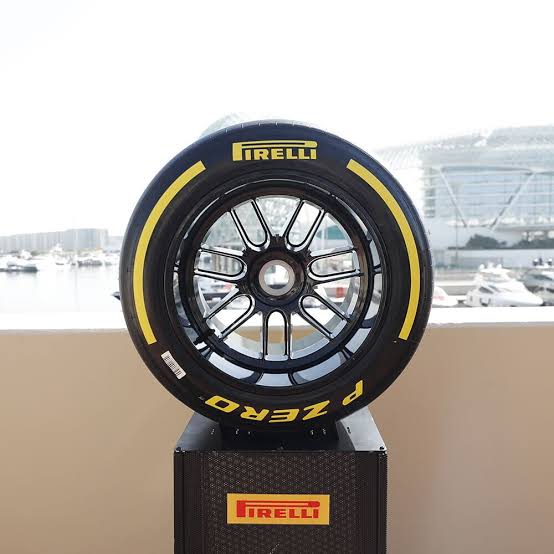
Instead, Pirelli is testing different construction philosophies and measuring how those structures respond when subjected to the loads of a modern F1 car.
Why change the structure?
The answer comes from what happened during the opening part of the 2026 season.
According to The Race, nine of the first 15 Grands Prix of 2026 had predominantly been one-stop races, with the race winner also completing the event with a single stop.
For F1, that presents a strategic problem.
When the tyres remain consistent for long periods, teams can calculate the optimal pit window with extraordinary precision.
The race becomes:
Protect the tyres → extend the stint → make one stop → defend track position.
Pirelli wants to introduce more uncertainty.
The intention is not necessarily to force every Grand Prix into a three-stop race. Rather, the manufacturer wants tyre performance to fall away sufficiently that teams have to make genuine strategic choices.
That could mean deciding whether to attack early and accept faster degradation, or conserve the tyre and attempt to extend the stint.
Front and rear degradation could become another weapon
The front and rear tyres do not experience identical demands.
The front axle is heavily influenced by braking and corner entry. The rear tyres have to deal with traction, acceleration and the delivery of power.
That means deliberately increasing degradation at one end of the car can produce very different consequences.
A construction designed to increase front degradation could progressively affect steering response and balance as the stint develops.
A rear-focused degradation profile could make traction increasingly difficult and force drivers to manage throttle application and wheelspin.
Pirelli’s confirmation that it has been investigating different solutions for the front and rear therefore suggests that the company is looking at how degradation is distributed around the car, not simply increasing wear across all four tyres equally.
It is not just about physical wear
This is where the 2027 programme becomes particularly interesting.
There is a difference between a tyre physically wearing away and a tyre losing performance because it becomes too hot.
Pirelli is specifically talking about increasing thermal decay.
As a tyre generates heat, its performance can eventually deteriorate. That creates a feedback loop: the driver pushes harder, the tyre generates more heat, the tyre loses performance, the driver struggles for grip and the car can become increasingly difficult to manage.
For the driver, that can turn tyre management into a much more important part of the race.
The fastest lap may no longer be the objective.
The question becomes:
How fast can you drive without destroying the tyre?
Ferrari has already been testing it
Ferrari has been directly involved in Pirelli’s 2027 development programme.
At Imola in September, Ferrari and Racing Bulls completed a combined 400 laps while working with Pirelli’s 2027 prototypes. Ferrari’s programme involved Lewis Hamilton, Charles Leclerc and Antonio Giovinazzi.
The Imola test also involved the softer end of Pirelli’s 2027 compound range. Ferrari’s SF-26 was used during the programme, with Hamilton and Leclerc taking part on the first day and Giovinazzi completing the second day’s work.
That distinction is important because Pirelli is effectively working on two connected areas:
Construction: how the tyre behaves mechanically and thermally.
Compound: how the rubber itself delivers grip, warm-up and degradation.
The Imola programme was heavily focused on the softer compounds, while Pirelli’s broader 2027 development programme is also examining construction.
2027 gives Pirelli something it didn’t have before
The 2026 tyre programme was unusually difficult because Pirelli had to develop its product before there was a genuine 2026 F1 car available.
The company had to work with team simulations and mule cars.
Those simulations reportedly differed substantially in their predictions of 2026 downforce, with differences of up to 30% between teams’ estimates during development.
For 2027, the situation is very different.
Pirelli can now put its prototypes on actual 2026 F1 cars using the new-generation power units.
That provides significantly more representative information about how the tyres behave under real aerodynamic and powertrain loads.
And that data could prove extremely valuable.
The real change could happen at the pit wall
If Pirelli gets the balance right, the biggest consequence may not be visible in the tyre itself.
It will be visible on the timing screens.
Imagine two cars running together.
One driver attacks aggressively for several laps, gains time but heats the tyres.
The other driver manages the rubber, accepts a slightly slower pace and waits.
Eventually, the first driver’s tyres begin to fall away.
Now the team has a decision:
Pit early?
Stay out?
Undercut?
Overcut?
Take a two-stop strategy?
That is precisely the kind of strategic uncertainty F1 is looking to create.
And it is why the construction programme matters.
Pirelli isn’t simply trying to make a tyre that disappears faster.
It is trying to make a tyre whose performance changes more meaningfully during a race.
The secret is still inside the tyre
For now, however, there is a limit to what we actually know.
Pirelli has confirmed the objective and confirmed that construction is being modified to increase heat generation and thermal degradation.
But Berra has deliberately declined to reveal the precise solutions being tested.
So claims that Pirelli has already settled on a particular new belt, carcass or compound formulation should be treated cautiously.
The construction has not yet been publicly detailed.
What we do know is more significant:
Pirelli is deliberately moving the 2027 tyre away from the low-degradation behaviour that has characterised much of 2026.
The next stage of development will determine just how far it goes.
And for Ferrari, Mercedes, Red Bull and the rest of the grid, the challenge will be to design a car that doesn’t merely generate enormous performance from the tyre—but one that can keep that performance alive for an entire stint.
That could make the tyre one of the most important pieces of the 2027 technical puzzle.
The revolution may not be visible from the outside. It could be happening inside the sidewall.