Panama Canal Under Pressure: What the World Should Watch as 2026 Draws to a Close
Subtitle: U.S.–Panama tensions, global shipping costs and rising oil prices could shape the months ahead—but what does that mean for consumers?
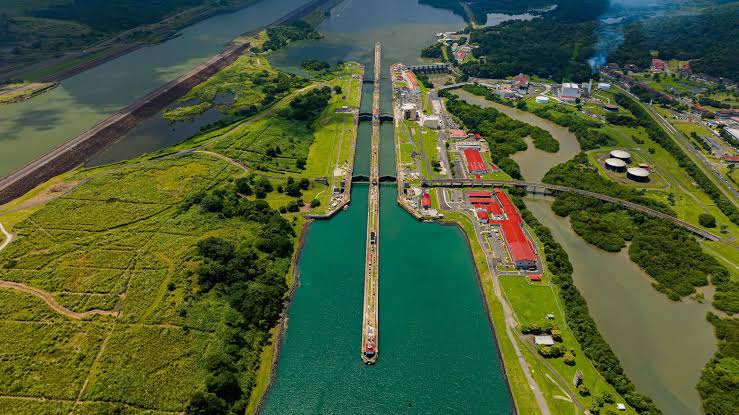
A strategic waterway at the centre of a growing dispute
As the world approaches the end of 2026, the Panama Canal remains an important point to watch—not only for its role in international trade, but also for the political and economic interests surrounding it.
The dispute involves the United States, Panama and China, with questions about strategic influence, port operations, security and control over infrastructure near one of the world’s most important maritime routes.
For ordinary consumers, however, the most pressing questions are more immediate: Will shipping become more expensive? Could petrol and diesel prices rise further? And could the dispute contribute to the cost of imported goods as businesses prepare for the Christmas season and the beginning of 2027?
The answers depend on several factors, and it is important to distinguish the political dispute from the canal’s day-to-day operating conditions.
The United States transferred control of the canal to Panama on December 31, 1999, under treaties signed in 1977. Today, the Panama Canal Authority, an autonomous Panamanian agency, administers the waterway. Although Washington has continued to express concern about China’s influence around the canal, greater U.S. strategic influence is not the same as legal ownership of the canal.
The “Congressional Research Service’s June 2026 report on U.S.–Panama relations” (https://www.everycrsreport.com/reports/R48997.html) provides an overview of the legal framework, security cooperation and the continuing dispute over port operations.
Why the port dispute matters
One of the central issues is the future of the Balboa and Cristóbal port terminals, located at opposite ends of the canal.
In January 2026, Panama’s Supreme Court invalidated the legal framework underpinning the concessions held by Panama Ports Company, a subsidiary of Hong Kong-based CK Hutchison. Panama subsequently moved to install temporary operators while arrangements for the terminals’ future operation were addressed.
The decision followed growing U.S. pressure over Chinese-linked interests near the canal. It also triggered a legal dispute: CK Hutchison has pursued international arbitration, seeking compensation over the loss of its port concessions.
Reuters reported in August that CK Hutchison was seeking more than $1.5 billion in one arbitration, while its subsidiary had separately pursued a claim exceeding $2 billion.
These proceedings could continue for an extended period. They are significant because they add a legal and diplomatic dimension to a dispute that already involves two major powers and a country determined to retain its sovereignty.
However, the port dispute should not be confused with a closure of the canal itself. The terminals and the waterway are distinct operations, and the available evidence does not establish that the political disagreement will necessarily interrupt canal transits.
Sources: “Reuters on CK Hutchison’s arbitration” (https://www.investing.com/news/stock-market-news/ck-hutchison-seeks-15-billion-from-panama-in-treaty-dispute-arbitration-4197082) and the “Congressional Research Service” (https://www.everycrsreport.com/reports/R48997.html).
Is the situation likely to improve—or deteriorate?
Over the coming months, the most useful approach is to watch for concrete developments rather than assume that either a diplomatic breakthrough or a major confrontation is inevitable.
A period of managed tension remains a plausible scenario. Washington could continue pressing its security and investment concerns while Panama maintains cooperation where the countries’ interests overlap. Negotiations and legal proceedings could continue without preventing the canal from operating normally.
The situation could become more difficult if either side introduces new economic restrictions, if cooperation breaks down, or if the dispute over port operations expands into wider trade measures.
China’s response is also important. The port dispute has already become part of a broader contest over maritime influence, and actions affecting shipping companies or Panama-flagged vessels could increase uncertainty for operators.
For now, there is no sound basis for treating a U.S. takeover of the canal as an inevitable outcome. Panama remains the canal’s legal administrator, and a change in political pressure does not automatically change that legal position.
The most sensible outlook for November 2026 and early 2027 is continued uncertainty, with the possibility of negotiation and the risk of further diplomatic flare-ups.
The shipping-cost question: What should importers expect?
The canal’s operating conditions may matter more directly to freight costs than political rhetoric alone.
The Panama Canal Authority announced in late September that it would increase the number of daily transits through its Neopanamax locks to 10 from October 15, bringing the total to 33 daily slots across the Neopanamax and Panamax locks. It also raised the maximum authorized draft for Neopanamax vessels to 49 feet.
Those changes reflected improved rainfall and water levels. The Authority nevertheless cautioned that a water deficit remained in the canal watershed.
This is an important distinction. Better water conditions can help the canal accommodate more vessels and reduce the risk of delays. But if rainfall falls short and lake levels deteriorate, restrictions may return. Ships without secured reservations can face uncertainty over transit dates.
The Authority’s “official announcement on transit capacity and draft limits” (https://pancanal.com/en/panama-canal-announces-increase-in-draft-and-daily-transit/) explains the changes.
There is also a wider freight-market issue. Drewry’s World Container Index rose 2% to US$4,585 per forty-foot container on October 22, its highest level in 15 weeks. Rates increased on several major Asia–Europe and trans-Pacific routes. Drewry attributed the movements to factors including demand, capacity management and changes in shipping schedules.
That figure is a global benchmark, not a price for every shipment or a direct measure of the cost of using the Panama Canal. Actual freight charges vary by route, container type, contract, fuel surcharges, insurance and port conditions.
Still, it shows that businesses are already operating in a market where shipping costs can change quickly.
For importers, retailers and distributors, the practical concern is whether higher freight costs persist long enough to affect new orders and replenishment shipments. Companies may absorb some increases, renegotiate contracts, reduce margins or pass part of the additional expense to customers.
The result will vary by industry and country. A higher global freight index does not automatically mean every imported product will become more expensive immediately.
Source: “Drewry World Container Index, October 22, 2026” (https://www.drewry.co.uk/supply-chain-advisors/supply-chain-expertise/world-container-index-assessed-by-drewry).
What about petrol and diesel prices?
Fuel prices require a separate analysis because the Panama Canal dispute is only one part of a much larger energy market.
The U.S. Energy Information Administration’s October 6 Short-Term Energy Outlook reported that Brent crude averaged US$114 per barrel in September, following attacks on Middle Eastern oil infrastructure and tankers that disrupted important export routes.
The agency forecast Brent at an average of US$105 per barrel in the fourth quarter of 2026, while warning that continued disruptions and elevated transportation costs could keep prices volatile. Its forecast assumes that oil flows gradually recover; a worsening of the situation could change that outlook.
More recently, Reuters reported that Brent settled at US$116.72 per barrel on October 23 amid heightened concerns about Middle Eastern supply disruptions and attacks affecting energy infrastructure and commercial shipping.
These developments are crucial to understanding the outlook for motorists. Oil prices can rise when the market fears that supplies will become harder to obtain, even before a full shortage reaches consumers. Higher tanker rates and insurance premiums can also increase the cost of delivering crude oil to refineries.
The Panama Canal can influence some shipping routes and the economics of moving certain energy cargoes. But its role should not be overstated: the most immediate oil-price pressures in the current market have included disruptions and security risks around Middle Eastern export routes.
Sources: “U.S. Energy Information Administration, October 2026 outlook” (https://www.eia.gov/outlooks/steo/marketreview/crude.php) and “Reuters, October 23 oil-market report” (https://www.reuters.com/business/energy/oil-little-changed-supply-concern-lingers-amid-houthi-attacks-saudi-arabia-2026-10-23/).
For motorists, the implication is straightforward: fuel prices could remain under upward pressure if global supply disruptions persist, but the direction and timing of pump-price changes will depend on crude prices, refining costs, freight, taxes, exchange rates and local pricing policies.
A fall in crude oil prices would not necessarily translate into an immediate reduction at the pump. Equally, a political dispute around the canal alone is not enough to predict a specific increase in petrol prices.
Could the cost of living rise as Christmas approaches?
The possibility deserves attention, particularly for countries that rely heavily on imported food, consumer goods, building materials and fuel.
If freight rates rise, importers may face higher costs for bringing merchandise into their markets. If oil and marine fuel prices remain elevated, shipping companies may also face greater operating expenses. Those costs can work their way through supply chains, although the effect is neither uniform nor immediate.
Retailers may already have ordered their Christmas inventory, meaning that some products arriving in the coming weeks were purchased under earlier shipping contracts. Other businesses may be placing new orders at different rates. This can produce a lag between changes in freight markets and the prices consumers actually see.
Fuel prices can have a wider effect because transportation is involved in moving food, construction supplies and other goods after they reach a port. But domestic taxes, distribution costs, currency movements and competition also shape the final price.
Rent is a different matter. Shipping and energy costs can affect construction materials and household expenses, but they do not determine rent by themselves. Local housing supply, demand, financing costs and government policies remain major influences.
Consumers should therefore be alert to possible price pressures without assuming that every increase in the cost of living can be attributed to the Panama Canal.
What to watch between now and early 2027
There are five developments worth monitoring:
1. Diplomatic relations: Whether Washington and Panama continue negotiating or announce new measures that increase economic or political pressure.
2. Port operations and arbitration: Whether the dispute over Balboa and Cristóbal produces operational changes, new legal developments or uncertainty for shipping companies.
3. Canal water levels: Whether rainfall and Gatun Lake levels allow the Authority to maintain current transit capacity, or whether restrictions return.
4. Global oil supply: Whether Middle Eastern export routes and tanker movements become more stable or suffer further disruptions.
5. Freight-rate trends: Whether container rates continue rising, stabilize or fall as shipping capacity, demand and fuel costs change.
These indicators will provide a more useful picture than relying on political statements alone.
The bottom line
The Panama Canal is at the intersection of global trade, strategic competition and climate-related operating risks. Its importance makes any sustained disruption worth watching, but the current situation does not justify assuming that the canal will close or that fuel prices must rise because of the dispute.
The more immediate concern for businesses and consumers is the combination of uncertain freight rates, high oil prices and potential interruptions to important shipping routes.
If diplomatic tensions remain contained and canal operations continue to improve, the effects on shipping could remain manageable. If water restrictions return or the geopolitical dispute begins to disrupt trade more directly, costs could rise and delivery schedules could become less predictable.
As the world moves toward 2027, the prudent position is to watch the evidence, follow official operating notices and energy-market reports, and avoid treating any single scenario as inevitable.
For households, that means keeping an eye on fuel prices and essential-goods costs. For businesses, it means reviewing freight contracts, delivery schedules and inventory plans. For governments, it means recognizing that the resilience of global supply chains depends on both stable international relations and reliable transport infrastructure.
The canal remains open. The question is whether the political and economic pressures surrounding it can be managed without adding further strain to an already uncertain global trading environment.