Otherwander Soho: Is This What the Future of London Hotels Looks Like?
London has never been short of hotels. But Otherwander Soho is betting that the next generation of travelers may not want a traditional hotel at all.
In the heart of London’s Soho, just steps from Oxford Street and Tottenham Court Road, a new kind of hotel is challenging the idea of what a city stay needs to be.
“Otherwander Soho” (https://reference-url-citation.invalid/0) is a futuristic pod hotel built around a simple proposition: give travelers a comfortable place to sleep, put them in the middle of one of London’s most energetic neighborhoods, remove unnecessary hotel formalities and let technology handle the rest.
The concept was recently explored by “Newsweek’s report on Otherwander Soho” (https://reference-url-citation.invalid/1), which looks at how the property has been designed with a new generation of travelers in mind.
And while Gen Z is an obvious part of the target audience, Otherwander’s leadership says the idea is actually broader than age.
Welcome to the “Gen Z psychographic”
Otherwander Soho CEO Fredrik Korallus describes the hotel’s audience as a “Gen Z psychographic” rather than simply people born into a particular generation.
That distinction matters.
The concept is built around travelers who value design, convenience, technology, authenticity and experiences. They may want to spend their money exploring Soho rather than paying for a large hotel room they will barely use.
Research cited by Newsweek from an August 2026 Booking.com survey supports part of that thinking. Among American travelers aged 18 to 34, 84 percent said they would be willing to spend more for accommodation in a good location, while 86 percent said they would splurge for greater comfort.
The same survey found that 90 percent considered comfort and convenience important when judging the value of a trip, while 91 percent wanted to balance quality with price.
That creates an interesting challenge for hotels.
Travelers may want affordability, but they do not necessarily want something that feels cheap.
Otherwander’s answer is to reduce the room rather than reduce the experience.
Forget the traditional hotel room
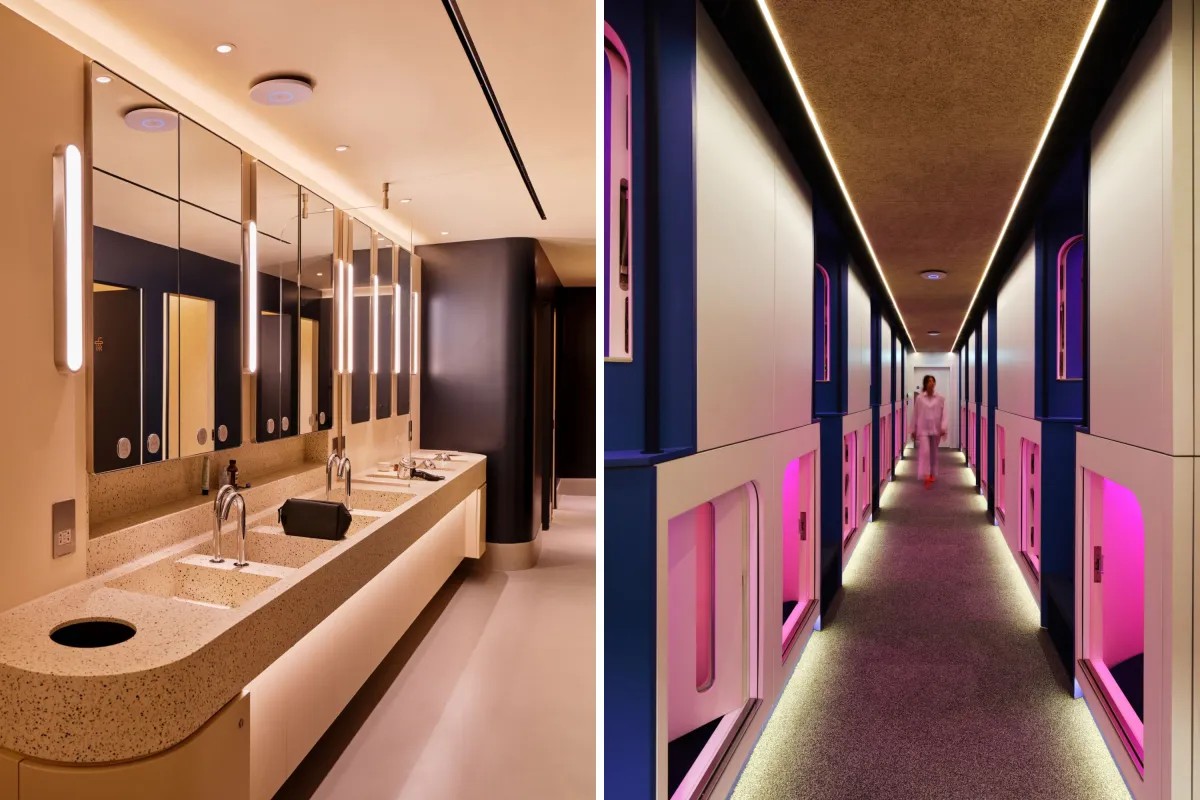
Otherwander Soho opened at 92 Dean Street in June 2026 with hundreds of sleeping pods, known by the hotel as “nests.”
According to the company’s opening announcement, the property contains 566 pods, available in single and double configurations.
The idea is straightforward: instead of paying for a conventional hotel room with space that may sit unused for most of the day, guests receive a compact private sleeping environment and access to carefully designed communal facilities.
The nests feature premium bedding, individual temperature controls, lighting, integrated storage, USB charging, Wi-Fi, blackout features and sound-softening measures.
The company says the spaces are also supplied with filtered fresh air.
The result is less traditional hotel room and more futuristic private cocoon.
Your phone becomes the front desk
Perhaps the most noticeable difference is what guests don’t encounter.
There is no traditional reception experience at the center of the concept.
The guest journey is designed to be entirely digital. Visitors check in before arriving and receive a QR-enabled Wanderpass, which can be stored in their phone’s digital wallet.
That pass provides access to the building and the guest’s nest.
“Otherwander’s opening announcement” (https://reference-url-citation.invalid/2) describes the approach as a way of removing traditional friction from the hotel experience.
For travelers who are comfortable doing almost everything through a smartphone, it could feel remarkably natural.
For others, it raises an obvious question: what happens when you actually need a person?
That is one of the trade-offs behind this new model of hospitality.
Small spaces, big expectations
The biggest test for Otherwander may not be its technology.
It may be the bed.
A futuristic hotel can have QR keys, mood lighting and a beautifully designed communal area, but guests still have to sleep comfortably.
The nests attempt to address that with blackout conditions, sound dampening, temperature control and fresh air.
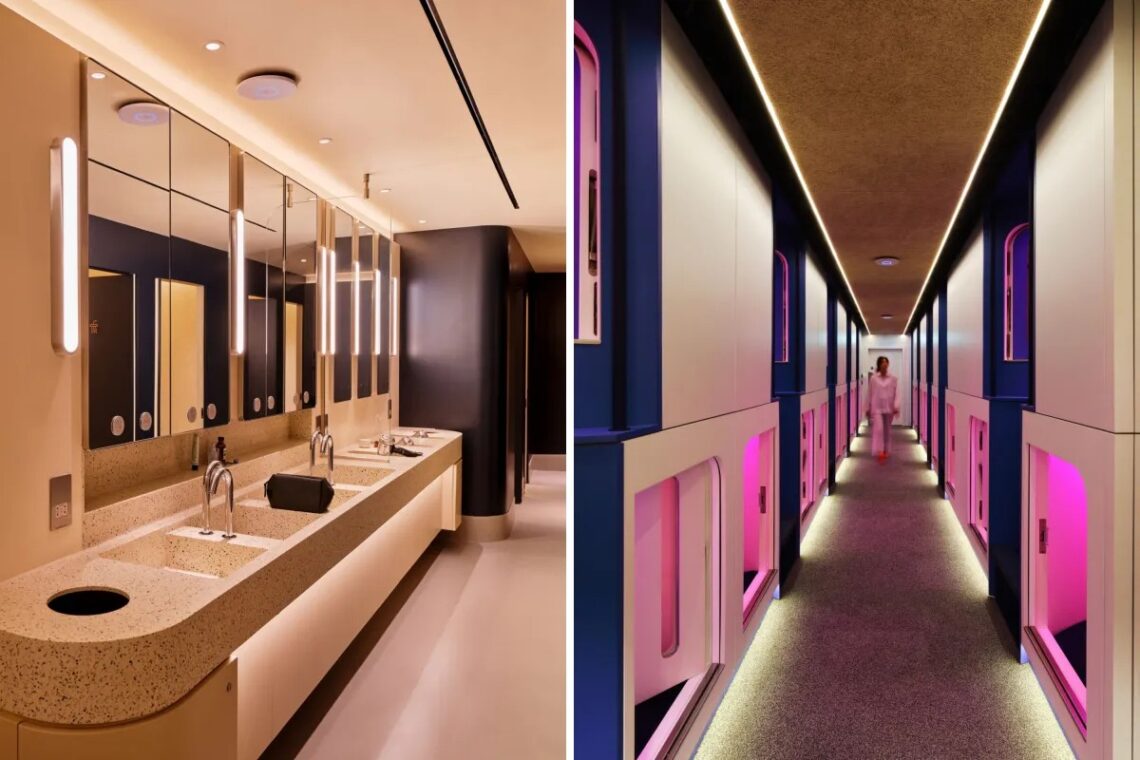
The shared bathrooms are also designed to feel more premium than the word “pod” might suggest. They include rain showers, separate wet and dry areas, terrazzo-finished vanities, hair dryers, towels and complimentary toiletries.
That balance is important.
Newsweek’s report also included commentary from hospitality and design experts who warned against assuming that every Gen Z traveler wants the same thing. Some may prioritize affordability and social interaction, while others may happily pay more for privacy.
The common denominator may therefore be choice.
Give travelers a private place to retreat to, but create communal areas when they actually want to interact.
Otherwander calls those communal spaces “huddles.”
Designed for Soho, not separated from it
Perhaps the hotel’s greatest luxury is not inside the building.
It is outside.
Otherwander Soho sits in one of London’s most recognizable neighborhoods, surrounded by restaurants, bars, theaters, boutiques and nightlife.
The location is particularly significant because the hotel’s philosophy is essentially to make the city the destination and the hotel the base.
The property is also close to Tottenham Court Road and the Elizabeth line, making it relatively easy for guests to move through London rather than spend their stay inside the hotel.
That helps explain the design philosophy.
Why pay for a large room with a view if you are spending the day in Soho, the evening in a West End theater and the night exploring London’s bars and restaurants?
Otherwander is betting that some travelers would rather spend their money outside the hotel.
Social when you want it. Private when you don’t.
The communal side of the concept is equally deliberate.
Guests have access to social areas where they can work, relax, meet other travelers and pick up food and drinks.
The property also incorporates vending facilities, coffee, pastries, snacks and a self-service bar.
This creates an unusual middle ground between a traditional hotel and a hostel.
You have your own sleeping space, but you don’t necessarily have your own conventional room.
You can interact with other guests, but you don’t have to.
And you can spend considerably more time outside the hotel because the entire property is designed around the assumption that the city itself is part of the experience.
The bigger question
Otherwander Soho is interesting because it isn’t really trying to convince travelers that smaller rooms are better.
It is arguing that space should be allocated differently.
Give guests enough private space to sleep comfortably. Make the technology invisible and convenient. Invest in the areas that matter. Then put the hotel in a neighborhood where people actually want to spend their time.
That philosophy could become increasingly relevant as major cities become more expensive and travelers look for ways to stay centrally without paying traditional luxury-hotel prices.
Otherwander launched with rates advertised from around £70 per night, although actual prices can vary depending on dates and room type.
And the company has already made it clear that Soho is intended to be the beginning rather than the end.
The brand says its model has been designed for expansion into other major cities around the world.
That could make Otherwander less of a novelty and more of an experiment in where urban hospitality is heading.
The future hotel may not necessarily be bigger.
It may simply be smarter, smaller and better connected to the city outside its doors.