Four Men, Four Legacies, One World at War: Where Were the Minds Behind Mercedes-Benz, Ferrari, Dior and Porsche During WWII?
Fun fact: Before their names became synonymous with some of the world’s most recognisable luxury brands, the men behind Mercedes-Benz, Ferrari, Dior and Porsche lived through one of the most defining periods in modern history. Some were caught in the machinery of war, others served in uniform, and one would find his engineering talents increasingly tied to Germany’s military ambitions.
We have spent time exploring the heritage of Mercedes-Benz, Ferrari, Dior and Porsche. We have looked at the origins of their designs, the people who shaped their identities and the histories that made these names internationally recognisable.
But there is another story worth exploring.
What were these men doing during the Second World War? Where were they living? What side of the conflict were they on? And, considering the geographical proximity of some of their lives, how close might they actually have been to one another?
It is a fascinating intersection of fashion, engineering, automobiles, politics and history.
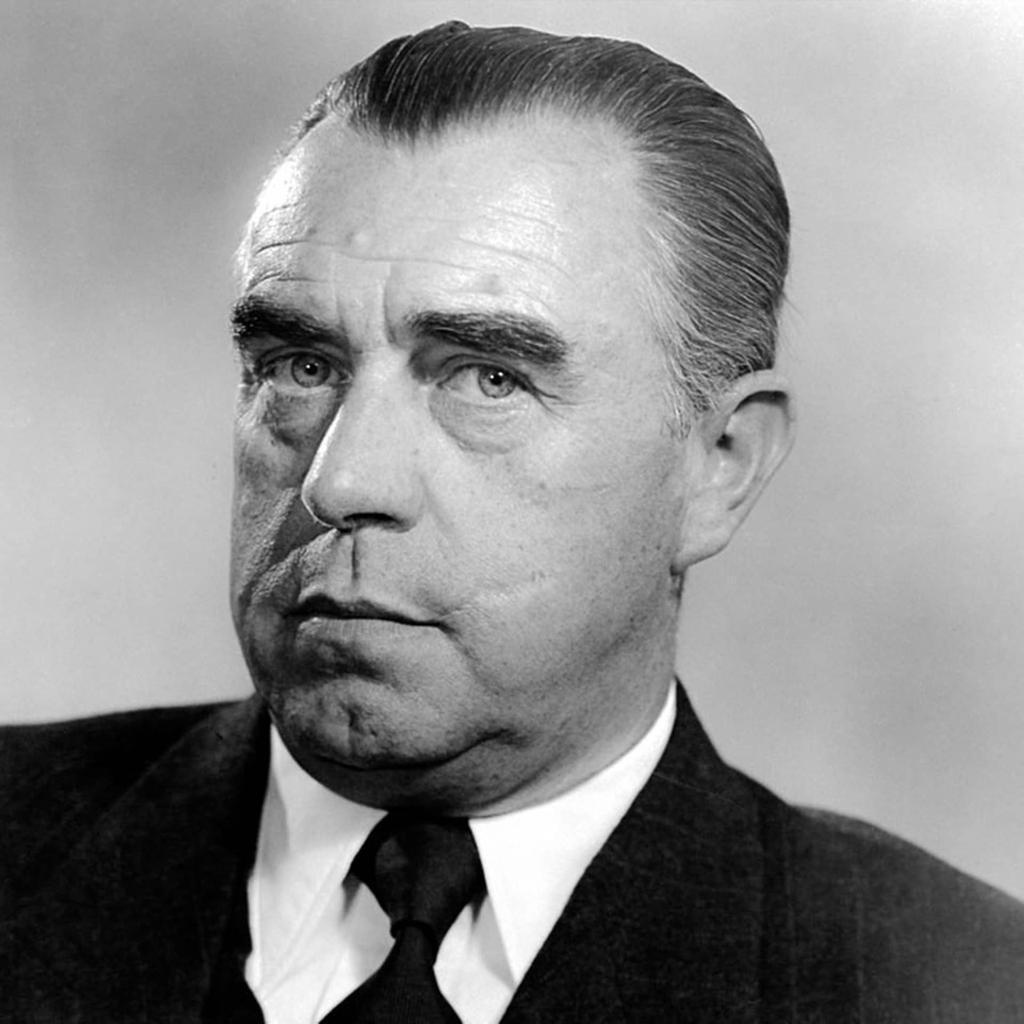
There is, however, an important distinction: Mercedes-Benz has two original automotive pioneers, Gottlieb Daimler and Carl Benz, neither of whom lived to see the Second World War. For the wartime chapter, the more relevant Mercedes figure is Wilhelm Haspel, who led Daimler-Benz from 1942.
### 1\. Mercedes-Benz: Wilhelm Haspel – Leading an industrial giant under the Third Reich
Location: Stuttgart and Sindelfingen, Germany.
By the time the Second World War began in September 1939, Mercedes-Benz’s original pioneers were already gone.
* Gottlieb Daimler died in 1900.
* Carl Benz died in 1929.
Their companies had merged in 1926 to form Daimler-Benz AG. The man who would become particularly important during the war was Wilhelm Haspel, appointed chairman in August 1942.
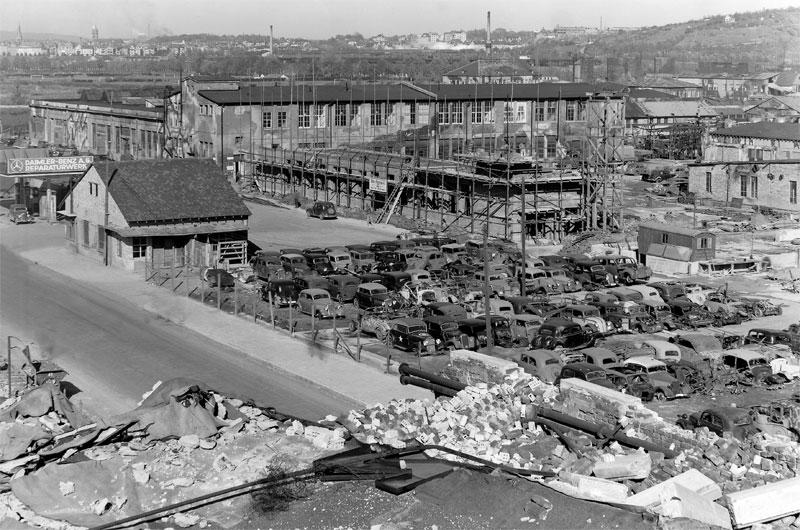
His story is particularly interesting.
Haspel was married to a Jewish woman, something that placed his family in direct conflict with the racial policies of Nazi Germany. According to Mercedes-Benz’s own historical account, the company retained him despite the regime’s objections. Mercedes-Benz Group +1
However, his personal circumstances should not be confused with the company’s wartime activities.
Under Nazi Germany, Daimler-Benz became an important supplier to the military. Its factories produced aircraft engines, military trucks, tank components, ammunition and other equipment.
There is also a much darker chapter.
Daimler-Benz employed forced labourers, prisoners of war and concentration camp detainees. By the end of 1944, almost half of its workforce consisted of people in these categories.
That is a significant part of Mercedes-Benz’s history, and one the company has subsequently acknowledged. Mercedes-Benz Group +1
The interesting contrast: The man heading the company was married to a Jewish woman, while the company he led was part of Germany’s wartime industrial machinery.
That distinction matters when examining individual responsibility and corporate history.
2\. Ferrari: Enzo Ferrari – Building a future while Italy was at war
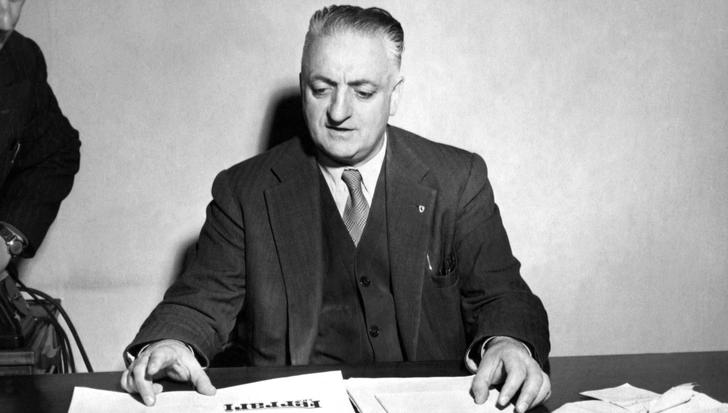
Location: Modena and Maranello, Italy.
Enzo Ferrari was not yet the international automotive icon we recognise today.
His relationship with racing had already been established, including his years with Alfa Romeo, but his own automotive company was still in its infancy.
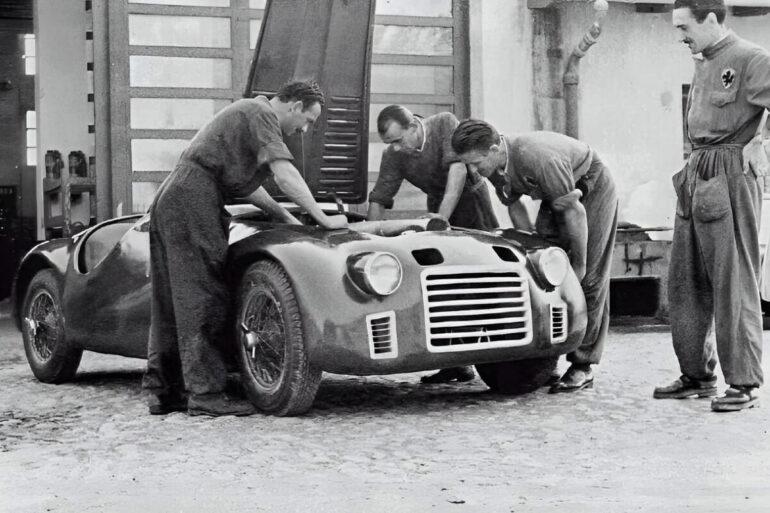
In 1939, Ferrari established Auto Avio Costruzioni, which initially concentrated on engineering and machine-tool production rather than manufacturing cars under the Ferrari name.
The war changed everything.
When Italy entered the conflict alongside Germany in 1940, civilian motorsport effectively came to a halt. Ferrari’s business turned towards manufacturing industrial equipment, including hydraulic grinding machines.
In 1943, Ferrari moved his operations from Modena to Maranello, partly in response to industrial decentralisation measures designed to reduce the vulnerability of factories in built-up areas.
Even that location would not remain untouched. The Maranello factory was bombed during the war. VisitModena +2
There is an interesting historical distinction here.
Ferrari operated within Fascist Italy’s industrial system, as did many Italian businesses. His company undertook wartime industrial production, but that does not automatically establish that Enzo Ferrari personally served as a combatant or held a military command.
After the war, he returned to his original ambition.
In 1947, the Ferrari 125 S made its racing debut, beginning the story of the Prancing Horse as a manufacturer of its own racing cars. VisitModena +1
The interesting contrast: While Porsche’s engineering was increasingly directed towards military vehicles and tanks in Germany, Ferrari was operating a machine-tool business in northern Italy, waiting for the opportunity to return to racing.
3\. Christian Dior – The fashion designer caught between two worlds
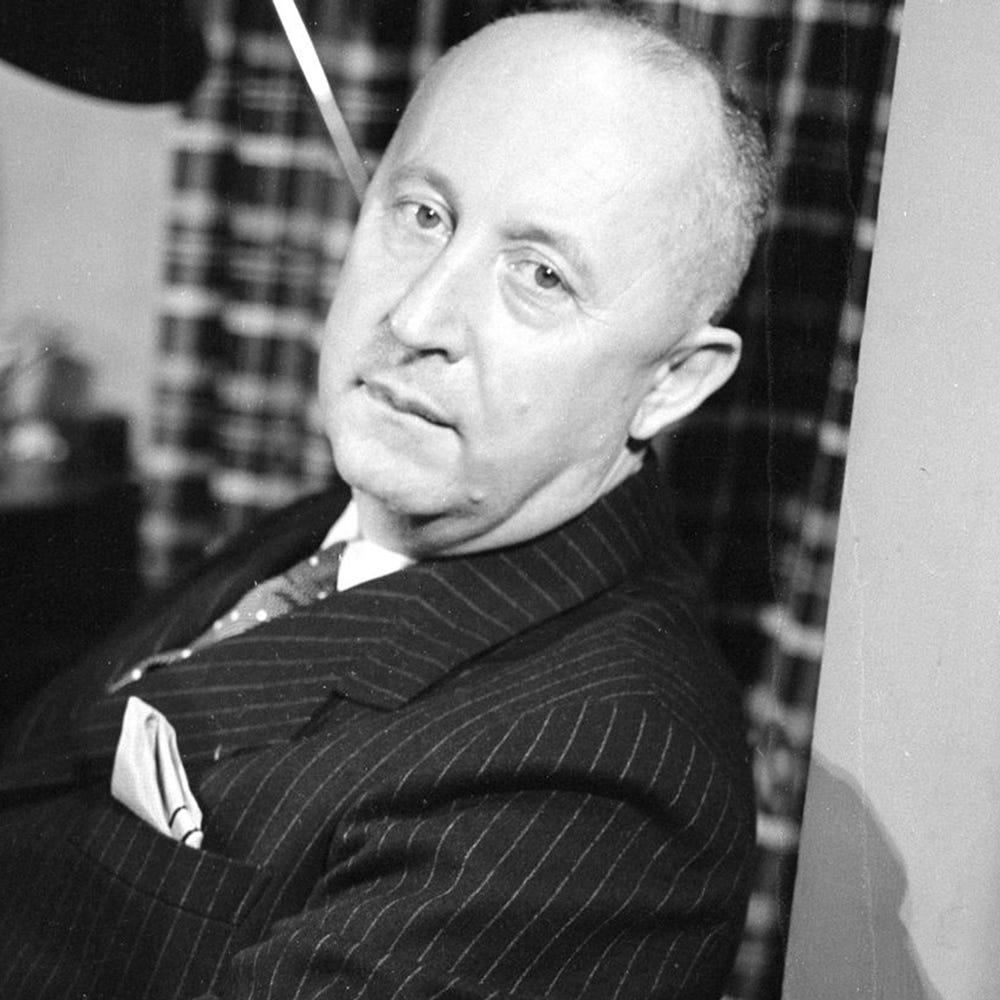
Location: France – initially military service, then Callian in Provence and occupied Paris.
Christian Dior’s wartime story is perhaps the most unexpected of the four.
Before becoming one of the greatest names in fashion, Dior had been working as a designer for Robert Piguet.
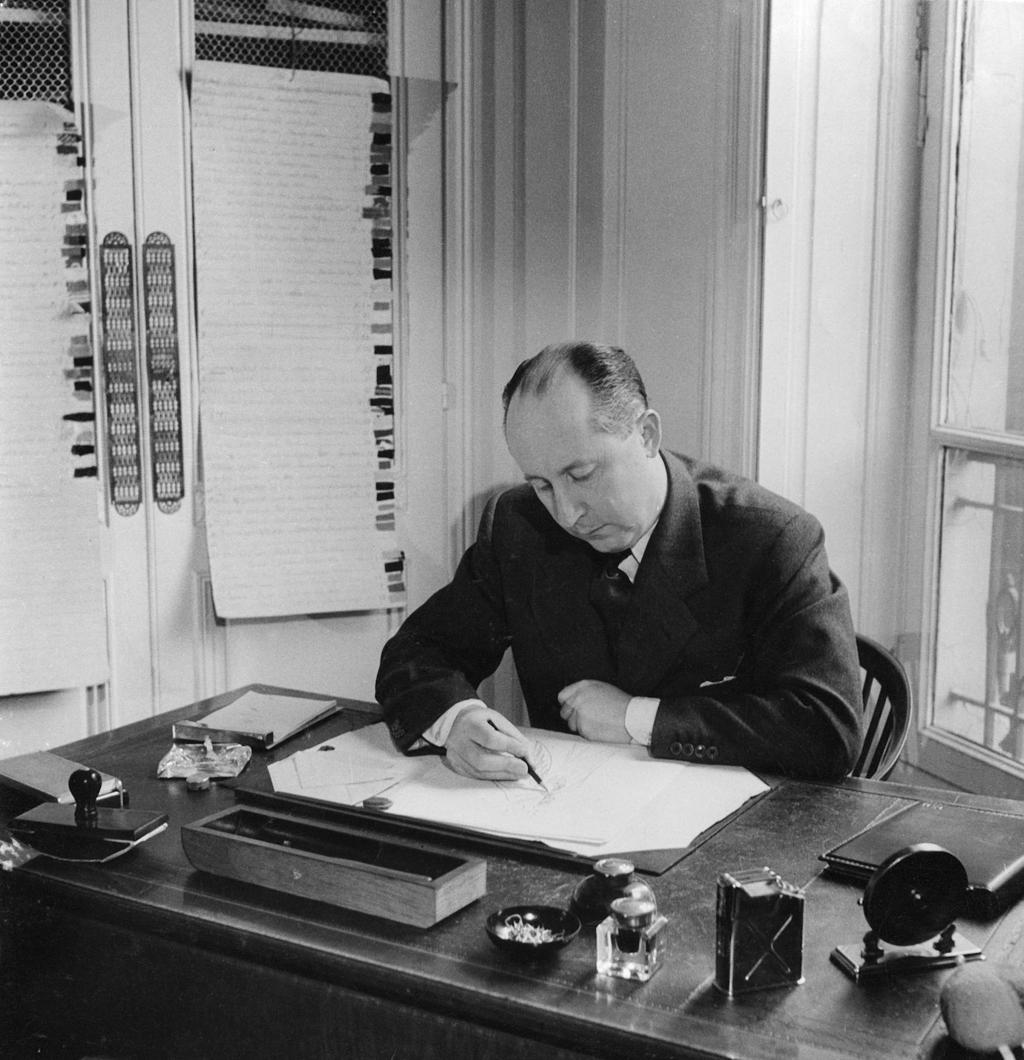
When war broke out in 1939, he was called up into the French Army. He served in the 47th Engineering Company and was demobilised in 1940 following France’s surrender to Germany. Galerie Dior +1
He subsequently joined his father and sister in Callian, in southern France.
But Dior’s career was not finished.
In December 1941, he returned to Paris and began working for Lucien Lelong, where he continued developing his understanding of couture.
Paris was under German occupation, and the fashion industry had to navigate the realities of the occupying authorities. Lelong’s fashion house dressed women connected to Nazi officers and French collaborators, alongside its other clients. Dior worked within that establishment as a designer. Design Museum +1
Yet there is another side to this story.
Dior’s younger sister, Catherine, was involved in the French Resistance. She was arrested, deported to Ravensbrück concentration camp in 1944 and liberated in 1945.
It is an extraordinary family contrast: while Christian continued working in the Paris fashion industry, his sister was risking her life in the resistance against the German occupation. Galerie Dior +1
In 1946, Dior established his own fashion house with the backing of Marcel Boussac.
On 12 February 1947, he presented the collection that would become known as the New Look.
A fashion revolution was born from a country still recovering from war.
The interesting contrast: Dior’s story was not one of military engineering or industrial production. It was about survival, occupation, family, creativity and the complicated position of the arts during wartime.
4\. Ferdinand Porsche – The engineer whose work entered the battlefield
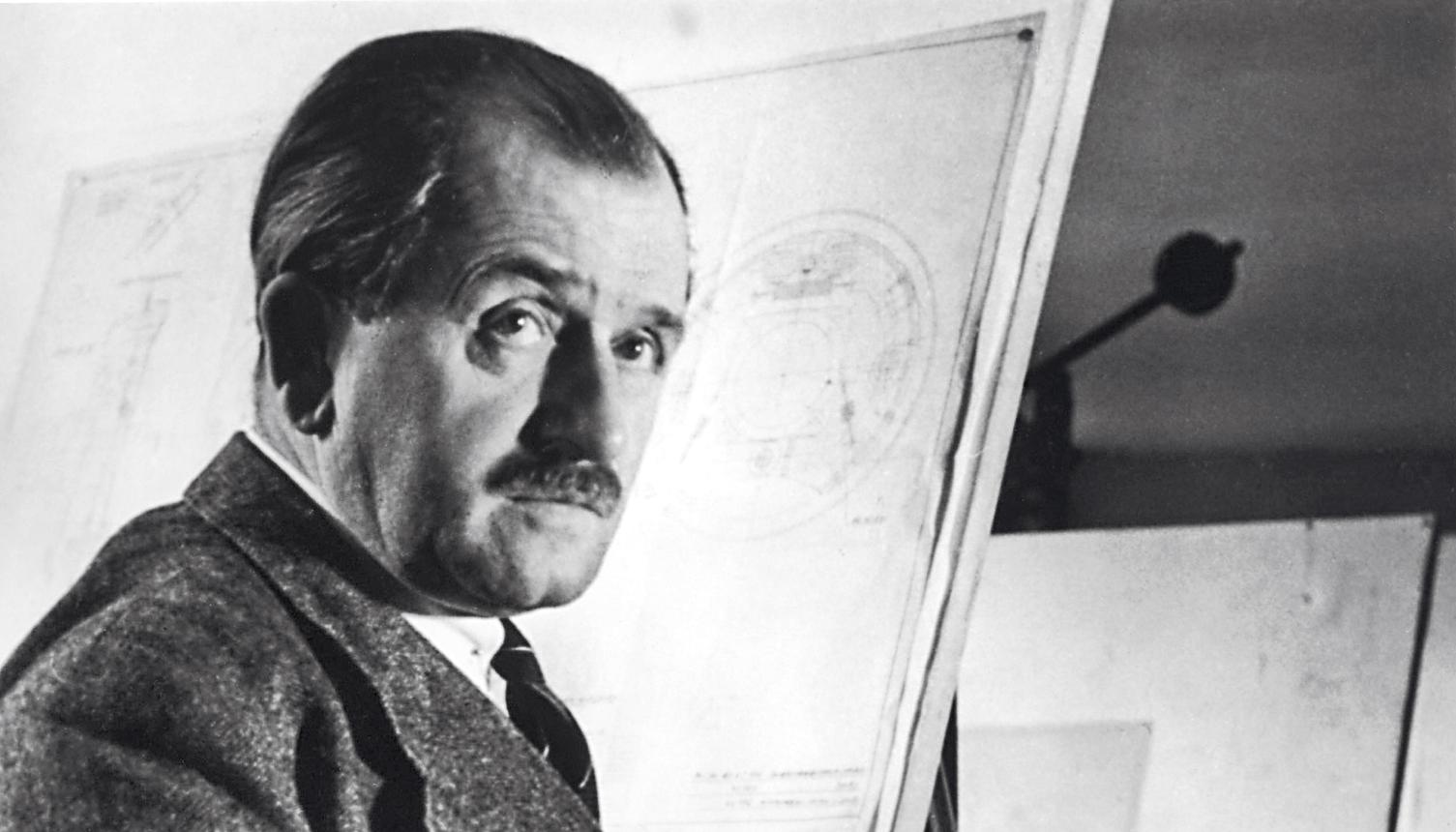
Location: Stuttgart, Wolfsburg and eventually Gmünd, Austria.
Of the four stories, Ferdinand Porsche’s wartime involvement with the German military is the most direct.
Porsche had already established himself as an influential automotive engineer long before the war. He was involved in the development of the Volkswagen project, which had been commissioned under the Nazi government.
But when the war began, his engineering office’s responsibilities expanded considerably.
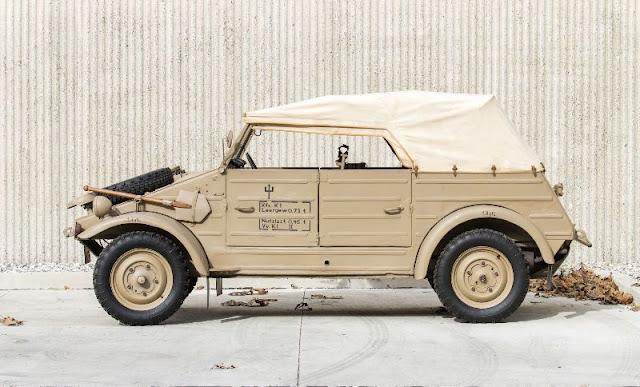
The Volkswagen platform was adapted into military vehicles, including the Kübelwagen and the amphibious Schwimmwagen.
Porsche also became involved in German tank development.
Between 1941 and 1943, he headed Germany’s Tank Commission. In 1942, he received a contract to develop the enormous Panzerkampfwagen VIII Maus, a super-heavy tank that would never enter operational service.
Only two prototypes were built.
The engineering work associated with these military projects took place predominantly in Stuttgart-Zuffenhausen, with the wider Volkswagen operation centred on Wolfsburg. Prisoners of war and forced labourers were also involved in wartime production and development. Porsche USA +1
As Germany’s defeat approached, Porsche moved his development operation and some production activities to Gmünd in Austria.
His wartime associations would follow him into the post-war period.
Following Germany’s defeat, French authorities arrested him in connection with activities including the German occupation of Peugeot in France. He spent time imprisoned before being released and ultimately acquitted in 1948. Ferdinand Porsche +1
The interesting contrast: Ferdinand Porsche’s engineering talents helped create vehicles that became part of the German war effort. Yet the company that eventually carried his surname would become known internationally for sports cars rather than military machinery.
### So, how close were they geographically?
This is where the story becomes particularly interesting. Although they came from different national backgrounds and professions, their lives intersected with a relatively concentrated European theatre of war.
Some geographical comparisons:
* Mercedes and Porsche: Stuttgart was central to both automotive histories. Porsche’s engineering operations and Daimler-Benz’s industrial operations were in the same wider region.
* Ferrari and Porsche: Stuttgart and Modena are roughly 400 kilometres apart as the crow flies. They were operating in different countries, but within the same broader European industrial landscape.
* Dior and Porsche: Paris and Stuttgart are approximately 500 kilometres apart as the crow flies.
* Ferrari’s two homes: Modena and Maranello are only about 18 kilometres apart. The move between them would become an important part of Ferrari’s history.
These are geographical comparisons, not evidence that the men personally met or interacted.
### Four legacies, four different wartime experiences
| Figure | National background | Wartime position |
| —————– | ————————— | ———————————————————— |
| Wilhelm Haspel | German | Daimler-Benz chairman, married to a Jewish woman |
| Enzo Ferrari | Italian | Industrial manufacturer in Fascist Italy |
| Christian Dior | French | French Army service, then fashion designer in occupied Paris |
| Ferdinand Porsche | Austrian-born, German-based | Engineer involved in Nazi Germany’s military development |
There is another important point about the question of which side they were on.
These men were not four soldiers fighting opposite one another. Their wartime positions were fundamentally different. Dior served in the French Army, Porsche undertook engineering work for Nazi Germany, Ferrari operated within Fascist Italy’s industrial economy, and Haspel led a German company operating under the Nazi regime.
We should also distinguish between the actions of individuals, the organisations they led and the governments under which they operated.
### The final thought: Before the luxury, there was history
Today, we see Mercedes-Benz as German engineering, Ferrari as Italian motorsport, Porsche as German performance and Dior as French haute couture.
We associate these names with exclusivity, craftsmanship, innovation and cultural influence.
But their histories are not isolated from the world that existed before them.
The Second World War shaped the industries, economies, factories and societies from which these brands emerged. It also left difficult questions about collaboration, survival, resistance, forced labour and responsibility.
Perhaps the most fascinating thing is that the people behind these names were not simply creating products. They were living through a period that would fundamentally change Europe.
And when peace finally came, each would contribute, in very different ways, to shaping the modern world of luxury.
Four names. Four different professions. One extraordinary period of history.
### Historical sources and further reading
These are useful starting points for the editorial’s fact-checking:
* [Mercedes-Benz – Our history and responsibility during WWII](https://group.mercedes-benz.com/company/tradition/company-history/75th-anniversary-of-the-end-of-world-war-ii.html?utm_source=chatgpt.com).
* [Mercedes-Benz – Wilhelm Haspel’s biography](https://group.mercedes-benz.com/company/tradition/ceos/haspel.html?utm_source=chatgpt.com).
* [Visit Modena – Enzo Ferrari’s biography](https://www.visitmodena.it/en/discover-modena/art-and-culture/illustrious-people/enzo-ferrari?utm_source=chatgpt.com).
* [University of Modena – Ferrari’s wartime machine-tool production](https://www.officinaemilia.unimore.it/site/home/in-english/documento98015759.html?utm_source=chatgpt.com).
* [Galerie Dior – Christian Dior during the war](https://www.galeriedior.com/en/history?utm_source=chatgpt.com).
* [Galerie Dior – Catherine Dior and the Resistance](https://www.galeriedior.com/en/history?utm_source=chatgpt.com).
* [Porsche – Historical account of wartime engineering](https://www.porsche.com/usa/aboutporsche/pressreleases/pag/?id=2011-04-27-1&pool=international-de&utm_source=chatgpt.com).
* [German Patent and Trade Mark Office – Ferdinand Porsche’s post-war history](https://www.dpma.de/english/our_office/publications/milestones/automobiles/ferdinandporsche/index.html?utm_source=chatgpt.com).
Editorial note: The Mercedes section deliberately uses Wilhelm Haspel rather than attributing WWII activities to Carl Benz or Gottlieb Daimler, both of whom died before the conflict.