Another race, another collision, another meeting promised. Ferrari’s latest internal confrontation in Las Vegas has raised a bigger question than who was responsible for the contact: does Scuderia Ferrari actually have a plan for managing its two drivers, or is it simply hoping the problem will disappear before 2027?
There is a point at which a racing incident stops being an isolated occurrence and starts becoming a management problem. For Ferrari, that point is becoming increasingly difficult to ignore.
The 2026 Las Vegas Grand Prix was supposed to offer Scuderia Ferrari an opportunity to recover from a difficult qualifying session. Instead, it delivered another uncomfortable chapter in the increasingly complicated relationship between Lewis Hamilton and Charles Leclerc.
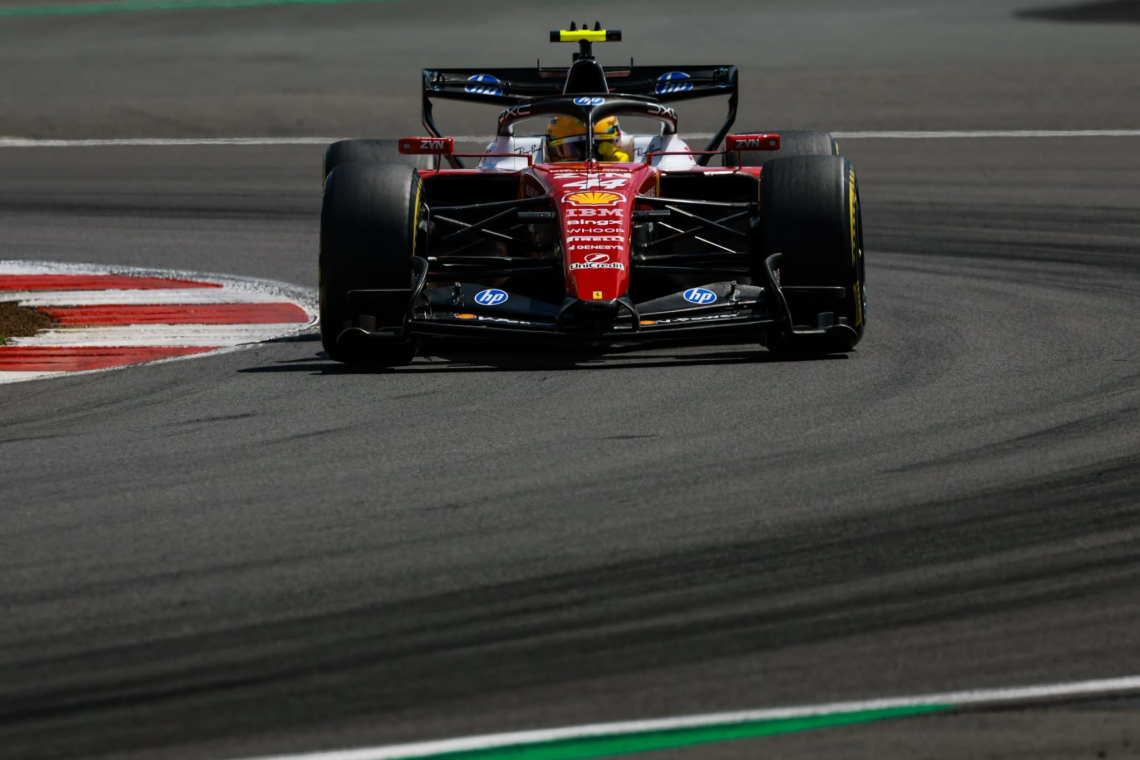
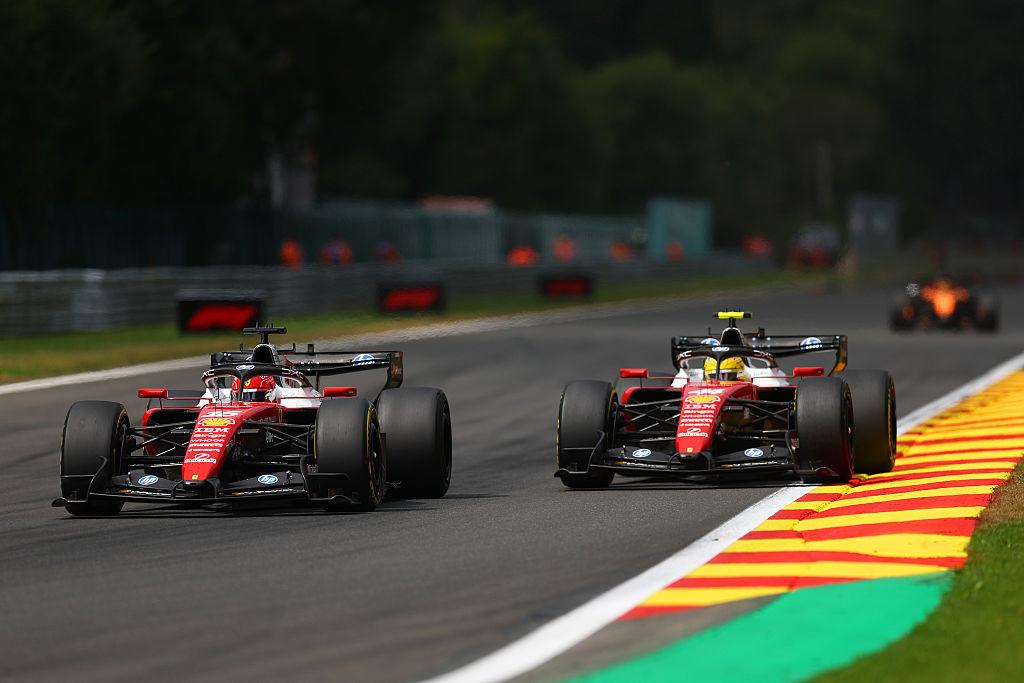
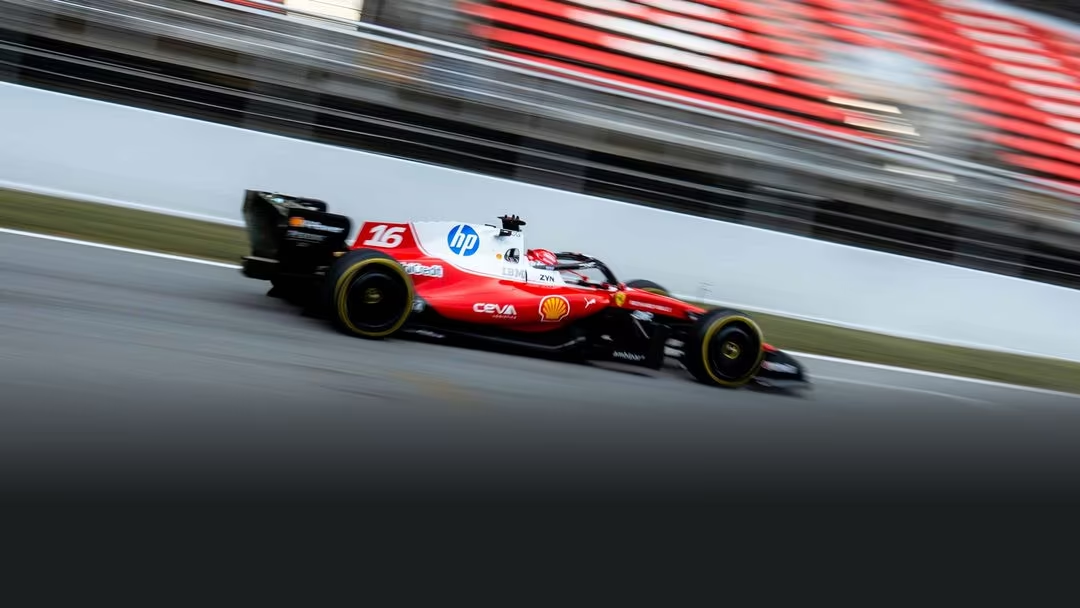
With both drivers fighting their way through the field, Ferrari had an opportunity to secure a considerably stronger result. Hamilton was attempting to challenge the McLarens ahead, while Leclerc was also looking to improve his position. But their battle eventually brought the two red cars together at Turn 7.
This time, however, the stewards were not undecided.
Charles Leclerc received a ten-second time penalty after the FIA stewards determined that he was wholly responsible for the collision.
And perhaps more importantly, the incident happened despite Ferrari having already addressed the same underlying problem following their confrontation in Mexico City.
The stewards made their decision. Leclerc’s response raised another question.
The official FIA decision is particularly important here because it removes much of the ambiguity surrounding responsibility for the collision.
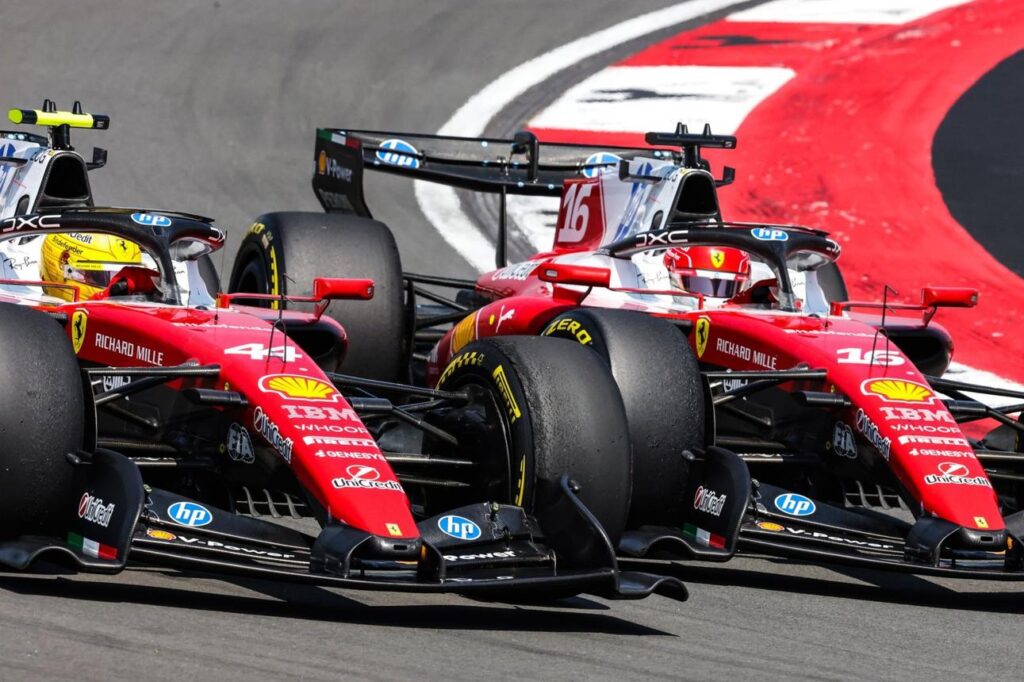
According to the stewards’ report, Leclerc attempted to overtake Hamilton on the inside from a considerable distance behind. At the apex, his front axle had not reached the required position alongside Hamilton’s mirror.
The stewards therefore determined that Leclerc had not earned the right to the corner and was wholly to blame for the resulting collision.
The penalty was ten seconds.
Speaking to F1 TV afterwards, Leclerc offered a response that did little to settle the wider discussion.
“Today, I was considered to be fault, and I took a 10-second penalty. I’m not going to argue that. I will look back at it.”
He also explained that he believed there was sufficient space on the inside and suggested that Hamilton might not have seen him approaching.
His subsequent interview with Sky Sports F1 was similarly restrained.
“I have been penalised so, as a result, I guess the majority and the stewards thought that it was my mistake. I’ll accept that.”
It was an interesting choice of words. The stewards had reviewed the video and in-car footage before reaching their decision. Their conclusion was not that responsibility was shared.
Leclerc’s immediate reaction appeared more concerned with accepting the verdict than openly acknowledging the mistake itself.
He later went further in Ferrari’s official post-race statement, accepting responsibility, acknowledging that his mistake contributed to the result and apologising to the team and its employees.
That later apology deserves recognition. However, the difference between his immediate television response and his subsequent written statement is worth noting.
For Ferrari, the issue is no longer simply whether Leclerc understands what happened. It is whether understanding will translate into different behaviour when the next opportunity to race his teammate presents itself.
Another instruction from the pit wall, another problem on track
Perhaps the most damaging part of the Las Vegas incident was that Ferrari had already attempted to address the situation.
Following the confrontation in Mexico City, Fred Vasseur arranged discussions with both drivers in Brazil. The message was straightforward: Ferrari comes first, and the drivers must respect one another while representing the team.
The meeting was presented as productive. Vasseur explained that both drivers had been given the opportunity to clarify their positions and that the team had moved forward.
Yet, in Las Vegas, the same concerns returned.
Vasseur subsequently confirmed that Ferrari had instructed Leclerc not to attempt an overtake on Hamilton at that particular stage of the race.
His frustration was unmistakable.
The team principal described the incident as completely unacceptable and explained that the message had already been made clear following Mexico.
The problem was not simply the contact between two cars. It was the apparent disregard for the team’s interests after an instruction had been communicated.
Ferrari has approximately 2,000 people working towards a common objective in Maranello. Every race represents the combined efforts of engineers, mechanics, strategists and personnel whose work ultimately depends on what happens during those 50 or so laps.
A driver may see an opportunity to gain another position. The team, however, must consider the consequences of losing two cars, valuable championship points and potentially an entire weekend’s work.
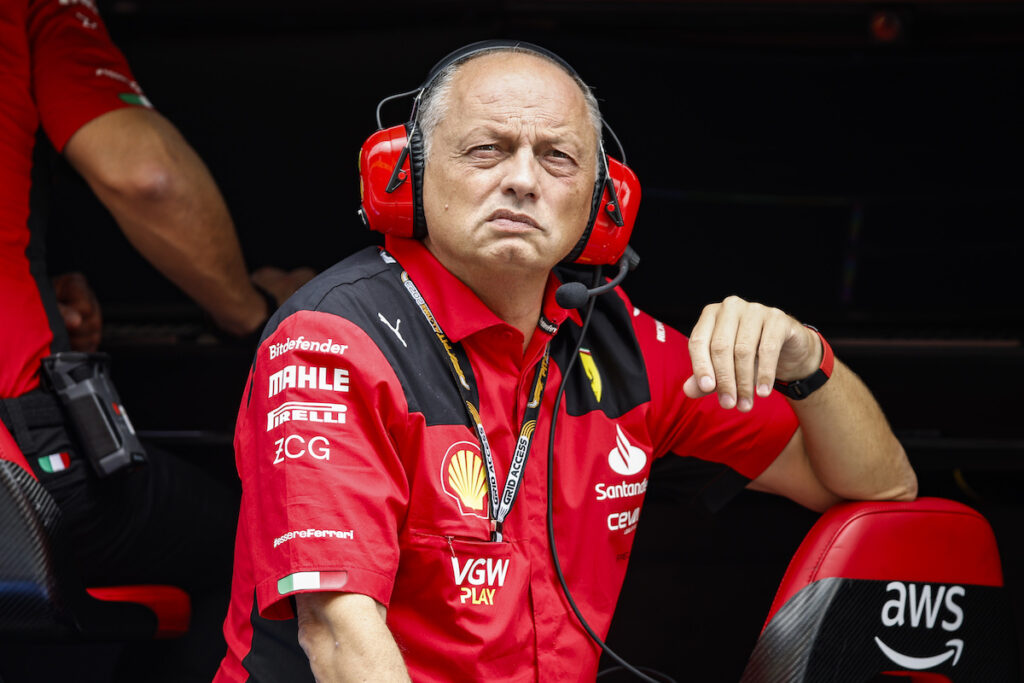
Vasseur made that distinction particularly clear when he described the incident as a lack of respect for the team, its sponsors and the people working behind the scenes.
For a team attempting to rebuild its competitive standing, these are expensive mistakes.
Hamilton’s response: “I’ve done all I can”
If Leclerc’s immediate response left room for interpretation, Lewis Hamilton’s reaction was considerably more revealing.
Asked by Sky Sports F1 whether Ferrari needed to introduce proper rules between its drivers, Hamilton offered a shrug before responding:
“That’s for Ferrari to decide, obviously. I’ve done all I can and I’ve said everything and more.”
He continued:
“It’s been difficult. All I can do is just show up and give it everything I can and hopefully in the background they eventually figure it out.”
There is a certain frustration in those words, particularly when viewed against the events of the previous races.
Hamilton has repeatedly raised the question of how Ferrari expects its drivers to race one another. His concerns have not been limited to Las Vegas.
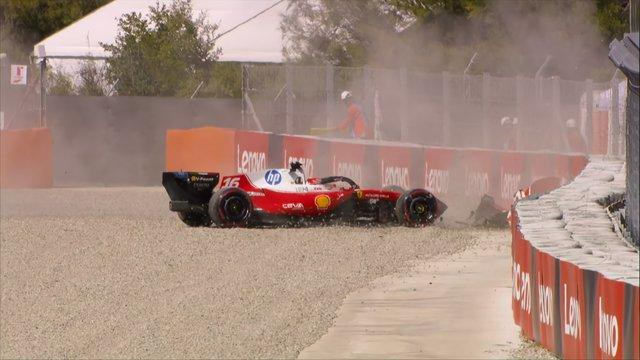
During the Italian Grand Prix at Monza, the two drivers also found themselves involved in an aggressive battle, with Hamilton forced onto the gravel. Leclerc subsequently apologised.
Then came Mexico City, where another confrontation cost Ferrari a potential victory.
Now Las Vegas.
Hamilton’s latest comments suggest that, from his perspective, he has already communicated what he believes needs to change. He is leaving the responsibility with Ferrari management.
That is an important distinction. Hamilton is not publicly demanding that Leclerc be made a number two driver. He is asking the organisation to establish how two competitive drivers are expected to operate when their individual ambitions conflict with the team’s interests.
And that is a reasonable management question for any championship-contending team.
Fred Vasseur’s admission: Would Ferrari have made a different decision in 2024?
Perhaps the most revealing development came from Vasseur himself.
When questioned about the decision to bring Hamilton to Ferrari, replacing Carlos Sainz for the 2025 season, Vasseur was asked whether he anticipated the relationship between the two drivers becoming this difficult.
His response was unusually candid.
“Honestly, no. If I’d known, our approach would have been different.”
The comment is significant because Hamilton’s arrival was originally presented as one of the most important decisions in Ferrari’s modern era.
The seven-time world champion was expected to bring experience, technical knowledge and a championship-winning mentality to Maranello. Leclerc, meanwhile, represented Ferrari’s long-term investment and its established driver.
On paper, it was an exceptionally attractive pairing.
But the reality has been considerably more complicated.
Vasseur has now described the relationship between the drivers as increasingly difficult to manage, even suggesting that the situation has become unmanageable.
He has also indicated that the pressure is mounting and that Ferrari will need to consider measures and decisions following the latest confrontation.
It would be inaccurate to interpret his comments as confirmation that Ferrari regrets signing Hamilton altogether. What he has acknowledged is that, knowing how the relationship would develop, the team’s approach to the pairing would have been different.
That admission raises another question: if the warning signs have become this apparent, why has Ferrari not already established a more effective management structure?
The problem is bigger than two drivers
Ferrari’s situation has become a regular talking point across Formula 1 coverage, including Sky Sports, specialist motorsport publications, independent commentators and online fan discussions.
The question repeatedly returning to the conversation is whether Ferrari needs a change.
Not necessarily another driver, another technical director or another expensive recruitment announcement.
Perhaps it needs a change in how it manages its drivers.
There is a difference between allowing two drivers to compete and allowing their competition to undermine the team.
Mercedes has demonstrated that two ambitious drivers can operate within a defined organisational structure, although its own Hamilton-Rosberg rivalry showed just how difficult that can become.
McLaren has also had to manage the competitive relationship between Lando Norris and Oscar Piastri. Their battles have not been without controversy, but the team has established procedures for managing their on-track competition.
Ferrari cannot simply expect Hamilton and Leclerc to resolve every disagreement themselves.
The team principal, race engineers and sporting management must establish expectations before the cars leave the garage.
What exactly is Ferrari’s plan for 2027?
This is where the discussion becomes particularly important.
The 2027 season represents another opportunity for Ferrari to put its championship ambitions back at the centre of the conversation. But technical development alone will not solve a management problem.
Ferrari needs to address several questions.
1. Clear rules of engagement
Drivers should know precisely when they are permitted to race one another, what constitutes an acceptable overtaking attempt and when the team expects them to protect an existing result.
2. Enforceable instructions
If the pit wall issues a clear instruction, there must be an established process for responding when a driver chooses not to follow it. Otherwise, team orders become suggestions rather than instructions.
3. Consistent treatment
Both drivers must understand that the same standards apply regardless of their standing, experience, popularity or relationship with management.
4. Accountability after incidents
Another private conversation cannot become the only response to repeated problems. Ferrari needs to establish what happens when the same behaviour occurs again.
5. A defined championship strategy
If Ferrari intends to challenge for the Drivers’ and Constructors’ Championships in 2027, it must determine how it will manage two drivers fighting for the same positions without repeatedly sacrificing valuable points.
These are recommendations, not measures Ferrari has confirmed it will implement.
Interestingly, Vasseur has expressed reservations about simply writing down a set of rules for every possible racing situation. His argument is that drivers ultimately need to demonstrate respect and professionalism, because no document can anticipate every scenario.
There is some merit to that position.
However, respect and professional judgement should complement a management structure, not replace one.
Another meeting, another promise?
Following the Las Vegas collision, Vasseur confirmed that Ferrari would review the situation and take the necessary measures.
He also indicated that the team would need to consider next season.
But Ferrari supporters have heard variations of this message before.
After Mexico, there was a meeting. After Brazil, there was renewed confidence that the matter had been addressed. In Las Vegas, the two drivers were again involved in a costly confrontation.
At some point, the team must move beyond promising that the problem has been discussed.
A private meeting might resolve an immediate disagreement, but it does not necessarily establish a long-term solution.
Hamilton’s response perhaps captured the situation better than anything else said after the race. He has made his position clear. Now he expects Ferrari to act.
And while Leclerc has acknowledged his responsibility for the latest collision, the team still needs to ensure that the next race does not produce another version of the same story.
The final question for Maranello
Ferrari’s problem is not that it has two competitive drivers. That should be an advantage.
The problem is that the organisation appears to be struggling to turn that competition into a consistent advantage on the circuit.
Leclerc is an exceptionally talented driver who has carried Ferrari’s ambitions for years. Hamilton is a seven-time world champion whose experience should be an asset to the Scuderia. Neither needs to become the other’s friend, but both need to understand that they are employed by the same organisation.
Vasseur has now acknowledged that, had he known how the situation would develop when Hamilton was signed in 2024, Ferrari would have approached the decision differently.
That is a significant admission from the man responsible for managing the team.
But hindsight is not a strategy.
As Ferrari looks towards 2027, the question is no longer whether another meeting will take place. It is whether the next meeting will finally produce something measurable.
Because the Tifosi do not need another promise that everything has been resolved.
They need to see it on the track.