With the Monaco Grand Prix rapidly approaching on the 2026 calendar (scheduled for early June), the whisper network and engineering reports out of Maranello are highlighting a massive technical puzzle.

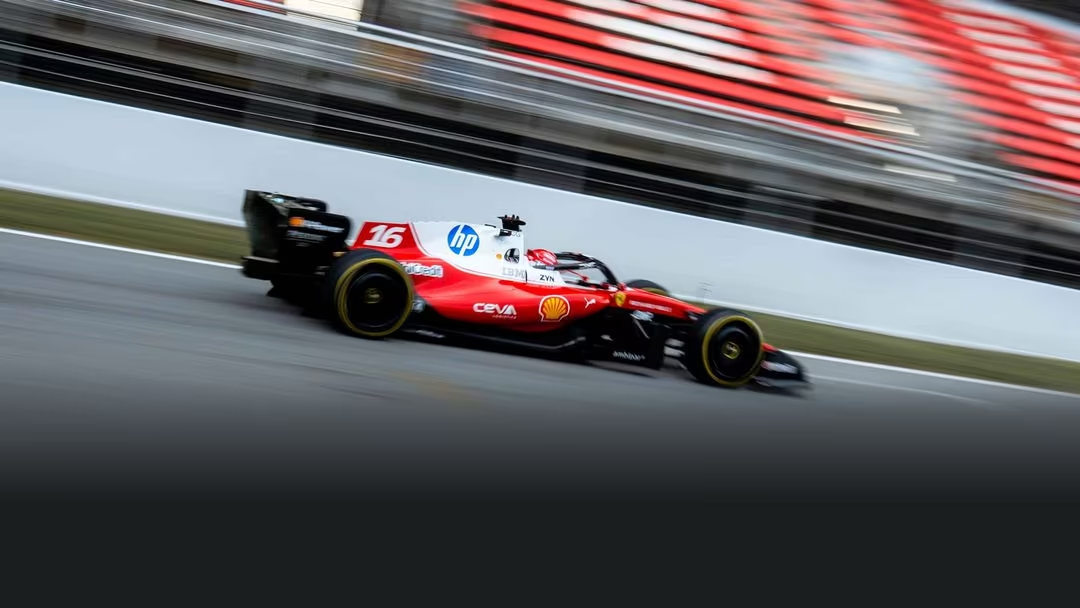
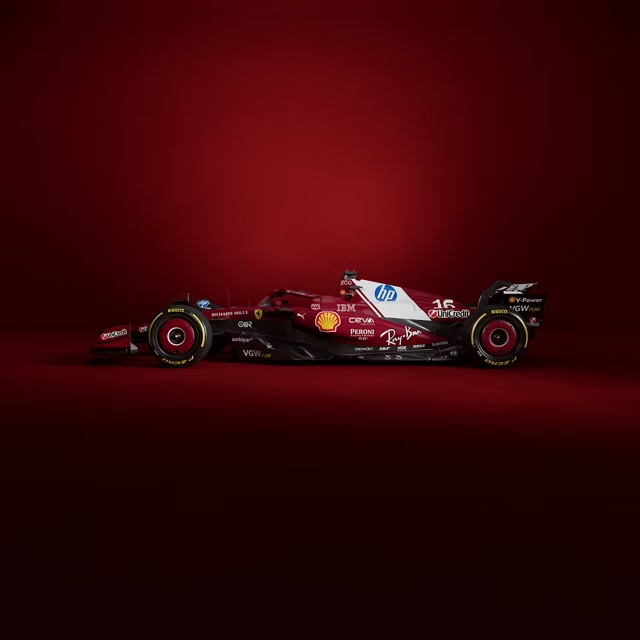
Ferrari’s approach to the streets of Monte Carlo is heavily dictated by what just played out at the Canadian Grand Prix, and the telemetry tells a very specific story about Charles Leclerc’s SF-26 package.
1. The Good News: Agility and Oversteer Balance
If there is one track where chassis compliance and mechanical turn-in trump sheer raw horsepower, it’s Monaco. Under the leadership of Chassis Technical Director Loïc Serra, Maranello has managed to lean heavily into Charles Leclerc’s preferred driving style.

- The Agility Gains: Leclerc noted earlier in the season that the lighter weight of the 2026-generation regulation cars has made the front end much sharper.
- Living with Oversteer: The mechanical balance of the SF-26 allows Ferrari to run a livelier, highly adjustable rear end. For a driver who thrives on micro-correcting a car rotating aggressively through tight apexes (like the Grand Hotel Hairpin or Rascasse), this is Ferrari’s biggest weapon.
2. The Bad News: The Horsepower Deficiency
While Monaco minimizes straight-line performance deficits, Maranello’s biggest headache cannot be completely ignored—even on a tight street circuit.
Following a grueling weekend in Canada, Leclerc delivered a harsh reality check: Ferrari’s 2026 power unit is currently losing the horsepower war against Mercedes and Ford.
“I can see sometimes on the straight that we are lacking a little bit compared to the Mercedes or even Ford power unit.”
— Charles Leclerc
While you don’t need a massive top speed down the short Beau Rivage hill or through the Tunnel, you do need immediate, punchy torque deployment out of slow corners. Because the 2026 regulations completely removed the MGU-H (which used to instantly spool the turbo using exhaust heat), the operational dynamics of managing electrical deployment and avoiding turbo lag are incredibly complex.
If Ferrari’s power unit optimization isn’t absolutely flawless, Leclerc will struggle on throttle application out of Portier and Anthony Noghes.
3. The Monaco Strategy: No New Upgrades, Pure Optimization
Don’t expect a radical visual overhaul on the SF-26 in the Monaco pit lane. Team Principal Fred Vasseur confirmed that after rolling out a massive, sweeping aerodynamic and floor upgrade package back in Miami, Ferrari explicitly chose not to bring major raw performance parts to the latest rounds.

Instead, Maranello is treating Monaco as a pure system optimization battleground.
[Miami Grand Prix] ──► Introduced Major Floor/Aero Upgrade Package
                             │
[Canadian Grand Prix] ──► Freeze on Raw Parts / Baseline Telemetry Collection
                             │
[Monaco Grand Prix]   ──► Target: Maximize Low-Speed Mechanical Grip &
                          Electrical Deployment Maps (No New Hardware)
Because Monaco is nearly 100% down to driver confidence and low-speed mechanical grip, the focus back at the factory has been entirely centered on the simulator. They are building bespoke engine maps to optimize electrical energy harvesting and strategic manual override deployment specifically tailored to maximize traction on Monaco’s low-grip asphalt.
The Ultimate Silver Lining: ADUO Hopes
Looking past the streets of Monaco, Maranello is banking heavily on the FIA’s new ADUO (Additional Development and Upgrade Opportunities) system.
The FIA evaluates engine performance indexes at strict intervals during the 2026 season. If a manufacturer’s power unit is definitively assessed to be trailing the leaders by more than 2%, they are granted extra dyno hours and homologation upgrade tokens to close the gap. Leclerc has already openly stated he expects Ferrari to qualify for this relief, which could completely rewrite the script for the second half of his season.
But for Monaco? It’s going to be up to Charles’ left foot, zero margin for error against the barriers, and hoping that compliance over the bumps makes up for what they lack down the straights.