The 2026 Formula 1 season isn’t just a reset for power units and aerodynamics; it is the most significant leap in driver protection since the introduction of the Halo. While the “nimble car” concept focuses on agility, the FIA has simultaneously mandated a “fortress” philosophy for the chassis.

Below is the exhaustive outline of every specific adjustment made to the 2026 technical regulations to ensure the safety of the grid.
1. Structural Integrity & Impact Protection
The chassis (Survival Cell) has undergone a total redesign to handle higher localized loads without significantly increasing the car’s weight.
- Two-Stage Front Impact Structure (FIS): A major adjustment to the nose cone design. In previous years, a heavy initial impact could cause the crash structure to break off entirely, leaving the driver vulnerable to a “secondary impact.” The 2026 nose features a two-part construction where the base remains attached to the survival cell even after the tip has crumpled.
- 20G Roll Hoop Requirement: Following high-profile roll-over accidents, the roll hoop load-resistance has been increased by 23%. It must now withstand a vertical load of 167 kN (approximately 20G) to prevent the structure from digging into the track surface or collapsing.
- Doubled Fuel Cell Protection: The carbon-kevlar shielding surrounding the fuel bladder has had its penetration resistance requirements doubled. This ensures that even in a high-energy side-impact, the fuel cell remains unbreached.
- Enhanced Side Intrusion Panels: The “SIPS” (Side Impact Protection Structures) now use more advanced homologated laminates. This is designed to stop a nose cone or a loose wheel from penetrating the cockpit during a T-bone collision.

2. High-Voltage & Electrical Safety
With the electrical output surging to 350kW, the risks of “thermal runaway” or accidental electrocution for marshals have been addressed with new hardware.
- Lateral Safety Lights: For the first time, cars must be fitted with safety lights on the sides of the chassis (near the mirrors). In the event of a spin or a car facing sideways, these lights inform oncoming drivers and marshals of the car’s ERS status (Green for safe, Red/Flashing for high-voltage danger).
- Battery Containment “Safety Box”: The Energy Store (battery) is now housed in a self-contained, reinforced vault. This box is designed to prevent a fire in one cell from spreading to others (thermal propagation) and is isolated from the main chassis to mitigate vibration-induced failures.
- Standardized High-Voltage Connectors: All teams must now use FIA-homologated orange high-voltage cabling and connectors to ensure consistency for emergency responders across all 10 teams.
3. Aerodynamic & Stability Controls
Safety in 2026 also means making the cars more predictable and reducing the “dirty air” that led to erratic handling.
- The End of Porpoising: The 2022-style Venturi tunnels (ground effect) have been replaced with a flatter floor and a massive rear diffuser. This removes the “stalling” effect that caused cars to bounce aggressively at high speeds, which previously led to spinal discomfort and loss of control.
- Active Aero Fail-Safe: The new moveable wings (X-Mode and Z-Mode) are engineered with a mechanical default. If the hydraulic system fails, the wings automatically snap into the Z-Mode (High Downforce) position, ensuring the driver doesn’t enter a corner with zero rear grip.
- In-Wash Bargeboards: The return of bargeboards is specifically designed to control the “wake” of the car. By pulling air inward, it reduces the spray in wet conditions and minimizes the turbulent air that makes following cars unstable.
4. Dimensional Safety
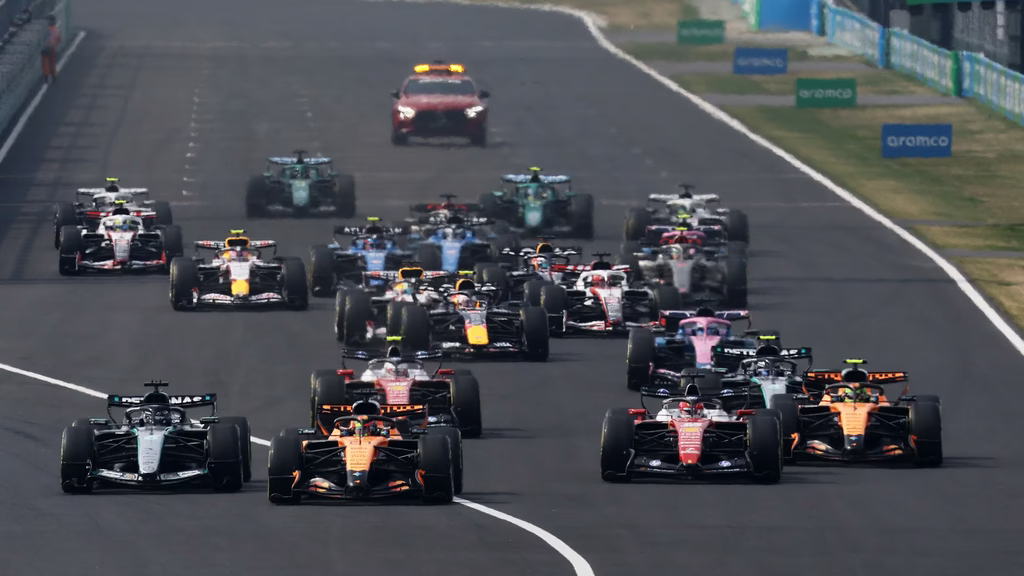
- Smaller Footprint: The car is 200mm shorter and 100mm narrower. On tight street circuits like Miami or Monaco, this extra “breathing room” provides a wider margin for error during wheel-to-wheel combat and gives drivers more space to navigate around a stationary car on track.
- Narrower Tires: Pirelli has reduced front tire width by 25mm and rear by 30mm. While this reduces drag, it also lowers the “unsprung mass,” meaning the suspension can react faster to bumps, keeping the tire in contact with the road more consistently.