The intersection of elite motorsport worlds always provides an incredible narrative. As the racing world converges on the Circuit de la Sarthe for the 94th running of the Le Mans 24 Hours, the grid is heavily populated by those who once plied their trade at the absolute pinnacle of single-seaters. Formula 1 may be the ultimate test of raw, single-lap speed, but Le Mans remains the ultimate test of mechanical endurance, tactical flexibility, and raw mental fortitude.

Imola, Italy
April 17th – 20th 2025
Photo: Nick Dungan / Drew Gibson Photography
Here is a breakdown of how the F1 diaspora is shaping the grid, alongside the shifting paradigms, technological battles, and rising stars across Formula 1 and Formula 2.
The F1 Diaspora: Seeking Redemption at Le Mans
The 2026 Le Mans grid features no fewer than 16 former Formula 1 drivers looking to cement their legacy or find the career fulfillment that a mid-field F1 seat often denies. Endurance racing offers a level playing field where driver skill, heavy traffic management, and mechanical empathy eclipse the pure aerodynamic and budget advantages of top-tier F1 teams.
The entry list reads like a mid-2010s Grand Prix paddock, with multiple drivers boasting heavily decorated junior and professional careers:
| Driver | Current Le Mans Entry | Past F1 Team(s) | Notable Championships / Major Career Wins |
| Sébastien Buemi | #8 Toyota GR010 Hybrid | Toro Rosso | 4x Le Mans 24 Hours Winner, 3x WEC World Champion, Formula E Champion |
| Brendon Hartley | #8 Toyota GR010 Hybrid | Toro Rosso | 4x Le Mans 24 Hours Winner, 4x WEC World Champion |
| Kamui Kobayashi | #7 Toyota GR010 Hybrid | Toyota, Sauber, Caterham | 1x Le Mans 24 Hours Winner, 2x WEC World Champion, 2012 Suzuka F1 Podium |
| Nyck de Vries | #7 Toyota GR010 Hybrid | Williams, AlphaTauri | Formula 2 Champion (2019), Formula E Champion (2021) |
| Antonio Giovinazzi | #51 Ferrari AF Corse | Sauber, Alfa Romeo | 1x Le Mans 24 Hours Winner (2023) |
| Kevin Magnussen | #15 BMW M Hybrid V8 | McLaren, Renault, Haas | 1x F1 Podium (Australia 2014), IMSA Race Winner |
| Will Stevens | #12 Cadillac V-Series.R | Caterham, Marussia | 1x Le Mans LMGTE Am Winner (2022) |
| André Lotterer | #6 Porsche Penske | Jaguar (Test) | 3x Le Mans 24 Hours Winner, 1x WEC World Champion |
For drivers like Buemi and Hartley, moving past the cutthroat Red Bull junior hierarchy unlocked legendary status in sports cars. For others like Magnussen and de Vries, Le Mans represents a pure racing environment free from the exhausting corporate politics and severe machinery disparities inherent to contemporary F1.

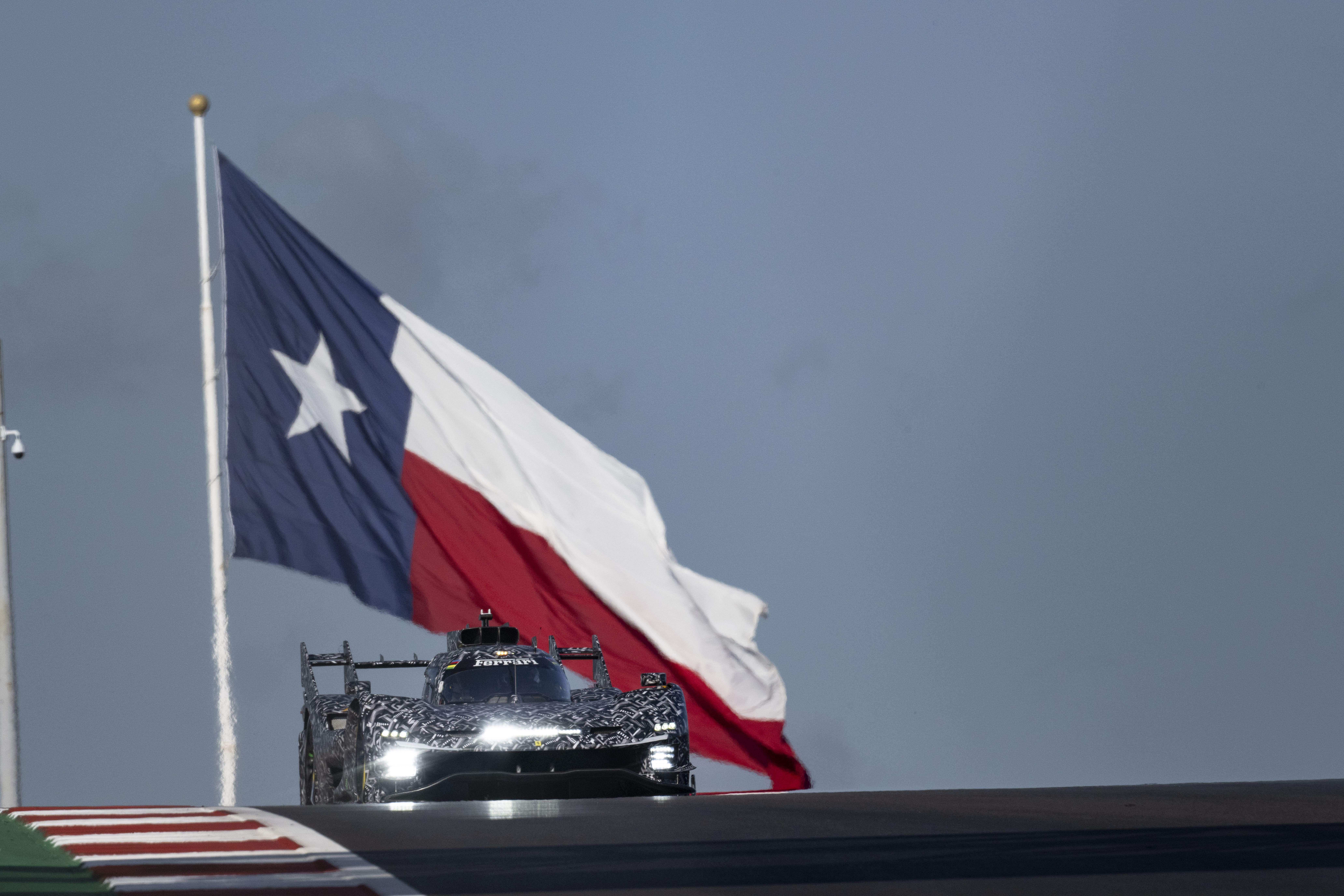
Prologue
Imola, Italy
April 13th – 14th 2026
Photo: Javier Jimenez / Drew Gibson Photography
The Alonso Dilemma: Combustion over Compromise
While his former colleagues fight for 24-hour glory, Fernando Alonso remains locked in a battle with the shifting identity of Formula 1 itself. Alonso has frequently dropped hints about his frustrations with the current state of F1, particularly regarding the grid’s lack of true competitiveness and a regulatory landscape that often prioritizes heavy hybrid restrictions over raw, flat-out racing.

There is an underlying sentiment shared by many purists: if that’s how he feels, let the man decide his own path—whether to stay or leave. Alonso has nothing left to prove. He has won the Monaco Grand Prix, the Le Mans 24 Hours, and two F1 World Championships. If the sport cannot provide a package that allows a generational talent to truly extract maximum performance without constant energy management, his departure would be a severe indictment of modern regulations.
This stems from a deeper philosophical divide in motorsport engineering:
The Power Unit Debate: Despite the phenomenal technological leaps made in Formula E—proving that the math works out for pure electric efficiency and staggering torque recovery—the racing soul still craves the unadulterated, raw power of a pure internal combustion engine (ICE).
The upcoming 2026/2027 engine regulations lean heavily into a 50/50 split between internal combustion and electrical energy harvesting. Yet, drivers and fans alike often wonder if the sport is over-engineering a compromise when pure, lightweight, high-RPM combustion is what truly defines the visceral thrill of Grand Prix racing.
Dino Beganovic: Keeping His Eyes on the Prize in F2
Down in the feeder series, Ferrari Driver Academy standout Dino Beganovic is putting together a deeply calculated campaign in the FIA Formula 2 Championship with DAMS Lucas Oil.

The season has required immense maturity. Most recently, at the Monaco Feature Race, Beganovic secured a brilliant, composed 3rd-place podium finish behind Nikola Tsolov and Alex Dunne, capitalizing on a late-race mistake by long-time leader Rafael Câmara.
Beganovic’s junior record demonstrates his caliber:
- 2022: Formula Regional European Championship (FRECA) — Champion (13 podiums, 4 wins)
- 2023: FIA Formula 3 Championship — 6th overall
- 2025: FIA Formula 2 Championship — 7th overall
Now in his second full season of F2, Dino is explicitly playing the long game, focusing on consistent, heavy points hauls rather than high-risk, low-reward maneuvers. His steady upward trajectory has already earned him an upcoming FP1 outing with Scuderia Ferrari at Barcelona—a crucial step for his F1 aspirations.
The Crucible of Barcelona: Bottas’s Masterclass
The next stop on the calendar is the Circuit de Barcelona-Catalunya, a track that serves as the absolute benchmark for aerodynamic efficiency. Because F1 historically utilized this circuit for thousands of miles of pre-season testing, every veteran driver knows its high-speed sweeping bends and tire-shredding final sector like the back of their hand.

When looking at the current grid’s history in Spain, Valtteri Bottas stands out as an absolute titan of consistency on this tarmac. During his dominant tenure with Mercedes AMG, Bottas recorded an incredible run of performance at Barcelona:
- Pole Positions: 1 (2019, beating Lewis Hamilton by over six-tenths of a second)
- Podiums: 5 consecutive podium finishes between 2017 and 2021
- Laps Raced: Well over 700 competitive race laps at this venue alone
While Bottas currently fights for scraps in the midfield with the Cadillac F1 Team ( Sauber), his technical mastery of Barcelona’s tire management and high-G loads remains a vital asset.
The Pitwall Dynamics & The Brake Disparity
The relationship between a driver and the pit wall is a delicate tightrope of data and emotion. This has been vividly apparent with the “Ferrari Boys”—Charles Leclerc and Carlos Sainz—and their frantic, highly technical addresses to the pits. Ferrari’s pit wall has historically suffered from strategic indecision, forcing Leclerc and Sainz to act as driver, strategist, and tier-one data analyst simultaneously while flying down a straight at 200 mph.


This radio tension reached a breaking point earlier this season when Charles Leclerc suffered a severe split-brake temperature issue, causing the car to pull violently to one side under heavy braking zones.
This mechanical vulnerability brings to light a fascinating technical comparison between the braking systems used by Ferrari and those preferred by drivers like Lewis Hamilton:
- Ferrari’s Material Philosophy: In recent years, Ferrari has leaned heavily into carbon-composite friction materials from Brembo that favor aggressive, immediate initial bite. This setup offers incredible stopping power but creates a narrower thermal operating window. If the cooling ducts ingest debris or if the electronic brake-by-wire system miscalculates the hybrid harvesting torque, the temperature delta between the left and right axles can spike rapidly, causing the catastrophic lockups Leclerc experienced.
- The Hamilton Approach: Lewis Hamilton has famously run highly customized brake configurations throughout his career. Hamilton typically prefers a braking material and caliper stiffness that offer a more progressive, modular pedal feel. This allows him to trail-brake deeply into the apex of a corner, controlling the car’s pitch and weight distribution with immense precision. It values absolute thermal stability over a hyper-aggressive initial bite, ensuring the balance remains predictable over an entire race stint.
As Formula 1 heads into the European leg at Barcelona and the endurance world tackles the night stints at Le Mans, the underlying theme remains completely unchanged: whether running a hybrid hypercar or a finicky ground-effect single-seater, the boundary between mechanical perfection and heartbreaking failure remains razor-thin.