There is a distinct type of automotive theater that can only happen in Modena. As the mechanical symphony of the 1000 Miglia echoed through the historic streets, Maserati chose its home turf to deliver its latest bespoke creation: a one-of-a-kind masterpiece from the Fuoriserie customization program, the MCPURA Cielo Tributo 1926.

The car serves as a bridge across a century of racing history, linking the legendary Tipo 26—the machine that birthed the brand’s competitive legacy—with the open-top super sports car defining its modern tomorrow. By utilizing the Bottega Fuoriserie philosophy, Maserati has avoided empty nostalgia, delivering instead a raw, technical tribute to pure engineering history.
The Palette of 1926: Designing the One-Off
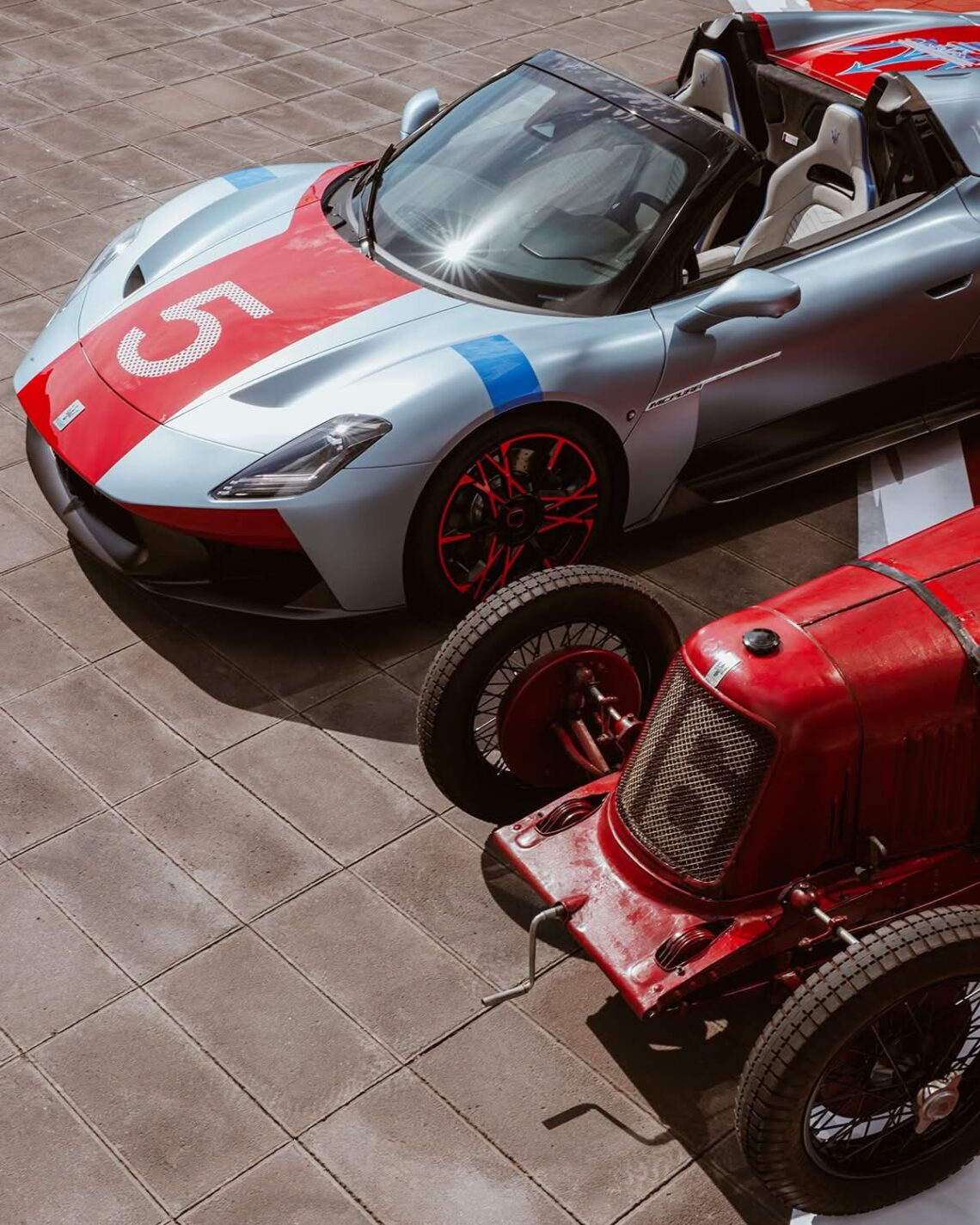
The exterior skin of the MCPURA Cielo Tributo 1926 directly evokes the raw texture of 1920s motorsport. The body is finished in a specialized Grigio Lamiera Matte (Sheet Metal Grey), a tone formulated to replicate the bare, unpainted aluminum panels of early Grand Prix racers before they were stamped and riveted into history.
This industrial canvas is split by an aggressive, hand-painted racing livery that combines deep heritage tones:
- Rosso Capannelle: A deep, historic red running longitudinally down the center spine of the car.
- Blu Infinito & Bianco Pastello: Clean, stark accents that frame the aerodynamic channels and contrast the bare-metal aesthetic.
- The Centenary Number 26: Prominently displayed on the bodywork, honoring the 100-year milestone of the Trident’s first official competitive outing.
The visual climax sits directly on the hood, which features a meticulous, historically accurate reproduction of the original badge worn by the Tipo 26 in 1926. On the tonneau cover behind the seats, the graphic elements shift to merge Mario Maserati’s original 1926 intertwined Trident design with the sharp, geometric logo used by the factory today.
Raw Engineering Meets Sartorial Luxury
While the paintwork tells the story of the Targa Florio, the hardware anchoring this one-off is undeniably modern. The exterior architecture is framed by the Exterior Carbon Fiber Package, contrasting the matte grey paint with high-gloss weave across the splitters, side sills, and rear diffuser. It rides on 20-inch Cyclonic diamond-cut wheels featuring a custom red inner surface, housing massive black brake calipers.
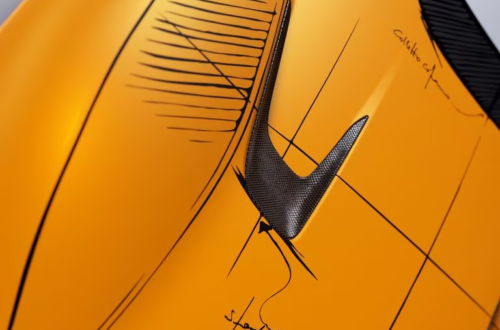
The most profound “Pinkies Down” detail, however, is laser-etched onto the door badges. The car carries the actual signatures of Alfieri Maserati and his legendary chief mechanic, Guerino Bertocchi—the two men who willed the brand into existence through sheer mechanical grit.
Inside, the driver-centric cabin blends top-tier acoustics with track-focused materials:
Heated sports seats featuring the Trident hand-stitched into the headrests.
The Interior Carbon Fiber Package, stripping away weight in favor of exposed composite structural elements.
A 12-speaker, 695-watt Sonus faber High Premium Audio System to provide a soundtrack when the exhaust valves are closed.
The Centenary Connection: Tipo 26 to MCPURA
On April 25, 1926, Alfieri Maserati drove a supercharged, straight-eight cylinder machine named the Tipo 26 to a grueling class victory at the Targa Florio. It was the first car to ever bear the Trident badge. One hundred years later, the MCPURA Cielo acts as its direct spiritual successor, replacing the supercharged straight-eight with the 621-horsepower, twin-combustion, twin-turbo Nettuno V6.
The MCPURA Cielo Tributo 1926 represents Italian automotive philosophy at its absolute best. It proves that true luxury isn’t about marketing fluff or corporate compliance—it’s about technical mastery, historical respect, and an uncompromised devotion to the art of the machine.