The End of the Gunn Era: DC Studios Changes Hands as Marvel Veteran Jeremy Latcham Prepares to Take the Reins
There was a time when DC Comics seemed to have all the ingredients necessary to rival Marvel at the box office. Its characters were already household names, its stories had decades of cultural relevance, and its library of intellectual property was arguably one of the most recognisable in entertainment.
Yet, having the characters was never the problem. Finding a consistent creative direction was.
Now, just as DC Studios appeared to be establishing a new identity under James Gunn and Peter Safran, the studio is preparing for another change in leadership.
On November 9, 2026, Skydance Motion Picture Group officially announced that James Gunn and Peter Safran would step away from their positions as co-heads of DC Studios after four years in charge. Their departure from executive leadership takes effect December 1, when Jeremy Latcham assumes the position of President and Chief Creative Officer.
It marks the end of a relatively short but consequential chapter in DC’s history, one that began with the promise of rebuilding a cinematic universe and now concludes with a different executive structure overseeing its future.
But what does this actually mean for DC?
A new direction after four years of rebuilding
When Gunn and Safran assumed leadership in 2022, DC was facing a familiar problem: a collection of successful individual properties without a consistently functioning shared universe.
The previous cinematic universe had experienced considerable changes in direction, with films, characters and storylines frequently appearing disconnected from the wider franchise.
Gunn’s appointment was particularly interesting because he was not simply another studio executive. He was a filmmaker with a recognisable creative identity, having directed Marvel’s Guardians of the Galaxy trilogy and DC’s The Suicide Squad.
His approach was to create a connected universe that could accommodate different genres and styles without requiring every production to follow precisely the same formula.
The new DCU began its screen journey with the animated series Creature Commandos, followed by the return of Superman in 2025.
The intention was to establish a new foundation, one where Superman, Batman, Supergirl, Green Lantern and lesser-known characters could exist within a larger narrative.
There were successes, particularly Superman, which generated more than $618 million worldwide. However, the commercial performance of subsequent releases, including Supergirl, demonstrated that rebuilding audience confidence would not necessarily be straightforward.
The leadership change arrives at a moment when the studio must decide how much of Gunn’s original vision should remain intact.
Enter Jeremy Latcham: A familiar face from Marvel
The appointment of Jeremy Latcham is perhaps the most interesting aspect of this announcement.
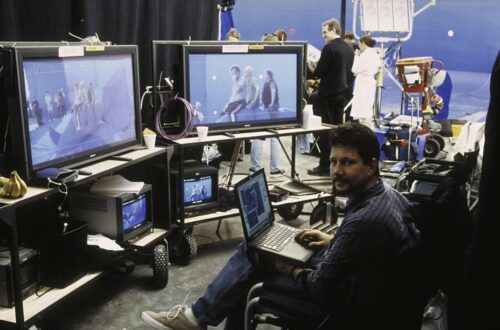
Latcham is not new to the superhero film industry. He joined Marvel Studios in 2004 and became part of the team responsible for developing what would eventually become the Marvel Cinematic Universe.
His production experience includes Iron Man, The Avengers, Avengers: Age of Ultron, Guardians of the Galaxy and Spider-Man: Homecoming.
He also worked with Gunn during the Marvel years, giving the incoming executive an established professional relationship with the very filmmaker whose leadership he is replacing.
That experience is important.
Marvel’s success was not built on individual films alone. It was built on a carefully managed production strategy, recurring characters, interconnected stories and an audience that understood there was something larger waiting beyond each theatrical release.
Latcham has experience working within that system.
However, DC is not Marvel, and attempting to reproduce the Marvel formula could create its own problems. DC’s strongest characters have distinctive histories, visual identities and storytelling traditions. Batman, Superman and Wonder Woman do not necessarily need to operate under the same creative rules as the Avengers.
Latcham’s challenge will be determining how to manage a shared universe without sacrificing the individual identities that make DC’s properties commercially and culturally valuable.
The films that are still coming
Despite the leadership change, DC is not starting from zero. Several productions are already well advanced, and the official announcement confirms that important projects remain on the release schedule.
Man of Tomorrow – July 9, 2027
Perhaps the most important film in this transition is Man of Tomorrow.
Written and directed by James Gunn, the film continues the story of Clark Kent and Lex Luthor, with David Corenswet returning as Superman and Nicholas Hoult reprising his role as Luthor.
Rather than simply repeating the traditional Superman-versus-Lex formula, the story brings the two characters into an uneasy alliance against a much greater threat.
The film is particularly significant because it represents Gunn’s continued creative involvement after leaving the executive position.
It is already in post-production, and Skydance has explicitly confirmed its July 9, 2027 theatrical release.
Other returning characters include Rachel Brosnahan as Lois Lane, alongside members of the wider Superman family. Supergirl, played by Milly Alcock, is also expected to appear.
For audiences, the question is whether this film will serve as the next major foundation of the DCU or become a bridge between Gunn’s creative leadership and Latcham’s incoming administration.
At present, there is no official indication that the film will be cancelled or substantially altered.
The Batman Part II – February 18, 2028
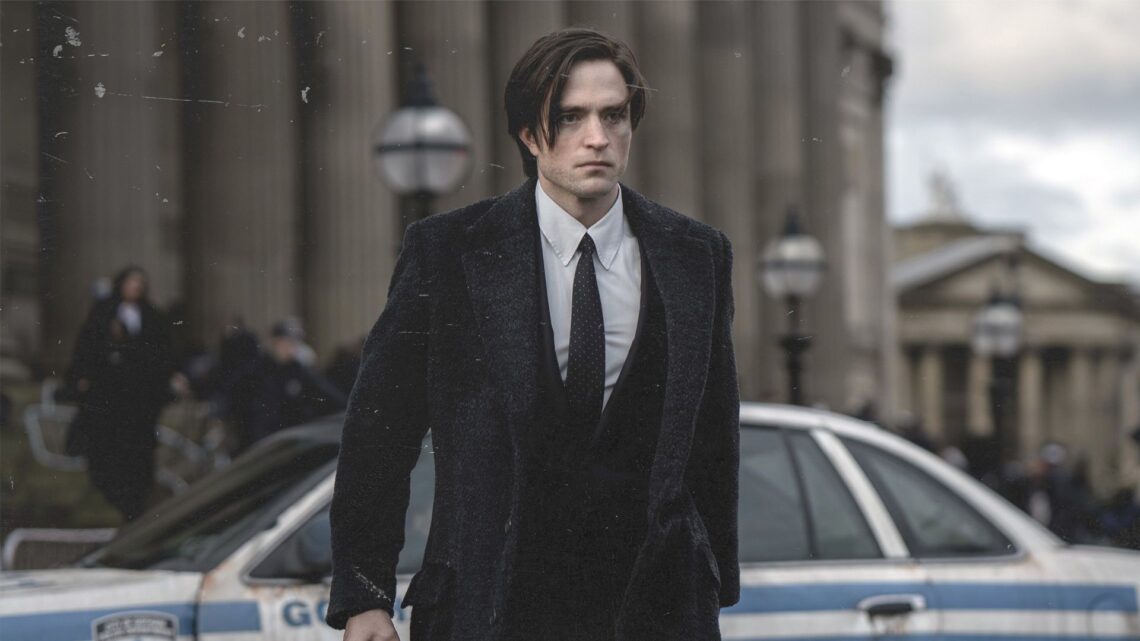
Robert Pattinson’s Batman is another major property that remains on the schedule.
Directed by Matt Reeves, The Batman Part II exists outside Gunn’s principal DCU continuity. This distinction is important because the character is not required to follow the same narrative direction as David Corenswet’s Superman.
The sequel has experienced a lengthy development period, but production is now underway.
Steven Soderbergh has stepped in to help complete principal photography following Matt Reeves’ departure from the production process for family reasons.
The current theatrical release date is February 18, 2028.
The film’s future is particularly interesting because it demonstrates that DC has been operating with two separate Batman interpretations: Pattinson’s darker, self-contained Gotham and the Batman intended for the wider DC Universe.
There is little reason to assume that Latcham will immediately abandon a production of this scale, particularly with filming already underway.
However, the long-term relationship between these two versions of Batman remains something to watch.
The People v. Gorilla Grodd – 2027
One of the more unusual projects in the DC pipeline is The People v. Gorilla Grodd.
The eight-episode HBO series features Skyler Gisondo as Jimmy Olsen and Jimmy Tatro as Gorilla Grodd.
The production has completed filming and is expected to arrive in 2027.
It is an interesting example of Gunn’s willingness to explore characters outside DC’s traditional blockbuster territory.
Gorilla Grodd is one of the Flash’s most recognisable adversaries, but his presence in a television series built around a courtroom-style concept illustrates the broader creative experimentation that has characterised the new DCU.
With filming completed, the immediate likelihood of cancellation appears limited, although its final release and marketing strategy will fall under the incoming leadership.
Dynamic Duo – September 2028
DC also has an animated feature called Dynamic Duo in development, centred on Dick Grayson and Jason Todd.
Both characters have important connections to the Robin identity and the wider Batman mythology.
The project is particularly interesting because it expands the Batman world without depending on another live-action theatrical production.
Its current release date is September 2028.
Animation is an area where DC has considerable room to experiment, and the project could offer an alternative way of introducing audiences to characters who might otherwise require extensive live-action development.
Its progress under Latcham will be worth following.
What happens to the other DC projects?
This is where the situation becomes less certain.
Not every project announced during Gunn and Safran’s tenure has reached the same stage of development.
Some have scripts, creative teams or substantial development work behind them. Others have been discussed publicly without receiving a confirmed production date.
Among the projects worth watching are:
The Brave and the Bold
The proposed DCU Batman film, intended to introduce Bruce Wayne and his son Damian Wayne as Robin.
This is an important project because it would establish the principal Batman within Gunn’s shared universe, separate from Pattinson’s interpretation.
Its future will depend heavily on how Latcham intends to manage DC’s Batman properties.
Swamp Thing
A darker, horror-oriented project that was part of the original Gods and Monsters announcement.
The character offers an opportunity to explore a very different side of DC, although a confirmed theatrical release date has not been established.
Waller
A television project centred on Amanda Waller, played by Viola Davis.
Given Waller’s involvement in several existing DCU storylines, the series could help connect different parts of the franchise. Its production future remains uncertain.
Creature Commandos – Season 2
The animated series was the first official release of Gunn’s new DCU.
A second season has been in development, with production progress reported. It is one of the projects that could preserve continuity between the original leadership and the incoming administration.
Lanterns – Season 2
The future of the Green Lantern television series is less certain.
Before the leadership announcement, Peter Safran had indicated that a second season had not yet received an official green light.
That means the series’ continuation should not be treated as guaranteed.
Mister Miracle and other animated productions
DC has also been developing additional animated properties, including Mister Miracle, alongside other projects exploring its wider character library.
These productions could offer Latcham opportunities to maintain the diversity of DC’s storytelling, but their eventual production and release commitments remain to be established.
Is DC preparing to abandon the Gunn universe?
Not necessarily.
There is an important difference between changing the person responsible for a studio and cancelling the creative direction that person helped establish.
The incoming executive has already inherited productions that cannot simply be erased without considerable financial and commercial consequences.
Man of Tomorrow is in post-production. The Batman Part II is being filmed. The People v. Gorilla Grodd has completed filming.
These projects will carry Gunn and Safran’s influence into the next phase of DC Studios, regardless of who occupies the executive office.
The greater question concerns what happens after them.
Will Latcham continue the existing roadmap, or will he introduce a new approach to character development, theatrical releases and television production?
There is also the wider influence of Skydance and David Ellison to consider. DC is now operating within a changed corporate environment, and its future will inevitably be shaped by decisions about production budgets, release schedules, distribution and commercial performance.
The studio has not announced a wholesale cancellation of Gunn’s original plans. Consequently, reports suggesting that the entire DCU is being dismantled should be treated with caution.
The next chapter belongs to DC’s characters
For years, DC has been trying to answer a question that Marvel answered relatively early in its cinematic journey: how do you turn a collection of individual characters into a universe audiences want to revisit?
Gunn and Safran attempted to answer that question through a unified creative direction.
Their departure does not erase the work already completed, nor does it automatically mean that the franchise is heading towards another reboot.
Jeremy Latcham inherits something quite different from what Gunn and Safran received in 2022: an established Superman, a developing shared universe, several productions already in motion and an audience waiting to see whether DC can maintain its momentum.
His Marvel experience gives him a particular understanding of franchise filmmaking, but DC’s future will ultimately depend on whether he can build something that feels distinctly DC rather than another version of Marvel.
For now, the immediate future is relatively clear. Superman and Lex Luthor are returning in Man of Tomorrow, Robert Pattinson’s Batman is preparing for another appearance, and DC’s television and animation divisions have projects waiting in the wings.
The uncertainty begins beyond those productions.
Perhaps the biggest question is not whether James Gunn should have stayed, but whether DC can finally establish a creative identity that survives the departure of the people who built it.
The Gunn era may be ending in the executive office, but its real legacy will be determined by the films and stories audiences see next.