### Chevrolet Corvette CX: The $1 Sale, the Space Race, and a Rocket Ship on Four Wheels
Some cars are built to take us somewhere. Others are built to remind us that the horizon is never the end. With the Corvette CX and CX.R Vision Gran Turismo concepts, Chevrolet looks toward a future where the American sports car remains a machine for dreamers — those who look up at the stars and wonder what lies beyond them.
There is something wonderfully appropriate about connecting the Chevrolet Corvette to the space race. Both belong to an era when America was determined to go faster, reach further and prove that yesterday’s limits did not have to define tomorrow’s ambitions. One chased the road; the other chased the heavens. Somewhere between the two, the Corvette earned its reputation as a rocket ship on wheels.

What interests me most about Chevrolet’s latest vision for the Corvette is not simply its performance potential or its futuristic proportions. It is the attempt to reconnect the car with that sense of possibility. The Corvette CX and CX.R Vision Gran Turismo concepts, unveiled in 2025, look toward the future without entirely abandoning the emotional character that made the Corvette an American icon in the first place.
And then there is the story of a Corvette sold for just $1 — a remarkable historical footnote that deserves its place in the wider conversation about the car’s relationship with America’s astronauts and the space programme.
Before we get to that story, however, we need to look at the machines themselves.
### The $1 Corvette: How America’s Space Race Found Its Sports Car
The Corvette’s association with America’s astronauts was not simply a marketing department’s clever invention. It grew from a genuine connection between a group of men who had spent their careers pushing the boundaries of speed and a sports car that seemed to embody the same ambition.
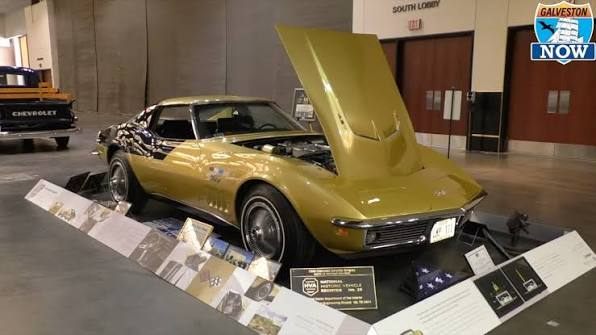
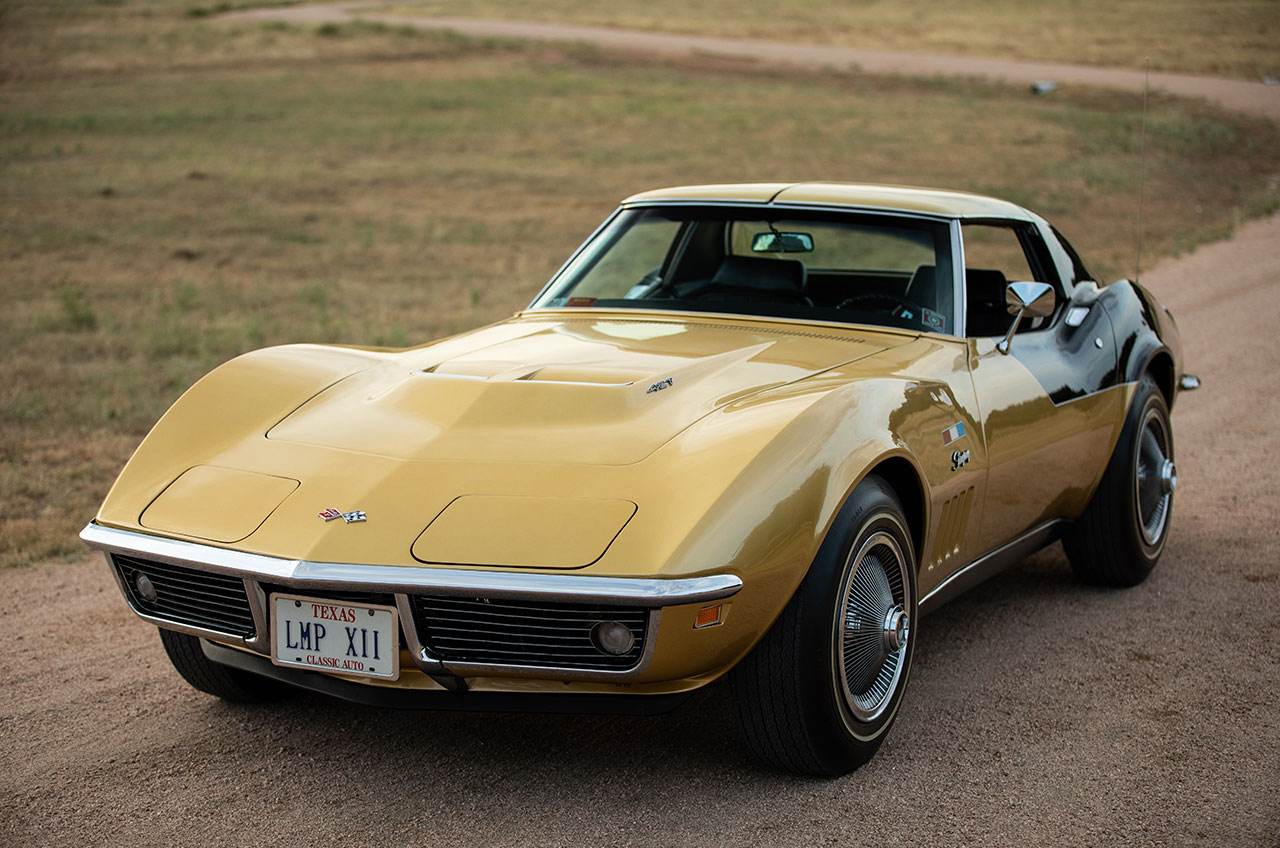
The story begins with Alan Shepard, one of the original Mercury Seven astronauts and the first American to travel into space, on 5 May 1961. Long before that historic flight, Shepard was already a Corvette enthusiast. He bought a used 1953 Corvette in 1954, followed by a 1957 model, and became associated with the car’s performance-driven character.
Shepard’s enthusiasm attracted attention, and General Motors recognised the publicity potential of having an astronaut behind the wheel of its sports car. After his historic flight, GM president Ed Cole presented him with a new 1962 Corvette. But the more enduring story was about to begin, thanks to a man who understood both racing and the value of a good advertisement.
His name was Jim Rathmann.
A former Indianapolis 500 winner who became a Chevrolet and Cadillac dealer in Melbourne, Florida, Rathmann recognised an opportunity to connect the Corvette with America’s newest national heroes. He offered Mercury astronauts a deal that has since become part of automotive folklore: a Corvette lease for just $1 per year.
There is an important distinction here. The famous $1 figure was not simply the purchase price of a brand-new Corvette. It referred to the annual lease arrangement offered by Rathmann. The cars could subsequently be purchased on favourable terms, but the legendary dollar was associated with the lease.
And it worked.
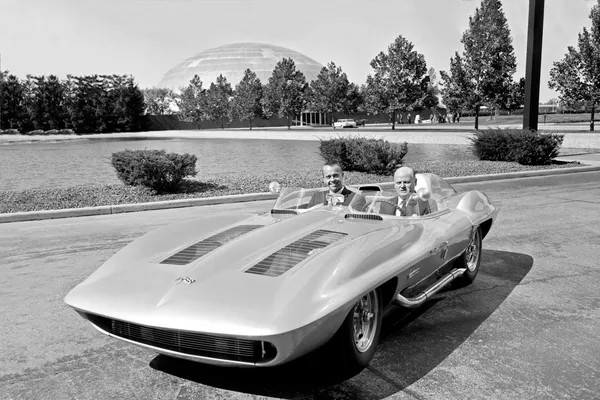
Astronauts including Shepard, Gus Grissom, Gordon Cooper and Deke Slayton took advantage of the arrangement. Their Corvettes became highly visible symbols of the space programme, photographed and discussed alongside the men who were preparing to travel beyond Earth’s atmosphere.
What a wonderful idea it was. These men were preparing to sit atop rockets, cross the boundary between Earth and space, and enter a world that had existed beyond human experience for most of history. And when they returned to the ground, they could drive a machine that offered its own, much smaller taste of speed and exhilaration.
The Corvette became more than a sports car. It became a symbol of the American space age.
That connection is especially relevant when considering the CX concepts. Chevrolet is not simply designing an exotic machine for a future showroom. It is revisiting an identity built around speed, technology and the belief that there is always something further to reach.
### A Corvette that looks beyond the road
I have always had a particular appreciation for the sharper, more aggressive Corvettes of the twentieth century. Those cars had an unmistakable visual attitude. Their edges, muscular proportions and assertive front ends made them look as though they were permanently preparing to launch themselves down the road.
Some of the generations that followed have not appealed to me in quite the same way. That is a matter of personal taste, of course, but what makes the CX concept interesting is how it approaches the future from a different direction.
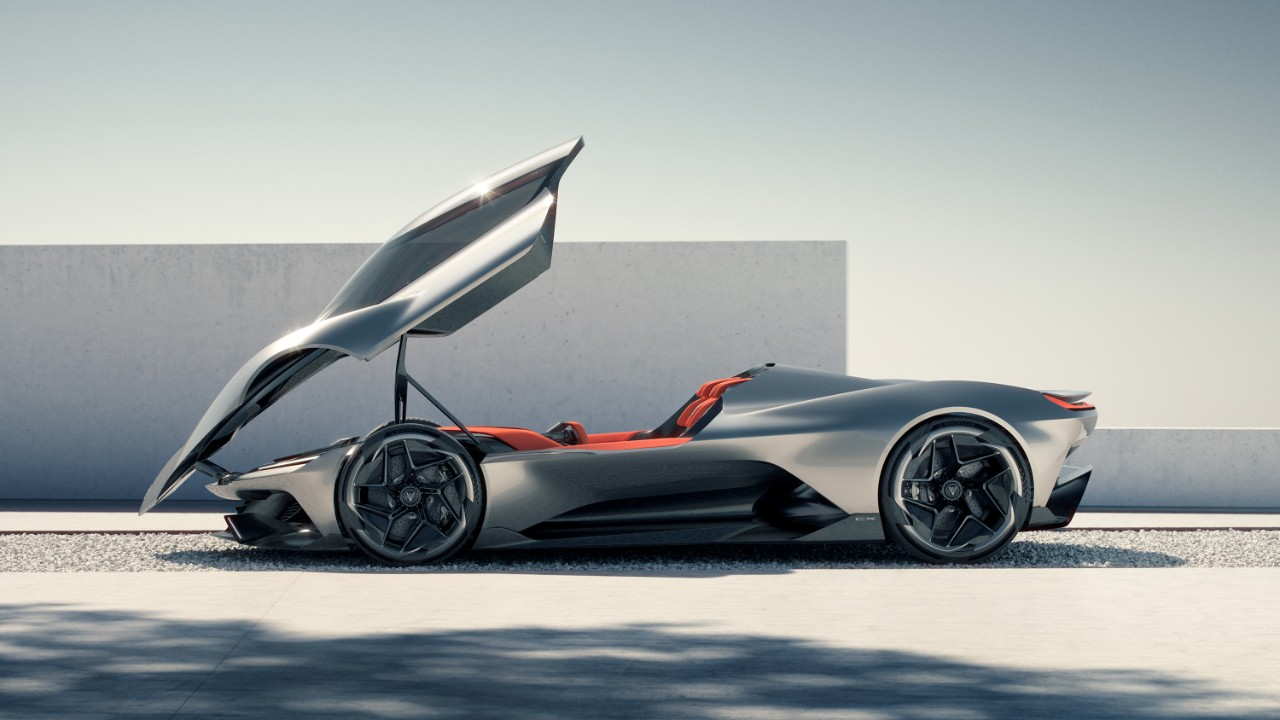
Rather than relying entirely on sharp creases and angular aggression, the CX brings back a sense of fluidity. Its bodywork appears sculpted by airflow, with softer transitions between surfaces and a low, almost liquid profile. The result feels futuristic without becoming visually disconnected from the Corvette’s heritage.
Chevrolet has retained familiar design cues, including the forward-reaching nose, the pronounced horizontal body line known as the chine and the distinctive dual-element taillight treatment. Yet these elements have been reinterpreted into a form that looks less like a conventional sports car and more like an aircraft designed to operate close to the ground.
The canopy is perhaps the clearest expression of that idea.
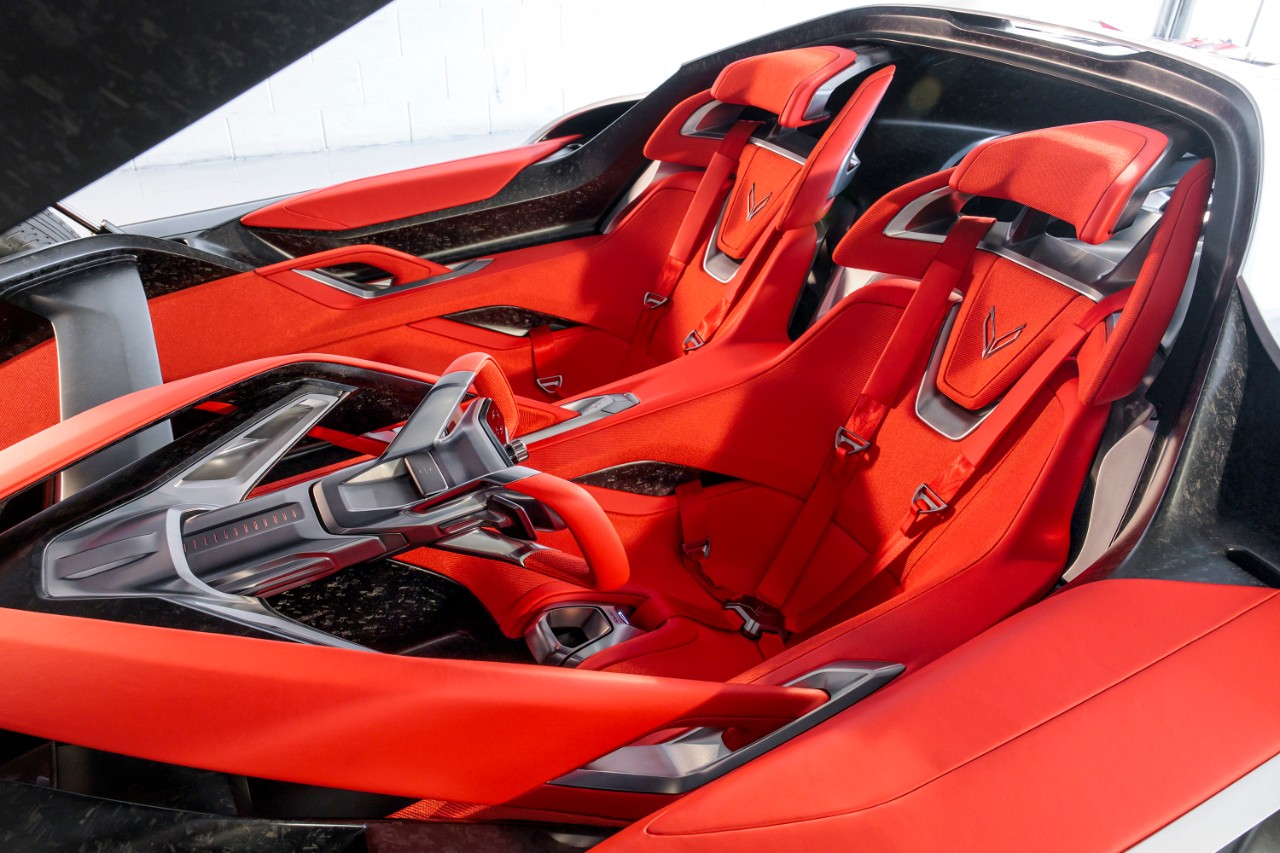
Inspired by fighter aircraft, it opens forward to reveal a cockpit that places the driver at the centre of the experience. The roofline sits less than 41 inches high, reinforcing the car’s extremely low proportions. Inside, a digital windscreen displays driving information while the controls are integrated into the steering wheel.
There is something almost childlike about the excitement this design inspires, and I mean that as a compliment.
Who among us, at some point, has not imagined what it would be like to sit inside a spaceship? To look out across an enormous black sea of stars, with planets hanging in the distance and black holes representing some of the universe’s most mysterious frontiers?
The CX does not literally promise that experience. It offers something more grounded: a road-car concept that borrows from the visual language of flight and space exploration to make driving feel extraordinary.
It is, in the most imaginative sense, a rocket ship on wheels.
More than a beautiful shape: the technology underneath
Of course, Chevrolet has not created the CX merely to give us something beautiful to look at. Its engineering concept is every bit as ambitious as its styling.
The CX is imagined as an all-wheel-drive electric supercar with four electric motors, one for each wheel, delivering more than 2,000 horsepower. A 90-kWh lithium-ion battery is mounted within the chassis, helping establish a low centre of gravity and balanced weight distribution.
But the most fascinating feature may be its approach to aerodynamics.
Chevrolet describes a Vacuum Fan System that draws air through channels integrated into the bodywork. The system is designed to generate substantial downforce, while active front and rear aerodynamic elements adjust to help optimise grip and stability. The concept even features wing-shaped suspension components intended to improve airflow.
This is where the CX’s appearance begins to make sense. Its unusual surfaces are not merely stylistic flourishes. They are part of a vision in which the body itself becomes an active participant in performance.
The design suggests a machine that does not simply push through the air but works with it, managing the airflow around and beneath the car to remain composed at speed.
That distinction matters. A vehicle capable of producing extraordinary power needs more than a powerful motor. It needs to turn that power into usable performance, especially when cornering and braking. Chevrolet’s concept imagines aerodynamic systems and individual wheel torque control working together to achieve precisely that.
The CX is, therefore, an exercise in what happens when designers are allowed to explore the relationship between shape, propulsion and aerodynamic efficiency without having to deliver an immediately saleable production vehicle.
The CX.R: when the spaceship goes racing
If the CX is the Corvette looking toward the stars, the CX.R Vision Gran Turismo is that same ambition redirected toward the racetrack.
The CX.R takes the fundamental design language of the roadgoing concept and makes it more aggressive. Its yellow-and-black colour scheme references Corvette’s modern GT racing heritage, while its lower stance, enlarged aerodynamic features and lightweight interior are designed around competition.
Its imagined powertrain is particularly striking. Rather than using the CX’s fully electric configuration, the CX.R combines a mid-mounted, 2.0-litre twin-turbocharged V8 with three electric motors.
Chevrolet’s concept specification gives the V8 an output of up to 900 horsepower and a theoretical maximum engine speed of 15,000 rpm. Running on renewable e-fuel, the engine drives the rear wheels through an eight-speed dual-clutch transmission. The electric motors power the front wheels individually, with a third motor integrated into the gearbox.
The resulting proposed system output is 2,000 horsepower. These are concept specifications, not independently verified production-car performance figures.
I find the CX.R particularly interesting because it does not suggest that Corvette’s future must abandon its combustion-engine heritage to embrace electrification. Instead, it imagines both technologies working together.
The V8 remains central to the character of the machine, while electric motors provide additional power and the potential for precise torque delivery. It is an ambitious interpretation of what a future competition Corvette might become.
And unlike the astronauts’ cars of the 1960s, which were very real road-going machines, the CX.R exists as a design and engineering vision. Its purpose is to explore possibilities rather than promise a customer a production vehicle.
Will the Corvette CX ever go into production?
This is the question that will interest anyone who has looked at the CX and imagined it in their garage.
The answer, at present, is that Chevrolet has not announced the Corvette CX or CX.R as production cars.
When the two concepts debuted at The Quail, A Motorsports Gathering, on 15 August 2025, Chevrolet explicitly stated that they were not intended for production. The company described them as design exercises intended to inform Corvette design language for years to come.
That distinction is essential. The CX’s extraordinary power figures, fan-assisted aerodynamics, aircraft-style canopy and advanced cockpit are not a specification sheet for an upcoming showroom model. They demonstrate what Chevrolet’s designers and engineers can explore when they are not constrained by the practical requirements of a production vehicle.
There is, however, a reason not to dismiss the concepts as mere fantasy.
Chevrolet’s design leadership has said the exercise helped define a direction for future Corvette design. The company has also developed detailed conceptual blueprints covering the chassis, drivetrain and aerodynamic systems. That gives the project more substance than a styling sketch alone, although it does not mean the complete vehicle will be built for customers.
Chevrolet has made both concepts available to experience virtually in Gran Turismo 7. That allows enthusiasts to drive the imagined future of Corvette performance in a digital environment, rather than purchase the physical cars.
So, will some version of this design eventually reach production? It is possible that future Corvettes will borrow elements of the CX’s proportions, aerodynamic thinking or interior design. Chevrolet has explicitly positioned the project as an influence on future design.
But whether that means a production car with this body, a four-motor electric powertrain or anything close to 2,000 horsepower remains unknown. No production date or commitment has been announced for either concept.
And as the official material makes clear, the concept shown is not for sale.
A car for those who still dream of the unknown
What I appreciate most about the Corvette CX is that it seems to understand something important about the people who fall in love with extraordinary machines.
Not everyone buys a sports car simply to travel from one place to another. For some, it represents a personal ambition. For others, it is an appreciation of engineering, a fascination with speed or a reminder of what human imagination can accomplish when it is allowed to run free.
That is what makes the historical connection to the astronauts so compelling.
Jim Rathmann’s $1-a-year lease arrangement was a clever business decision, certainly. But it also attached the Corvette to a generation of people who were attempting something previously unimaginable. The car became associated with individuals who had quite literally been chosen to reach for the stars.
Decades later, Chevrolet is still exploring that relationship between ambition and performance.
I may prefer the sharper, more aggressive character of certain twentieth-century Corvettes, but the CX makes a persuasive case for softer edges and fluid body dynamics. It retains the visual confidence of an American sports car while imagining a future in which aerodynamics, electrification and design are inseparable.
The CX.R, meanwhile, reminds us that the Corvette’s racing identity remains part of the picture.
Neither concept promises a production future, and neither should be mistaken for a car that customers can order today. Yet their value lies precisely in their freedom to imagine what might be possible.
There is a vast black sea beyond our atmosphere, filled with stars, planets and mysteries we have barely begun to understand. We may not be ready to drive among them, but we have always found ways to bring a little of that ambition back to Earth.
The Corvette has been one of those ways.
And perhaps that is the real meaning of the CX: not a promise that Chevrolet will build a spaceship for the road, but a reminder that the best cars have always offered something greater than transportation.
They offer a glimpse of the unknown — and the possibility that, one day, we might get a little closer to it.