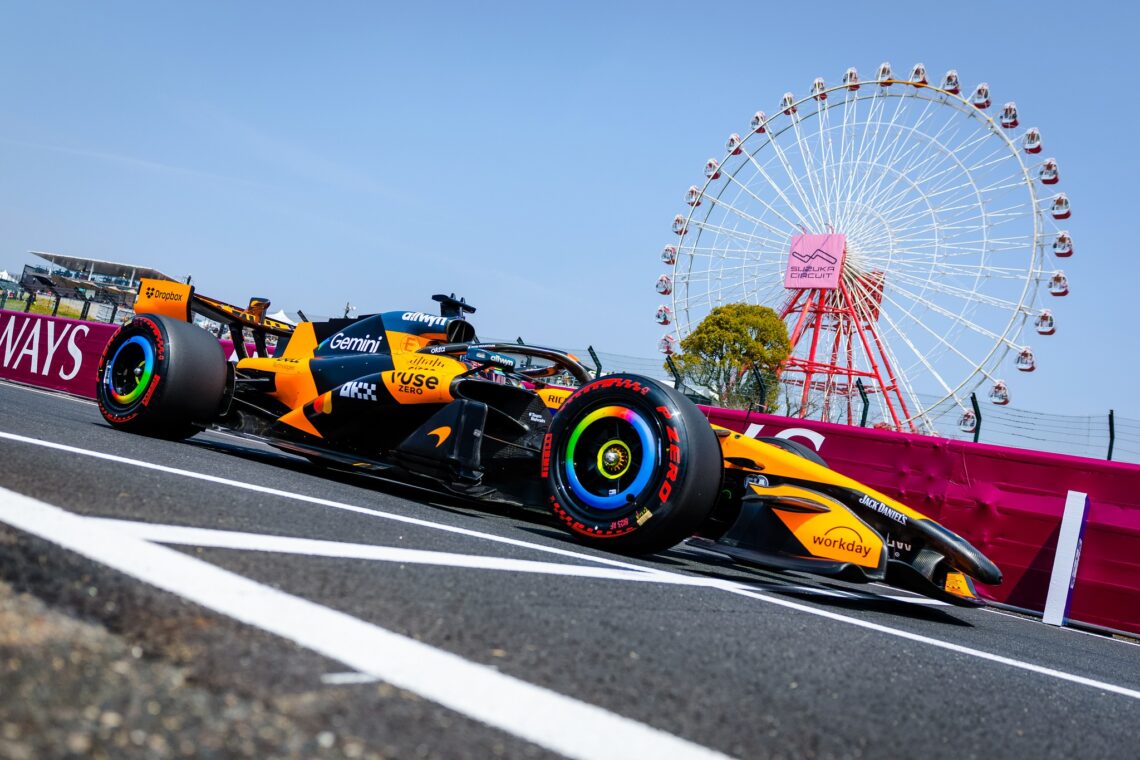
In an era of Formula 1 defined by high-decibel radio theatrics and the “Drive to Survive” industrial complex, Oscar Piastri is a glitch in the simulation. While his peers are busy narrating their frustrations in 4K resolution, Piastri operates with the pulse of a long-distance sniper. To the casual observer, he looks like he’s cruising. To the skeptic, it looks like he isn’t trying.
But look closer at the “bones” of his performance, and a different narrative emerges: we aren’t witnessing a lack of fire, but a sophisticated masking of intent.
The Prost Paradox: Efficiency as an Aesthetic
The comparison to Alain “The Professor” Prost isn’t just about a shared calm; it’s about a technical philosophy. Prost famously believed that if a car looked like it was on the ragged edge, the driver was doing it wrong. Efficiency is quiet.

Piastri’s driving style follows this architectural serenity. He doesn’t muscle the car; he flows with it. This creates a deceptive visual a lack of “hustle” that many mistake for a lack of effort. In reality, he is simply allocating his mental bandwidth toward telemetry and tire management rather than vocal cords and PR optics.
| Driver Archetype | Visual Cues | Emotional Output | Competitive Edge |
| The Gladiator | Twitchy corrections, late braking | Radio outbursts, visible frustration | Pure, raw aggression |
| The Professor (Piastri) | Smooth lines, minimal steering input | Flat-line composure, neutral press | Mental bandwidth, hidden intent |
The “Hidden Bark” Theory
The most dangerous thing about Oscar Piastri isn’t his speed it’s his poker face. The prevailing narrative is that he lacks the “bark” required to be a World Champion. However, a more calculating interpretation suggests he hasn’t lost his bark; he’s just hiding it.
By maintaining a “balanced” persona, Piastri is running a psychological long game.

- The Sleeper Effect: When a driver is known for being hotheaded, their rivals defend with high-voltage intensity. When a driver is perceived as “too nice,” guards are dropped.
- Calculated Strikes: We’ve seen flashes of this tactical masking most notably his clinical move at Monza. It wasn’t an emotional lunge; it was a cold-blooded execution.
He isn’t screaming because he’s already won the argument on the apex.
The Utility of Indifference
Ultimately, Piastri’s relationship with the spotlight isn’t one of resistance, but of pragmatic indifference. He isn’t “against” the press he participates, answers the questions, and fulfills the obligations but he clearly doesn’t see the noise as a necessary component of his success.
In his eyes, the media circus isn’t a tool for leverage or a stage for ego; it’s a non-essential variable. He doesn’t drive to be seen; he drives to be fast. By treating the hype as an unnecessary byproduct of the job rather than its purpose, he maintains a level of mental clarity that his more “vocal” rivals simply cannot access. If he isn’t “trying” in the eyes of the public, it’s only because he doesn’t believe the public’s validation is necessary to cross the finish line first.