Haas in 2027: Bearman, a new driver direction, and the Ferrari advantage
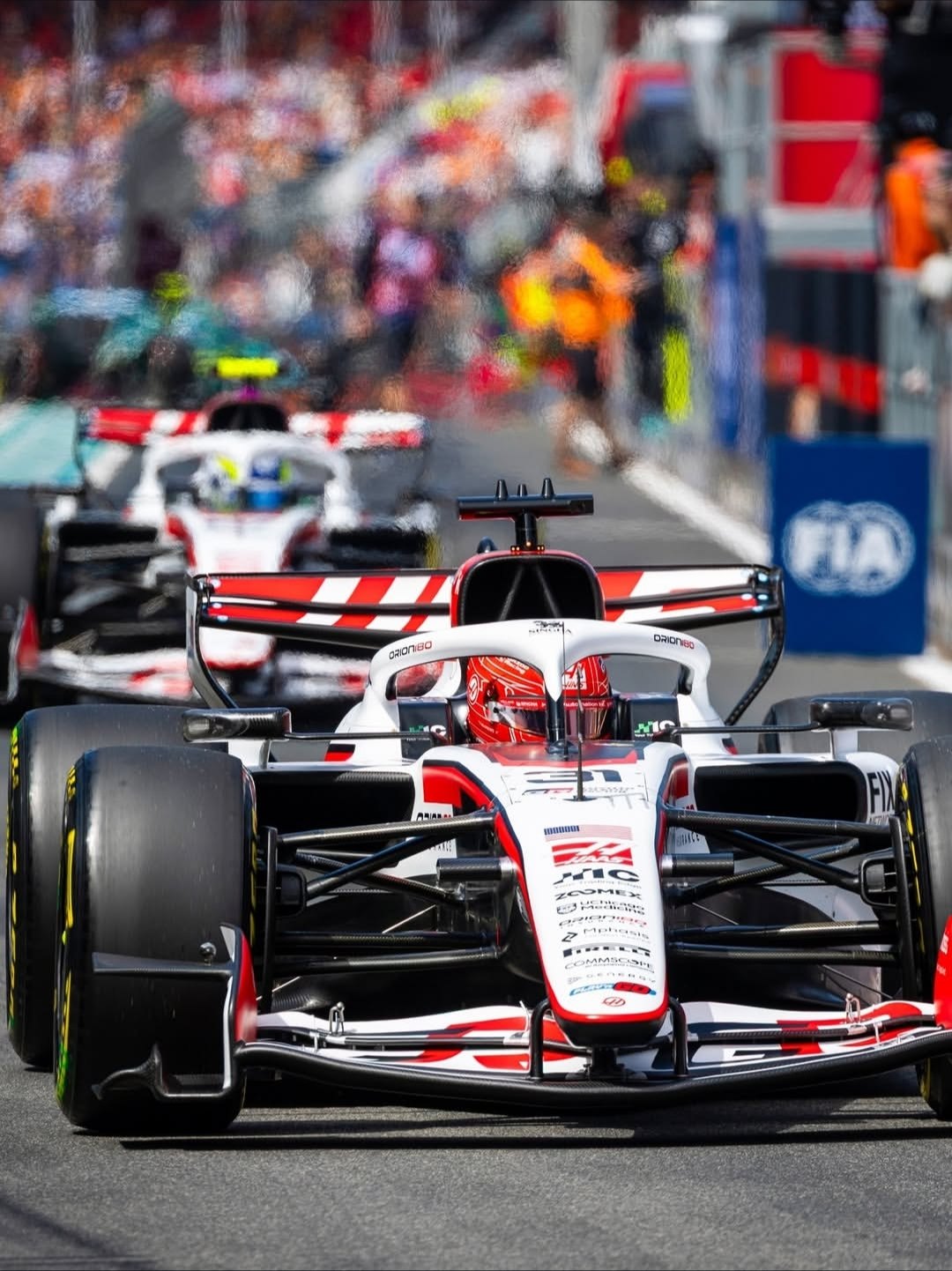
Haas could become one of the more interesting development stories of 2027 — not necessarily because it will suddenly challenge Ferrari, but because it may be in a position to extract more from Ferrari’s power unit than Ferrari itself.
The important distinction is that Haas is not simply preparing for another season with a familiar technical relationship. With its driver line-up changing around Ollie Bearman, the team has an opportunity to build a more deliberate development programme around a young driver, a revised competitive structure, and the demands of the next-generation regulations.
Bearman is particularly interesting here. A young driver entering a new technical era can sometimes become an asset beyond the points he brings home: his feedback, adaptability and willingness to explore a car’s operating window can influence how quickly a team understands its machinery.
The confirmation is now official: Haas has retained Ollie Bearman for 2027, completing its pairing with Rafael Câmara. Formula 1 reported Bearman’s renewal on November 26, while Haas had announced Câmara’s multi-year signing in October. Formula 1® – The Official F1® Website +1
That gives Ayao Komatsu something he has not had before: a full season ahead to prepare a driver pairing built around two Ferrari Academy graduates, rather than having to manage a late-season transition from Esteban Ocon.
The Haas 2027 story: a team that could understand Ferrari’s engine better than Ferrari
Haas enters 2027 with a combination that could prove more valuable than its modest budget suggests. Ollie Bearman has now been confirmed for another season, while Rafael Câmara arrives as one of the most promising graduates of the Ferrari Driver Academy. Both will be 21 at the start of the campaign, giving Ayao Komatsu a young pairing with considerable room to develop. Formula 1® – The Official F1® Website +1
The departure of Esteban Ocon marks more than a change of personnel. It closes a chapter in which Haas had to balance the experience of a race-winning driver against the emergence of Bearman, whose performances increasingly made him the team’s reference point.
Now, the team can begin building around a clearer identity.
### Bearman: the benchmark, not merely the senior driver
Bearman’s continued presence is perhaps the most important part of Haas’s 2027 plan.
He has already experienced the difficult transition from Ferrari reserve to full-time Haas driver, and he has shown that he can deliver meaningful results when the car allows it. His fifth-place finish in China earlier in the 2026 season demonstrated the potential that first attracted Ferrari’s attention.
But Bearman’s value in 2027 may be measured in something beyond finishing positions.
The new regulations demand drivers who can communicate clearly about energy deployment, braking behaviour, tyre preparation and the relationship between aerodynamic balance and power delivery. A driver who understands the car’s limitations and can describe them precisely becomes a development instrument.
Bearman has the advantage of continuity. He knows the Haas engineering environment, understands the team’s strengths and weaknesses, and has already experienced the difficulties of developing a car that begins the season competitively but loses ground as rivals introduce upgrades.
That experience should make him the natural reference point for Câmara.
### Rafael Câmara: the gamble with a considerable upside
Câmara’s promotion is a different proposition.
His junior career has been remarkably strong, progressing through Formula 3 and into Formula 2 with the Ferrari Driver Academy. Komatsu has publicly highlighted not only his speed but also his ability to adapt quickly during Haas’s previous-car testing programme. Haas F1 Team +1
That distinction matters.
Haas is not simply signing a driver who can qualify quickly. It is signing someone the team believes can learn its systems, build confidence and contribute to a longer development cycle.
There will be a learning curve. Formula 1’s next-generation cars will place new demands on energy management and race execution, and a rookie will inevitably face weekends where the machinery is unfamiliar or the operating window is narrow.
Yet Câmara’s arrival could give Haas something it has lacked: a driver entering the team without the baggage of a difficult previous season or an established relationship that needs to be repaired.
The challenge for Komatsu will be ensuring that Câmara is developed without being overwhelmed by the expectations attached to his Ferrari connection.
### Could Haas develop the Ferrari power unit better than Ferrari?
This is the most interesting technical angle — and one that deserves a careful distinction.
Haas will continue using Ferrari power units under its extended technical partnership, which runs through 2028. Haas F1 Team +1
Haas does not develop the internal Ferrari engine in the same way the factory team does. It cannot independently redesign the combustion system, electrical components or homologated engine architecture.
But it can develop the car around the power unit — and that is where the comparison becomes compelling.
A power unit is not simply an engine placed inside a chassis. Its performance depends on how effectively the team manages:
* Cooling and heat rejection
* Energy recovery and deployment
* Gear ratios and drivability
* Rear-end packaging and aerodynamic efficiency
* Traction, braking stability and power delivery
* The interaction between engine characteristics and chassis balance
Ferrari may possess the more extensive engine-development infrastructure, but Haas could find a more effective way to exploit the unit within its own car.
That is not the same as producing a better engine. It is the possibility of producing a more efficient package.
And there is precedent for the kind of opportunity Haas faces. During the 2026 season, Bearman received the first available upgraded Ferrari power unit allocated to Haas at Monza, with Komatsu choosing to prioritise performance at a power-sensitive circuit rather than wait for two units to become available. Formula 1® – The Official F1® Website +1
That episode illustrated how closely Haas’s competitive fortunes can be tied to Ferrari’s development schedule — but also how much responsibility remains with Haas to make the equipment work.
### The real opportunity: 2027’s development race
The danger for Haas is not necessarily a lack of initial speed. The team has repeatedly shown that it can produce a competitive baseline.
Its difficulty has been sustaining that performance.
Komatsu has acknowledged that Haas’s smaller technical organisation makes it harder to match the development rate of larger rivals. In 2026, the team began strongly but struggled to keep pace as the midfield evolved. Formula 1® – The Official F1® Website +1
That is the problem 2027 must solve.
With Bearman providing continuity and Câmara bringing fresh potential, Haas can begin the season with a more stable driver-development structure. If its technical department can improve the consistency of upgrades, understand the new car’s weaknesses earlier and avoid introducing parts that compromise drivability, the team could become a serious midfield threat.
The Ferrari relationship gives Haas a foundation. The driver pairing gives it a development opportunity. Komatsu’s task is to turn both into a coherent programme.
### What should we expect from Haas in 2027?
I would not frame Haas as a guaranteed breakthrough team. That would be premature, particularly when the competitive order of the new regulations remains uncertain.
But I would expect three things:
* A stronger technical reference point. Bearman’s experience should help Haas identify problems more quickly and give Câmara a clear benchmark.
* A potentially productive rookie season. Câmara has the credentials to contribute, although consistency will matter more than occasional flashes of speed.
* A more complete Ferrari-powered package. Haas may not have Ferrari’s resources, but it could become particularly efficient at integrating and exploiting the power unit.
The most compelling possibility is that Haas becomes a team which understands its equipment exceptionally well — perhaps better, in certain operating conditions, than the works team understands its own package.
That would not mean Haas has out-developed Ferrari’s engine department. It would mean the customer team has found a way to make the same technology work harder within its own architecture.
And that is precisely the kind of story worth watching in 2027: not Ferrari’s engine becoming Haas’s advantage, but Haas learning how to turn Ferrari’s engine into a competitive identity of its own.