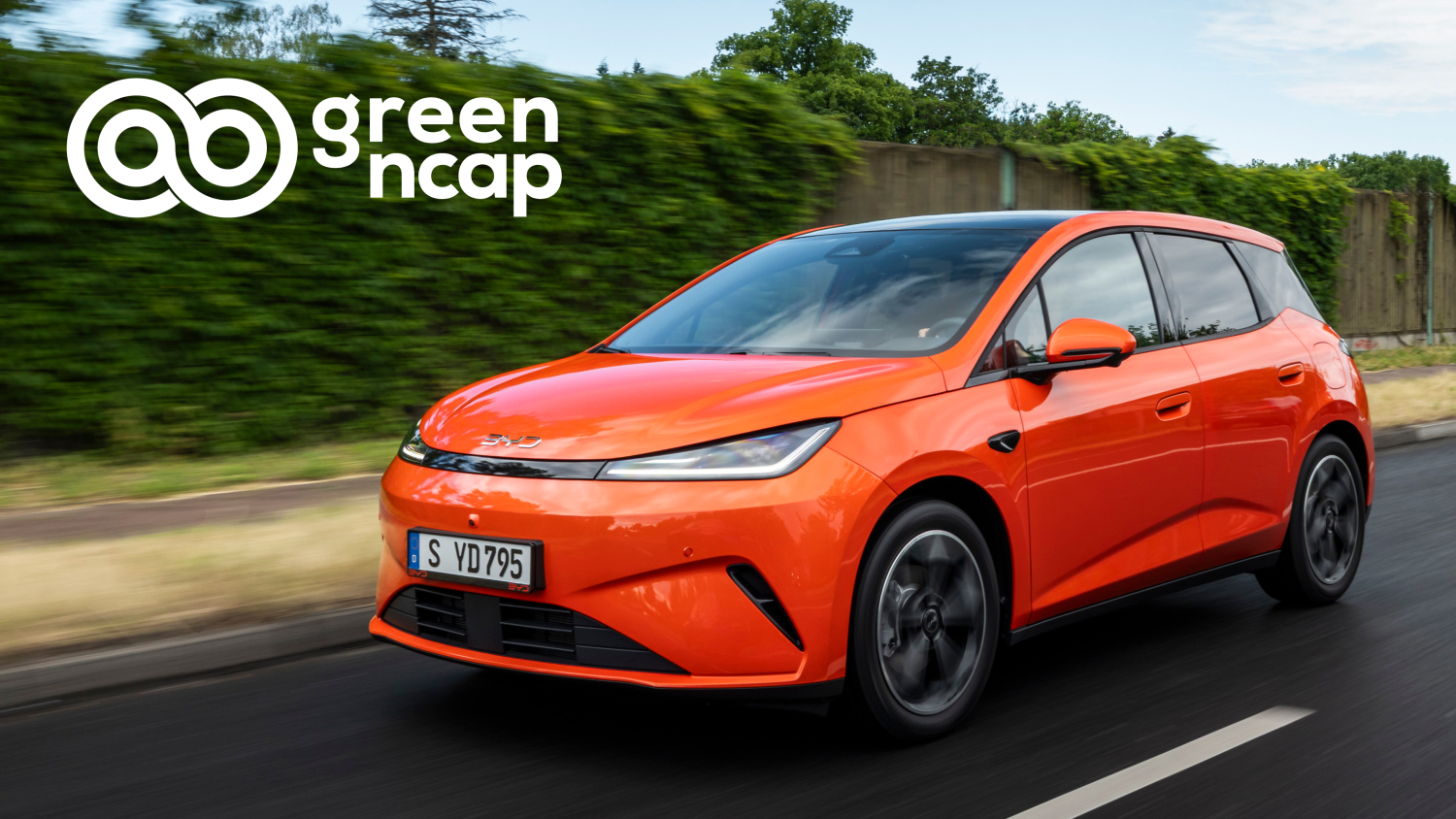
BYD DOLPHIN G DM-i Sets a New Benchmark for Plug-In Hybrids in Green NCAP
—
A Small Car With a Larger Environmental Ambition
The transition towards electric mobility has often been presented as a choice between two distinct worlds: the familiarity of the combustion engine and the promise of a fully electric future. Yet, for many drivers, the road between those two remains complicated by charging infrastructure, journey lengths and the practical demands of everyday ownership.
BYD’s DOLPHIN G DM-i arrives with a proposition that attempts to bridge that divide. Designed specifically for the European market, the compact hatchback combines the manufacturer’s plug-in Super Hybrid technology with a battery capable of supporting meaningful electric-only journeys.
Its latest recognition from Green NCAP gives that proposition a more substantial foundation.
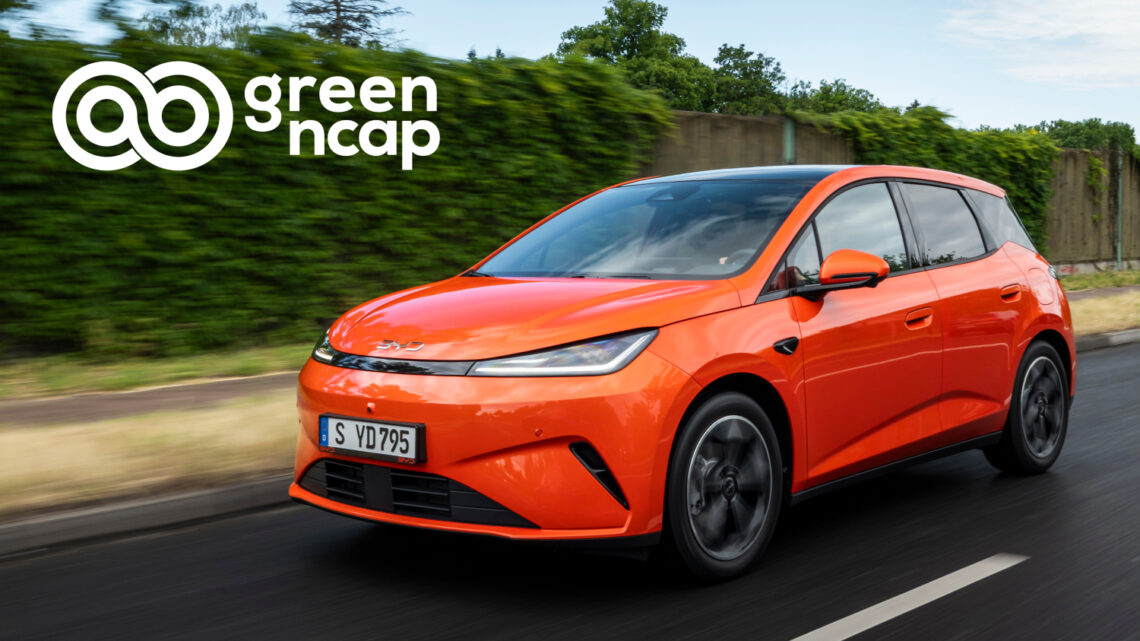
In its 2026 assessment, the DOLPHIN G DM-i Comfort achieved a 4.5-star sustainability rating, placing it among the strongest-performing plug-in hybrids evaluated under Green NCAP’s current testing protocol. The organisation recorded an electric driving range of 97 kilometres under its more demanding assessment conditions, against the vehicle’s declared WLTP electric range of 105 kilometres.
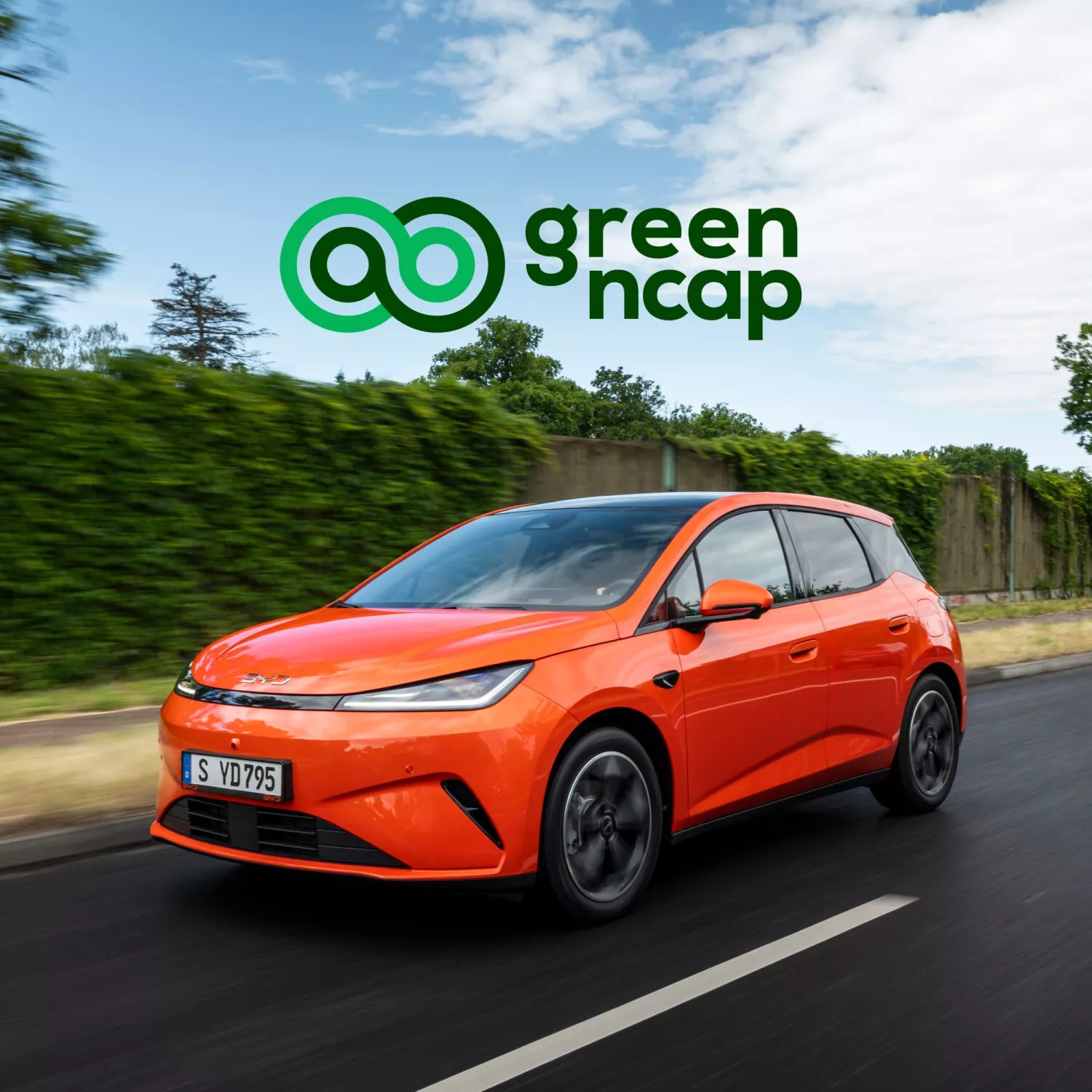
The result is significant not simply because of the distance covered, but because it demonstrates how much of a compact car’s daily use can potentially be completed without relying on its petrol engine.
The Technology Behind the Result
At the centre of the DOLPHIN G DM-i is BYD’s Dual Mode Intelligence, or DM-i, hybrid architecture. Rather than functioning like a conventional hybrid in which the combustion engine remains the dominant source of propulsion, the system is designed around an electric driving experience.
The car combines a 1.5-litre petrol engine, electric motors and BYD’s Blade Battery technology. Its powertrain management system determines how energy is distributed according to driving conditions, battery charge and the demands placed on the vehicle.
The larger battery offered in the European range has a capacity of 18.3kWh, providing a declared WLTP combined electric range of up to 105 kilometres. The smaller Active specification uses a 7.42kWh battery, with a declared electric range of 40 kilometres.
For the versions equipped with the larger battery, BYD also claims a combined driving range of up to 1,040 kilometres when the battery is charged and the fuel tank is full.
These figures place the DOLPHIN G DM-i in an interesting position within the B-segment. Its compact dimensions are intended to make it suitable for urban environments, while its hybrid system provides the flexibility required for longer journeys.
What Green NCAP Actually Found
The independent assessment provides a more useful perspective than manufacturer figures alone.
Green NCAP recorded 97 kilometres of electric range, a result that remained substantial despite the organisation’s more demanding test conditions. The car also completed the full winter driving test at minus seven degrees Celsius in electric mode.
That performance is particularly relevant to plug-in hybrids, whose environmental advantages can diminish when cold weather reduces battery efficiency or prompts the combustion engine to operate more frequently.
Green NCAP also reported good electric efficiency and reasonable real-world fuel consumption across its assessed scenarios. The DOLPHIN G DM-i demonstrated that a plug-in hybrid can retain a meaningful electric contribution even when conditions are less favourable than those represented by standard certification cycles.
However, the assessment was not without qualification.
The organisation observed elevated carbon monoxide, particle and hydrocarbon emissions during cold-start and high-load conditions. These findings underline an important distinction: a plug-in hybrid may reduce its reliance on petrol during everyday driving, but it does not eliminate the emissions associated with combustion when the engine is operating.
The vehicle’s environmental performance therefore remains dependent on how it is driven and maintained.
A Lifecycle Perspective
One of the more notable findings concerns the car’s greenhouse-gas performance beyond its immediate use on the road.
Green NCAP calculated lifecycle emissions of 124 grams of CO₂-equivalent per kilometre for the tested vehicle. This assessment considered the contribution of electric driving, the European electricity mix and manufacturing emissions.
The manufacturing data was supplied by BYD and independently verified by Green NCAP experts. That distinction matters: lifecycle assessments are not based solely on exhaust emissions, and their results depend on the assumptions and data used to calculate the wider environmental footprint.
The DOLPHIN G DM-i’s result reflects the benefit of a high electric-driving share, particularly when the battery is charged regularly and the electricity used is comparatively low in carbon intensity.
It also demonstrates why the environmental case for plug-in hybrids cannot be separated from the habits of their owners.
The Responsibility of the Driver
Green NCAP recommends beginning journeys with a fully charged battery and recharging frequently to maximise the benefit of the electric powertrain.
That recommendation may appear straightforward, but it is central to the technology’s purpose.
A plug-in hybrid that is rarely connected to a charger can carry the additional weight and complexity of its battery system while relying heavily on its petrol engine. In such circumstances, the advantages demonstrated during testing may not translate into the same results in everyday use.
The DOLPHIN G DM-i is therefore best understood as a vehicle designed around a particular ownership pattern: short and medium journeys completed primarily on electricity, with the combustion engine providing flexibility when distance or conditions demand it.
Its sustainability credentials are strongest when that pattern is followed.
More Than a Supermini
The DOLPHIN G DM-i also reflects BYD’s broader strategy of bringing electrified technology into segments traditionally associated with accessible, practical transport.
With a 425-litre boot, a wheelbase of 2,610 millimetres and a range of equipment that includes driver-assistance technology and, in selected versions, Google-integrated infotainment and Vehicle-to-Load functionality, the car attempts to offer more than an efficient powertrain.
It is a compact hatchback intended to serve as a daily family vehicle, rather than a specialised solution for drivers willing to compromise on practicality.
That ambition is particularly relevant in Europe’s B-segment, where affordability, packaging and running costs remain central to purchasing decisions.
A Benchmark, With Conditions
Green NCAP’s 4.5-star result gives the DOLPHIN G DM-i a strong independent endorsement. Its electric range, winter performance and lifecycle emissions assessment all point towards a plug-in hybrid capable of making a substantial contribution to lower-impact driving.
But the result should not be interpreted as a blanket statement that every plug-in hybrid journey is environmentally equivalent to electric driving.
The car’s performance depends on regular charging, driving conditions and the proportion of journeys completed using battery power. Its combustion engine remains part of the equation, particularly during cold starts and periods of high demand.
For BYD, the recognition is an important achievement in a competitive market increasingly focused on measurable efficiency rather than headline specifications alone.
For the wider industry, it offers a reminder that the transition to electrification is not defined exclusively by the arrival of fully electric vehicles. There is also a question of how effectively existing powertrain technologies can be adapted to reduce their environmental impact in the real world.
The DOLPHIN G DM-i does not remove that debate. Instead, its Green NCAP result gives it a stronger place within it.
And for a compact hatchback, that may be the more meaningful benchmark of all.