Fernando Alonso: A difficult Formula One season, but all eyes are on the Aston Martin Dreadnought
From the challenges of the 2026 Formula One season to the unforgiving terrain of Dakar, Fernando Alonso is preparing for another chapter in his motorsport career. But how does Aston Martin’s new Dreadnought measure up against the established machinery of Toyota and the wider Dakar competition?
There are seasons in motorsport that are remembered for victories, championships and records. Others are remembered for the machinery that simply refused to cooperate.
For Fernando Alonso, 2026 has been a particularly challenging year.
The two-time Formula One World Champion entered the season with Aston Martin, hoping that the team’s engineering direction and its new competitive package would provide a platform for progress. Instead, the season has been marked by reliability problems, limited performance and a frustrating number of retirements.
With 20 Grands Prix completed as of November 17, Alonso sits 17th in the Drivers’ Championship with seven points, three top-ten finishes and seven retirements. His best result remains eighth in Bahrain, while Monaco and the Netherlands also provided points-scoring finishes.
It has hardly been the season the Spaniard would have wanted.
Aston Martin’s early problems were particularly concerning. Pre-season testing had already exposed difficulties with the AMR26, while vibration and power-unit issues restricted mileage during the opening rounds. The team subsequently introduced fixes and development packages, but the gap to the leading competitors remained substantial.
Yet Alonso has not been looking exclusively towards the next Formula One race.
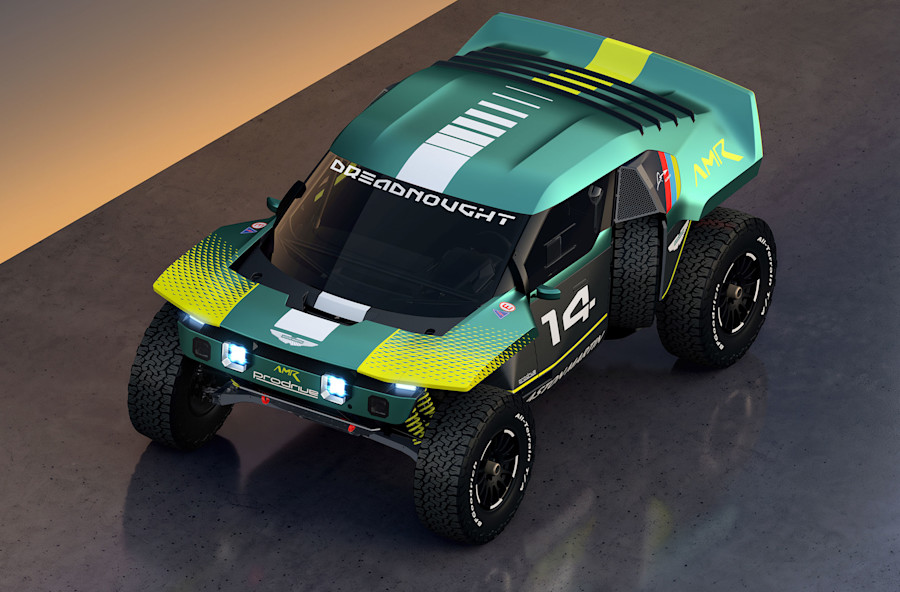
His attention is now shared with a rather different machine: the Aston Martin Dreadnought.
From Formula One to the desert
Aston Martin’s announcement of its three-car Dakar programme changes the conversation surrounding the manufacturer.
Alonso will return to Dakar in January 2027, seven years after his first appearance, when he finished 13th overall in a Toyota Hilux alongside Marc Coma.
This time, however, he will be representing Aston Martin, with Prodrive responsible for engineering, construction and running the three competition vehicles.
The driver line-up is particularly interesting.
Alongside Alonso are Sébastien Loeb, a nine-time World Rally Champion, and Lucas Moraes, the 2025 FIA World Rally-Raid Champion.
This is not a collection of names assembled simply for publicity. Each driver brings a different understanding of endurance, navigation and competitive driving.
For Alonso, the return also represents unfinished business. His 2020 appearance demonstrated that he could adapt to rally-raid competition, but Dakar is a different challenge from anything encountered in Formula One.
The Dreadnought: What is underneath the Aston Martin badge?
The Dreadnought’s appearance may suggest something entirely new, but its engineering story is arguably more important than its styling.
Prodrive is the organisation behind the project, and its experience in Dakar is considerable. The company developed the BRX Hunter and subsequently the Dacia Sandrider, winning the Dakar with the latter in 2026.
That experience gives Aston Martin an important advantage: it is not entering the desert with an unproven engineering organisation.
The Dreadnought is reported to use Prodrive’s established T1+ rally-raid architecture, with a Nissan-derived twin-turbocharged V6 petrol engine.
This is significant because the Dacia Sandrider programme demonstrated that Prodrive’s underlying engineering could deliver an outright Dakar-winning package.
However, there is a distinction between the technical information reported by automotive publications and what Aston Martin has formally released. The manufacturer has not yet published a complete Dreadnought engine specification, including its final power and torque figures.
Consequently, comparisons of outright horsepower should be treated cautiously.
The Dreadnought is not simply an Aston Martin road car with its suspension raised. It is a purpose-built competition vehicle designed around the demands of rally-raid racing.
Toyota: The established benchmark
Toyota is a name that cannot be overlooked when discussing Dakar.
Its Hilux rally-raid programme has established a reputation for durability and competitive performance. The conventional GR DKR Hilux T1+ uses a 3.5-litre twin-turbocharged V6 petrol engine derived from the Land Cruiser 300 powertrain.
Toyota’s published specification for that generation of competition Hilux lists:
– 3.5-litre twin-turbocharged V6 petrol engine.
– Approximately 400 bhp.
– 660 Nm of torque.
– Six-speed sequential transmission.
– Tubular-frame construction.
– Double-wishbone suspension with 350 mm of travel.
These are established published figures, rather than a confirmed specification for every 2027 entry.
Toyota’s advantage is not simply its engine. It is the development history of a vehicle that has already been tested through years of competition in some of the most demanding conditions in motorsport.
The Dreadnought will have to prove that it can match that consistency.
There is also another Toyota project worth watching.
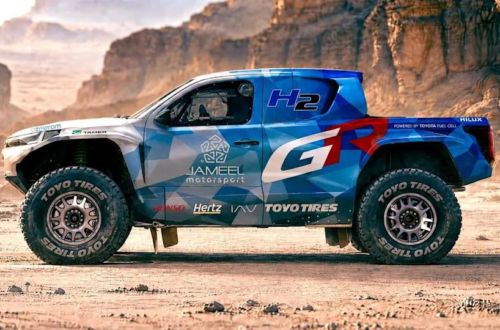
For 2027, Toyota Gazoo Racing has developed the DKR GR FC Hilux, a hydrogen fuel-cell electric vehicle. It uses two fuel-cell stacks, compressed hydrogen storage and an electric drive system producing a declared 400 kW.
That is approximately 536 horsepower.
However, this vehicle is entered in Dakar’s Future Mission 1000 category, not the Ultimate category occupied by the conventional rally-raid cars. It is therefore a technology demonstration and development project, not a direct class-for-class opponent for Alonso’s Dreadnought.
The distinction matters: Toyota is exploring two different approaches to Dakar, one based on established combustion-engine competition and another exploring hydrogen-electric propulsion.
And what about Red Bull?
Red Bull is another major name associated with Dakar, although its most prominent factory-backed presence is through Red Bull KTM Factory Racing.
KTM competes in the motorcycle category, with Luciano Benavides, Daniel Sanders and Edgar Canet leading its 2027 campaign.
Its competition is therefore not directly against the Aston Martin Dreadnought.
Nevertheless, Red Bull’s involvement is significant. KTM’s Dakar programme demonstrates the importance of specialist engineering, endurance preparation and the relationship between rider and machine.
The motorcycle competition has its own engineering challenges, particularly when it comes to weight, navigation, suspension and the physical demands placed on competitors.
For Aston Martin, the more direct comparison is with the Ultimate-class cars, including Toyota’s Hilux, Ford’s Raptor and the Prodrive-developed machinery that has already proven itself through the Dacia programme.
The powertrain question: Can Prodrive deliver again?
This is where the Dreadnought becomes particularly interesting.
The reported Nissan-derived twin-turbo V6 places the Aston Martin project within a familiar Prodrive engineering philosophy: use a proven competition architecture, develop it around the manufacturer’s programme and build a package capable of surviving the distance.
But Dakar is not Formula One.
A high-performance engine must deliver power over long distances while coping with sand ingestion, extreme temperatures, repeated suspension impacts and the possibility of hours spent at high load.
A vehicle can be exceptionally quick over a single stage and still lose the rally through mechanical failure.
Toyota has the advantage of a well-developed Hilux programme. Prodrive has the advantage of recent Dakar-winning experience with its own rally-raid engineering.
Neither advantage guarantees the result.
The most important question is whether the Dreadnought’s final specification, cooling system, drivetrain and reliability can translate Prodrive’s previous success into a new Aston Martin entry.
Alonso’s biggest challenge
There is also the human element.
Alonso is expected to move from the 2026 Formula One season directly into Dakar preparation, with the rally taking place from January 9 to January 23, 2027.
His co-driver will once again be Marc Coma, the five-time Dakar motorcycle champion who guided him through his first appearance in 2020.
That relationship is important. At Dakar, the driver is not simply racing the terrain. The navigator is responsible for interpreting the roadbook, identifying hazards and helping the crew maintain the correct route.
A mistake can cost minutes, hours or an entire event.
And unlike Formula One, where a driver can rely on telemetry, engineers and a team of specialists monitoring every aspect of the car, Dakar requires an extraordinary level of independence from the crew.
The bigger picture
Aston Martin’s Dreadnought arrives with an interesting combination of ambition and experience.
The Aston Martin badge provides the identity, Prodrive supplies the engineering and three accomplished drivers bring the competitive experience.
Alonso’s 2026 Formula One campaign may not have delivered the results he hoped for, but Dakar offers a different opportunity to demonstrate his versatility.
Toyota will bring its established Hilux programme, Ford will bring its Raptor, and Red Bull KTM will be pursuing another motorcycle victory.
The Dreadnought, meanwhile, has a much bigger task than looking spectacular in photographs.
It must finish.
And if Prodrive can translate the engineering that helped deliver Dakar success in 2026 into the Aston Martin programme, the Dreadnought could become one of the most interesting additions to the 2027 field.
For Alonso, the challenge is clear: leave the frustrations of Formula One behind, return to the desert and see whether unfinished business can finally become a Dakar victory.