Following the trail to an American novelist
The first significant lead came through the identity of the person selling the gold.
Investigators identified the seller as Eleonor, known as Gay Courter, an American novelist and documentary producer living in Florida. When questioned about the origin of the bars, Courter reportedly explained that they had been given to her by French friends, Annette May Pesty and her late partner, Gérard Pesty.
The explanation brought another name into the investigation.
In 1999, Annette May Pesty had appeared on the American television programme Antiques Roadshow, where she reportedly discussed finding gold bars while diving near the Cape Verde Islands off West Africa.
However, investigators were not convinced that this was where the gold had originated. Their attention turned towards Pesty’s brother-in-law, Yves Gladu, a professional underwater photographer with extensive experience diving along the Breton coast.
Gladu was already a familiar figure in the underwater exploration community. More importantly, he had a history connecting him to the Prince de Conty.
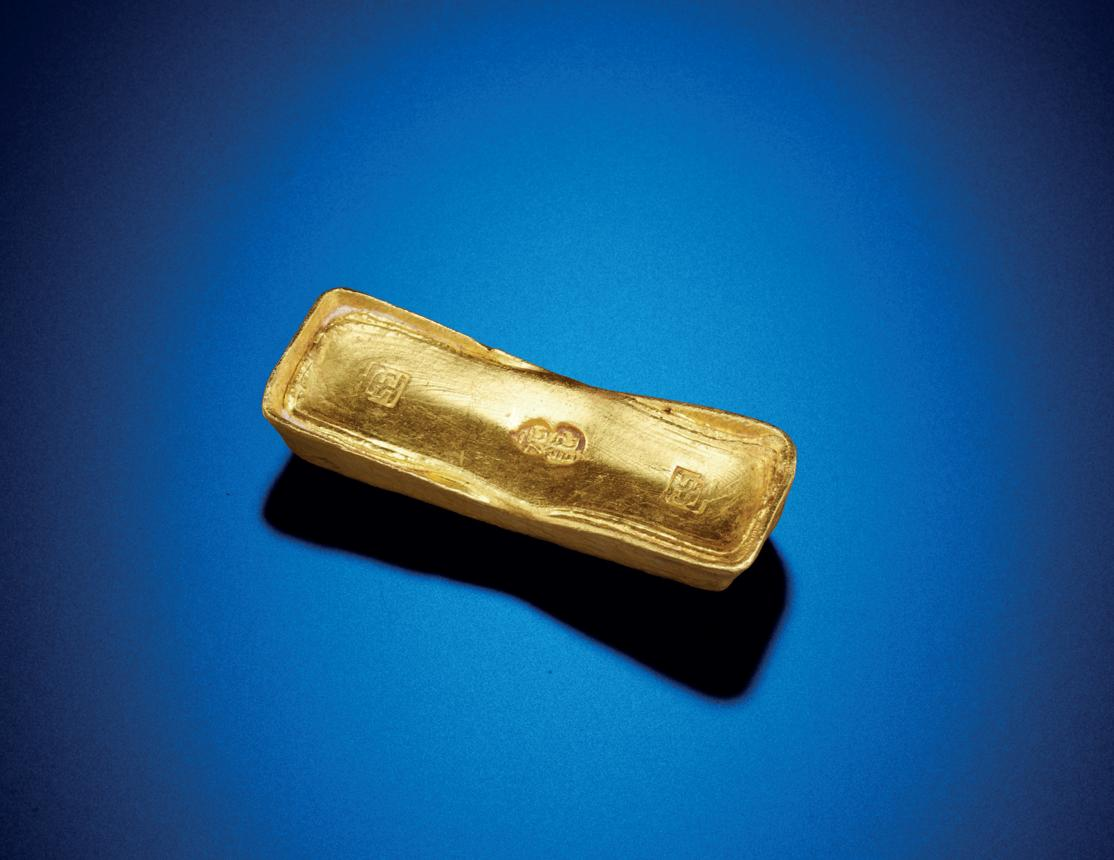
During questioning in May 2022, Gladu acknowledged making approximately 40 dives on the wreck between 1976 and 1999. He admitted recovering 16 gold bars but maintained that he had sold them in 2006 to a former military serviceman living in Switzerland.
He denied giving any of the bars to the Courter couple.
This distinction would become one of the central issues in the investigation. Authorities were attempting to establish whether the gold sold in the United States could be traced directly to the recovery activities around the French wreck, and what role each individual had played in its subsequent movement.
At least 23 gold bars and a trail of international sales
According to investigators, Gay and Philip Courter had possessed at least 23 gold bars.
The couple reportedly sold 18 of them for more than $192,000, with some transactions taking place through eBay.
Three bars were also reportedly sold to the British Museum in London, adding another international dimension to the investigation.
The Courters maintained that the gold had been entrusted to them by their French friends and that the proceeds from its sale were intended for the Gladu family. They disputed knowingly participating in the sale of stolen historical property.
Their relationship with the French divers was not simply a casual acquaintance. Investigators established that the couples had known one another since the 1980s and had travelled together aboard the Gladu family’s catamaran, Tethys.
Their shared journeys included Greece in 2011, the Caribbean in 2014 and French Polynesia in 2015.
The investigation also resulted in the seizure of the catamaran as part of the judicial proceedings.
What began as an investigation into five gold bars being offered online had developed into a much wider examination of an alleged network of recovery, possession and resale.
Arrests in England and the international investigation
The investigation crossed another border in June 2022 when Gay and Philip Courter were arrested in England.
The couple had been returning from a cruise when they were detained under an international arrest warrant issued by France.
They were subsequently placed under house arrest in Southampton while the French proceedings and extradition questions were being addressed.
For the American couple, the situation was particularly difficult. They maintained that they had received the gold from friends and had not understood that the objects could be connected to an unlawfully recovered French shipwreck.
Their legal representation challenged the allegations and questioned the basis on which the proceedings were being pursued.
The case also raised questions about the differences between American and French approaches to the possession and sale of precious metals and historical artefacts.
Nevertheless, the French investigation continued, with prosecutors examining the alleged relationship between the original recovery of the gold and its eventual sale.
The five bars seized in the United States were officially returned to France on June 15, 2022, an important moment in the recovery of material believed to have originated from the wreck.
Five defendants prepare to face trial in Brest
The investigation has now reached a new stage.
According to reporting by Agence France-Presse, published by TV5MONDE on November 12 and The Connexion on November 14, 2026, five people are scheduled to appear before the criminal court in Brest, France, on May 27, 2027.
The defendants are:
– Eleonor ‘Gay’ Courter, 82, the American novelist and documentary producer.
– Philip Courter, 84, her husband.
– Yves Gladu, 79, the French underwater photographer who acknowledged recovering 16 gold bars.
– Brigitte Gladu, 76, his wife.
– Annette May Pesty, 80, the French woman who reportedly introduced the American couple to the gold.
All five face allegations of criminal conspiracy. Some are also accused of handling stolen property and money laundering.
The precise allegations differ between defendants, and it is important not to treat the accusations as established facts before the proceedings take place.
The Courters’ lawyer, Grégory Lévy, has indicated that he intends to seek their acquittal. He has criticised the decision to proceed with the trial, particularly given the advanced ages of those involved.
Yves and Brigitte Gladu, meanwhile, have declined to comment publicly ahead of the proceedings.
The trial is expected to examine the circumstances surrounding the recovery, transfer and sale of the gold, including the competing accounts of how the bars reached the United States.
A treasure that raises a much bigger question
The story of the Prince de Conty is not simply about gold disappearing from a shipwreck and reappearing on the international market.
It highlights an ongoing challenge facing maritime archaeology: the protection of historical sites against unauthorised recovery and commercial exploitation.
A shipwreck is an archaeological site, not simply a collection of valuable objects waiting to be recovered. Its cargo, construction, location and surrounding remains can reveal information about trade, technology, navigation and the societies that built and operated these vessels.
In the case of the Prince de Conty, the surviving porcelain, tea containers and Chinese gold provide a physical connection to the commercial networks linking Europe and Asia in the 18th century.
Once such objects are removed from their original context, however, much of their archaeological value can be lost.
The legal question is equally important. Who has the right to recover an object from a historic wreck? Under what circumstances can it be sold? And what responsibility falls on those who subsequently receive or trade in such material?
These are questions that extend well beyond Brittany.
For now, the French authorities have recovered five of the gold bars, while the whereabouts and full history of other objects believed to have been removed remain part of the wider mystery.
The Prince de Conty sank in 1746. Its wreck was rediscovered in 1974. More than half a century after that discovery, the fate of its missing gold is still being contested.
The proceedings scheduled for May 2027 may finally provide a clearer account of how some of that treasure left the seabed and entered private hands. Whether they will establish the complete history of the missing cargo is another question entirely.
One thing is certain: the Atlantic has preserved the remains of the Prince de Conty, but it has not preserved the secrets of everyone who came looking for its gold.