BYD Yangwang Altior: The $311,000 Electric Luxury Saloon Coming for Rolls-Royce
There was a time when the ultimate expression of automotive luxury was defined by a handful of European manufacturers. Rolls-Royce, Bentley and Mercedes-Benz spent generations establishing what it meant to arrive in something truly extraordinary.
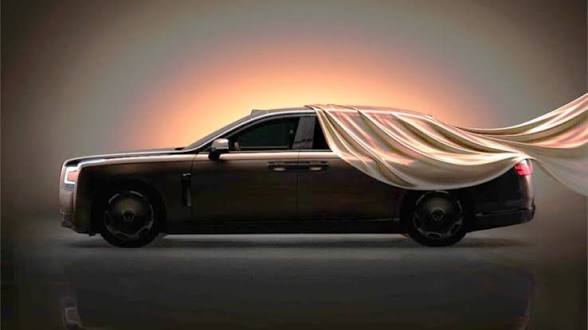
But the luxury automotive landscape is changing, and China’s BYD is increasingly comfortable challenging the establishments that once seemed untouchable.
Its latest statement comes in the form of the YANGWANG ALTIOR, a $311,000 all-electric luxury limousine unveiled in Abu Dhabi on November 7, 2026.
This is not another electric vehicle attempting to compete on range, acceleration or touchscreen technology alone. BYD wants to enter a market where craftsmanship, exclusivity, passenger comfort and prestige matter just as much as engineering.
And it has chosen Rolls-Royce as one of its most obvious benchmarks.
A Chinese interpretation of ultra-luxury
Measuring 5,600 mm in length, 2,030 mm in width and 1,590 mm in height, the Altior is a substantial automobile. Its 3,500 mm wheelbase provides the foundation for a cabin designed primarily around its rear passengers.
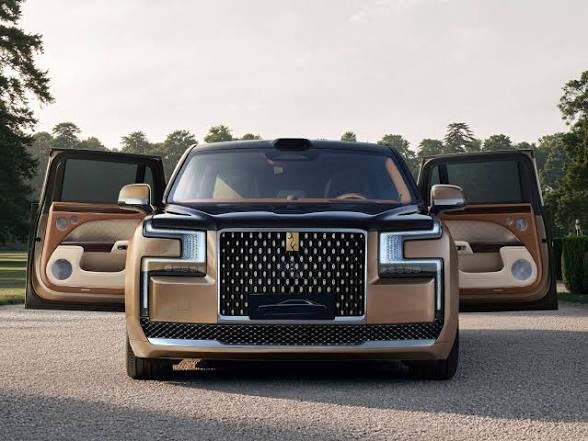
The styling takes inspiration from the ancient Chinese ding, a ceremonial bronze vessel historically associated with strength, dignity and authority.
That cultural reference extends beyond the exterior.
The front grille features individually polished decorative elements, while its lighting arrangement incorporates 12 elements that illuminate sequentially as the owner approaches. The front emblem is framed by an elaborate jewellery-inspired design.
The doors are another deliberate nod to traditional chauffeur-driven motoring. The front doors open to 80 degrees, while the rear coach doors open to an impressive 90 degrees.
And, in a detail that will immediately remind some buyers of Rolls-Royce, umbrellas are integrated into the doors.
However, the Altior’s identity is not simply about borrowing familiar luxury-car features. BYD has incorporated traditional Chinese materials and craftsmanship throughout the cabin.
Yellow Hetian jade appears around the air vents, while Suzhou embroidery brings traditional silk craftsmanship into the upholstery. Full-grain semi-aniline leather, natural wood and pure-wool floor mats complete the interior.
There are also 48 decorative jewellery-inspired pieces distributed across 11 locations, with real-metal switches designed to deliver a particular weight and tactile response.
The intention is clear: China wants to demonstrate that its interpretation of luxury can be rooted in its own cultural history rather than simply reproducing European traditions. BYD +1
A private lounge on four wheels
Inside, the Altior adopts a four-seat configuration, placing considerable emphasis on the rear occupants.
Two aviation-inspired zero-gravity seats provide reclining functions, mechanical massage and adjustable leg rests. A dedicated relaxation mode coordinates the seats, privacy blinds, ambient lighting and massage functions at the touch of a button.
For business passengers, the experience includes a 21.4-inch overhead entertainment screen, while a 39-speaker Dynaudio Platinum Evidence audio system provides the soundtrack.
There are refrigerators at both ends of the cabin, including a 5.5-litre rear unit with cooling and warming functions.
Rear passengers also receive 1,209 mm of legroom, making the Altior particularly interesting as a chauffeur-driven vehicle.
It is an interesting direction for BYD. Rather than concentrating entirely on the person behind the steering wheel, the company is developing an automobile in which the passenger experience is arguably the main attraction.
### The engineering: four motors and a rather unusual trick
Beneath the carefully finished exterior sits BYD’s e⁴ platform, featuring four independently controlled electric motors, one at each wheel.
This arrangement allows the vehicle to distribute torque individually, adjusting the amount of power delivered to each wheel more than 100 times per second.
One of its more unusual capabilities is the so-called tank turn, allowing the vehicle to rotate on the spot.
It also incorporates emergency flotation technology, designed to provide additional protection if the vehicle accidentally enters water.
Another important component is BYD’s next-generation DiSus fully active suspension system.
Using road-preview technology, the suspension can anticipate changing road conditions and adjust the vehicle’s body movements in real time. The objective is to reduce unwanted pitch, roll and disturbances from uneven surfaces.
BYD has also incorporated its God’s Eye A driver-assistance system, offering motorway, urban navigation and parking assistance.
Interestingly, the company has not yet published the Altior’s final power output, acceleration figures or full performance specifications. Although its four-motor arrangement suggests considerable potential, it would be premature to assign it a horsepower figure.
### Charging: five minutes that could change the conversation
Despite its international unveiling in Abu Dhabi, the first market to receive the Altior commercially is China.
The announced pre-sale benchmark is 2.08 million yuan, approximately US$311,000–312,000, depending on exchange rates.
Importantly, this figure is associated with the Shanhe Dingyun limited edition, featuring a distinctive brown-and-gold exterior and brown-and-white interior.
Interested Chinese buyers are being asked to place an intention deposit of 300,000 yuan.
Customer deliveries are reported to be scheduled for the second quarter of 2027.
The United Arab Emirates is an interesting market for the brand. Yangwang already operates there through distributor Al-Futtaim, and Abu Dhabi provided the setting for the vehicle’s global unveiling. However, local Altior pricing and customer delivery dates have not yet been confirmed.
Europe is also on the horizon. Yangwang is expected to begin its European expansion in 2027, with the United Kingdom among its initial markets. Whether the Altior will arrive alongside that expansion, and in which countries, remains to be confirmed.
There is currently no confirmed US launch.
In other words, China gets the first opportunity to own BYD’s new flagship, while international buyers will have to wait for further market announcements. CarNewsChina.com +2
### Can BYD really challenge Rolls-Royce?
.
* [CarNewsChina – Technical specifications, pricing and charging](https://carnewschina.com/2026/11/07/byd-yangwang-altior-debuts-with-rolls-royce-style-coach-doors-and-5-5-metre-body/?utm_source=chatgpt.com).
* [InsideEVs – Five-minute charging report](https://insideevs.com/news/814803/byd-yangwang-altior-luxury-ev-rolls-royce-rival/?utm_source=chatgpt.com).
* [BMWBLOG – Pricing, deliveries and international expansion](https://www.bmwblog.com/2026/11/08/yangwang-altior-byd-rolls-royce-ghost-rival/?utm_source=chatgpt.com).