Luna Rossa and the AC75: What the 2026 Testing Season Revealed, and What Comes Next?
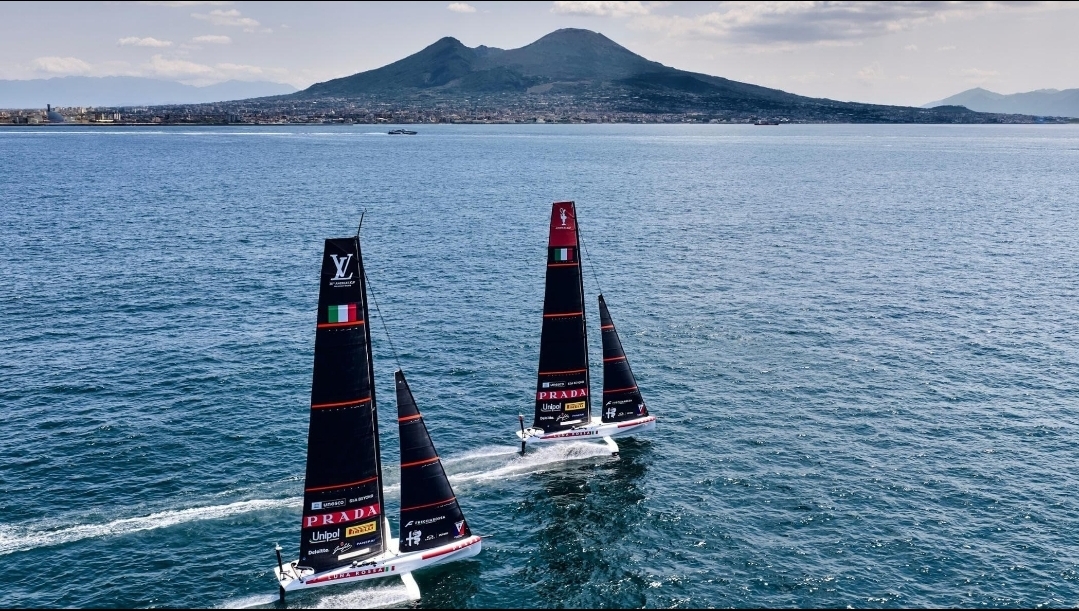
From the waters of Cagliari to the road towards Naples 2027, Luna Rossa’s development programme is entering a critical phase. The question is no longer simply how fast the AC75 can sail, but how much further the team can push its performance before the next America’s Cup.
For Luna Rossa Prada Pirelli, the 2026 season has been about more than putting a foiling yacht on the water. It has been an opportunity to understand the behaviour of the AC75, evaluate its existing configuration and identify where further development could deliver an advantage ahead of the 38th America’s Cup.
The AC75 is an extraordinary piece of sailing engineering. At speed, the yacht lifts its hull clear of the water, supported by hydrofoils that dramatically reduce drag. But achieving that performance consistently requires a complicated relationship between aerodynamics, hydrodynamics, control systems, structural engineering and the sailors themselves.
Testing is where those relationships are examined, challenged and refined.
### A season of development, not simply speed
The first important lesson from the 2026 programme is that Luna Rossa is not starting from scratch. Its current AC75, known as B3, has been carried forward from the previous America’s Cup campaign, but it has undergone modifications to bring it into the new configuration and development programme.
In July, following its initial return to sailing, Design Director Horacio Carabelli described the yacht as lighter than its predecessor and easier to handle in lighter winds. He also indicated that the team was still using foils from the previous campaign, with further updates expected.
That distinction is important. The team was initially evaluating the revised platform with existing components before introducing and assessing further developments. Sailweb
The early testing programme therefore concentrated on understanding how the modified yacht responded to changes in configuration, how its control systems behaved and whether the design improvements made ashore translated into measurable performance on the water.
Peter Burling also emphasised that the sailors’ feedback was essential. The team needed to verify the sails, foils and control systems together rather than assume that an individual improvement would automatically make the complete yacht faster.
### What did the testing programme reveal?
Several areas of development stand out from the team’s 2026 sailing sessions.
1\. Foil control and electronic systems
One of the more technically interesting aspects of the programme has been the work on the electronic systems controlling the foil cant arms and rudder pitch angles.
These systems are fundamental to the AC75. They help control how the yacht generates lift, maintains its flight height and responds to changes in wind, speed and direction.
In May, the America’s Cup reconnaissance team observed Luna Rossa conducting tow tests at different speeds, including 25, 30 and 32 knots. The team also experimented with different rudder rake settings and foil cant angles.
This was not simply a speed exercise. It was an opportunity to understand how different configurations affected the yacht’s behaviour. Louis Vuitton 38th America’s Cup
2\. The rudder became an important development area
August brought one of the more revealing moments of the testing programme.
Luna Rossa returned to the water with a reworked rudder. The revised design featured additional blade area towards the upper section, less area lower down and a sharper leading edge.
During aggressive bear-aways and gybes, the rudder ventilated and stalled, resulting in a loss of steering control.
Flight controller Vittorio Bissaro confirmed that the team had lost control of the rudder and the yacht’s yaw.
This was a useful, albeit costly, testing experience. It demonstrated that a component can perform under one set of conditions but encounter limitations when subjected to particularly demanding manoeuvres.
The incident underlined the importance of rudder stability, water attachment and predictable control during transitions. The Foil
3\. Data collection became increasingly important
By October, the yacht was carrying an assortment of additional cameras and sensors.
These included cameras positioned around the foils, the rig and the hull, alongside equipment intended to study water flow and airflow.
The team was also rotating engineers through the sailing sessions, allowing specialists to observe different aspects of the yacht’s performance.
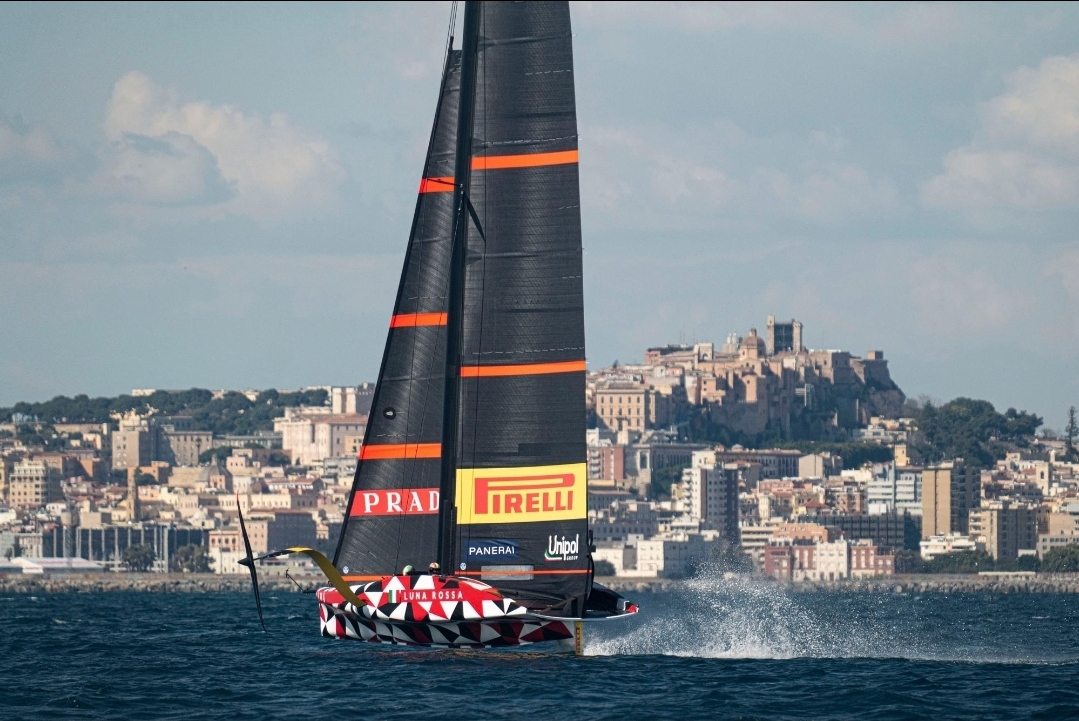
During the October 6–7 sessions, the yacht encountered further technical difficulties, including a broken sensor pole that damaged the hull. There were also interruptions associated with rudder control.
However, the reconnaissance reports also recorded consistent manoeuvres, with the yacht completing tacks in approximately six seconds as it transferred from one foil to the other.
That is an important area of development because every transition involves a temporary change in the yacht’s lift and stability. Reducing the time spent in that vulnerable phase can help preserve speed and momentum. The Foil
### Where can Luna Rossa improve?
There are several areas where the 2026 testing observations point towards further development. It is important, however, to distinguish between confirmed technical incidents and areas that warrant continued investigation. Luna Rossa has not publicly released a complete engineering assessment of the yacht’s remaining weaknesses.
Rudder performance and stability
The August rudder incident makes this an obvious area for continued attention. The team needs a configuration that maintains reliable steering authority during high-load manoeuvres, particularly when the yacht is changing direction at speed.
Foil efficiency and flight control
The foil is arguably one of the most important performance components on an AC75. Its shape, surface characteristics, cant angle and interaction with the water influence lift, drag and stability.
Further optimisation could help the yacht maintain flight more efficiently, particularly when wind conditions change.
Sail development and aerodynamic efficiency
October’s sessions also involved a new mainsail and several new jibs of different sizes.
This suggests an ongoing effort to understand how different sail combinations perform across varying wind conditions. The relationship between the sails and the foils is particularly important: generating more power is not necessarily beneficial if the yacht cannot translate that power into efficient forward motion.
Reliability and sensor integration
The broken sensor pole in October illustrates another challenge. An AC75 is dependent on a sophisticated network of electronics and measurement equipment.
The team needs reliable data collection without compromising the yacht’s structural integrity or introducing unnecessary operational interruptions.
Ultimately, the objective is not simply to build a faster yacht. It is to build one that can repeatedly deliver its performance throughout a demanding racing campaign.
### The next phase: What happens before Christmas?
On October 25, Luna Rossa concluded its latest sailing block in Cagliari after completing 28 of the 49 possible sailing days available before January 14, 2027.
The yacht was scheduled to undergo further work ashore, including preparation and repainting following the demanding testing period.
Team CEO Max Sirena confirmed that the AC75 would return to the water before Christmas.
He also explained that the programme would continue to develop the Youth and Women’s sailing groups, with new sailors being given opportunities to sail the AC40s while the senior AC75 underwent further work.
Sirena was particularly careful not to reveal too much about the team’s technical plans. His position was that Luna Rossa needed to concentrate on its own development rather than become distracted by what rival teams were doing.
That is understandable. Every competing team is working towards the same deadline, and the development race is far from over. 38th.americascup.com
### When will we see Luna Rossa racing again?
There is an important distinction between returning to the water for testing and returning to competitive racing.
Luna Rossa’s next expected AC75 sailing session is before Christmas 2026, according to Sirena. However, no specific day has been confirmed.
The next major competitive milestone is the 2027 America’s Cup programme in Naples.
The published competition calendar confirms:
* 22 May 2027: The Louis Vuitton Cup begins, with an opening weekend of AC75 fleet racing.
* 4 July 2027: The Challenger Selection Series is scheduled to conclude.
* 10 July 2027: The 38th America’s Cup Match begins, with the winning challenger facing Emirates Team New Zealand.
There will also be further AC40 activity involving the Youth and Women’s teams. These events should not be confused with the main AC75 competition. 38th.americascup.com +1
### The bigger picture: A development race that is far from finished
![‘LAST CARD’ FOIL FOR LUNA ROSSA – 37th America’s
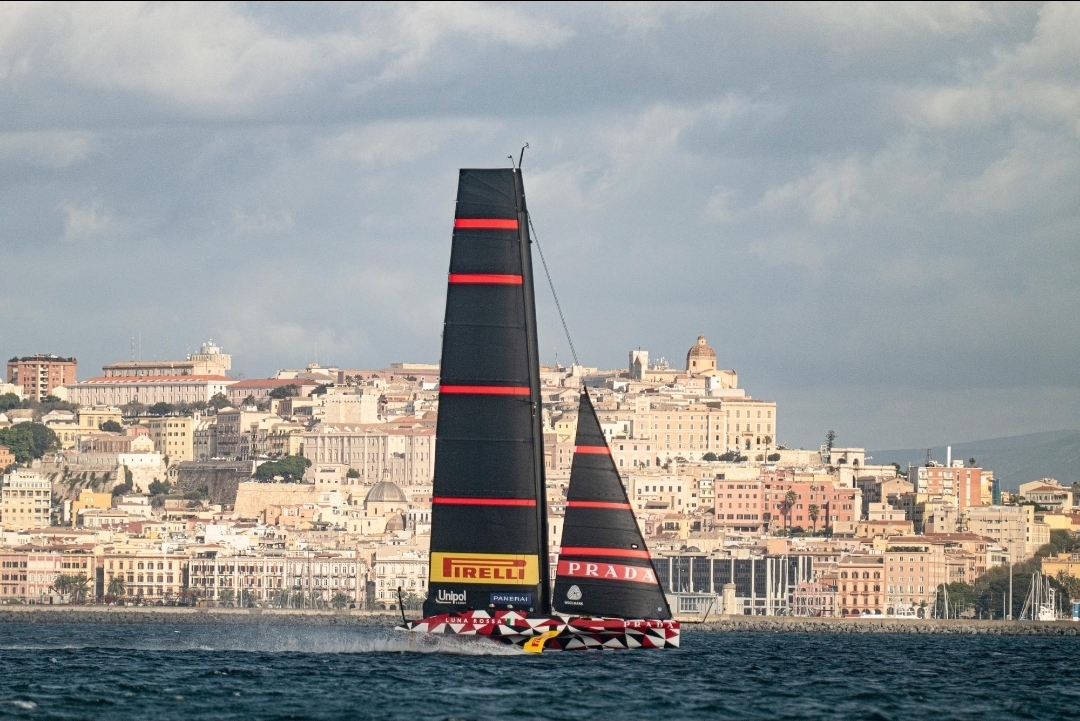
Emirates Team New Zealand, INEOS Britannia and the other challengers are also developing their boats and preparing for Naples. The performance gap between teams will not necessarily be determined by one spectacular design innovation. It could come down to a combination of smaller improvements: more efficient foils, better sail configurations, more reliable electronics and faster transitions.
For Luna Rossa, the next few months will be about turning the information collected during testing into a more refined racing machine.
The Silver Bullet has been given a considerable amount of attention in 2026. Its next appearance on the water, expected before Christmas, should provide another opportunity to see how much of that development has translated into performance.
And with Naples waiting in 2027, the real examination is still ahead.
### DLifestyle Magazine – Publishing package
SEO headline: Luna Rossa’s AC75 Testing Season: What 2026 Revealed Ahead of the 2027 America’s Cup
### Sources and further reading
* [America’s Cup – Back at it in Cagliari, October 2026](https://38th.americascup.com/news/4393_BACK-AT-IT-IN-CAGLIARI?utm_source=chatgpt.com).
* [Max Sirena – October training block and future plans](https://38th.americascup.com/news/4427_SIRENA-IM-FOCUSED-ON-OURSELVES-WE-DONT-WANT-TO-BE-DISTRACTED?utm_source=chatgpt.com).
* [The Foil – Luna Rossa tests a new rudder](https://thefoil.com/news/luna-rossa-test-new-rudder-and-take-a-knock/?utm_source=chatgpt.com).
* [The Foil – Two days, two headaches for Luna Rossa](https://thefoil.com/news/two-days-two-headaches-for-luna-rossa-in-cagliari/?utm_source=chatgpt.com).
* [Sailweb – First impressions of the modified AC75](https://www.sailweb.co.uk/?p=63895&utm_source=chatgpt.com).
* [Official 38th America’s Cup competition calendar](https://38th.americascup.com/38th-americascup?utm_source=chatgpt.com).
Editorial note: The December return is a stated team intention, not a confirmed racing date. The technical improvements discussed above are development opportunities identified from observed testing, not a list of officially acknowledged design deficiencies.